[@CityPrepping] Best Solar Generator for 2025 (The Ultimate Guide)
![[@CityPrepping] Summarizer](https://summaries.pages.dev/img/logo.webp)
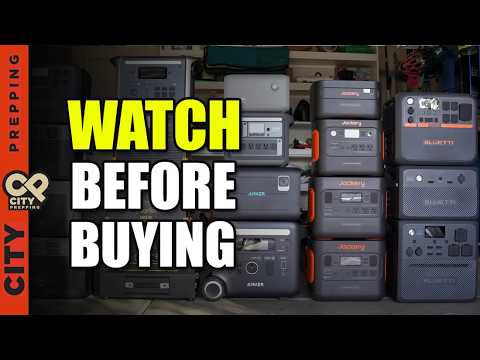
Link: https://youtu.be/i1sIXTZsgMM
Short Summary
Number One Action Item/Takeaway: Determine your essential power needs before you buy a solar generator to avoid overspending or purchasing the wrong unit.
Executive Summary: This video provides a comprehensive guide to selecting the right solar generator for emergency backup power. It emphasizes understanding your specific needs, evaluating key specifications (capacity, output, battery chemistry), and using a provided calculator tool to match your power requirements with the appropriate solar generator, ultimately helping viewers make informed purchasing decisions.
Key Quotes
Okay, here are 4 quotes extracted from the transcript that I found particularly insightful:
- "We're at a point now where making the right choice, not the flashiest one, is what matters most." - This highlights a shift in the solar generator market towards practicality and informed decision-making.
- "If you're not clear on your answer, it's easy to buy the wrong unit or overspend on something that doesn't really fit your situation." - Emphasizes the importance of accurately assessing one's power needs before purchasing a solar generator.
- "There are a lot of these companies on the market now, and I've been offered large sums of money to promote new off-brand units, and I don't because I've seen companies, they'll pop up with large marketing budgets and deliver a piece of junk product." - Transparency and a focus on established, reputable brands.
- "A smaller unit you can afford now is way better than dream setup you might buy someday. The goal is get started. Get something that gives you peace of mind now and expand it over time if you want to." - This advocates for a practical, incremental approach to emergency preparedness.
Detailed Summary
Here's a detailed summary of the YouTube video transcript, presented in bullet points, focusing on the key information and arguments:
Key Topics:
- Solar Generators as Emergency Backup Power: The video focuses on using solar generators as a reliable source of backup power, especially during grid outages.
- Choosing the Right Solar Generator: The primary goal is to provide a framework and tools to help viewers make informed decisions when purchasing a solar generator, based on their specific needs, budget, and lifestyle.
- Understanding Solar Generator Specifications: Explains key specifications like capacity (watt-hours), output (continuous, surge, UPS/EPS), and battery chemistry.
- Real-World Use Case Demonstrations: Presents five tiers of backup power, showcasing what different sized solar generators can power and for how long.
- Cost vs. Capability: Discusses how to avoid overspending by identifying the unit that best fits your needs, not just the most expensive one.
- Calculating Power Needs: Offers a custom spreadsheet tool to calculate power consumption of devices and determine the appropriate solar generator capacity.
Arguments and Information:
- The Market is Overcrowded and Confusing: The solar generator market has grown rapidly, making it difficult for consumers to navigate.
- Focus on Essential Home Backup (EHB): Prioritize powering essential items (fridge, medical equipment, internet) rather than trying to run the entire house during an outage.
- Solar Generators vs. Traditional Generators: Solar generators use solar panels to harvest energy and store it in batteries, making them independent of gas or propane.
- Stick with Reputable Brands: Due to the influx of new companies, it's safer to choose established brands with a proven track record.
- Capacity (Watt-Hours) Explained: A practical explanation of how watt-hours relate to powering devices for a specific duration. The formula is basically: Watts = Volts * Amps and Watt Hour = Watts * Hours
- Output Capability (Continuous, Surge, UPS/EPS) Explained:
- Continuous: The maximum continuous power output the generator can handle.
- Surge: The momentary power spike a generator can handle when starting devices with motors.
- UPS/EPS: Uninterruptible/Emergency Power Supply – instant switchover in case of power failure.
- Battery Chemistry (Lithium-ion vs. Lithium Iron Phosphate - LiFePO4):
- Lithium-ion: Lighter, fewer charge cycles (around 500).
- LiFePO4: Longer lifespan, more charge cycles (around 3500), more heat stable, but heavier (negligibly).
- Expandability: Some units allow for adding extra batteries to increase capacity in the future.
- Charging Capability (Solar/AC): How quickly the unit can be charged, which is important in emergencies.
- App Connectivity (Bluetooth/Wi-Fi): Allows for remote monitoring and control of the solar generator.
- Tiered Use Case Demonstrations:
- Tier 1 (300W): Small devices, phones, apartments, portability.
- Tier 2 (1500W): Essential home backup, routers, laptops, refrigerator (short-term), remote workers.
- Tier 3 (2000W+): Best entry-level for essential home backup, fans, lights, refrigerator, sweet spot for performance/portability.
- Tier 4 (3000W+): Advanced essential home backup, kitchen appliances, RVs, app control.
- Tier 5 (7000W+): Most powerful essential home backup, whole home resiliency, high budget.
- Importance of Solar Panels: Pair solar generators with solar panels for prolonged power during outages.
- Cost Breakdown and Use Cases: Each price range of solar generator fits a different need.
- Spreadsheet Tool Demonstration: Walks through the spreadsheet tool, explaining how to input device power consumption and calculate runtime for different solar generators.
Final Recommendations:
- Start Small and Expand: If on a budget, get a smaller unit now and expand later.
- Consider Solar Panels: Strongly consider solar panels to extend power during outages.
- Choose the Right Tool for the Job: Focus on having the right solar generator for your needs, not just the largest one.