[@DwarkeshPatel] Why The Robot Revolution Will Come Sooner Than You Think - Elon Musk
![[@DwarkeshPatel] Summarizer](https://summaries.pages.dev/img/logo.webp)
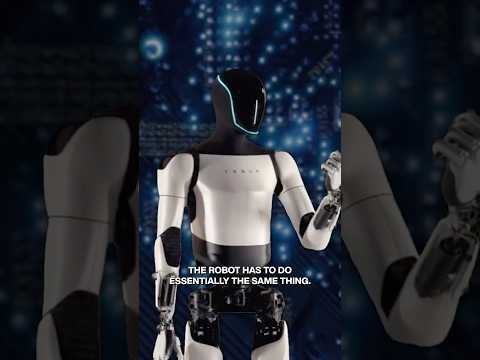
Link: https://youtu.be/vgiYZP6lREI
Short Summary
Over the past decade, self-driving technology has evolved from compelling demos to scalable services like robo-taxis and Whimo, prompting a closer look at the readiness of household robots. This progress builds on five to six years of work on humanoid robots, which leverage Tesla AI chips and advanced visual data processing to mirror human behavior effectively.
Key Quotes
Key Quotes
- "So 10 years ago, you had really compelling demos of self-driving, but only now we have robo taxi and Whimo and all these services scaling up. Shouldn't this make one pessimistic on household robots? Because we don't even quite have the compelling demos yet." (00:00:00)
- "So we'll use the same Tesla AI chips in the robot as the car." (00:00:22)
Detailed Summary
The transition from early self-driving demos to current scalable services like robo-taxis and Whimo highlights the growing readiness of household robots. Humanoid robot development over the last five to six years utilizes Tesla AI chips to manage numerous degrees of freedom shared with autonomous vehicles. AI systems process visual data by compressing it into two bitstreams, filtering critical elements like road signs and pedestrians while discarding less relevant details. A significant data reduction occurs where 1.5 gigabytes per second of video input is compressed into a 2 kilobytes per second output for efficient control decisions. Robot operations emulate human physiology, functioning as a photon flow where vision captures light signals and motor controls manage physical actions.