[@RenaissancePeriodization] Peptides: The Most Overhyped Trend in Fitness?
· 4 min read
![[@RenaissancePeriodization] Summarizer](https://summaries.pages.dev/img/logo.webp)
Link: https://youtu.be/zeA4DvEyMIk
Duration: 23 min
Short Summary
Dr. Mike, an expert on peptide biology, explains that no peptides currently exist that directly and significantly grow muscle mass without additional support. He emphasizes that while weight loss peptides like Semaglutide are safe, recovery and exercise mimetic peptides often lack robust human trial data and present specific safety concerns.
Key Quotes
- "there are no peptides that grow muscle." (00:00:00)
- "The weight loss peptides are magic fat loss and health elixirs." (00:00:08)
- "when they clip into a receptor, shit really, really happen." (00:00:58)
- "you're wasting a lot of money." (00:01:49)
- "It's not on this list because it doesn't exist yet." (00:04:26)
Detailed Summary
Peptide Efficacy and Classification Analysis
Fundamental Properties and Administration
- Dr. Mike defines peptides as amino acid chains typically less than 50 amino acids in length, noting that natural examples include Insulin and GLP-1 which function as signaling molecules. Most peptides require subcutaneous injection because the digestive tract breaks down amino acid chains, preventing oral bioavailability.
- Synthetic peptides are engineered for stability, longer half-lives, and enhanced receptor sensitivity, yet reconstituted versions typically possess a half-life measured in weeks rather than months. Proper storage is critical, as reconstituted peptides require refrigeration between 2 and 8 degrees Celsius to avoid degradation from heat, light, and agitation.
Five Classes of Peptide Compounds
- Class 1 comprises modern weight loss drugs like semaglutide, tirzepatide, and retatrutide, which are well-tested for fat loss but lack anabolic muscle-growing effects. These agents are considered safe for fat loss with proper dosing, with multi-year data showing reduced all-cause mortality in older populations.
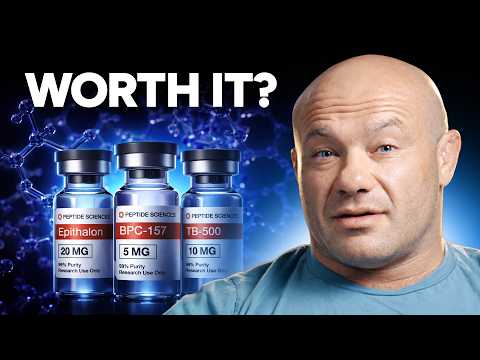
- Class 2 includes recovery peptides such as BPC-157 and TB-500, which are injected for injury healing but show mixed safety data and no direct muscle growth effects. High community hype exists for these compounds, yet they lack good human trials and have questionable safety profiles regarding cancer cells, suggesting use for injury cycles rather than year-round application.
- Class 3 features exercise mimetics like Myo-AT and MOTS-c that mimic exercise cascades but are suspected to be anti-anabolic by suppressing the mTOR pathway. Evidence suggests these compounds do not burn radical amounts of fat and remain underresearched regarding specific risks and benefits.
- Class 4 consists of growth hormone secretagogues including sermorelin, CJC-1295, and ipamorelin, which act as permissive anabolics that support but do not cause muscle growth. While they raise growth hormone to high normal levels, they underperform compared to direct growth hormone administration.
- Class 5 includes IGF modulators such as IGF-1 LR3, IGF-1 DES, and MGF, which act on muscles but require frequent daily injections to achieve massive anabolic drive. These drugs are too systemic to replicate local animal trial results and are often reserved for advanced users already utilizing anabolic steroids.
Market Realities and Future Outlook
- Accessing peptides involves significant uncertainty, particularly through online labs and gray market shops where quality and contamination risks vary widely. Tirzepatide in 30ml vials may lose effectiveness if consumption is below 10 milligrams per week, highlighting the fragility of premixed solutions.
- Dr. Mike notes that the question of muscle growth peptides is a frequent topic, received approximately three times per day, yet enhanced professional bodybuilders do not commonly utilize powerful muscle-growing peptides, indicating their likely non-existence or ineffectiveness. Looking forward, oral small molecule drugs like SLU PPM 333 offer high target specificity and are expected to become available for physique and health in just a few years.