[@alux] 5 Financial Crises That Keep Repeating
![[@alux] Summarizer](https://summaries.pages.dev/img/logo.webp)
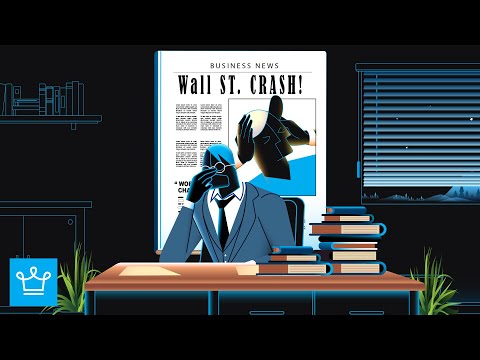
Link: https://youtu.be/CmFxWFZuzzs
Short Summary
Here's a summary of the video transcript:
Number One Takeaway: History shows financial crashes are often the result of pushing economic systems too far – too much debt, speculation, or trust in flawed models. Recognizing these patterns is key to building wealth and securing it against future crises.
Executive Summary: The video analyzes five major financial meltdowns, highlighting that they are not unpredictable events but recurring consequences of systemic imbalances, excessive debt, and speculative bubbles. Each crisis demonstrates how pushing economic boundaries eventually leads to collapse, impacting individuals and the global economy. Recognizing these historical patterns is key to understanding current economic conditions and mitigating risk.
Key Quotes
Here are 5 quotes that I found particularly insightful from the transcript:
-
"Because history doesn't repeat itself exactly, it just keeps getting more expensive." This is a clever and concise way to frame the cyclical nature of financial crises, highlighting the escalating costs associated with each iteration.
-
"Every financial system starts with rules. Then we find loopholes. Then we build entire industries inside of those loopholes until the system collapses under its own weight." This quote captures the essence of how regulations can be undermined over time, leading to systemic instability.
-
"Attention doesn't equal value. You can't pay your employees or investors with hype." This highlights the core problem with bubbles, especially those fueled by internet hype, as seen in the Dot Com bubble.
-
"Inflation is not just about numbers. It is about trust. Once people lose faith in what their money can buy, fixing the problem becomes 10 times harder." This highlights the psychological impact of inflation and the importance of maintaining confidence in the currency.
-
"The Great Depression wasn't caused by one bad policy or one greedy group. It happened because everyone believed the party could go on forever and nobody had a plan for when it didn't." This emphasizes the role of collective complacency and lack of preparedness in exacerbating crises.
Detailed Summary
Okay, here's a detailed summary of the YouTube video transcript provided, using bullet points, focusing on the key topics, arguments, and information presented, while excluding promotional material.
Key Topics & Arguments:
- Recurring Nature of Financial Crises: The video argues that financial crises are not random events, but rather occur regularly (every 8-15 years) due to predictable patterns and systemic vulnerabilities.
- History Doesn't Repeat, But Rhymes (Expensively): Emphasizes that while each crisis has unique details, underlying causes and human behaviors remain consistent, leading to increasingly costly consequences.
- Systemic Vulnerabilities: The video explores the specific weaknesses and imbalances that led to each crisis, focusing on: debt, speculation, inflation, asset prices, and trust.
Analysis of Five Major Financial Meltdowns:
-
2008 Financial Crisis (Debt Outruns Productivity):
- Trigger: Subprime mortgage crisis and the collapse of mortgage-backed securities.
- Root Cause: Banks prioritized quantity over quality of loans, bundling and selling risky mortgages (mortgage-backed securities) without properly assessing borrowers' ability to repay.
- Mechanism: Rising housing prices fueled refinancing, masking underlying debt. When housing prices stagnated and declined, defaults surged, causing mortgage-backed securities to collapse.
- Credit Default Swaps amplified losses as banks couldn't cover insurance on failing mortgages.
- Consequences: Foreclosures, stock market crash, unemployment, global economic freeze, bank bailouts. Highlighted the unfairness of banks being bailed out, while families were not.
- Key Lesson: Unchecked debt growth and reliance on loopholes lead to systemic failure.
-
Dot-Com Bubble (Speculation Replaces Fundamentals):
- Trigger: Overvaluation of internet companies based on potential, not actual earnings.
- Root Cause: Investors focused on "the next big thing" (the internet) without proper due diligence, funding companies with flawed business models.
- Mechanism: Speculative investment drove stock prices up, creating a bubble. Media hype amplified the trend. As confidence waned, a massive sell-off ensued.
- Consequences: Tech sector collapse, NASDAQ plummeted, loss of trillions in market value, job losses, startup failures.
- Key Lesson: Attention and hype do not equal value; fundamentals matter.
-
1970s Oil Crisis & Stagflation (Inflation as a Hidden Tax):
- Trigger: OPEC oil embargo in response to US support for Israel.
- Root Cause: US dependence on foreign oil and the end of the gold standard, coupled with geopolitical events.
- Mechanism: Oil price shock led to inflation across the economy (everything became more expensive), while economic growth stagnated. Central banks struggled to manage inflation and recession simultaneously.
- Consequences: Double-digit inflation, high unemployment, declining purchasing power, loss of economic confidence.
- Key Lesson: Inflation erodes trust in currency; economic policy must account for broader geopolitical factors.
-
Japanese Asset Bubble (Asset Prices Detach From Reality):
- Trigger: Overvaluation of real estate and stocks in Japan.
- Root Cause: Low interest rates, economic boom, and belief in Japan's continued economic dominance fueled speculative investment in land and stocks.
- Mechanism: Asset prices rose far beyond their actual value, with companies using inflated land values as collateral for more loans.
- Consequences: Bank of Japan raised interest rates which resulted in collapse of the stock market, real estate deflation, and a prolonged period of economic stagnation ("lost decade").
- Key Lesson: Even economies built on real progress can be vulnerable to bubbles fueled by speculation.
-
The Great Depression (Trust in the System Collapses):
- Trigger: Stock market crash of 1929.
- Root Cause: Easy credit, margin buying of stocks, and overvaluation of companies fueled a speculative bubble.
- Mechanism: Initial selling triggered panic, forcing investors to sell to cover loans, further driving down prices. Bank failures led to loss of savings and economic paralysis.
- Consequences: Mass unemployment, bank failures, global economic collapse, rise of nationalism and protectionism.
- Key Lesson: Loss of trust in financial institutions and the market can have catastrophic consequences.
Common Themes & Conclusion:
- Excessive Leverage/Debt: Each crisis involved excessive borrowing or reliance on debt.
- Speculation & Hype: Irrational exuberance and speculative investment played a key role.
- Trust in Bad Models: Over-reliance on flawed economic models and assumptions.
- Shortcuts: The pursuit of easy money and quick profits at the expense of long-term stability.
- Repeating Patterns: The video suggests that current economic conditions exhibit similar characteristics to past crises (rising asset prices, high debt, speculation).
- "This Time It's Different" Fallacy: Highlights the dangerous belief that current economic conditions are immune to past patterns of boom and bust.