[@joerogan] Joe Rogan Experience #2423 - John Cena
![[@joerogan] Summarizer](https://summaries.pages.dev/img/logo.webp)
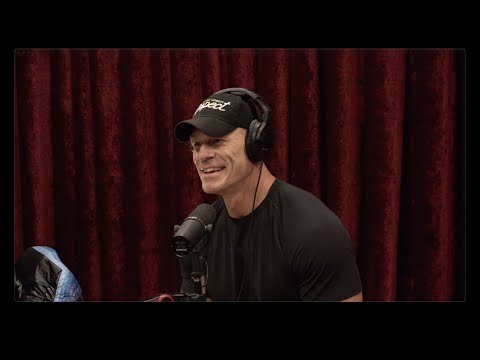
Link: https://youtu.be/sJ4Ho4ccuFg
Short Summary
Here's a concise executive summary of the Joe Rogan Experience podcast with John Cena:
John Cena discusses his wrestling career, including his initial struggles, the "happy accidents" that shaped his persona (like rapping), and the challenges of transitioning to acting. He emphasizes the importance of gratitude, seizing opportunities, and living a purposeful life, regardless of external validation or accolades.
Key Quotes
Here are five quotes from the Joe Rogan podcast transcript featuring John Cena:
-
"Um just because you know a language doesn't mean you know the culture." This quote highlights a crucial aspect of communication and understanding, emphasizing that language proficiency isn't enough to truly connect with and respect a different culture.
-
"Honestly, man, it was everything in my life seems to be wrestling related. It was wrestling related...China was like the one place that didn't understand what we did." This quote explains Cena's unexpected motivation for learning Mandarin, revealing a strategic and business-minded approach to expanding WWE's reach.
-
"...I think I might have been the only guy almost to get cancelceled for doing his homework..." This reflects the complexities of navigating cultural sensitivities and the potential for missteps, even when motivated by good intentions.
-
"It takes saying yes to the thing means no to everything else." This quote captures the sacrifices and singular focus required to achieve significant success in any field.
-
"And I understand I have been awarded more opportunity than one human being should get. And it's it's um from what I've tried to boil down to it, the best way to honor that opportunity is to do your best to try to live a good life." This exemplifies Cena's humility and perspective, emphasizing the responsibility that comes with success and the importance of using opportunities wisely.
Detailed Summary
Okay, here's a detailed summary of the Joe Rogan Experience podcast featuring John Cena and Tony Hinchcliffe, presented in bullet points:
Key Topics:
- John Cena's Mandarin Language Learning and Geopolitical Misstep:
- Cena learned Mandarin for about a decade to break into the Chinese market with WWE.
- He achieved conversational fluency and dreamt in Mandarin.
- During a press tour for a movie, he read a prompter that described Taiwan as a "country," causing controversy and requiring him to apologize to China.
- The incident taught him that knowing a language doesn't guarantee cultural understanding.
- He faced criticism both in China and the U.S. regarding his apology.
- He admitted fault for not checking the prompter reads.
- He now avoids speaking languages he doesn't fully understand the cultural nuances of.
- WWE's Second Language Program:
- WWE offered a free second language program to its athletes, which inspired Cena to learn Mandarin.
- Only a few people including Cena, Claudio Castagnoli, and Natty Neidhart took advantage of the opportunity.
- Pro Wrestling's Origins and Evolution:
- Discusses wrestling's origins as a carnival attraction and its territorial nature.
- Talks about how the sport has evolved with the benefits being offered to its competitors and athletes.
- Potential Podcast Guests from Pro Wrestling:
- Tony Hinchcliffe suggests Vince McMahon and Stone Cold Steve Austin as ideal future podcast guests.
- The discussion touches on the current status of Vince McMahon in WWE.
- Triple H is mentioned as someone who could answer more high-level questions about WWE.
- Tony Hinchcliffe's Near Miss with WWE:
- Tony was offered a writing job with WWE before becoming a successful comedian.
- He turned it down due to the job's location in Connecticut and the travel requirements.
- Tony's Involvement in Pro Wrestling & Kill Tony Parallels:
- Discusses how Kill Tony show is set up in a similar manner to a WWE event.
- Reveals that Tony is going to a WWE event.
- Undertaker Story:
- The hosts tell a story about the Undertaker attending a Wrestlemania event and surprising his wife by secretly performing as the Undertaker during the show.
- John Cena's Start in Pro Wrestling:
- Cena was working at Gold's Gym Venice when he was introduced to pro wrestling.
- His friends, Chris and Mark Bell (of "Bigger, Stronger, Faster" fame), helped him get started.
- Cena's Pain Tolerance and Opioid Use:
- Cena reveals he has had multiple surgeries for injuries related to wrestling.
- He has never taken a pain pill, despite receiving prescriptions.
- He recognizes the dangers of opioid addiction and prefers to manage pain naturally.
- Discussion about genetic or lifestyle influences on pain tolerance.
- Mentions using a cadaver ACL graft for one of his knee surgeries due to faster recovery.
- Contrasts this with the patellar tendon graft, which is a more painful and invasive procedure.
- The dangers of training too early post-surgery and reinjuring are highlighted.
- WWE's Calculated Risks:
- Contrasts UFC's 'best person wins' environment with the co-operative working relationship in WWE.
- Cena mentions that while the sport does create choreographed risk, that risk needs to be calculated over and over to have a long career.
- Talks about how the WWE schedule has scaled back for safety of the competitors.
- WWE touring parallels:
- John Cena compared touring as a WWE superstar to that of a touring stand up.
- The Absorbent Nature of WWE:
- Discusses how to succeed in WWE it is not just a job but an identity.
- The Importance of Failure and Bumps:
- John Cena discusses how modern WWE performers are missing out on the experience of taking bumps with the scaling down of live events.
- The All-Consuming Nature of Success:
- Cena emphasizes that achieving success in any field requires dedication, sacrifices, and laser-like focus.
- Jensen Huang (CEO of Nvidia) is used as an example of someone who works tirelessly to maintain success.
- Talent vs. Work Ethic:
- The podcast examines the fact that talented people many times fail to make it to the top due to lack of drive.
- There can be someone with great athletic ability, acrobatics, or writing abilities, but there needs to be a balance in the other areas as well.
- The Meritorious system of WWE:
- Even though there can be backstage politics, WWE understands the sound of money which keeps people accountable and relevant.
- Cena's Early Character and Initial Backlash:
- Cena entered the WWE business quietly, but didn't connect with the audience.
- His hip-hop gimmick faced initial resistance from Vince McMahon and others.
- He was considered disrespectful and not caring about the business.
- Cena's Lucky Breaks:
- Stephanie McMahon (Vince's daughter) saw Cena rapping on the bus.
- She encouraged him to do it on TV.
- Cena got a small chance and used it as a stepping stone.
- Cena's Heel Turn:
- Talks about Cena's epic iconic heel turn and the cold dark way in which he portrayed the persona.
- Reverses his persona of a tasmanian devil.
- The Power of Simplicity in Wrestling:
- John Cena talks about how less can be more when playing to the audience.
- Talks about how an action will mean more if people in the audience watch it and see it.
- The Universal Appeal of Pro Wrestling:
- Discusses how pro wrestling's messages can be sent based on true human emotion that everyone knows about.
- Dom Mysterio Talk:
- Cena and Hinchcliffe talk about Dirty Dom and how much the crowd loves him.
- American Pro Wrestling Style:
- The way American wrestling has evolved over time compared to other countries.
- The importance of live Non-televised events:
- John Cena and Tony talk about how there is an importance on live events as WWE performers need those experiences to get better.
- Cena's Brother's Dare:
- John Cena would do a dance where he would shake his head and keep his hand in front of him.
- Cena's brother dared him to do it on television.
- The dance that Cena's brother dared him to do turned into a memorable signature of his.
- The importance of Saying Yes:
- That it is important to take the opportunity you are given.
- John Cena and His Dad:
- Having a shitty relationship with his dad.
- Getting out of his own way to mend fences with him.
- The importance of gratitude:
- To have a core value to make sure you don't waste what has been given to you.
Arguments:
- Cultural Awareness is Essential: Knowing a language is not enough; cultural understanding is crucial for international communication and avoiding offense.
- Meritocracy and Hard Work: While talent is important, success requires a strong work ethic, dedication, and the ability to capitalize on opportunities.
- Failure as a Learning Tool: Embracing failure and learning from mistakes is essential for growth and improvement.
- Seizing Opportunities and Saying Yes: Being open to new experiences and saying "yes" to opportunities, even if they seem unconventional, can lead to unexpected success.
- Adapting to Changing Circumstances: Remaining flexible and adaptable is crucial for navigating career shifts and staying relevant in a dynamic industry.
- The value of being in the moment.
Information:
- John Cena learned Mandarin to promote WWE in China.
- WWE offers a second language program to its athletes.
- Vince McMahon initially disliked John Cena's hip-hop persona.
- John Cena's heel turn took place in February of this year.
- Tony Hinchcliffe was offered a job at the WWE.
- There's great value in losing a fight.
- The undertaker attended a wrestlmania and didn't tell his wife he was going to wrestle in it.
- John Cena has had more than 10 surgeries related to pro wrestling.
- Cena has worked with famous people including Tina Fey and Amy Polar
- As a touring comic, the best thing that has been done is start taking friends with the comic on the road.
- WWE has a program for people called NXT where up to 200 personal are learning WWE skills at any given time.
- John Cena had a rough relationship with his Dad that they recently resolved.
- Tony talks about the importance of remembering where you come from as success grows in life.
- One of the most important things in life is staying curious and to not be bored.
The discussion revolves around John Cena's career journey, his thoughts on success, the wrestling industry, and the importance of adaptability and gratitude.