[@alux] Debt vs Equity: How Billionaires Actually Fund Their Businesses
![[@alux] Summarizer](https://summaries.pages.dev/img/logo.webp)
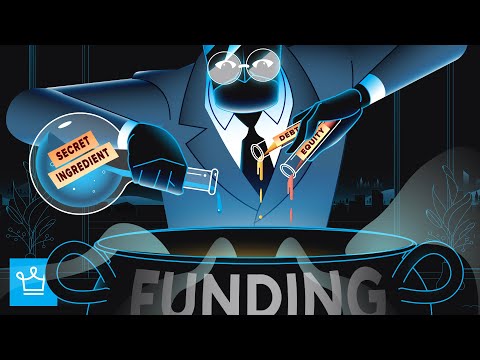
Link: https://youtu.be/dDUUgN41hAc
Short Summary
Number One Action Item/Takeaway:
Understand the trade-offs between debt and equity financing and how each impacts control, risk, and potential wealth in your business.
Executive Summary:
The video discusses the three primary ways to fund a business: equity, debt, and bootstrapping. Equity financing involves trading ownership for capital, potentially diluting control. Debt financing allows you to retain control while assuming financial risk. Bootstrapping relies on internal resources and organic growth. The right choice depends on your business stage, risk tolerance, and long-term vision.
Key Quotes
Here are 3 quotes from the YouTube transcript that represent valuable insights:
-
"Most people don't realize that the funding structure from day one can either make you rich or make you an employee at your own company." This highlights the long-term consequences of early funding decisions and the potential trade-off between control and capital.
-
"Equity buys help and debt buys you control." This encapsulates the fundamental difference between equity and debt financing, framing them as tools for different objectives.
-
"That's why Amazon, Microsoft, Meta, Google, they all have billions of dollars in debt." This surprising data point about established tech giants using debt challenges the notion that debt is only for struggling or growing companies.
Detailed Summary
Here's a detailed summary of the YouTube video transcript, organized by bullet points:
Key Topics:
- Business Funding Options: The video primarily focuses on three ways businesses get funded: equity, debt, and bootstrapping.
- Control vs. Growth: It highlights the trade-offs between relinquishing control (equity) to achieve faster growth versus maintaining control while assuming financial risk (debt).
- Long-Term Consequences: It emphasizes how funding decisions from the very beginning can significantly impact an entrepreneur's wealth and influence within their own company.
Equity Funding:
- Definition: Selling a portion of your company in exchange for capital.
- Prevalence: Common among early-stage startups lacking revenue, assets, and creditworthiness.
- The Process:
- Seed Capital: Funding from angel investors or early-stage VCs to build a prototype and test the market.
- Series A: Funding focused on proving product-market fit and building a real business. Requires paying users, growth, and a scalable business model.
- Series B: Funding for scaling operations, hiring, expanding into new markets, and building infrastructure.
- Series C: Pre-IPO funding aimed at dominating the market, acquiring competitors, and preparing for public markets. Often involves private equity and hedge funds.
- IPO (Initial Public Offering): Listing the company on a stock exchange, allowing the public to buy shares. Provides a massive influx of capital but comes with increased scrutiny and reporting requirements.
- Risks:
- Loss of Control: Each equity round dilutes ownership, potentially leading to a founder being fired from their own company (example: Steve Jobs at Apple).
- Pressure from Shareholders: Public companies face constant pressure to meet earnings expectations.
Debt Funding:
- Definition: Borrowing money and repaying it with interest.
- Advantage: Allows businesses to raise capital without giving up ownership.
- Prevalence: Common among established corporations, even those with large cash reserves, as it can be a cheaper option than equity and offers tax advantages.
- Methods:
- Business Loan: Traditional loan from a bank with monthly installments and interest. Requires stable income, assets, or collateral.
- Line of Credit: Pre-approved credit that can be drawn on as needed, with interest only charged on the amount used. Helps bridge the gap between expenses and revenue.
- Corporate Bonds: Issuing bonds to investors, promising to pay a specific interest rate over a set period. Allows companies to tap into a global pool of capital.
- Risks:
- Pressure to Repay: Obligation to make timely payments regardless of business performance.
Bootstrapping:
- Definition: Building a business from the ground up using personal savings and generated revenue, without external funding.
- Characteristics:
- Small initial investment.
- Prioritizing profit over rapid scale.
- Lean operations and minimal expenses.
- Reinvesting profits.
- Founder handles all aspects of the business.
- Advantages:
- Full ownership and control.
- No debt or equity dilution.
- Disadvantages:
- Slower growth.