[@BryanJohnson] McDonald's Items To NEVER Order
![[@BryanJohnson] Summarizer](https://summaries.pages.dev/img/logo.webp)
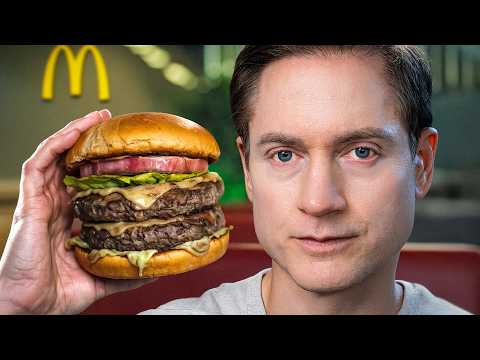
Link: https://youtu.be/agF-JwliFw0
Short Summary
Here's a breakdown of the YouTube video transcript:
Most Important Action Item/Takeaway:
Avoid regularly consuming McDonald's and other highly processed fast food due to the presence of harmful ingredients, toxins, and high levels of sugar, salt, and unhealthy fats that can negatively impact your health and longevity.
Executive Summary:
The video dissects the ingredients and potential health consequences of popular McDonald's menu items, revealing the presence of trans fats, refined seed oils, excessive sugar, and potentially harmful additives like sodium aluminum phosphate and carcinogens. The speaker argues that these unhealthy components can contribute to chronic diseases, accelerated aging, and cognitive decline, ultimately shortening lifespans. He urges viewers to make informed choices and prioritize healthier alternatives to fast food.
Key Quotes
Here are 4 direct quotes from the YouTube video transcript that represent valuable insights or strong opinions:
- "AES, which are toxins that form when the starch is exposed to high temperatures. The AES you find in fries at McDonald's is 20 times higher than you'd have in a baked potato that you make at home. These compounds contribute to oxidative stress and inflammation throughout the body, which has been linked to insulin resistance, vascular damage, and accelerated aging."
- "The 9 g of added sugar is almost as much as a glazed doughnut. That will give you an extreme insulin and sugar spike, and then 90 minutes later, your mood is going to plunge and make you feel hangry."
- "It's interesting how much cover McDonald's gets. It's probably because everybody shares this addiction. Everybody. And so everyone like you can't speak out against your abuser because you're stuck."
- "They're not a happy place. They're not a good player in society. And even if they say we're just giving people what they want, that uh don't don't do that. If if people want to do uh bad things, don't enable it. Like that's not a good argument."
Detailed Summary
Here's a detailed summary of the YouTube video transcript, presented in bullet points:
Key Topics:
- Analysis of popular McDonald's menu items.
- Discussion of the health implications of ingredients in McDonald's food.
- Emphasis on ultra-processed foods and their negative impact on the body.
- Critique of McDonald's marketing and its influence on consumers.
- Advocacy for making informed food choices and avoiding unhealthy fast food.
Arguments & Information:
- Fast Food Epidemic: The video highlights the prevalence of fast food consumption and its correlation with rising obesity rates, particularly among children. Ultra-processed foods make up a significant portion of the US food supply (73%).
- Large Fries:
- While advertised as having "zero trans fat," the FDA allows for a listing of zero if the amount is under .5g.
- Fried in refined seed oils which oxidize to form cancerous toxins (aldehydes) which damage proteins, cell membranes, and DNA (linked to heart/liver disease, Parkinson's, Alzheimer's).
- Contain high levels of Advanced Glycation End Products (AGEs), 20x higher than home baked potatoes, that contribute to oxidative stress and inflammation.
- Big Mac:
- Contains 580 calories, 45g carbs, 11g saturated fat (50% of daily value), 3g fiber, 1060mg sodium (almost 50% daily value), 85mg cholesterol, 25g protein and 9g added sugar.
- High added sugar content causes an extreme insulin spike and subsequent mood plunge.
- Beef from industrial lot-fed cattle has less omega-3 and more omega-6.
- Emulsifying agents in pickles disrupt the microbiome, potentially causing inflammation and metabolic disease.
- Hot Cakes Breakfast:
- Most caloric dense option (1,340 calories) that spikes blood glucose, increases fat storage and makes you hungry.
- Contains 41g of added sugar.
- 20 Piece Chicken McNuggets:
- Contain sodium aluminum phosphate which is linked to increased risk of cognitive decline and dementia. One 20pc contains 2.8mg of aluminum, 28 times more than the amount linked to cognitive decline in a French study.
- Fried in TBHQ oil which scientists have shown in rodent studies to cause cell damage, DNA damage and tumor growth.
- Caramel Frappe:
- Contains 70g of added sugar.
- Caramel coloring contains 4-MEI, a potential carcinogen listed under California's Prop 65.
- McGriddle:
- Smells like sugar.
- Contains processed meats with nitrites, which are known carcinogens.
- Cheese contains cancer-causing toxins.
- Contains 13g of added sugar.
- Egg McMuffin:
- Less harmful version of the McGriddle but still contains heated processed meats which increase cancer risk.
- Double Quarter Pounder with Cheese:
- A bigger, more harmful version of the Big Mac with more saturated and trans fat, totaling 740 calories.
- Contains 48g protein but its quality is questionable.
- Doesn't satiate when paired with sugary drinks.
- McFlurry with Oreos:
- 410 calories and 48g of sugar.
- Fructose produces terrible AGEs (the major driver of aging) at 8-10x faster rate than glucose.
- Snack Wrap:
- Smaller portion (390 calories) but still contains 6g saturated fat.
- Contains 900mg of sodium.
- Breading contains sodium aluminum agent.
- Hidden Ingredients and Labeling: The video emphasizes the deceptive nature of food labeling, especially concerning trans fats.
- Health Consequences: The consumption of these items is linked to various health problems, including heart disease, liver disease, cognitive decline, inflammation, insulin resistance, and accelerated aging.
- McDonald's as a Villain: The video argues that McDonald's is a harmful influence on society, exploiting consumer preferences for convenience and taste despite the detrimental health consequences. The video is repulsed by the product after reviewing ingredients.
- Call to Action: The video urges viewers to make better food choices and promotes the idea that they are capable of resisting the temptation of unhealthy fast food. It ends with a request for viewers to suggest other fast-food restaurants for analysis.