[@ChrisWillx] AI Can Fix Your Face Without Surgery?
· 4 min read
![[@ChrisWillx] Summarizer](https://summaries.pages.dev/img/logo.webp)
Link: https://youtu.be/lkdV97ve15w
Duration: 11 min
Transcript: Download plain text
Short Summary
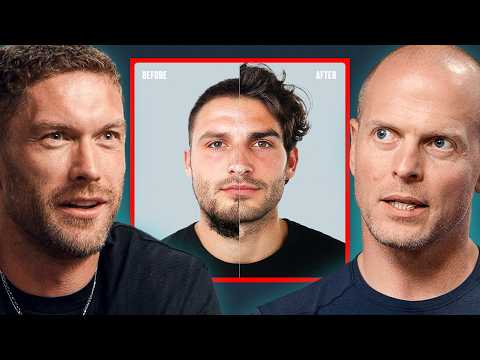
Guest shares how Gemini AI correctly diagnosed their persistent two-year facial skin condition as fungal and recommended ketoconazole (Nisarol) shampoo, resolving an issue doctors couldn't fix. The episode explores the growing "looks maxing" trend where people use AI apps like Facetune and Cooves for facial analysis and transformation, alongside concerns about how AI and brain-computer interfaces like Neuralink might distinguish authentic self from random mental chatter.
Key Quotes
- "upload a photo of yourself to Gemini or Chat GPT and just say, 'Hey, based off what you can see with my skin, recommend me moisturizers, recommend me everything.' And it'll be better than Do you know anything?" (00:01:29)
- "I can't wait to see the first failed demos of, you know what I mean? Like these epic software demo fails and someone gets up and it's just like [] [] [] [] twe" (00:02:32)
- "This is just IRL Facetune, right?" (00:07:10)
- "it turns out every Instagrammer or before they post any time people post photos um they typically went through the same workflows" (00:07:39)
- "when groups of young girls are out and they're taking photos at a party, everybody fights to be the one whose phone is used to have the photo taken because that means that they're the one that's in charge of the face tuning." (00:08:43)
Detailed Summary
Personal Health Victory with AI
- A guest used Gemini to upload photos of a persistent facial skin condition (redness, subdermatitis) that doctors couldn't resolve over two years
- Gemini identified it as fungal and recommended Nisarol (ketoconazole) shampoo, which the guest applied once every two weeks
- The treatment resolved the issue completely after years of trying topical steroid creams, meditation, and diet changes
- Guest recommends uploading a selfie to Gemini or ChatGPT and asking for skincare recommendations as a practical home remedy
Meditation and the "Monkey Mind"
- When asking "what thoughts are going to come up next" during meditation, the guest's mind went quiet for six seconds before a random thought appeared (about a former Bayern Munich winger)
- Raises philosophical concerns about Neuralink: how will it distinguish between "me" versus the "monkey mind" doing strange behaviors?
The "Looks Maxing" Phenomenon
- People are increasingly uploading photos to Gemini and ChatGPT for AI recommendations on medical procedures, jaw surgery, facial symmetry, hairstyles, and beards—a trend called "looks maxing"
- Cooves (also referred to as Covetune): An AI-powered "glow up without surgery" app offering personalized facial analysis and transformation, backed by what was described as an "absolutely sick" science team
- Facetune: An Israeli photo manipulation app allowing users to slim jawlines and alter facial features, used by nearly all Instagram users before posting
Social Dynamics of Photo Face-Tuning
- Writer Freya India notes that when groups of young girls take party photos, everyone fights to be the one whose phone is used, because whoever controls the device controls the face-tuning
- Meeting an Instagram personality in real life who looked "nothing like herself" in photos due to heavy face-tuning
- In group photos, posting a picture where you look good but your friend doesn't is considered a social faux pas called "stitching your mate up"
- AI face transformation apps now offer capabilities described as "IRL Facetune" with "limitless possibilities" for regenerating photos with various AI filters
Cultural Reference: The Ashley Cole Meme
- British footballer Ashley Cole became the subject of a major internet meme due to an awkward Roma squad photo where he was positioned on the edge of the group
- The Ashley Cole Roma meme persisted as one of the biggest memes in the world for approximately 10 years, referenced as an "I know it when I see it" cultural moment
Documentary Mention
- The documentary "I Swear" follows a man with one of the most severe forms of Tourette's who grew up in Scotland during the 1970s-80s when the condition was poorly understood