[@ChrisWillx] Ex-Military Hacker: The Secret World Of Government Surveillance - Bill Thompson
![[@ChrisWillx] Summarizer](https://summaries.pages.dev/img/logo.webp)
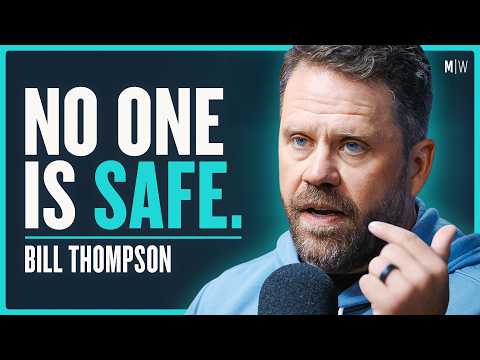
Link: https://youtu.be/cx4e3FaInA4
Duration: 75 min
Transcript: Download plain text
Short Summary
Bill Thompson, a former US military HUMINT operator who later advised DARPA and US Army offensive cyber leadership, discusses why recruiting human sources is cheaper than hacking about 95% of the time, how AI is compressing target development from months to hours, and government surveillance overreach including the Patriot Act and FISA. The conversation also covers his post-military venture Spartan Forge, a hunting app using proprietary neural networks and 5cm LiDAR imagery to predict deer movement. Thompson shares personal background from growing up in North Dakota after his father's early death, through military service supporting operations in Iraq, Afghanistan, Africa, and the southern Philippines.
Key Quotes
- "The English don't care about the Bill of Rights" (00:07:10)
- "that process moves conveniently slow in my experience." (00:08:41)
- "The cheapest ways are always recruiting humans that work inside of the organization." (00:14:34)
- "95% of the time it's cheaper." (00:14:43)
- "I would say that's the last bastion of competence inside of the government. Otherwise it's a totally incompetent um organization." (00:11:13)
Detailed Summary
Detailed Summary: Bill Thompson on HUMINT, Cyber Operations, and Spartan Forge
Guest Background: Bill Thompson
Thompson is a former US military HUMINT operator and DARPA adviser who later consulted for US Army offensive cyber leadership before transitioning to entrepreneurship. His personal history includes growing up in North Dakota after his father's early death and developing strong constitutionalist beliefs from Enlightenment-era texts.
- Father died when he was five; his mother was an alcoholic waitress in North Dakota, and he joined the military to escape the state, citing widespread methamphetamine issues outside farming communities.
- His military role was "variable analysis for commanders," supporting operations in Iraq, Afghanistan, Africa, and the southern Philippines before he was hired into DARPA, which he calls "the black box of the DoD," for a couple of years.
- His final military-adjacent position was advising a two-star general and a full colonel running all US Army offensive cyber development ("offco"), and he identifies G357 as the operations/training/sustainment office that allocates the funding.
- He identifies as a constitutionalist; he reenlisted after reading Montesquieu, John Locke, Cicero, and the Federalist Papers, motivated by preserving what he calls "the American experiment."
- He has been out of hacking for roughly 3–4 years and now runs two, almost three companies, including the hunting app Spartan Forge.
HUMINT Recruitment Fundamentals
Thompson was trained as a US military HUMINT (human intelligence) operator and lays out the tradecraft used to evaluate and handle sources. He emphasizes that human recruitment remains dramatically cheaper than technical hacking in most real-world cases.
- Recruitment is evaluated on five factors: placement, access, motivation, susceptibility, and accessibility.
- He states that recruiting a human source is cheaper than hacking the surrounding technology roughly 95% of the time, with insider payments commonly running $30K, $40K, or $50K.
- HUMINT courses run at Fort Huachuca, but he estimates only about 30% of those trained actually become effective source recruiters.
- Most people don't reach the "command of self" required for Cat 1 recruitment until they are 40–45 years old.
- Walk-ins are common leads; a typical example is someone arriving at a base saying "I think my brother's going to blow something up."
- Surveillance detection routes are mandatory before any meeting, and forensic exploitation afterward confirms the source actually drove the instructed route via GPS or phone data.
HUMINT Categories and Modern Recruitment Challenges
Source recruitment is tiered by category, and high-value (Cat 1) targets require entirely different tradecraft than lower-tier operatives. Digital forensics have forced intelligence services to rely on long-term "backstopped" cover businesses rather than organic social engineering.
- Sources are tiered Cat 1 (someone like the defense secretary) down to Cat 4 (such as a gate guard), and recruiting a Cat 1 source requires an "artisan" who can deduce motivations in about a 15-minute conversation.
- Modern Cat 1 recruitment is essentially impossible through organic social engineering, so governments instead fund "backstopped" cover businesses that provide long, verifiable cover stories.
- Digital forensics on high-value targets have made Cat 1 figures hyper-cautious, which forces intelligence services to insert operatives years in advance through these cover firms.
- Thompson names Elon Musk as the most surveilled human on the planet but says he would target Musk's people instead because Musk himself is functionally inaccessible.
- He also lists the Trump family among current recruitment targets worth pursuing.
Five Eyes and Intelligence Sharing
The Five Eyes alliance shares spies in addition to raw intelligence, allowing partner nations to effectively bypass each other's domestic legal limits. Thompson describes how this workaround functions in practice.
- If a target is legally off-limits to one country (for example, US Bill of Rights constraints on recruiting certain Americans), partners like UK MI5 or MI6 will recruit instead and pass the resulting intelligence back.
- The arrangement means a single foreign intelligence service can serve as a workaround for domestic legal limits, with the host government still benefiting from the reporting.
FISA, Patriot Act, and Domestic Surveillance
Thompson argues that US surveillance legislation and the FISA court have created an architecture of systemic overreach. He describes minimization procedures as broken in practice because data lingers while the declassification machinery moves slowly.
- The Patriot Act originally targeted telephonic infrastructure, including microwave links and base transceiver stations (BTS), and he describes it as one of the most "usurpacious" pieces of US legislation.
- The FISA court sits near Fort Meade, Maryland, and he says its warrants effectively never see the light of day.
- Officially, "minimization" procedures are supposed to protect incidentally collected US-person data, but he argues the process "moves conveniently slow" while data remains cataloged—for example, an American appearing on a Bahrain phone channel.
- He cites Senator Rand Paul as one of the few elected officials actively fighting FISA and the minimization process, and he says he agrees with some of Paul's positions.
AI in Offensive Cyber Operations
Thompson explains how AI has compressed target development timelines from months or years down to weeks or days. He attributes the shift to the convergence of older algorithms, modern compute, and internet-scale training data.
- US Army offensive cyber development was historically a very civilian-heavy organization; Thompson puts the share of civilians at roughly 85%, with only a handful of military members on his floor.
- Modern AI was enabled by three ingredients that came together: algorithms known since the 1970s–80s (CNNs, LSTMs), modern GPU/TPU compute, and internet-scale training data.
- Historically, target development took 3–6 months and sometimes up to 1–2 years, including manually dumping popular Middle East phones and combing through EL1 code files.
- With AI, he estimates target development is now compressed to one month at most, with most of the actual work done in the first 3 hours.
- AI-assisted code generation has cut routine coding tasks from 1–2 weeks down to about 1 hour; tools from Anthropic and OpenAI are typically fed technical dumps of target devices (routers, firmware, network diagrams) to flag IP-table issues, buffer overflows, and weak credential reuse.
- Thompson claims organized crime is already training and using AI hacking tools without guardrails, targeting phones, banking, Bitcoin wallets, and betting platforms.
Army Cyber Budget and Organizational Culture
In offensive cyber operations, Thompson says budget execution metrics often drove behavior more than mission outcomes. He describes how end-of-fiscal-year spending pressures distorted normal acquisition logic.
- In offensive cyber, budget execution was prioritized over mission: a general given $100B who executed only $99B risked being fired because underspending was treated as failure.
- He recalls a $100M pot that had to be spent by September even though the requirement did not arrive until July, illustrating how end-of-year pressures warped normal acquisition timing.
- The metric he describes as primary is "promotion-worthy" achievement of presidential NIPF (National Intelligence Priorities Framework) effects with only 70%—roughly three-quarters—of the requested budget.
DoD Intelligence Modes and Tradecraft
Thompson surveys the main DoD intelligence collection disciplines and gives examples of how IED adversaries adapted to US countermeasures over time. The pattern shows a clear arms race between jammers and trigger technologies.
- DoD intelligence modes include MASINT (measurement and signature), FISINT (foreign instrumentation signals/telemetry), ELINT (radar signals), COMINT (communications intelligence), cyber, and open-source intelligence.
- Pegasus spyware, developed by Israel, is mentioned as an example of nation-state cyber tooling; early versions required phishing-link clicks to compromise a target.
- IED tactics evolved through several generations: pressure triggers → command-detonated devices → garage-door openers operating in low-frequency bands to defeat jammers → back to wired or pressure triggers in hotel rooms.
Israeli Pager Operation
Thompson describes a large-scale Israeli supply-chain operation against enemy combatants as a case study in patience-led offensive tradecraft. The hardware choice was dictated by changing adversary communications hygiene.
- The Israeli pager operation targeted roughly 3,000 enemy combatants at once, after years of target development and deliberate supply-chain interdiction that pre-seeded the hardware.
- Pagers were chosen because smartphones were no longer considered secure communications devices for adversary operatives.
Spartan Forge: Origins and Product
After leaving government work, Thompson founded Spartan Forge to apply AI and geospatial intelligence to hunting. The company's first product was a deer-movement neural network trained on crowdsourced GPS collar data.
- Thompson founded Spartan Forge in approximately 2017 with the explicit goals of demystifying the woods, getting people outdoors, and applying neural networks, AI, and geospatial intelligence to hunting.
- The first mobile app launched in 2021, and the first product was a deer movement neural network trained on GPS collar data contributed by biologists, universities, and private individuals.
- In 2015, hunting and mapping corporations offered him about $500,000 for 6–8 years of mapping work; he turned it down to focus on machine learning instead.
- The app's aerial resolution is 5cm LiDAR imagery, which he claims is about 100x better than Google Maps, collected by sharing plane costs with soil/mineral surveyors, real estate companies, and solar developers.
Spartan Forge: Features, Use Cases, and Reception
The Spartan Forge app combines LiDAR maps, group coordination tools, and a hunting-specific AI assistant. Its aerial data also found an unexpected emergency-response use case during a hurricane in North Carolina.
- Features include downloadable offline maps, a "Blue Force Tracker" pin-dropping tool for group coordination, and "Cyber Scout," a proprietary neural network trained only on high-caliber hunting content so it doesn't regress-to-the-mean the way ChatGPT-style assistants do.
- During a North Carolina hurricane, first responders used Spartan Forge's logging trail data to reach washed-out houses and deliver diabetes medication and oxygen tanks to emphysema patients cut off by road damage.
- Anecdotally, one father-and-son pair used the app for 3 years to locate and harvest a specific whitetail buck.
- The app ranks approximately #14 in the mapping/outdoors category and has hundreds of thousands of users.
- Thompson personally answers social-media messages about 2 hours each morning; after appearing on Rogan, he received roughly 3,500 messages that took about a month and a half to clear.
Government Overreach and Constitutional Views
In the conversation's final segment, Thompson levels a series of critiques at US domestic security agencies, big pharma, and information warfare. He frames much of what he has seen through a constitutionalist lens as scope-of-government overreach.
- He claims the FBI had a whole division focused on homeland threats with 25% of its budget devoted to white supremacy, and that 60% of KKK meeting attendees (across the dark web, open web, and in-person events) were actually federal agents.
- He claims the Biden administration allocated $100–200 million to countering white supremacy primarily for talking points, and argues that real white supremacists are confined to small rural areas rather than numbering in the tens of thousands.
- He compares these government "self-licking ice cream cones"—agencies manufacturing defeated threats—to big pharma prescribing statins instead of addressing diet and lifestyle for type 2 diabetes and cholesterol.
- On GLP1 drugs like Ozempic, he frames them as a way to "play within big pharma's rules" for better outcomes; he jokes that even a 5-year lifespan reduction would still net positive outcomes for a 35-year-old at 600 lbs with 5 years left, while admitting that long-term GLP studies aren't yet available.
- He describes information flooding as designed to produce confusion and apathy rather than conviction in any particular narrative direction.
- He speculates that Nick Fuentes may be funded by Israel to serve as a useful straw man, and argues that Bill Clinton would be a "nightmare" target or source compared with Epstein-type figures.
- Finally, he argues the Founders would be revolted by the current scope of government, which he lists as regulating toilets, light bulbs, and taxing citizens at every stage of life—making money, spending it, saving it, and dying.