[@ChrisWillx] How Love Thrives: Stop Arguing & Rebuild Your Self-Worth - Dr John Delony
![[@ChrisWillx] Summarizer](https://summaries.pages.dev/img/logo.webp)
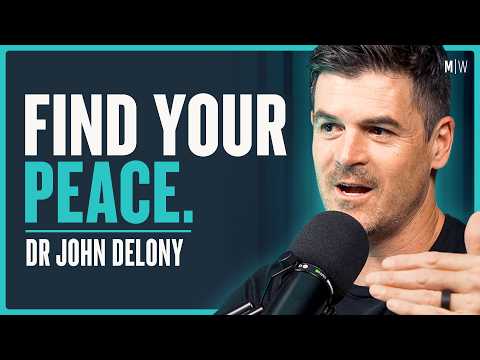
Link: https://youtu.be/bqsNycAhuaw
Short Summary
Okay, here's the breakdown of the YouTube video transcript you provided:
Number One Most Important Action Item/Takeaway:
If you're in a committed relationship (and especially if married), strive for radical transparency and openness with your partner regarding your digital life (phones, emails, social media, etc.), because secrets fuel pathology and openness creates a guardrail against destructive behavior.
Executive Summary:
The video discusses the importance of honesty and transparency in relationships, contrasting privacy with secrecy. It argues that sharing access to digital devices and accounts can act as a guardrail, fostering trust and safety. The speakers emphasized that secrets are the fuel that feed relationship problems, so putting everything on the table is the best defense.
Key Quotes
Okay, here are 5 direct quotes from the provided YouTube transcript that I found particularly insightful:
- "Every major pathology ends up secrets fuel that right it's gasoline for pathology."
- "One interesting thing is the openness to give your partner your devices and email accounts and messages and social media and all that sort of stuff actually acts a little bit like a a guard rail for your behavior as well."
- "I want to have the benefits of a fully anchored partner, but I don't want to put all of myself on the table. I don't want to put both feet in that boat. And you can't have one without the other."
- "I don't think you can have a relationship without safety and without trust. But I think safety says I can say what I want, put that on the table and you'll be curious about it. You won't hurt me with it."
- "That's fantastic, huh? >> You think? >> Yeah. They That's the Love Island, right? Those who can't like just go, you all stay there. >> Yeah. >> Yeah. You know I was on Love Island, right? >> No. >> No, you weren't really."
I hope this is helpful!
Detailed Summary
Okay, here's a detailed summary of the YouTube video transcript, presented in bullet points:
Key Topic: Transparency, Honesty, Safety, and Trust in Relationships
- The initial premise is that spouses should have access to each other's phones, email, and social media accounts. This is framed as essential for a trusting and safe relationship.
- The video explores the difference between privacy and secrecy, arguing that they are often conflated. Secrecy is seen as fuel for pathology.
- The speakers contend that withholding information or access creates dissonance and suggests something is being hidden.
- Openness and transparency can act as "guard rails" for behavior, discouraging actions that could damage the relationship.
- The speakers discuss the concept of being "all in" in a relationship, meaning being fully seen and known, even with the risk of vulnerability.
- Halfway in relationships, where one partner suggests "opening things up" is strongly correlated with pre-existing infidelity by the partner raising the topic.
- There's a discussion of the importance of finding partners who are either both "all in" or both "not all in" in relationships, to avoid conflict.
Safety and Vulnerability
- Safety in a relationship means feeling able to express oneself without fear of being weaponized against. It requires honesty and trust.
- Safety is practiced and built incrementally through small acts of reliability and consideration.
- Unspoken expectations lead to premeditated resentment.
- Compatibility relates to whether what one person needs to feel safe aligns with what the other is prepared to do. It requires choice and communication.
- Blaming the partner for discomfort is discouraged; instead, individuals should own their feelings and needs.
Solving for Peace and Avoiding Complexity
- The conversation touches on "solving for peace" in various aspects of life (relationships, finances, career).
- The speaker describes solving for peace financially, even if others criticize the choice as not being mathematically optimal.
- Complexity is identified as a significant stressor. Simplifying life and relationships is crucial.
- Lack of margin (financial, relational, etc.) contributes to anxiety.
- There is an allergy to boredom.
- The discussion highlights the importance of building margin in relationships to avoid anxiety and stress.
Men's and Women's Perspectives in Relationships
- A central issue men bring up is a sense of not being liked or good enough. They internalize messages of inadequacy.
- It's noted that many men want to be a net positive influence.
- Women call about the question on why men don't change and how they've done everything they "should" but still don't feel complete. This suggests societal expectations are not fulfilling.
- Women also question if all men are unfaithful or disengaged. The discussion recognizes a recursive problem where male disengagement leads to more women feeling this way.
- The speakers suggest women can foster a sense of worth in their partners by practicing admiration and appreciation.
- Honesty begins by the relationship partner truly seeing each other, beyond the lens of their own life.
Infidelity (Broader Definition)
- Infidelity is defined more broadly than just sexual intercourse. It includes emotional and financial infidelity, as well as cheating with money, a golf course, or work.
- Infidelity is viewed as a means of escaping co-created life in search of aliveness outside the relationship.
- Financial infidelity includes hiding money and controlling a partner through finances.
Forgiveness and Honesty
- In cases of infidelity, it is paramount that the offended partner first forgives themselves.
- Infidelity is sometimes retroactively manufactured by partners as the new standard for the relationship when they are already engaging in unfaithful activities.
New Parenthood
- The best parenting advice: "Don't try to make a happy kid happier." Let kids explore and get messy.
- Relationships change after children, and couples need to build a new awesome kind of marriage.
Making Decisions: Gut vs. Head
- The speaker acknowledges his own tendency to make emotional decisions and thus outsources important decisions to trusted friends or advisors.
Grief and Loss
- Our culture lacks a good understanding of grief. We try to "solve" sadness instead of being present with it. Grief demands a witness.
- When facing a loss, just showing up and being present is most important.
Smartphone Use
- There are very few helpful digital archetypes available to model in the 21st century.
Financial Success
- Writing a letter to one's self, for 10 years from now, is a helpful process for self-evaluation.
Personal Fulfillment
- Overcommitting to work and career will sacrifice personal relationships. There needs to be balance.
- Finding enoughness is a big part of happiness.
- The world does not reward nervous systems that are in sync.
Long-Term Relationships
- The two most important qualities of a long-term relationship are willingness to tell the truth and curiosity about the partner.
- If both parties have an established pattern of open honesty from the beginning, and have found an effective way to communicate with their partner about sensitive topics from a place of empathy and vulnerability, then the long-term likelihood of that relationship's success will improve exponentially.
I hope this helps!