[@ChrisWillx] It’s time to talk about my health.
![[@ChrisWillx] Summarizer](https://summaries.pages.dev/img/logo.webp)
Link: https://youtu.be/IU4D_kjty2k
Short Summary
Following a successful year with significant subscriber growth, the speaker details their challenging journey after being diagnosed with Lyme disease and multiple other infections, including mold toxicity from their home. Despite rigorous treatments and lifestyle changes, progress has been slow, highlighting the complexities of chronic illness, the emotional toll of dashed hopes, and the immense effort required to navigate the healthcare system.
Key Quotes
Here are 5 direct quotes that represent particularly valuable insights from the transcript:
-
"It's one of these unique situations in life where working harder does not fix it. And that was an unbelievably difficult pill to swallow." (This highlights the frustration and unique nature of chronic illness, where the typical "work harder" mentality doesn't apply.)
-
"Feeling like you're not in control of your health, like you don't get to say how you function is a special type of helplessness. Doing all of the things and not making progress is very disheartening." (This captures the emotional toll of chronic illness, the feeling of powerlessness and the impact of failed treatments.)
-
"There is this odd sense of, oh, you deserve this. If only you'd tried harder, been better. be more diligent or whatever." (This touches on the internal criticism and blame often associated with chronic illness, where individuals may feel they are somehow at fault for their condition.)
-
"If you have the most perfect health in the world and you're watching this right now and I ran the battery of tests that were done on me on you, you would have loads of stuff in the red, but you feel fine. So, you don't need to fix them. But if you don't feel fine, you have to fix every single one before you actually get to the culprit." (This highlights the individualized, personal basis on which treatment decisions need to be based.)
-
"The worst thing of like everything, all the treatments, the money, the time, the demotivation, all of that, the worst thing is disappointment. It is the feeling of hope being dashed." (This emphasizes the emotional burden of living with a condition where solutions can be hard to find.)
Detailed Summary
Okay, here's a detailed summary of the YouTube video transcript, broken down into bullet points, focusing on key topics, arguments, and information:
I. Introduction & Initial Symptoms:
- The video documents the host, Chris's, year-long journey dealing with complex health issues.
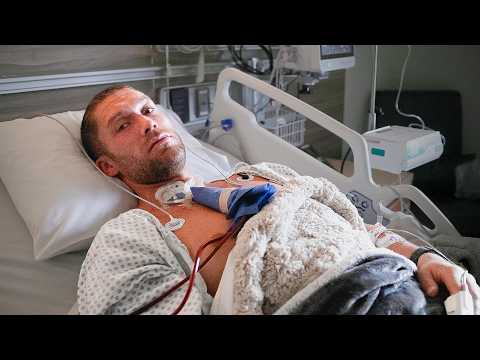
- He experienced a decline in energy, cognitive function (brain fog), and mood, despite professional success with his YouTube channel.
- He initially dismissed his symptoms and pushed himself, but eventually sought medical help.
- He began vlogging the process around the time of his Lyme disease diagnosis.
II. Diagnoses & Initial Treatments:
- Multiple Diagnoses: Chris tested positive for Lyme disease, SIBO, H. pylori, roundworm, and liver fluke.
- Initial Reaction: He was shocked but determined to track his journey and find solutions.
- Conventional and Biohacking Approaches: He initially pursued both conventional medicine and extensive biohacking treatments.
- Biohacking Treatments: These included:
- IV therapies (phosphatidylcholine, glutathione, high-dose vitamin C)
- Ozone therapy (blood removal, ozone injection, re-infusion)
- Red light therapy
- Peptides
III. Mold Exposure & Its Impact:
- Discovery of Mold: A toxin test revealed severe environmental mold contamination in his house.
- Physiological Effects: Mold exposure caused redness, cognitive impairment, and immune system stress.
- Mold Illness Mechanisms: Mold spores can colonize the body, causing inflammation, particularly in the central nervous system and brain nuclei.
- Relocation and Remediation: Chris had to move to a hotel for four months while dealing with the mold issue. Remediation is described as difficult and often requires discarding possessions.
- Cleaning Protocol: Every movable item had to be cleaned multiple times.
- Landlord Assistance: His landlord suspended the rent on the mold-infested property.
IV. Complexity of Treatment & Symptoms:
- Intense and Regimented Protocol: The mold protocol, combined with other treatments (antibiotics, supplements, diet), became extremely time-consuming and restrictive.
- Layered Testing and Protocols: The video details the complexity of testing, involving precise timing, dietary restrictions, and supplement schedules.
- Continued Symptoms: Despite the extensive treatments, Chris didn't initially feel better and actually felt worse.
- Cognitive Issues: Memory problems, difficulty thinking clearly, and word recall issues were significant and worsened over time.
- Physical Symptoms: Constant fatigue, ear ringing (tinnitus), and other physical symptoms persisted.
- Emotional Dysregulation: Chris experienced agitation at normally pleasurable stimuli like music, silence, and interacting with others. He also struggled to feel joy or gratitude.
- A Specific Example: He even forgot how to tie his shoes, highlighting the severity of his cognitive decline.
V. Emotional & Psychological Toll:
- Loss of Control: The inability to control his health and cognitive function led to feelings of helplessness and frustration.
- Impact on Performance: The cognitive issues impacted his ability to perform at his best for his podcast, causing him significant stress and self-criticism.
- Fear of Loss: He feared losing his cognitive abilities, which he considered central to his identity and success.
- Disappointment & Despair: Doing everything he could and not making progress led to disappointment and questioning whether he would ever recover.
- Internal Struggle: He grapples with a tendency to blame himself ("I deserve this"), but also a persistent inner drive to fight back ("Fuck you" - a small part of him refusing to give up).
- Acceptance vs. Fighting: The video explores the struggle between accepting his new, limited reality and continuing to fight for improvement.
VI. Mexico Treatment & Ongoing Journey:
- Searching for a "Silver Bullet": Chris sought a blood-cleaning treatment in Mexico (intrajugular line, not intravenous).
- High Hopes: He hoped this treatment would eliminate mold, EBV, microbes, and spike proteins from his blood.
- Complex Illness as a War Zone: The video describes complex illness as a "war zone" inside the body, making it difficult to identify the root cause.
- Challenges of Diagnosis & Treatment: It highlights the expense, time commitment, and specialized knowledge required to address complex illnesses.
- Lack of Progress & Maintaining Hope: Despite the Mexico treatment, tangible progress was limited, but Chris continues to seek answers and refuses to give up.
- Treatment Access Inequity: Chris acknowledges that his access to specialized care and treatments is not available to most people.
- Call for Change: He calls for cheaper, easier, and more accessible treatments for complex illnesses.
VII. Key Arguments & Themes:
- Invisible Suffering: The video emphasizes that people can be struggling deeply with health issues despite appearing outwardly successful.
- The Complexity of Chronic Illness: It highlights the multi-faceted nature of chronic illnesses and the challenges of diagnosis and treatment.
- The Importance of Recognizing Physiological Issues: It stresses the need to consider physiological causes for symptoms often attributed to mental health.
- The Need for Better Treatment Options: It argues that current treatment options for complex illnesses are inadequate and inaccessible.
- Resilience & Hope: Despite the challenges, the video conveys a message of resilience and hope, emphasizing the importance of not giving up and continuing to seek answers.
- Personal vs. Professional Victory: Facing internal battle and just managing to show up can be a personal win.
VIII. Ending Notes
- Chris emphasizes that his worst experiences from the entire journey were the instances where hope was dashed.
- Chris is going to continue to try to fix the problem.