[@ChrisWillx] The Period Brain: How Hormones Change Behaviour - Dr Sarah Hill
![[@ChrisWillx] Summarizer](https://summaries.pages.dev/img/logo.webp)
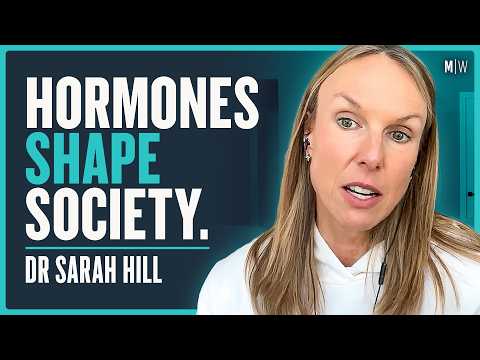
Link: https://youtu.be/83YP1tpOWvk
Short Summary
Number One Takeaway:
Women have been mishandled by science and medicine due to a lack of understanding of the cyclical hormonal changes they experience and their impact on their physical and mental well-being.
Executive Summary:
The speaker discusses the significant hormonal shifts women experience throughout their menstrual cycle and how these changes influence brain function, behavior, and overall health. She argues that the medical and scientific communities have historically overlooked these cyclical changes, leading to misdiagnosis, ineffective treatments, and a general misunderstanding of women's health. The video highlights the need for a more nuanced approach that acknowledges and addresses the unique biological rhythms of women.
Key Quotes
Okay, here are 4 quotes that I found particularly insightful from the YouTube transcript:
-
"From an evolutionary perspective, like it doesn't make a lot of sense for women like to all have a disorder, right? It just doesn't make any sense because generally if there's some sort of a trait and it's causing problems, it'll get selected out of the population." (This is a foundational idea that drives the speaker's research.)
-
"…the way that women have been handled by science and by medicine is that we're just like small less hairy versions of men." (This is a very concise and impactful description of a pervasive problem in research.)
-
"When you're in the estrogenic phase of the cycle, it's like women can tell clear differences between very fine-tuned differences in testosterone levels based on scent and also based on physical appearance of facial features." (This highlights a surprising level of sensitivity and discrimination during one phase of the cycle.)
-
“The results of this is that women have been absolutely mishandled by science and by medicine. And one of the results of that is PMS.” (This is a strong and direct condemnation of current practices, linking it to a very common experience.)
Detailed Summary
Here's a detailed summary of the YouTube video transcript in bullet points, excluding advertisements:
Key Topics and Arguments:
- Evolutionary Perspective on the Menstrual Cycle: The video explores the biological and evolutionary reasons behind the changes in women's bodies and brains across the menstrual cycle. The main argument is that these changes are not simply disorders, but rather functional adaptations for reproduction.
- Two Main Phases of the Cycle:
- First Half (Follicular Phase): Dominated by estrogen, this phase focuses on attracting partners, increasing sexual desire, and preparing for conception.
- Second Half (Luteal Phase): Dominated by progesterone, this phase focuses on implantation and preparing the body for pregnancy, even if pregnancy is not desired or possible.
- Progesterone's Role and Misunderstanding: Emphasizes the underappreciated role of progesterone compared to estrogen. The video argues that progesterone-driven changes in the second half of the cycle are functional, not simply negative side effects.
- Impact of Ignoring the Cycle: The video critiques the medical and scientific fields for treating women as "small, less hairy versions of men" and ignoring the impact of hormonal fluctuations on health, behavior, and disease. This has led to mismanagement of women's health, including PMS.
Detailed Information about the Follicular Phase:
- Starts with menstruation (day 1).
- Estrogen levels rise, leading to:
- Increased energy and sexual desire.
- Heightened attraction to men.
- Improved ability to distinguish between high and low-quality partners based on scent and physical appearance.
- Women's brains become more sensitive to the environment.
Detailed Information about the Luteal Phase:
- Occurs after ovulation (around day 14).
- Progesterone levels rise, leading to:
- Increased emotional sensitivity and heightened threat detection (a more sensitive "smoke detector").
- Sleepiness and decreased motivation to go out.
- Increased hunger and cravings due to increased basal metabolic rate (women need more calories in this phase).
- Shift from pro-inflammatory to anti-inflammatory immune response, affecting drug metabolism and symptom experience for chronic conditions (e.g., asthma, ADHD).
- Motivation for outward activities reduces so women become more introspective and want to stay home in a safe place
Adaptiveness of Luteal Phase Changes:
- Prepares the body for potential pregnancy by:
- Promoting energy conservation.
- Heightening awareness of threats to protect the potential pregnancy.
- Orienting women towards home and safety.
- Greater social sensitivity to ensure stability of relationships in order to secure support of villiage.
Partner Selection and Ovulatory Shift Hypothesis:
- During high fertility (estrogenic phase), women show heightened sensitivity to "good genes" markers like testosterone levels in men.
- Testosterone can signal a man's robust immune system.
- Strippers, who are naturally cycling, earn more money during their high-fertility phase.
- The video acknowledges the "ovulatory shift hypothesis" (that women's partner preferences change across the cycle) is debated, but suggests longitudinal studies within individuals provide the strongest evidence for it.
- Studies indicate that both the women and the men are picking up scent cues related to mate quality.
Sex and Pair Bonding in the Luteal Phase:
- While sexual desire decreases in this phase, sex becomes more focused on pair bonding and connection with the partner.
- This is important for securing the partner's investment and support during a potential pregnancy.
- Women with greater relational insecurity (feeling like they care for their partner more than their partner cares for them) tend to have more sex in the luteal phase.
- This also shows that women, due to suppressed ovulation, do not release eggs in a competitive manner to ward off other possible inseminations and allow the partner to continue their pair bonding and paternal role.
PMS and the Disconnect:
- PMS is not simply an inevitable consequence of hormonal changes.
- Part of the problem is a lack of awareness and understanding of these changes.
- Ignoring the cycle and living a "one-size-fits-all" lifestyle can worsen PMS symptoms.
Hormonal Birth Control and its Effects:
- The pill flattens hormonal cycles, eliminating the natural fluctuations of estrogen and progesterone.
- It primarily mimics the progesterone-dominant phase, creating a hormonal "deja vu."
- Progestins in birth control are not the same as natural progesterone.
- They can reduce levels of allopregnanolone, a neurosteroid that promotes mood stability, potentially contributing to mood disorders.
- The video shows that that use of contraception can have mental health implications.
- Birth control is linked to lower relationship satisfaction, decreased attraction to partners and lower sexual desire.
- Being on the pill can mask an "authentic part" of oneself.
- There is a possible concern that contraception is just a big long unexamined experiment in mental health.
Impacts of Flattened cycles:
- Lack of proper mate detection
- Impact on brain plasticity
- Decrease sexual activity
Testosterone, Birth Control, and Male Hormone Levels:
- There is a potential "missing X factor" in the decline of men's testosterone levels.
- One possibility is that global suppression of female fertility signaling (due to birth control use) impacts men's testosterone production.
- Another factor could be increased male parental investment, as men who spend more time caregiving tend to have lower testosterone.
Women in the Workforce and Burnout:
- The traditional 9-to-5 work schedule does not account for women's hormonal cycles.
- Women are possibly more susceptible to burnout because they do not adapt across their menstrual cycle.
Need for a New Perspective on Hormones and Biology:
- The historical bias of science and medicine toward male bodies has created a "mass delusion" that women's hormones don't matter.
- Women have been mismanaged in the areas of science, health and in society because of this misconception that women were inferior, broken people.
Practical Advice for Women:
- Track your cycle and pay attention to how you feel during different phases.
- Understand your personal relationship with your hormones.
- Communicate your needs to the people around you.
- Adapt your lifestyle to better support your body's changing needs.
Conclusion:
- The video emphasizes the importance of understanding women's biology and hormones.
- Embracing the reality of hormonal changes can empower women to take better care of themselves and live more fulfilling lives.