[@ChrisWillx] What Does The Future Of The Culture War Look Like? - Naval Ravikant
![[@ChrisWillx] Summarizer](https://summaries.pages.dev/img/logo.webp)
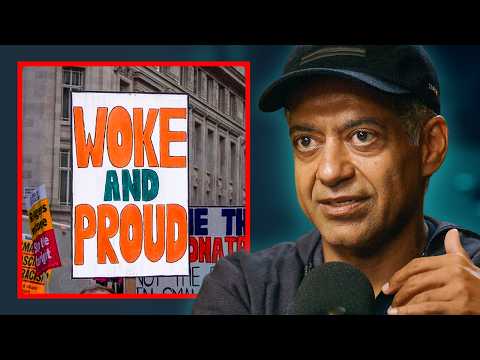
Link: https://youtu.be/N291KE6rpcU
Short Summary
Number One Action Item/Takeaway:
Focus your attention and energy on things that are local and/or things you can affect directly, as caring about everything in the news will lead to unhappiness and a feeling of being out of control.
Executive Summary:
The discussion explores the ongoing cultural battle between collectivist/Marxist ideologies and individualist/capitalist ones, suggesting a pendulum swing between the two. The modern era amplifies individual power but also exacerbates inequality, potentially destabilizing democratic structures. The key takeaway is to consciously limit exposure to overwhelming and uncontrollable global issues, instead focusing on local and actionable concerns to maintain well-being and agency.
Key Quotes
Here are five quotes from the transcript that offer particularly valuable insights:
-
"It's not the right to vote that gives you power, it's power that gives you the right to vote. So we've confused the two."
-
"All of nature, all of society, all of capitalism, all of human endeavors are underpinned by physical violence. And that is very hard truth to swallow and hard to get away from. "
-
"Desire is a contract to be unhappy until you get what you want."
-
"You're probably better off only caring about things that are local or things that you can affect. So, if you really care about something that's in the news, then by all means care about it, but make a difference. Go do something about it."
-
"The great men of history are becoming greater."
Detailed Summary
Here's a detailed summary of the YouTube video transcript, focusing on the key arguments and information discussed, excluding sponsor announcements and other advertisement:
-
The State of the Culture War:
- The speaker acknowledges that the "left" had won earlier rounds of the culture war by taking over institutions.
- They believe the fight is now more balanced due to individuals like Elon Musk rising up and resisting the "left's" dominance.
-
Great Men vs. Great Forces in History:
- Two contrasting theories of history are presented: the "great man" theory (individuals like Einstein, Tesla, Genghis Khan shape history) and the "great forces" theory (demographics, geography determine history, individuals are interchangeable).
- The speaker argues that leftist institutions have favored the "great forces" theory, but the rise of figures like Trump and Musk demonstrates the continued influence of individuals.
-
The Collectivist vs. Individualist Pendulum:
- Humanity is presented as being constantly pulled between collectivist and individualist tendencies.
- We are neither completely individualistic (no man is an island) nor a hive mind (like ants).
- This manifests in economics as a battle between Marxism (collectivism, equality) and Capitalism (individualism, free markets).
-
Modern Flavor: Increased Individual Leverage:
- The speaker argues the individual is gaining leverage in the modern era. People like Elon Musk have access to unprecedented resources (engineering talent, capital, media reach). The "great men of history" are becoming "greater".
- However, this increased individual leverage also exacerbates inequality.
-
The Wealth Game vs. The Status Game:
- While the "wealth game" sees overall improvement, the "status game" creates more "losers." People are relatively worse off despite potentially being objectively better off.
- As relative creatures, there are more losers than winners and democracy will be used to try to vote down those winners.
-
The Right to Vote vs. Power:
- The speaker posits that "it's not the right to vote that gives you power, it's power that gives you the right to vote."
- Voting initially arose as a way for powerful groups to divide power peacefully.
- As voting rights expanded to those without power, it led to a situation where those lacking power can use the state to control those with it. The speaker offers the example of those without guns voting to disarm those who do have guns.
- This can lead to instability, as those with actual physical power may eventually resist being controlled by those without it.
-
The Role of Physical Violence:
- All of nature and society are underpinned by physical violence. Those who do not fight, do not survive.
- Giving up physical power while expecting to exercise political power will fail.
- Communist revolutions, while aiming for equality, inevitably devolve into rule by "thugs" because wealth distribution is based on power and influence, not merit.
- The challenge is to keep the thugs with the guns happy while allocating based on merit.
-
The Importance of Not Caring About the News:
- The speaker notes that the human brain is not evolved to handle a constant stream of global emergencies.
- It's better to focus on local issues or those you can affect.
- Caring about things you cannot control (e.g., national politics) can lead to unhappiness and a loss of control over one's own mental state.
- The speaker uses the example of "Trump Derangement Syndrome" to illustrate how external political factors can drive people insane.