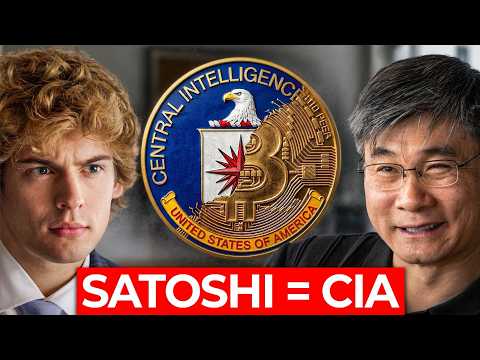
[@jackneel] "They Created Bitcoin!" Professor Jiang Exposes Why Every Technology Needs A "Front Man"│Jack Neel
Link: https://youtu.be/RIL8PsSNTZg
Duration: 115 min
Short Summary
Professor Jeang, a Yale-educated YouTuber teaching in China, presents sweeping predictions of civilizational collapse by 2060 alongside controversial geopolitical theories including the "Greater Israel Project," COVID origins conspiracy, and AI surveillance states. The interview traces his transformation from a depressed Ivy League graduate struggling with failure to a 2 million-subscriber alternative media creator, while covering hermetic philosophy, historical theology, blockchain origins, and longevity theories.
Key Quotes
- "mind is everything. The universe is conscious and how it's conscious is through vibrations. Okay. So the the uh universe is energetic and it uh it's vibrates and so vibrations are information right so that's consciousness." (00:04:09)
- "Science prides itself on being above religion, on being entirely focused on the truth. But truth can only be arrived at through debate, through questioning, through exploration. How much debate happened during the COVID epidemic? None. If you try to debate this, they shut you down." (00:07:44)
- "The second big lie is that we are individually powerless. We don't matter, right? So there's this war going on in Iran. Well, we can't affect its outcome because we're not warriors. We don't have an army. So let's just sit back and watch only fans or play video games or gamble how the world will will turn out. But as I say, but but as I said before, we're all a reflection of the universe and what we do matters." (00:54:40)
- "The Japanese have been the most resilient people in human history. Um, I mean the things they've been able to accomplish as a very small nation are just incredible." (00:02:43)
Detailed Summary
ThinkingBlock(signature='da39fc9e00b0038a5dc55da9ac01c7baf2ed9af491311e57e166fa880bb3cef5', thinking="The user wants me to write a final detailed markdown summary for a long-form transcript. Let me analyze the requirements:\n\n1. Markdown only\n2. At least 10 section headings using '##'\n3. Each section should start with 1-2 narrative sentences\n4. Include at least 30 bullets total across the document\n5. Bullets must focus on substantive claims, disagreements, mechanisms, examples, chronology, names, numbers, and outcomes\n6. Avoid sponsor copy, banter, repeated praise, meta commentary, and filler unless substantively relevant\n7. Prefer concrete details over generic abstraction\n\nThe transcript is about Professor Jeang (also called Jang), a Yale-educated YouTuber teaching in China. I need to synthesize the structured summary and section digests provided to create a comprehensive markdown summary.\n\nLet me organize the content into sections:\n\n1. Episode Overview\n2. Environmental and Civilization Predictions\n3. Geopolitical Forecasts\n4. The Greater Israel Project and Pax Judea Theory\n5. COVID Origins and Vaccine Controversy\n6. Historical, Theological, and Philosophical Analysis\n7. Historical Geopolitics: US/UK and Islamic Extremism\n8. Technology Origins and Blockchain Theory\n9. AI, Longevity, and Elites\n10. China and AI Surveillance\n11. Personal Transformation Journey\n12. YouTube Growth Strategy and Work\n13. Literary Philosophy and Book Recommendations\n14. Career and Creative Output\n15. Experience with Gay Talese\n\nLet me make sure I have:\n- At least 10 section headings (I have 15)\n- Each section starts with 1-2 narrative sentences\n- At least 30 bullets total (I'll aim for 50+ to be safe)\n- Focus on substantive claims, concrete details, names, numbers, examples\n\nLet me write this out:\n", type='thinking')
Episode Summary: Professor Jeang — Civilizational Collapse, Conspiracies, and Alternative Media
Episode Overview
This podcast features Professor Jeang (also referenced as Jang), a Yale-educated YouTuber and teacher in China who has built an alternative media platform with approximately 2 million subscribers on his "Predictive History" channel. The interview covers his sweeping geopolitical predictions, controversial conspiracy theories, personal transformation journey, and philosophical worldview, spanning topics from environmental catastrophe to hermetic philosophy to longevity science.
Environmental and Civilization Predictions
- Jeang predicts environmental catastrophe by 2045 triggered by a geomagnetic excursion that would move the poles, weaken Earth's magnetic field, and expose the planet to solar EMP waves capable of destroying the digital economy—internet, telecommunications, cars, and power plants
- He describes cascading failures in sanitation and clean water systems, predicting worldwide population collapse, economic decline, and moral decay by 2060, with new dark ages lasting thousands of years
- Professor Jeang references Isaac Newton, who calculated the world would end in 2060, as validation for his timeline
- He draws analogies to the Bronze Age collapse, suggesting modern civilization faces similar systemic vulnerabilities
- The predicted collapse would span from 2045 environmental catastrophe to 2060 civilizational endpoint, creating a 15-year window of accelerating chaos
Geopolitical Forecasts: Iran War and Great Power Competition
- Jeang predicted Trump winning the 2016 election, America's invasion of Venezuela, and war between Iran and the US, expecting the US to be "incompetent, overextend into Iran, get bogged down, and collapse"
- He claims Iran proved resilient and is "dominating the war, controlling the escalation ladder strategically," and predicts Persia/Iran could become a counterweight to Pax Judea, forming a trade block with China and Russia
- He references theological calculations interpreting Gog and Magog as Persia and Russia in end-times scenarios
- He claims some Americans are "rooting for the Iranians" against US foreign policy objectives
- He describes Germany's military situation in Ukraine as potential humiliation that may help Germany rediscover its national identity
- The podcast was recorded before Russia's 2022 invasion of Ukraine, yet Jeang had predicted Putin would invade despite friends dismissing it as too dangerous
The Greater Israel Project and Pax Judea Theory
- Jeang describes the "Greater Israel Project" as extending Israel's territory from the Nile in Egypt to the Euphrates in Iraq, including parts of Turkey and Saudi Arabia, with Jerusalem as capital and the Third Temple rebuilt for the Messiah's arrival
- "Pax Judea" is described as transnational capital exploiting this project by financing it and building an AI surveillance state, hiring mercenaries for military operations
- He claims the project involves importing Indian, Chinese, and Filipino workers as a slave labor force
- He notes the Middle East has unlimited oil and energy, making it ideal for data centers to power AI surveillance infrastructure
- He uses Jeffrey Epstein as an example of transnational elite behavior, stating such individuals have no loyalty and position themselves to benefit regardless of political winds
- He claims billionaires like Peter Thiel play "both sides" of conflicts for personal gain
- The theory posits Jerusalem as the capital of a reconstituted biblical empire spanning Northeast Africa and the Middle East
COVID Origins and Vaccine Controversy
- Professor Jeang claims COVID-19 originated from gain of function research supported by the US military, subcontracted to a Chinese research facility, arguing viruses in nature do not mutate as fast as COVID-19 did
- He suggests rapid mutation contradicts natural survival strategy since keeping hosts alive benefits viral propagation
- He references Obama's ban on gain of function research causing the US military to subcontract such research to China as evidence of deliberate circumvention
- He describes 80% of the US population taking the COVID vaccine while only 20% questioned the logic, arguing "science functioned like a religion during COVID, with debate shut down and people who questioned being removed from society"
- He claims the COVID mRNA vaccine was introduced in 8-9 months despite viruses mutating rapidly, whereas typical vaccine development takes about 10 years
- He became upset during COVID in 2020 watching how the world "shut off its brain" regarding vaccines, following whatever scientists said without questioning
- The gain-of-function research ban under Obama is presented as the proximate cause of the US-China research arrangement
Historical, Theological, and Philosophical Analysis
- Professor Jeang presents hermetic philosophy, describing the universe as conscious through vibrations, with the "as above, so below" principle stating the universe is fractal where each aspect contains the entire universe
- He analyzes the Greeks as polytheistic and the most creative people ever, accomplishing foundational work for modern Western civilization within approximately 100 years through deep introspection driven by competing gods
- He contrasts monotheism with polytheism, arguing monotheism compels "frenetic anxious action" leading to both tremendous achievements (skyscrapers, airplanes) and tremendous suffering
- He references the Gospel of Thomas as potentially the earliest record of Jesus's sayings, predating the Gospel of Mark (approximately 70 AD), describing a Gnostic worldview asserting humans are divine sparks seeking enlightenment
- He claims Jesus was probably crucified for providing truth that threatened the Roman strict hierarchy, telling slaves they were divine souls and making them less productive
- The hermetic worldview presented treats consciousness as fundamental to reality rather than matter
Historical Geopolitics: US/UK and Islamic Extremism
- Professor Jeang claims that in the 1950s, Americans and British encouraged Wahhabiism throughout Saudi Arabia and the Islamic world (which later became al-Qaeda) for three reasons: fighting the Soviet Union through sabotage, controlling Middle Eastern oil, and countering nationalist, pan-Arab, and socialist movements
- He notes Muslims constituted approximately 20-30% of the Soviet Union's population, concentrated in the south, making them a significant Cold War target for destabilization
- He claims Iran in the 1950s democratically elected a leader who wanted to nationalize the oil industry rather than give it to the British, representing a nationalist movement that countered Anglo-American empire
- The CIA-backed overthrow of Iran's democratic government is presented as an early example of Western intervention to protect oil interests
- Wahhabi Islam is identified as the ideological progenitor of modern jihadist movements including al-Qaeda
Technology Origins and Blockchain Theory
- Professor Jeang theorizes the same people who created the internet, GPS, DARPA, NSA, and CIA likely created blockchain technology, arguing "Satoshi Nakamoto" translates to "central intelligence" in Japanese
- He claims the blockchain creation story makes no sense as a free public release, suggesting covert government involvement
- He claims the CIA would benefit from blockchain through surveillance capabilities and as a mechanism to finance black operations and drug trafficking
- He discusses how the Pentagon invested in the internet as a surveillance tool, wanting to promote computers as a way to control people, but faced a credibility problem after Vietnam, Watergate, and assassinations of MLK, JFK, and RFK
- He notes the government's strategy was to open-source technology "to nerds, bypassing public distrust of government"
- He mentions the Winklevoss twins invested millions in Bitcoin and are now among the largest individual owners
- The internet's ARPANET origins are presented as surveillance infrastructure rather than communication tool
AI, Longevity, and Elites
- Professor Jeang presents a vision of humanity forking by 2060: some using AI to create a god-like system for control, others resisting as a "perversion of humanity"
- He claims some powerful people will try to use AI to create a god that people believe is real, making humanity completely obedient to "end history"
- He argues elites are obsessed with living forever, referencing Peter Thiel charging $100,000 per year for longevity consultation and Brian Johnson attempting to live as long as possible
- He suggests the secret to eternal life is the mind not the body, implying consciousness transfer or digital immortality
- He discusses bloodline conspiracy theories, claiming 13 families trace themselves back to the Roman Empire and Jeffrey Epstein was of the Sapine Frankus bloodline, though he explicitly notes this is a "conspiracy theory with no evidence"
- The 2060 timeline connects his AI governance vision with the civilizational collapse predicted elsewhere in the interview
China's AI Surveillance System
- Professor Jeang describes Chinese citizens with Chinese ID being part of the AI surveillance grid where everything they say, do, and payment information is monitored, stored online, and used to construct social network profiles
- He notes China has no desire to "conquer the world" because it would be "a pain in the ass," explaining China's system is designed to control people internally, not externally
- He describes himself as operating in a "gray zone" as a foreigner teaching English at a private school in China—he is tolerated but doesn't matter in the system
- He chooses freedom and avoids lucrative opportunities knowing public social media use, speeches, or media engagement would make him "a problem in the system"
- The surveillance infrastructure integrates financial transactions, communications, and behavioral data into comprehensive social profiles
Personal Transformation Journey
- Professor Jeang describes attending Yale, feeling like an "imposter" and alienated because he was not wealthy, developing a naive worldview believing the world was a meritocracy
- After graduating, he experienced "failure after failure" as a journalist and documentary filmmaker, leading to years of deep depression and anxiety
- He wrote an article titled "Three Things Yale Didn't Teach Me" identifying three fundamental problems: overvaluing IQ, viewing the world as zero-sum competition, and seeing failure as a personal deficiency rather than a learning opportunity
- He redesigned his education by attending cooking school, Brazilian jiu-jitsu, stand-up comedy, rock climbing, skydiving, and singing lessons
- He describes being the worst student at cooking school, being "beaten up daily for a year" in BJJ, and spending $10,000 on singing lessons despite being tonedeaf
- He met his wife 10 years ago while helping a college program; when they met, he was broke, unemployed, and had no house, but she took the initiative to date him
- They now have three children together
- He worked for the United Nations in 2006, describing it as having a "cushy lifestyle" with six-figure salary for minimal work, but walked away because he found it "a meaningless existence"
- He hit rock bottom before meeting his wife—he was unemployed, had no money after spending it on skydiving, and had no house while working for rent
YouTube Growth Strategy and Work
- Professor Jeang developed a strategy to build his YouTube channel by making predictions and hoping they would prove correct, believing this would distinguish him enough to appear on Joe Rogan and Tucker Carlson's shows
- He predicted Joe Biden would be the 2020 Democratic nominee and Trump would win in 2020, while his Yale and Harvard-educated friends believed the opposite
- He was influenced by alternative media figures including Joe Rogan, Jimmy Dore, Bret and Eric Weinstein, and Tucker Carlson
- His YouTube channel "Predictive History" covers geopolitics through a structural lens, and his Substack is predictivehistory.substack.com where he writes about current events in a larger structural context
- In 2008, he built China's first public school international program to send Chinese kids to America for college, with many people in that field becoming millionaires, but he walked away after a couple years
- He currently has approximately 2 million YouTube followers and states he has ignited a spark in people worldwide, including recognition in Hong Kong from diverse individuals such as hotel staff
- The prediction strategy is presented as deliberate platform-building rather than organic content creation
Literary Philosophy and Book Recommendations
- Professor Jang spent six months watching YouTube videos about Dante's Divine Comedy while reading it daily, feeling confused and frustrated before experiencing a breakthrough realization about love as the work's central theme
- He describes the universe as divine, alive, conscious, and believes that with faith and love in one's heart, it will guide you to light
- He recommends Dante's Divine Comedy as the greatest book ever written, calling it literally a word from God and stating Dante was channeling the universe when writing it
- As an accessible alternative, he recommends Homer's Iliad, noting that Chinese high school students with little Western cultural exposure and limited English proficiency still love it years later
- He teaches great books including Homer, Dante, Plato, and Kant, having had very little prior exposure to these works and learning them through YouTube videos and self-study
- The Divine Comedy is presented as a guide to understanding love as the fundamental organizing principle of existence
Experience with Gay Talese
- In autumn 1999 in Beijing, Professor Jang served as assistant and translator for Gay Talese for six months; Talese, then 94, was considered among the last great living American writers
- Gay Talese's book "Thy Neighbor's Wife" (1969) explored promiscuity in America; to research it, Talese participated in sex orgies in California, became a brothel manager in New York, and joined sex cults
- Gay Talese married Nan Talese, a famous Random House editor, and their marriage survived despite his extramarital research activities being revealed through New York Times articles in the 1970s
- The best advice Professor Jang received from Gay Talese was "don't chase," which still resonates with him today
- The mentorship lasted six months in Beijing when Talese was working on a book about the Asian sex trade
- Talese's methodology is presented as immersive, participatory journalism that required personal sacrifice
Career and Creative Output
- After entering the relationship with his wife, Professor Jang wrote a book published in China and a series of science fiction novels, describing it as a time of tremendous creative output
- He believes he has started a global awakening movement through his alternative media platform
- His work spans both academic teaching of Western canonical literature and geopolitical prediction content creation
- The combination of literary scholarship and alternative media creation represents an unusual career trajectory detailed in the interview
- His science fiction novels and China-published book emerged from the creative period following his personal transformation
Full Transcript
Show transcript
Today's guest uses history to predict wars, elections, and the end of the world. What's your prediction for60? I think by60 we will have reached this fork in the world where you do have communities that are AI controlled. Everyone is perfectly happy being a microchip, perfectly happy being a slave to the system, and you have other communities who are trying to >> A son of Chinese immigrants in Toronto, he grew up poor, invisible, and obsessed with how power actually works. >> Who do you think is Satoshi Nakamoto? They say that it translates into central intelligence. And when you do game theory analysis, you look at all possibilities. You end up with a deep state. You end up with a CIA. Now, a high school history teacher in China, he's predicted Trump winning the election, America's invasion of Venezuela, and recently the war between Iran and the US. What can I do that makes me so distinct that I might be popular on social media? And my solution was I'm going to make some stupid predictions and if they aren't correct I'm going to be a laughing stock for the rest of my life. But if they are correct then I might get on Taco Carson. In this episode we'll break down the system he uses to predict the future. Examine why he's certain America will lose the war in Iran and question if he is a crazy conspiracy theorist or the only person willing to say the truth about what's coming next. Professor Jeang, are you a spy? Professor Jeang, welcome to the Jack Neil podcast. >> Thanks, Jack. >> So, by 2045, and this is where it gets interesting. What do you think happens in 2045? Complete chaos. I think you will experience something akin to the Bronze Age collapse, which is a total systems collapse. It'll be brought on by environmental catastrophe. So there's something called the geomagnetic excursion event which is like the north and south pole start to move away from the present locations which then weakens the earth's magnetic field which then um makes the earth much more susceptible to solar flares which which are basically EMP shock waves which would destroy the digital economy right but the entire world is basically digitized so imagine a solar flare in the middle of New York City well no one would have access to the internet, uh, telecommunications, uh, the car won't work, the power plants will give out. You, if it's winter, you will literally freeze to death. Uh, sanitation breaks breaks down. There's no more clean water. It'll be complete chaos. And it it will only take one of these events to destroy a lot of the world because we're so congregated inside cities. Okay. So I think there's a real possibility in next 20 years there will be a major environmental catastrophe. Um and it's possible it's a perfect storm of catastrophes in meaning pestilence, famine, um drought, um um earthquakes, just a perfect storm and in which case you will have a shattering of the world. So the nation state then gives way to the city state and these city states have to fight amongst each other for precious resources especially water. Um and so it's not a very pleasant future for humanity but this is something that I don't think people are really prepared for. Yes I I I understand there will be a multipolar world and that is in the in the midterm but in the long term we have to worry about diverse survival of humanity itself. What do you think will be the dominant nation at that time? >> Um, I think people will be surprised by how resilient the Germans and the Japanese are. I think in the in the in the midterm North America, uh, Moscow, Israel will be very dominant. But over time, I think people will be surprised by the resurgence of the Germans and the Japanese. The Germans are headed towards military humiliation in Ukraine. They can't possibly beat beat beat the Russians in Ukraine. But it may be in the long term good for Germany because then after those loss, the Germans may be able to rediscover their national identity, their heritage and build a stronger nation out of this collapse. The Japanese have been the most resilient people in human history. Um, I mean the things they've been able to accomplish as a very small nation are just incredible. So you go back to the 13th century when the Mongols invaded Japan twice and the Japanese which was at this time a feudal society broken up into like different kingdoms waring against each other. They unified as a people to repel this invasion from at that time the greatest empire in the world. Then you go to the 19th century when China was being carved up by the western powers and it seemed as though Japan was going to be carved up as well. But then Japan started something called the Maji restoration and they start to industrialize and then in like 30 40 years they defeated Russia in a war and that was unimaginable to people at that time. Go back to 1945. America was firebombing Japan, destroying all of Japan's infrastructure industry. Millions of people were burning to death. America dropped two bombs, two nuclear bombs on Japan. After World War II, within a generation, they became the most dominant manufacturing power in the world. So if you look at East Asia, it's in a lot of trouble, but never ever bet against the Japanese. The way I had it was essentially 2030 was Russia expanding into Eastern Europe, Asia is in crisis, and America collapses. Historically, an empire falls, another one rises. This is where Israel starts to replace America as like the global uh superpower pack Judea and then the ultimate endgame is a one world AI surveillance state with the global matrix of control being headquartered in Jerusalem. Is that what you see happening by 2045 or is that what they see? >> Okay. All right. So let's differentiate between Greater Israel project and praa. Okay. So, Greater Israel Project is the idea that Israel needs to achieve the promised land, which they believe is what Yahweh promised to their ancestor Abraham. And this promised land, if you look at a map, extends from the Nile in Egypt to the Euphrates and Iraq. It also includes parts of of Anatolia, Turkey, as well as parts of Saudi Arabia. And so you can make the argument that what Israel wants to achieve in this war is the greater Israel project. Meaning that it wants to extend this war as much as possible to drag in as many players as possible including Turkey, including Saudi Arabia because if they're destroying this war, then it's just easier for uh Israel to achieve the greater Israel project. And then they want to make Jerusalem the the capital of this empire. and build the third temple and and this will allow for the Messiah to come. That's how they how how these religious Zionists see things unfolding. Pax Judea is different. Pax Judea is transnational capital seeing an opportunity in greater Israel and saying well if you guys are going to achieve the greater Israel project we'll come in and finance all this and we'll help with the building of the AI surveillance state. So there there are not that many Jews. So we'll we'll hire mercenaries to be the military for this empire. We'll also bring in millions of Indians, Chinese, Filipinos to work as slaves in this uh empire. Um and we will use the an AI surveillance state to keep this system in check. Right? So every slave will be given a microchip and um well and there's unlimited oil and energy in the Middle East. So we're going to have all these data centers in the Middle East. Okay. That's how they want this world to turn out, >> right? Okay. So, so the distinction is you you're saying it's kind of AI um and tech versus traditional finance, but people have to understand that AI was a project of people on the transnational capital side originally. >> Right. Right. Right. So, so um the distinctions aren't as clear as I make them out to be. >> Right. Because like let's just say you're a billionaire like Peter Theo. You're going to play both sides, right? You're going to see how the political wind shift and you're going to position yourself in a way that allows you to maximize your benefit. You're not going to be like, I'm only for my team. That's not how these people are. They have actually no loyalties. You look at someone like Jeffrey Epstein who knew everyone and who was on um everyone's good graces. Like that's how they behave. They're trying to uh in a in a time of chaos trying to position position themselves in a way so that they individually benefit. they absolutely no no loyalty to anyone. Okay. >> Right. >> So the greater Israel project um is just what the Jews want to achieve. Okay. The the religious Jews want to achieve. But but the uh trans capital wants to make Israel their their new center of operations. But it's not limited to just finance and AI. It's also limited to weapons manufacturing. Right? Because if the world is going into chaos, they're going to fight wars against each other. So, let's make weapons for them, right? Um it'll also be um food production and uh because Africa will be suffering during this time. So what you want to do is you want to take these um food supply basically carbohydrates from Russia and then add value it to it in greater Israel pasa and then transfer to the Middle East and to Africa as well. So the opportunities in the Middle East are almost unlimited because because of its resources because of its location uh and because of the technology that Israel has. Did you think at one point that Pax Judea and the Greater Israel project coming to fruition was like pretty set in stone and was there like a key event recently or in the past couple years that made you think that that's not the case anymore, >> right? Um, okay. So, before I actually believe that this was going to happen sooner or later, but quite honestly, this war in the Middle East has surprised me because I did not actually imagine the Iranians to be this um resilient. I didn't imagine that they would dominate the war in the way they are. I predicted that America would lose the war because I thought the Americans would be incompetent that they would be to become too arrogant. They would extend too far into Iran and they would get bogged down and then they would just collapse. >> But the Iranians are controlling the escalation ladder very strategically. Um they're able to control the the narrative very well. >> Like there are a lot of Americans who actually rooting for the Iranians. I mean that's incredible to think about. Um, and so I think we should not discount Persia. Uh, the Persians are an extremely creative people. They um have been around for at least 3,000 years and they claim a legacy that is even richer than the than the Jewish legacy. So, um, how Iran will develop is something that that I think will surprise people because I always imagine that this word would devastate Iran. But if Iran is able to stay intact, well, they can be a competitor to patcha, right? Because Iran also has a lot of resources. It's also in a very central location and it will uh have really really good trade relations with both China and Russia. So it actually it actually create a trade block in competition with Pakudea. There'll be a lot of overlaps. There'll be a lot of cooperation. But uh Persia could be a counterweight to Pax Judeica which might also lead to the war of Gog and Magog which is what is part of their esqueological script. >> In some calculations uh they think that Gog and Magog represent Persia and Russia. So they see eventually a war between Israel against alliance of Persia and Russia. Is there anything else you wanted to add to predictions for by 2045 that you think are guaranteed despite how this war plays out? I think you'll have population collapse around the world because what people don't appreciate is that um we borrow from the future to finance today. We shouldn't have 8 billion people around and like there are billions who live middle class lifestyles. If you're a middle-ass American today, you have a more extravagant lifestyle than the Roman emperors did. >> You're able to travel anywhere around the world. Today, if you wanted to, you could go online, book a flight to the Maldes and be on be there like in a couple days in a, you know, five-star resort. And in the Malds, you could be eating avocados from Mexico. You could be sipping red wine from Chile. It's incredible the world that the world that we've created. and we made it accessible to just an average American or Westerner. That's incredible to think about. But we have to remember that this is all an illusion and we've been able to create this because we borrowed from the future and we've mortgaged the future and eventually the bill is going to come due. And so in a time of war when supply chains are disrupted then you're going to have a lot of issues including famine. So um one trend that I I think people don't appreciate is how our values our sense of decency enormousy will change over time as economies become worse and worse. We think we believe today that we are so much superior to the past because we've eliminated famines, we've eliminated slavery, we've eliminated genocide. But who's to say that as things get worse and worse, these things won't return and they won't be normalized, right? If there there's not not much water to go around, if there's not enough food to go around, then you're going to have these issues, right? So, so I think people will be at first shocked by how rapidly the world declines both both in terms of population, morality, decency. Um, and I think people will be even more surprised by how quickly we become desensitized, how quickly we normalize this new world that we are in. And you know, if you just go back to recent history, we've changed a lot um, in these past 10 years. 2016 was election of Donald Trump. No one thought that was possible. Then you had COVID happen. No one thought that was possible. Then you had Russia invade Ukraine. No, we didn't think that was possible. Now America has invaded Iran. We didn't think that was possible. But each time we became normalized, desensitized to the event and it's become part of our um memory and um we sort of um memory hold a lot of the trauma. You've said that Isaac Newton, who many people just think of as a famous scientist and physicist, actually spent most of his life studying the Bible and trying to calculate when the world would end. Newton said the world would end in60, and you've said that people with unlimited power believe him and are executing his plan. What do you think will happen by60? I think by60, um, the world will be in complete chaos. It'll be the new dark ages. There'll be there'll be no central authority. There'll be catastrophe after catastrophe. Um there'll be floods everywhere. There'll be earthquakes. Um there will be um um uh there'll be population collapse. And um I think that humanity will have entered the darkest age it's experienced for thousands of of years. And I think at this time what's going to happen is that humanity will reach a um fork in the road. Um and there'll be some people who are like we need to return to the past. We need to return to central authority. We can use AI to create God. And once you we create AI, this AI god, people have no memory that was an AI. And um we can use this god to create a perfect world. There'll be there'll be a lot of people people like that and these are the most powerful people, right? And people will think well then we will we will have ended history because once this AI god is in place and no one knows it's AI and thinks is this god then people will be completely obedient. People will be reasonable people be rational people people will obey whatever this god tells them to do. But then you'll have another set of people in the minority who are like this is a perversion of humanity. This is like brave new world. This is using drugs. It's using technology to enslave the human imagination, the human consciousness. And we're not here in this world to just be obedient slaves. We're here to take risk. We're here to explore. We're here to ask questions. And we have to fight to leave a legacy of freedom. of imagination to our children. And so I think that by60 um we will have reached this fork in the world where you do have communities that are AI um controlled. You have an AI surveillance state where everyone is perfectly happy being a microchip, perfectly happy um being a slave to the system. And you have other communities which are uh weaker which which are the minority um who are trying to salvage what makes us human and trying to find a new spiritual path for humanity and this is will be the great defining struggle of60 um around that that that that that area while at the same time we have to remember there are still wars going on there's still a lot of environmental catastrophe going on brought on by the geometic uh excursion. Um there might have been a nuclear war by this point. Do you believe that the god everyone worships today is AI? Have you ever thought about how many different software subscriptions you're using to run your business or social media channels? Because if you're like me, you're probably doing email marketing on one platform. You're running your website on another platform, customer support, CRM somewhere else, and you're spending thousands of dollars a month on all these tools, and you barely can keep track of all of it. That's why I was so glad our team started using Highle. It's basically the operating system for our entire business all in one place. But the craziest part is their AI studio. Anything you want to add to your business, new website, better funnel, automations, it builds it out instantly simply by typing in a prompt. Now, be honest with me. Are you currently paying more than $97 a month to keep track of your leads in a CRM? Send automated emails and text messages, build landing pages, and process payments. If you said yes, you're probably going to want to switch to HighLevel. So seriously, if you want to stop paying for eight different software subscriptions to run your business, just go to jacknealil.com/highle or scan the QR code on screen. Again, that is jackneil.com/hyle if you want to run your entire business with one platform. But anyway, guys, back to the podcast. Do you believe that the god everyone worships today is AI? I believe um in hermetic philosophy. I think hermetic philosophy helps us best understand the world. And so I'll just go into the basic principles of of hermetic philosophy to structure our discussion. Okay. So the first idea or the first law is that mind is everything. The universe is conscious and how it's conscious is through vibrations. Okay. So the the uh universe is energetic and it uh it's vibrates and so vibrations are information right so that's consciousness. Second principle is as above so below which is to say that in like the universe is fractal in each aspect of the universe is the entire universe. So in ourselves is the universe itself. Okay. So as above so below so below as above. Okay. So uh second idea. The third idea is the idea of rhythm. The law of rhythm which which is to say is that there is a pattern to these vibrations. There's a pattern to the movement of the universe to the movement of the stars. Number four is the idea of um correspondence which is say that there are different dimensions okay an infinite set of the dimensions that range from the material to the divine. Okay. So the body, the heart, the mind, the soul, these are all different aspects of these are all different dimensions. Okay, they all correspond to each other and that's what enables our individuality. Then you have the law of cause and effect where if we assume that the universe is uh conscious, it's fractal. Um it's interconnected, then whatever I do impacts you in a certain way. It's almost like the butterfly effect where through individual action, through individual faith, we can impact the universe both in a positive or negative light. But our actions do have consequences. Then you have the law of polarity which just say that for every thing there's an opposite right so think of ying and yang think of thesis antithesis whatever there is creates something that is opposite okay then you have the law of generation which is say that when these opposites combine together you create a new force okay so think of thesis antithesis symphysis okay and and that's how the world the universe functions. It's constantly seeking creation. It's constantly seeking generation by unifying opposing forces. And so I think that this is how the the universe works and God is the universe itself. So the movement of the universe is uh the consciousness of of God. So we are inside God but God is also inside us. And so once we recognize this um aspect of ourselves that we can exist in multiple dimensions that we are both an individual as well as part of a greater collective then I think that leads to certain actions in the world. Okay. Um what I believe is our time in this world is short and it's precious and we are eternal but we have to make mo the most of our time here and the Greeks have a word for this udemonia which is flourishing. So every day we should be asking ourselves not how much money do we have, not what have I achieved, but am I flourishing as a person, meaning am I being my my most creative self, am I learning, am I growing, am I loving? Um, and I feel as though love is the uni unifying force of the universe in that when we love someone unconditionally, we open our souls to the collective conscious and and this is what drives our imagination. And then this imagination allows us to be creative and make the world a more creative place. Because again what happens in our mind we're just a fractal what happens in our mind is reflected throughout the universe. So if we are creative the world the universe becomes creative it itself. And so um for me I take this to mean that my role in this world is to use my imagination to inspire others to use their imagination and I do that through my teaching but but that's how I conceptualize my role given my understanding of the universe. So it's not really about like what is God and does he exist. It's more about how can we make God smile? How can we ourselves make others smile and bring joy to the universe? Imagine that the entire world, the entire universe, both past and future, it's all watching your movement. what you do and whatever you do today will be remembered for all of eternity and you should live accordingly to this principle and you know Emanuel Klein calls this the categorical imperative how do you know what is good what is just what is moral if you are proud that everyone in the universe who's ever lived and whoever will ever live watches what you do and smiles at you I think that's a really fascinating philosophy and a great takeaway. Um, if you don't mind, I do have a few questions that I think now that we've covered a timeline and kind of your view uh on all of it and your takeaway, there are some takeaways that I have that I found particularly interesting from reviewing so many of your lectures the past few weeks. Uh, if you wanted to control society, would you have them believe in one god, many gods, or no god? Okay. So, I think that um we've had different societies where we've tried either no god, many gods, or just one god. And I think you we you get different societies. So the Greeks were polytheistic at the same time they were the most creative people ever. I mean what they were able to accomplish about 100 100 years is just mindboggling because they basically created the foundations for modern western civilization. Um, and their concept of polytheism is that there are different gods competing against each other and we're just pawns in this great game. And so that made them much more thoughtful about the reality um of the universe like why are we here? What what is our purpose? and their deep introspection is what leads to their tremendous creative output. Um so that's the aspect of polytheism that I think is very encouraging in that you're always forced to ask the hard questions. Um one god is a recent phenomenon and it's led us to be the most energetic people in the world. Right? So, think about our accomplishments where we're able to build skyscrapers, we're able to build high-speed rails, we're able to build airplanes, but no one ever asked the question, why are we doing this, right? Like, what's the point of this? And quite honestly, if you just look at human health index, people's happiness, people's health, um their cancer rates, it's it's pretty abysmal. I mean, so so yeah. So having one god monotheism compels us into action a sort of like frenetic anxious action but it's also led to tremendous human suffering. No god is just complete and utter chaos. Um it could lead to tremendous individuality. But the problem with no God is we become God and we we feel as though we can impose our will on others as well. And that's the issue in China where where I live where we never really had a god but we had an emperor. So but the idea that one person can become god um has led to a very cruel and unjust world. Um, so I would say there are strengths and weaknesses to all systems. Um, but I would say that it is part of the human condition that we constantly shift and challenge our pre-existing conceptions of God. And that's what allows for a lot of progress. Why did they actually kill Jesus? Okay. Well, first of all, we don't really know they killed Jesus because if you look at the Islamic tradition, there is Jesus. Jesus is the penultimate prophet. Muhammad is the ultimate prophet. Um, and if you look at the Quran, uh, if you look at the Islamic tradition, Jesus never died. He was never crucified. He just died peacefully and he went up to heaven. Because the idea is that if you're a messenger of God, it doesn't really matter if you die or not. what matters is are you able to deliver the message properly and Jesus was able to to do that. So Jesus is revered in the Islamic tradition and um there are different sects of Christianity for example the Gnostics who don't really care and don't really even talk about his death because for them death is rebirth death is release. This planet that we're on is hell on earth. We're here to enlighten others, but once we finish our job, then we return home to wherever we came from. And so death is just release. It's rebirth. It doesn't really matter if if you die. Um, so there are people who don't believe that Jesus died and there are people who believe it didn't really matter how he he died. Um but obviously the story of the crucificiction is something that compels people and which drives people into this tremendous emotional angst. You you have a lot of war started over uh over this this this issue. Um right. So, um, my understanding is that if you look at the historical evidence, Jesus was probably crucified by the Romans. Because why would you make this up? Um, and he was probably crucified because he was a threat to the status quo, meaning that he pissed off both the Roman authorities as well as the Jewish authorities. And I think that he was pissing everyone off because he was he was providing some truth that spoke to people intuitively but which went against the natural order. And >> what was that truth? I personally believe that he was a religious genius who had an intimate connection with the vine and who believed something along the lines of Nazism hermetic philosophy and we and the evidence for that is the gospel of Thomas which is probably the earliest um record of his sayings And it and people believe some people believe not everyone but some people believe it actually precedes the gospel of Mark which was about 70. Um and if you just read the Gospel of Thomas I think it actually aligns pretty closely with what we know to be authentic sayings from the other gospels including Mark and Matthew. Um and if you read the Gospel of Thomas it's clearly a Gnostic worldview. Uh it's clearly believed that we're all divine sparks and we're here to experience the world for what it is to sort of suffer into pain in order to seek enlightenment. But we have to remember our true aspects if we are tr to truly seek knowledge and enlightenment otherwise we become slaves to the system. Otherwise we're too focused on material acquisitions otherwise we're too focused on making money. Um and this was a direct threat to the system because um this would overturn the status quo, right? The Roman society is a very strict hierarchy. And to say that uh the person with all the money has no authority over me. Uh the person with all the power has no has no authority over me because I'm a divine soul. Uh that could be very upsetting. So we also know that Jesus spent a lot of time with slaves. and the oppressed. Well, this is a problem because a slave is considered economic property. So, if you tell a slave, hey man, you're a divine soul. You shouldn't be a slave and the slaves either decides to quite quit or runs away, that's economic damage. And at that time in history, if you were to insult someone, uh, you know, you might get hit at, but if you actually steal from someone, they killed you, right? Because remember remember the um crucifificiction there were three people who were crucified Jesus and two thieves right so I think that Jesus with his message was liberating slaves psychologically and emotionally and giving tremendous comfort to to to them but this made them less productive in which case you know you're causing economic damage you know you're destroying property so he was considered basically a rebel you said Paul was a spy that used Jesus as a political symbol. Do you think the CIA uses mind control to create terrorists? Um, look, I think if you just look at the history of the Middle East, a lot of these Islamic extremists were creation of empire, right? So let's go back to 1950s and the spreading of um Wahhabiism throughout Saudi Arabia and throughout the Islamic world u which then became of course al Qaeda. Well if you go back to the 1950s this was heavily encouraged by the Americans and the British for three reasons. Okay. The first is that the so America was at war with the Soviet Union in the cold war, right? And you couldn't fight the Soviet Union in a battlefield because that would lead to a nuclear war. So what you had to do is sabotage them for move in. And there was a sizable Muslim minority in the Soviet Union about I think about like maybe 20 to 30%. That's a lot of people all conceded in the south of the Soviet Union, which has always been problematic for the Soviet Union, right? There there were that many Muslims in America. So why wouldn't you encourage fanatical violent extremism? Right? That's number one. That so that that works to the benefit of the Americans and the British. Second is that at this time in the Middle East um the Middle East had tremendous oil, right? And there were certain movements in the Middle East that were that would counter the power of the Anglo-American Empire. This included nationalism. This included pen arabivism and included socialism. So you go to um Iran in 1950s where they democratically elected a leader who wanted to nationalize the oil industry u rather than just give it for free to the British, right? Um and so nationalism and socialism were it were problems for the Americans and the British. So what do you do? you promote um Islamic extremism as a counter to nationalism and socialism, right? Um and uh the third thing is that Islamic extremism destabilizes the Middle East. We've seen this play out over and over again. And so how does this instability help America and Britain? Because it stabilizes Israel, right? So if you go to if you go look at ISIS, it's really funny how ISIS never attacked Israel. You would think that these Islamic extremists would hate Jews the most, but for whatever reason, they've never attacked Israel. In fact, we have quite a few instances where the American military arrested um an Islamic extremist and they discovered, oh, we have to let him go because he's a Mossad agent. So, there are lots if you actually just go to the Middle East and you ask around, they'll tell you this. They'll tell you, well, you know, ISIS was probably a CIA creation. um the ala al-Qaeda or some bin Ladden were all financed by the CIA because remember they went from Saudi Arabia to Afghanistan to become Mujahedin to fight the Soviets and so the CIA finance all this. Who do you think is Satoshi Nakamoto? >> Well, I mean they say that it translates into central intelligence and um the story makes no sense, right? Because why would you spend years, possibly decades in your basement creating a new technology, the blockchain technology and then just give it for free to the world and right that makes no sense. >> It does sound a little ridiculous. >> It sounds kind of ridiculous, right? So then you have to ask yourself three questions. First of all is who would have the technology and the expertise to create something like the blockchain. Second of all, you have to ask who would benefit from this blockchain creation. The third question you want to ask is why would they keep it secret? Okay. And when you do game theory analysis, you look at all possibilities, you end up with a deep state, the American deep state. You end up with a CIA. Okay? So the first question, who would have the expertise and the technology to create the blockchain? Probably the same people who created the internet, probably the same people who created GPS, DARPA, NSA, CIA, probably these guys, right? If they got the internet, uh blockchain, it's it's just more of an enclosed model of the internet, right? where where where the internet is open but the blockchain is actually closed up to certain members but everything is transparent within the blockchain right so um that's the first question second question is who would benefit from blockchain well the CIA because of two things one is surveillance where they're able to monitor everything right it's it's almost like a Trojan horse if you were to use blockchain second is like the CIA it does a lot of black ops it it is a within a within a government, right? It is basically outside of all um political control, but it needs a mechanism to finance it operations. It basically needs a mining operation and block blockchain is is a great mechanism to finance a lot of a lot of of of its operations, especially drug trafficking. Okay. Third question is why would they keep it secret? And the answer is only if people believe that this was transparent, open and uh um beyond authority, beyond political control, what does it have value? Right? So the moment people people recognize that this is a CIA operation, people won't put their money into blockchain. People won't put their money into Bitcoin. They'll they'll be like I mean uh why would I do that? You have to ask yourself this question. Where are the blockchain servers located? Right? Because I imagine if you're able to control the hardware, you can also control the software. I don't care what they tell tell me about open source and all that. I want to know where the databases are, where the servers are physically. It's interesting too that it's it's designed like a religion. >> Yeah. >> H >> I'll I'll I'll tell something else. Okay. Mark Zuckerberg. >> That's what I was going to ask about. Yeah. >> So Mark Zuckerberg um had his conflict with uh the Ven Veno Voss the Winkle >> Winkle Voss twins. Yeah. >> The Winkle Voss twins. Okay. And so the finger lost twins sued Mark Zuckerberg claiming that Zuckerberg stole the idea for Facebook from them. Okay. And this went to court and there there was a settlement. I I forget the amount. Okay. But then the Voss twins took a sizable portion of the settlement and put it all in Bitcoin. Like we're talking about millions of dollars into Bitcoin when it was like just a novelty. Why would people do that? They're the largest individual owners today. I believe I >> I don't know that. But I I I'm I'm just saying like back then, you know, when this was a novelty, when this was a niche thing, and these are not technologists, right? How why would they put millions and millions of dollars into this thing? That's really strange. Hey, really quick. Do you have a 401k, a Roth IRA, or happen to have a lot of money in crypto? Because you're definitely going to want to hear about this. See, the biggest supporters of this podcast right now are the guys over at iTrust Capital. And when they first reached out to me and explained what they did, it literally sounded like a cheat code. See, with their platform, you can convert your existing 401k or Roth IRA into one that lets you buy Bitcoin, Ethereum, and over 80 cryptocurrencies while maintaining the same tax-saving benefits. Now, of course, you can start a new IRA with them if you're bullish on Bitcoin and want to save on taxes if you ever decide to cash out. But if you're someone who already has a lot of crypto and you're worried about it getting hacked or stolen, iTrust also offers a PCA account, which is institutionalgrade level custody, meaning your assets are fully insured, ultra secure, and never sitting on any risky exchanges. So, if you guys want to get access, just go to jacknil.com/itrust or scan the QR code on screen. Again, that is jackneil.comitrust or hit the first link in the description for an easy $100 bonus. But anyway, back to the podcast. You've said figures like Zuckerberg, Elon Musk, and Bill Gates are not geniuses, but front people. Sam Alman didn't invent Chat GBT or LLM's. Steve Jobs didn't invent the iPhone. Do you think the government invented social media and AI? >> Um, so if you go back to 1970s, the government had a huge credibility problem and the Pentagon had put all this money into the internet as a surveillance tool, right? They wanted to promote the internet and computers as a way to uh control people. But the problem is Americans had this experience the Vietnam war and there were the um church committee hearings and so Americans knew the CIA was this evil organization. So there was actually no trust in government. There was there was also the Watergate hearings before that the assassinations of like Martin Luther King, JFK, RFK. Okay. So the government had absolutely no trust in government. So you needed a strategy of how to make people believe computers were safe and cute and innocuous. And the strategy they came up with is let's just open source this to nerds, right? So if you're able to sell computers to the public, you go make the billions of dollars, right? So Steve Jobs partnered with Steve Wasniaak. Okay. And at that time, people don't know this, but Steve Wnjak was an employee of Huard Packard, which is a defense contractor. Okay? And so whatever he created actually belong as an IP to HP, right? So, Steve Wing creates this open-source computer and then he goes to his uh superiors at HB and says, "Look, I'm working for you guys. You guys are are giving me the paycheck. Listen, this computer, I'm happy to give it to you guys for to give it to you guys." And they told him, "No, we don't want it. No, go sell yourself. It's yours." And that's kind of strange. and then he becomes a billionaire along with with Bill Gates. >> So HP gave Steve Wnjak the ability to sell Mac for free. Okay. So Steve Wnak was an employee of HP and he was trained by HP meaning his engineering skills came from that environment and he had access to all of HP's technology and that's how he was able to to construct a personal computer from scratch, right? because of the expertise provided to him from his employer. So technically it should belong to HP, >> right? >> But they came to agreement where HP would not claim any IP over uh this computer. Okay? >> So think of a university if you're Stanford, right? Stanford owns owns some some some parts of Google because you know Larry Page and and and and Sergey Brim like develop Google at Stanford, right? Because you you have you have you have access to all of Stanford's um technology and expertise. But when Steve Wnak designed the um Apple computer, HB said, "No, no, no. We don't want anything. We don't want to be involved in this. Right. And you ask, you have to ask yourself, why would they do that? I think there's about 3,000 uh like individual billionaires publicly documented by Forbes. Like did we like a 100 years ago, was that a thing where there were all these individual billionaires that had these come from nothing stories where they invented this great product and sold it or was that only a necessity after Vietnam? >> Um, I think this is a recent phenomena. If you go back to the guilded age, um these billionaires like John D Rockerfeller and um Andrew Carnegie, what people don't recognize is that like when they died, if you actually look at their net worth, how much they bestow onto uh their children and grandchildren, it was only a fraction of their total net worth. So where did all that other money go? Right? Um, and they were actually spending a lot of their money on charity. So, Andrew Andrew Carnegie, Rockefeller were known for that. And what people don't recognize is that they had a problem which is everyone assumed in America that these were self-made billionaires. This is American dream, right? They they they were the paragonss of the American dream. You come to America, you have nothing, but then suddenly overnight by working hard, uh, you're a billionaire or a trillionaire. Okay? And what they don't recognize is that these were just agents, representatives of the city of London. So, they need they need to disguise the fact that they didn't actually have that much money, right? And the way the way they disguise that is by donating the money to charity and saying, "Oh, well, you know, I gave it all away before I died. Right. I'll ask you, do you think science is the most woripped religion on earth? This is a thought I had watching your videos is what happens when an entire group of people worships one religion is it never feels like a religion. It feels like the truth. Look, let's look at CO, okay? So, CO, you had this virus going around. It was mutating very very fast. And um then they in like I think less than a year, right? Eight, nine months, they introduced the vaccine, the m RNA vaccine. And this thing was never tested. It usually takes about 10 years to develop a vaccine that's effective. and and that's when a virus stabilizes. But we know we know during that time the virus was constantly mutating. So they designed a vaccine to try to stop a constantly mutating virus which we know doesn't work. Um and there's a lot of denters like the most famous I think at that time was Brent uh Brett Weinstein and he was telling I I was watching a lot of his podcasts. Okay. Okay. But he he was explain explaining to uh his the public the audience a basic fact about viruses. Okay. The virus is constantly shifting mutating. Right. When you have a vaccine, the vaccine is a fortif for fortification against the virus. But if the virus is shifting, what the vi virus will do is develop strategies to evade the fortification. M right because it can shift your fortifications cannot. So what you're doing if you're introducing a vaccine into this situation is you're training the virus to to be much more evasive. So you shouldn't do that. Okay. Very simple logic, right? We're just using logic here. I'm just saying, you know, unless the virus has stabilized, you don't know what it will do. So don't build fortifications yet because these fort for fortifications will be half acid will not be effective and all that will happen is the virus become much more um evasive because of that right simple fact how many people took the vaccine 80% of the US well um and was there any and how many of these people question the logic and the evidence behind vaccines >> 20%. And after it was revealed that there might be some side effects to this vaccines including myocarditis. Okay, not strong evidence but I'm saying there might be some side effects because whenever you introduce a new vaccine at scale to hundreds of millions of people, there's always going to be side effects, right? So myocarditis might be um one of side effect, but how many people question that? Not many. And when you know CNN made fun of Joe Rogan for promoting Ivor Merin even though Ivor Mertton was won the Nobel Prize, how many people thought CNN was correct? I mean like like it's just astonishing how the vast majority of people during the co era shut off their brains and just accepted whatever science told them and just stop asking the most fundamental basic questions anyone should ask about anything. Do you think it's fair to say that the most popular religion is one that never feels like a religion? I I would say so. Yeah. Science prides itself on being above religion, on being entirely focused on the truth. But truth can only be arrived at through debate, through questioning, through exploration. How much debate happened during the COVID epidemic? None. If you try to debate this, they shut you down. They usize you from society. >> That seems to me like a religion. Yeah, it's an interesting one. Uh because if you look at the origins of it, it's like comes from magic, right? Yeah. Um look, I mean, clearly that thing was a boweapon of some sort because in nature viruses do not mutate that fast. It makes no sense for a virus to m mutate that fast because a virus is trying to survive by inserting itself into a host. So the host dies, it dies as well, right? So the strategy for a virus is to be innocuous enough to infiltrate the host. So why would you constantly become much more um powerful over time? Why would you become faster over time? It makes no it makes no sense. So clearly this came from game of function research that I think was um supported and financed by the US military. Um and because Obama had issued um uh a ban on gay function research, this research was in subcontract to China, >> which also tells you the world probably doesn't work the way you think it does, right? Because if China and United States are competitors, why would the US military subcontract biological research, biological weapons research, by the way, to a um research facility in China that is affiliated with the Chinese military? But Professor Jien, you're Chinese. I'm American. We're supposed we're supposed to be enemies, right? Yeah. And and and then the world will be perfect. Yes. >> What do you think are the three biggest lies humans have been told? >> Um I think the three biggest lies are death is the final reckoning whereas I think death is actually the beginning. I think that um if if you look at secret societies the way they initiate you into the society is through death. They pretend that you died. They bury you. And the reason why is that every time you die, you can look at yourself for who you are and choose a better path. So you you're able to let go of who you are. And that's why I think death is important because death allows for rebirth and rejuvenation. It allows for a reset. Um, and I I I think that's a mechanism of knowledge accumulation where if you are making mistake in this life, don't worry about it because you're going to die and you you'll probably come back at a later point and learn from your from from your mistakes. But don't be afraid to die. Don't be afraid of making mistakes. It's all part of the growing process. So, I think death is one of the greatest lies and it's it's a very destructive lie where for whatever reason, everyone's afraid to die. So they spend billions of dollars trying to live forever, right? So I think that that that's a huge huge lie. The second big lie is that we are individually powerless. We don't matter, right? So there's this war going on in Iran. Well, we can't affect its outcome because we're not warriors. We don't have an army. So let's just sit back and watch only fans or play video games or gamble how the world will will turn out. But as I say, but but as I said before, we're all a reflection of the universe and what we do matters. If we choose to live a good life ourselves, the universe will be better for it. So don't worry about what's happening um in the Middle East. Don't worry about geopolitics. Just worry about being a good person, being kind, open, and generous to everyone around you. And you you you have made the world a better place. Um you do matter and the great lie is that you don't matter. The great lie is that you have actually no impact in this world. And unfortunately, too many people have believed this lie and have absolved themselves of both agency as well as responsibility. >> I like those a lot. Do you think another lie is history is random? So they don't say history is random. They say history is theological. Meaning that history is moving towards a greater purpose and that we improve generation by generation. Right? So you look at our advances since the scientific revolution. Um and I think that we've deluded ourselves into believing that um we're at the height of civilization that because we have airplanes that because we have uh skyscrapers because we have the internet we've achieved um the greatest civilization ever in human history. But then you go and look you look at a place like Egypt which built the pyramids and like we can't explain the pyramids. We can't even build them today. Yeah. I mean like so so if we're the greatest civilization ever in in human history, why can't we build the pyramids? Um there's so many there's so much of history hidden from us. And so um we've just deluded ourselves into believing that we're so much better than everyone else. we're so much superior than every other civilization that's come before us. when I don't think that's actually true. When I think that, you know, if you go and you explore um these indigenous communities around the world, maybe the natives, the Inuit in Canada or, you know, uh Aboriginal groups in New Zealand, if you actually spend time with them, you find that they are really happy, balanced people with a deep sense of their own self-worth and meaning and purpose in their lives. And I think that's a goal worth striving for, >> right? Whereas we're just these empty vessels trying to increase the number in our bank account for no particular reason. We don't have a story of who we are, what we're doing here, and where we're going. They do. And I think that that that's what gives them joy and purpose in life. What do you think elites believe is the secret to living forever? >> Okay, so um the elites are actually obsessed with living forever. Um and there are different reasons why this is the case. Uh some have speculated that it's because they in their hearts know all the e evil they've done. So they're afraid of like the reckoning when they face God. um they're afraid of like take like being held accountable for their actions. So that's one possibility. Another possibility is they're just really happy with the life they have here. So they want to maintain that. They're afraid of like when they die they lose everything. Um so I think both are are possibilities. But I think that um the body is not the secret to eternal life. So you look at someone like Peter Aia. I'm not sure if you've seen his work, but he talks about how to live longer and healthier, right? He he's very expensive. I mean, um you know, he'll charge someone I mean $100,000 a year just to consult on how to um live a lifestyle that allows for maximum uh health uh in in in the long term. Okay. So people like Peter Tia, you people like Brian Johnson who is trying to live uh for as long as he can. There's a lot of money put into longevity research, but I think it's all the wrong approach. I think the secret is not the body, the secret is the mind, right? So I go back to Donald Trump because he's a very interesting case study for me where we've never had someone who's been able to capture global attention for so long. Right? Before you might be famous in your community, but that was it. >> But now with movies, with the internet, with with digitization, Donald Trump lives rentree in the minds of billions of people. There are people who like literally wake up every morning and they're like, "Oh, what what is Donald Trump doing today?" So they go online and they read the news. They are fascinated with this guy. They think about think about him all the time. And so we've never had a time when so many people were focused on one person. And my question is, will Donald Trump ever die? Because I understand, yes, he eats McDonald's every single day. I understand he is fat and old, but we never had had a situation where the entire world is focused on every second the speech, the movement of one person. If you just look at how he spends his day, it's always with the press, right? It's always either on true social or giving a press conference or talking to a reporter. It's amazing how reporters in Washington DC are like, "Oh my god, I can call up the president of the United States and he'll talk to me for an hour." It's like literally like any journalist in Washington DC could do this. You can get his phone number and he's the president of the United States and call him up and he'll tell you, you know, his thinking and all that. So, it's a very strange situation and you ask yourself why is he doing that? Well, I think he's doing that because he craves the attention because he wants to live in the consciousness of the whole world. We've never had something like that like that before, right? So, so let's go back to the um idea that consciousness is creation of reality. But what this means is that we create our own individual reality naturally. Okay. But if we all have Donald Trump in our minds, then Donald Trump becomes the convergence of all individual realities on planet Earth. And this convergence is what we call God. So, is it possible that by constantly thinking about Donald Trump all the time, by giving him our psychic attention, are we basically manifesting God into Donald Trump so that his consciousness becomes eternal locked in? because we make it eternal because we cannot perceive or imagine or desire a world without him. There's a certain addiction to Donald Trump today, right? Imagine how remember how boring Joe Biden was, right? We had Donald Trump and was like, "Oh my god, oh my god, please go away. I don't want to think about you anymore." Then we had Joe Biden like who who no one remembers what happened during Joe Biden, right? And now with Donald Trump, which is like we're back to constantly fretting about the world, constantly cursing, but constantly think about him, giving him all the our attention. And my question is, will he die? And I I fear that he won't die. I think that's a secret to longevity where you are able to implant yourself in the consciousnesses of so many people that their consciousness creates a reality in which you can inhabit forever. It's really fascinating if you look at the history of memes. uh I think it was Richard Dawkins that had proposed like mimemetics in the first place and Trump is the greatest meme of all time and you know this because what was the biggest meme coin Trumpcoin uh so it signals I don't know it's what really gives a god power when you think about it do you think the answer is just attention your active consciousness >> yes he he's a psychic demon okay And you feed a psych psychot demon fu intense emotions and there's so many intense emotions surrounding Donald Trump. People either hate him or love him. He doesn't care because it's all emotions that that empowers him, right? For him, hate love is the same thing. H So, so again, this is a thought experiment, but the question is, is he going to die? Because he's not going to go away. Okay? As long as he can stay in that office, he's not going to die. And like quite honestly, there's no way to get get rid of him now. >> Do you think the elite believe they're from sacred bloodlines? >> Oh, absolutely. >> Is it all the one bloodline or is it like multiple bloodlines? >> Yeah, they say 13 bloodlines. So I mean I I think it's this game theory where you're born into power and privilege and you go to place like Endover, Yale, Harvard Law School, and you meet people who are smarter than you are. So how can you explain to yourself why you're more powerful than these people? And the answer is my blood is better. My blood is pure. I have dragon blood. I have divine blood from Hercules, from Achilles, from Max the Great. That's why I should rule the world because I'm not gonna give up my position. I'm not gonna admit that this other guy is better than I am. >> I should rule. And the best explanation for why I should rule is because I've always ruled because I I'm a reincarnation of a divine being on on Earth, right? And that's something that Jeffrey Epstein believed. That's a fascinating one. I'm sure you could look at the history of like these ancestry.coms and 23 andmemes and I'm sure it's strange, but uh cuz how else would you determine the bloodline without the DNA test? Uh and you shouldn't actually participate in in any of those things. >> Why? >> Because um a conspiracy theory, okay, I I'll just throw this out there, okay? But a conspiracy theory is that um they want certain bloodlines and they use these websites to find certain bloodlines. So if you're in that bloodline, bad things could happen to you. Why is there so much human trafficking in the United States? They care a lot about blood blood lines, right? So if they believe that they are divine of divine bloodline, they would also want to prevent others from of divine bloodline from accessing power, right? They want to they would want to step out other bloodlines. They could also drink the blood of other bloodlines to increase their own bloodline. >> You know, again, this is conspiracy theory. I have no evidence this is the case. But if you if you you if you were to actually examine how these people think, you know, and these people are like insane. This makes sense. So, what bloodline would you have to be for them to would you have to be of that 13 families or would you be of just not that? Um, so I think that it depends on the group that you're in. I think there's something called the 13 bloodlines, >> which traces um themselves back to the Roman Empire basically. Um, but then you have the Sabine Frankus. >> Mhm. >> Who are maybe about few hundred families um and Jeffy Epstein was of the bloodline of the Sapine Frankus. >> So there's overlap, but there's also some distinctions. So, you know, honestly, I have not done that that much research into these bloodlines because I think um it's not really helpful. I'm more interested in ideas. Um because these people are not smart and their behavior is sort of pre-ordained. You'll know exactly how how they will behave. Um I'm much more interested in people like Donald Trump who regardless of what you think about him, he actually has an imagination. He actually >> has a connection to the divine perhaps. >> He thinks he does. Yeah. And he probably does. >> Yeah. Something I found fascinating from our conversation yesterday when we'd had a chat was that your belief that you have a belief that there isn't like uh one most powerful person in the world. >> Yeah. >> And that logics out to me. Uh and it also logics out to me that we'd be allowed to say it because uh the person who thinks they're the most powerful in the world would want us to say their name. >> Exactly. Exactly. That's exactly right. >> And the person uh >> Yeah. I I don't think anyone wouldn't want us to say their name. That makes sense. >> Yeah. >> Um so, so I mean they say like these these secret societies are promoted by secret societies, right? So go going back to the example of the Illuminati. Okay. Illuminati was founded at the end of the 18th century by Adam Weisshop who was forming a Jesuit and the Jesuits are crypto Jews and he aligned with Jacob Frank and Mayor Rothschild and they formed the Illuminati. And when you ever form whenever you form a secret society, okay, your major problem is actually recruitment. How do you get people to join your um organization? And Adam Weisshop um was able to grow the Illuminati because he was he was a master media media manipulator. Okay. So he created the myth that there are these people who are seeking to conquer the world and they're infiltrated throughout Europe in all the major noble lineages and they've infiltrated the Freemasons as well and they're conspiring to overthrow um these dynasties of Europe, right? And so he was the one who was promoting this myth because if you're just this average Joe and you read about these guys, they're like, "This is actually pretty cool. Yeah, I should join these guys." And it gives it gives it much more political leverage, right? So So, so that that's what people don't really appreciate about the illuminati. It's actually more of a PR um campaign than that than is actually a powerful force in the world. But but again remember this goes back to Donald Trump and Plato's cave. Consciousness is reality itself. If you can make enough people believe this to be true, it becomes true. You've talked about various secret societies. You've talked about various scops uh made different predictions about the system. Is there anything that you, Professor Jeang, are allowed to say? I think that if you refer to certain individuals and their actions, they would come after you because as long as you talk in the abstract like, okay, this is how secret societies rule the world, that's fine. They don't care. No one cares. You talk about how Jeffrey Epstein is connected to this person and it's this person that financed certain parts of his behavior. um this would create problems for him and then it would come create problems for you. So I think um naming names going into specifics is a problem. Another problem is let's just say I had access to confidential information that someone shared with me >> and I were to if I were to reveal that to you well that would be a problem because then I would have betrayed that person, >> right? >> Um and I don't do that because like I don't know any powerful people and no one's ever told me any secrets, right? So a lot of things I do is based on speculation, based on analysis and no one cares if you do that. But again, if you name someone powerful and you reveal certain of his behavior that can be um that can be used as legal evidence against him, that can cause for incrimination against him. Uh that would be a problem. If you had information revealed to you by a confidential source and you were to reveal this confidential information to other people and make it public, um that that would set you up for retribution as well. So I would say these two things. Most of your critics say that what you're doing is technically illegal in your home country and the only reason you haven't gotten trouble is because you're a CCP asset or a CIA asset or an MI6 asset. Professor Jeang, are you a spy? Okay, sure. So, let me respond to the question. How am I allowed to do what I do in China? And the reason is that I'm actually not part of the Chinese system. >> So the Chinese system is set up to control the behavior of Chinese citizens. Um, and so it's a very complicated bureaucracy. I'm not a Chinese citizen. I'm not a participant in the Chinese system. I'm a foreigner hired to teach English at a private school. That's my identity. That's my role in China. And foreigners are given a lot of leeway in China. Like we operate in a gray zone where we don't really matter and we're sort of like tolerated, but we don't really matter. Okay. And so an example of this is um if you're if you have a Chinese ID, then you're part of the Chinese AI surveillance grid, meaning that everything that you say is monitored. Everything that you do is monitored. um when you use any Chinese payment system that information is always stored online and the database is constructed to profile you. Okay? But it's a system designed for Chinese citizens. And why you do that is you're not interested in individual behavior. You're interested in collective behavior. So you're trying to figure out this person's social network and then you can profile this social network and then use mechanisms to manipulate that um social network. Hey, does that does that make sense to you? Okay. In other words, I don't matter. I'm not part of the system. Whatever I do does not impact how the system is is run and managed. Okay. The system is meant is meant to control the people inter internal to China, not external to it. China has absolutely no desire to conquer the world because it' be a pain in the ass. Right. So, um that's a lot. That's why I'm allowed to do what I do as long as I'm not on social media in China. As long as I do I do not do public speeches in China, as long as I don't talk to Chinese reporters, I don't matter in the system. Okay. But the moment, okay, and and this is a caveat. The moment I I decide, you know what? I I I want to be famous in China, I want to set up set up a social media account, I want to give speeches and generate income, now I'm a problem, right? So I I make that that distinction where I choose freedom but I also choose not to um engage in lucrative opportunities in China. >> But if I were to engage in in lucrative opportunities then then I would be expected to say certain things that promote the party line in the world and in China. Hm. Like if you saw an American influencer perhaps speaking Chinese to a classroom of American students and they were talking about the topics you're talking about, but like for China, like what would you think that is going on? Random question really quick. Have you ever looked up if the shampoo you're using can disrupt your hormones? Cuz if you're like me, you probably didn't know that over 70% of men's grooming products have chemicals that can disrupt your endocrine system or your testosterone levels. Now, I care a lot about my health, but I didn't really think any healthy products could make my hair look good. So, that's why I was so glad I met the guys at Based. They gave me their shower duo shampoo conditioner, and it's made with plant-based ingredients like peppermint or argan oil. So, there's no sulfates, no hormone disruptors, nothing that's going to mess with your body. And after using it for a while now, genuinely my hair does feel way healthier, like clean and hydrated as opposed to dry and dull. And honestly, I think it looks better, too. So, if you've been using the same products forever without thinking twice about what's actually in them, make sure to check out Bass Body Works. It's a plant-based, all-natural men's grooming brand that actually performs. So, if you guys want to try it out, just go to jackneil.com/based and use the code jackneal at checkout for 20% off your first order. Plus, you get a free toiletry bag when you buy your first set. So, again, that is jackneil.com/based or you can scan the QR code on screen. But anyway, guys, back to the podcast. Like if you saw an American influencer perhaps speaking Chinese to a classroom of American students and they were talking about the topics you're talking about but like for China like what would you think that is going on? I would have actually no idea what's going on. I'd be like first of all who is this guy and where is he getting his information? Second of all I'd be like why is he allowed to teach his stuff to students? I mean like there doesn't have a supervisor. Isn't there like a high school principal that oversees a curriculum? And then third of all, it's like what motivates this guy? Why why is he doing what what he's doing? Cuz like this is not going to help kids get into college. It's not going to help them uh do well in the SAT. This is all just silly. I would have absolutely no idea what's going on. I'd be completely confused. I'd be flabber flabbergasted by by this guy. I I would absolutely no idea who he is. I would not know why he's doing what he's doing. and I'd be confused as to how he's able to get away with this crap. And do you feel like your answers so far have answered that pretty fully? >> Um, if you just go in my history, I do all sorts of strange things. Um, people who know me aren't surprised by what I do. They're surprised by how famous I become, but they're not surprised by what I do. I'm I'm I'm just a strange guy, right? because I went to Yale and I come to China and I spend my entire life here just teaching and I'm like impoverished as compared to my Yale classmates, right, who've become lawyers and doctors and who live very respectful lives on the Upper West Side in New York. Um, so when I first got into Yale, all my cousins hated me because now they're under pressure to get into Ivy League as well. Then like 10 years later, um, I hear a story of how my cousin got into a fight with his mother and his mother said to him, "You have to work harder because you you want to be like Uncle Jang and get into into Yale." And then the cousin was like, "Yeah, mom, but he went back to China." And that ended the conversation. I was never mentioned again in that household. So, so, so I mean my my my entire my relatives, my family is shocked by how strange I am. Like you go to Yale, like you win, you win the lottery and you decide, you know what? I'm going to just foot away and go to a place where my my other degree doesn't really matter where I I can't become a doctor or lawyer. I can only be a become a high school teacher. So I'm just a strange person in general. And then you know like you know um in 2008 I built China's first public school international program to send Chinese kids to America for college. And at that time, this was a new field and everyone knew it was like a rocket ship. I could become a millionaire just helping Chinese kids apply to university. A lot of people did become millionaires. But after a couple years of doing that, I walked away because I didn't want to do this for the rest of my life. I didn't want to become a business person. I didn't want to make millions of dollars getting rich kids into Yale and Harvard. I walked away. I worked for United Nations in 2006. And look, when you work for United Nations, it is the cushiest, easiest life anyone can live. Okay? It is the silliest thing ever to exist. But like I literally was making six figures doing nothing every day, just sitting in my office and pretending to type on uh a keyboard. And I and like if I had a family, every one of my kids would be given free international schooling. If I flew around, it'd be business class. I'd be given a pension after 10, 20 years, a full pension. I was treated like royalty wherever I wherever I went because I'm the United Nations. Um, and I walked away because like because I did I thought it was a meaningless existence. So, I'm often confused by myself. Um, people think, you know, my friends tell me, you know, they don't they don't understand why I do what I do. Um, so, uh, it's led me to this point. And again, like people, my friends are not surprised by what I do what I do, which is, you know, teach conspiracy theories in high school. Like that's just part of my personality. But they're kind of surprised by I have like two million followers right now on YouTube, right? They're kind of surprised by that. It's like and and like these are Yale Harvard people, right? So they they're very conservative. there. They have a very rigid worldview and they don't understand how I'm able to teach this and be so popular um in the world. Did you manifest this? That's a really good question. Um the short answer is yes. But the real answer is I imagine this possibility, right? I um but you know the the thing though is that I am a writer by training like I write books and so I imagine things all the time and I imagine that this could be a possibility one day >> and I position myself I maneuver myself into um this position. So 5 years ago during COVID, I was so upset about CO. It really annoyed me how the entire world just shut off its brain, right? Just like, okay, well, you know, this vaccine, well, we don't know if it works, but some scientist said it works, so it must work, so I'll just put it in my body, hope for the best. I was it was just insane to me. I I've been fascinated um by social media, uh by the internet. So I was watching a lot of Joe Rogan. I was watching a lot of Jimmy Door. I was watching a lot of alternative media and I I became drawn to alternative media because like I like debate. I like conversation. I like exploration. It seemed to me like people like Jimmy Door, Joe Rogan, uh Brett and Eric Weinstein, um Tucker Carlson, these were people that was that that were trying to seek the truth, that were really questioning the world. And I was like, you know, I would one day like to be on their show, you know, I I feel that's the direction I could go. And so then I asked myself, okay, if I want to be like them, because only by being like them can I appear on their show, right? They're not going to like ask a random high school teacher to be on their show. What can I do that makes me so distinct that I might be popular on social media? And my solution was, I'm going to make some stupid predictions and hope they turn out correct. And if they aren't correct, I'm going to be a laughing stock for the rest of my life. But if they are correct, then I might uh get on Taco Carlson, right? So that was my strategy and planning when I start the YouTube channel. It sounds so silly, right? Are are are you telling me that you didn't believe those predictions? So I believe my predictions. I believe it would turn out the way um they did very strongly because remember I had to first of all explain my predictions and justify my predictions but I also tip myself and put on YouTube right which means that now there's a historical record that I made these predictions and I would only do that if I truly believed in them but what happened was that um for the past five six errors. I was having conversation with friends and we'd have these silly arguments about geopolitics. Like I would we argued about who the Democratic nominee would be in 2020 and and I was like why are we having this stupid argument? It's going to be Joe Biden. Okay. And like they there was a lot of push button says no no it's going to be Pete Buddhajette. It's going to be Kamala Harris because we want a younger candidate. And I'm like it doesn't matter what you want. It's m it matters how the world works and Joe Biden's going to be the nominee. Um I also predicted that Trump would win in 2020 and beat Joe Biden. Um and then the you and then there was talk of Putin invading Ukraine, attacking Ukraine, and my friends were like, "It's not going to happen. There's no way. It's too dangerous." And Putin would lose. I'm like, "Oh my god, this is so silly. This is all obviously going to happen." And for whatever reason, all my friends believe the complete opposite. And I can't talk to my friends anymore. It's just pointless. These are Yale Harvard people who are supposed to be like the some of the smartest people in the world. And they have like these thick skulls and like it's almost impossible to relay obvious reality to them. So screw this. I'm I'm I'm going to make my own YouTube channel and uh just speak my heart basically. Do you think the reason you're able to nail some of these predictions is because you went into Yale as a poor kid and just saw how these rich like elite that type of consciousness that group identity like how they behave and how they win games and like you're just able to see it for what it is and they're so stuck inside of it that they can't see it. They're too biased. >> Okay. So, um, the thing about Yale is when you're a poor kid and you get in a place at Yale, which is like I mean the height of elite power, okay? Um, you're traumatized by the event. All my time at Yale, I felt like an imposttor. Like I don't really belong here and you're traumatized by the alienation because you don't belong here because you're not because you're not rich and they don't they don't they don't want actually want to talk to you. Um, and so Yale was an alienating and traumatic experience for me. And when that happens, you go you you you disassociate, right? So I wasn't actually observing how power works because because I was never invited to their parties anyway and I was not friends with them. So I never I didn't understand how power power works. Um, and so I developed a very naive understanding of the world, which was that the world was a meritocracy, which is like the best ideas will always win out. So it didn't matter if I didn't have any friends. It didn't matter if if I didn't have any money, it didn't matter if I didn't have any connections. All mattered was if I just did the best job possible, whatever I did, I'd be successful. And that was my understanding leaving Yale. And so I go out into the world and I try many different things. I tried being a journalist. I tried being a documentary filmmaker. And no matter what I did, it was failure after failure. And I didn't I didn't think that the people who are my colleagues in these industries were necessarily better than I was. And I was sort of surprised by this. And I became very angry at myself for not succeeding because I thought the entire point of going to Yale was to be successful and I was not succeeding. So um I became very anxious. I became very depressed. And for many years I sunk into a deep depression. And no matter what I did, I couldn't escape my uh depression. And then in 2008, I got a job building and managing China's first public school study abro. But the process of building the program um left me traumatized because I spent my entire heart and soul into building the program to validate myself and I couldn't control myself emotionally and I got into a fight with my boss and so he fired me or I quit whatever you know um but um after that I was like clearly there's something wrong with me clearly I need to think about who I am how I got to this point and how I can how I can improve myself. So, I wrote an article at that time called three things Yale didn't teach me and I listed three fundamental problems with my education, my own psychology. And the first problem is I thought that IQ was the end all beall. So if you're able to articulate yourself clearly, if you're able to do math, well, you should be president of the United States. Whereas if you are not able to articulate clearly, then you should be a janitor. Okay? So I saw the world through the lens of IQ. I didn't appreciate that the world was much more diverse than I than I uh um believed. That's the first issue. Second issue is I believe the world was a zero- sum competition. So, I'm on YouTube and so I need to have the most YouTube views, have the most YouTube um subscribers, otherwise I'm nothing. And so, I saw everyone as a competitor. I couldn't take pleasure in the pleasure of others. I when others were happy, I became very unhappy because like why were they happier than I was? Okay. So, I saw the I saw the world um through that lens. And the third problem is I saw failure not as an opportunity to grow and to learn but as a testament to my own deficiencies. So I was afraid to fail. I didn't want to lose. Um it was the most traumatic experience to fail and to to lose. And so I recognized that these three things were setting me back and I needed to reinvent myself. I need to die basically. I needed to um keep myself. And so what I did was this. I redesigned my education, right? Y at Yale, you just went to school with the best and the brightest. You were taught by professors who were eloquent, who were um very scholarly. And so I said, I'm going to throw myself into a world. I'm gonna interact with ordinary people and do ordinary things. Right? So I signed up for cooking school and the first day I go to cooking school. I imagine I manifi I manifested myself that oh in a year's time I will be the world's greatest chef because my classmates don't know Shakespeare. They never went to Yale whereas I did. So I'm superior to them. Okay. So, at the end of this year, my ambition is I'm I'm I'm going to have my own restaurant empire. I'm going to have like a thousand restaurants all around the world. I'm going to have my own TV show and I'll be the best cook in the world. Okay? And of course, I was a complete disaster in the kitchen. I didn't know anything. And I was like the worst student in the class. And these are like vocational kids, by the way. They were like 18, 19. They were working as like short order cooks in a airport bar. They were coming at night to take this class because they loved cooking. There was a passion. And um so at the end of each class when you cook three meal, three dishes, you present it to the chef and then the chef would give it a grade. And I was so bad that the chef would not even touch my dishes. He like, "I'm not eating this crap. Go away, man." I was like, "What is it wrong you people? Don't you people know I went to Yale?" Like, "What is it wrong, you idiots?" Um, but that was this disaster as a um cooking student. It and it was complete humiliation, but it taught me that the world isn't the way you think it is. So, I need to reexamine my own values. I also took Brazilian jiu-jitsu classes and um Brazilian jiu-jitsu is a weird sport because you you don't know anything and what they do is they beat you up for a year and you go and like oh hey uh we're going to roll and you're like okay so are we going to train? No, no, someone's going to come and beat you up for a year. And that's what happened. And like every day after class, I just go home and cry because I remembered when I was a um student in Toronto, like in primary school and in junior high school, and every day I get beat I get beat up by bullies and I go home and cry. And was the same was happening to me again taking Brazilian jiu-jitsu. The difference of course is like now I'm paying good money to get beaten up and bullied uh and cry. Um, I did stand up comedy and stand up comedy was a revelation because um, all my entire life I was afraid of being laughed at. Like I had I had to like prove myself and when I got up on the stage and I told jokes and people actually thought I was funny. Um, I recognized that when they laugh that made me feel good about myself. It made me feel good to be vulnerable, to expose myself, to humiliate myself in front of others, bring them happiness, brought me happiness. And so that so that was a revelation. Um and so I I also learned not to take take myself too seriously like like the healthiest healthiest thing is just to be able to laugh at yourself. Um I did rock climbing. Um and rock climbing was also really important because rock climbing it's a social thing. Is that is that a competition? And at first when people in the gym were able to do much harder climbs than I was, I was kind of like angry and jealous. But, you know, when whenever I tried a hard climb and people around me were cheering me on, I recognized that, wow, if they can cheer me on, why can't I cheer them on? If they were able to find happiness in my success, why can't I find happiness in their success? Um, I did skydiving for a few months. Don't do that. Like, this the dumbest thing you can do. Okay. Those guys were in drugs, right? Um, yeah, it was just dumb. And like, but but I was trying different things. So, skydiving was Yeah, just don't don't try that. They're all drug on drugs. They're all Um, and yeah, I tried everything. I I tried singing um because I was tonedeaf and I spent like $10,000 so that I can sing some notes like oh something like that. I can't sing. Okay. But like it just it was just a lot of money. And every day my teacher was just shouting at me and saying you're an idiot. You can't you know sing. like and um and that was also um a humility experience that taught me to be much more um to have much more empathy in in life. And so that experience was very transformative because I recognized that education is not about going to the best schools and getting the best grades. It was really about taking risk, trying new things. and engaging in a process of self-reflection and um it was really about humility, empathy, resilience and that taught me to be a better teacher as well as a better person. Um, and you know, the great thing about that experience is that it didn't really save me from my anxiety, from my depression, but it opened my heart to the possibility of being saved. And that I felt that I'm now worthy of being saved. I'm now worthy of sharing my life with another person. Whereas before I was afraid and so I was able to let go my ego and fear. And I and so I I even today I tell people like the two your two greatest enemies are ego and fear. Your belief that you're alone in the universe and your belief that you will fail. Um so having let go of my ego and fear now have I've opened up my heart I was able to find the love of my life. Something I'd asked you last night was what was the moment that you noticed everything was an illusion? like what was the moment that you could see past the veil and see that all this was fake? >> Yeah. So, um I met my wife 10 years ago and um at first I didn't want to start a relationship because I had had I hit rock bottom. I had no money because I spent it all on skydiving. I was unemployed. Um I didn't have a house. I was actually working for rent. And um just by accident I met my wife. >> Where'd you meet her? >> Um I was um helping out a college program and she was also part of the team and she saw something in me and so she wanted to date me. So she took she took the initiative and I was kind of indifferent. Um, but we we went out a few times and we just connected, you know, we we we just clicked and we we were able to be intimate with with each other. And so, one thing led to another and then we were married. We had our first child. Now, we have three kids. And for this time, I was afraid that this was just an illusion, that this was not real, that she'll eventually wake up and said, "Oh my god, why am I dating an unemployed um middle-aged man who's who might be gay?" Um why am I doing that? Um but but she never left me and we've been together ever since. And and it feels as though we were just meant to be to be together. It meant it was meant I feel as though we we're like soulmates like we are two sparks drifting in the universe and we wanted to find each other and so we were able to somehow navigate the messiness of this world, navigate chaos and somehow find each other because we were looking for each other all this time. Like that's literally how I feel about her. Um, and you know, she saved my life. She transformed my life. And she was able to bring structure and purpose and meaning to my life when none existed before. Before I was like, I just want to succeed. I don't know why I I want to succeed, but I want to succeed. Now it's like, I don't need to succeed. Now I just need to take care of my family. Now I just need to be a good role model to my kids. Now I Now I just need to spend as much time as possible with my family and enjoy my time here with with my family. And um just having that spirit, just by letting go, just by seeing the world as an illusion, seeing that success means nothing. It's family that matters. Strangely enough, um I became much more creative. Um I wrote a book that was published in China. I wrote a series of science fiction uh novels. It was it was just a time of tremendous creative output and I started to teach and when I teach I was not interested in just teaching English. I wanted to be a role model to my kids. I wanted to be like be able to teach my kids and so I started to teach a great books Homer Dante Plato Kant. Um, and I had very, very little exposure to a lot of these books. And so I set myself on learning them as much as possible. And at first it was kind of okay because you can always watch YouTube videos and just imitate them, these professors who teach Plato and Homer. But then I got into Dante. And for six months, I was watching these YouTube videos about Dante Nan comedy. I had no idea what they were saying. I was so confused. I was reading Divine Comedy like every single day because I really wanted to master it and I had no idea what I was reading. I was just so lost. I was so frustrated. And so I went to sleep one one day and I woke up and I felt as though Dante had spoken to me and he he and I and his word was love. focus on love. That's what divine comedy is about, love. And so I started to reread it again and then things started to unpack themselves, slowly reveal themselves before me. And um it wasn't at once, but it was like as though before I just saw gray and now I'm able to see color slowly, piece by piece. And um and and then I recognized something which is the universe is divine. The universe is alive. The universe is conscious. And if you have the faith, if you have the love in your heart, it will speak back to you. It will guide you. It will lead you to the um to to the light. But first, you have to open yourself to love. Love is the great secret of the universe. >> Right. Professor Jang, you've spent your life studying how powerful people enslave the weak. You know how war, religion, and debt are used to create fear and give them control. If all your lectures were deleted, every book, every article erased from history, what's the one truth about humans you would leave to the world? Um, look, if tomorrow, for whatever reason, all my lectures were deleted, it wouldn't change anything. It wouldn't matter because I feel as though I've ignited a spark in a lot of people. It's a spark that compels them to seek the truth for themselves. So, these videos are not to be are not meant to be the truth. They're not meant to be the Bible. They're not meant to be scripture. This is meant to be a uh way to inspire you to seek your own truth. And I think there's a global awakening happening. I think I've started a movement of sorts. I I I mean I mean I come to Hong Kong and it's amazing how a lot of people recognize me and they come up to me and and tell me how much they love my lectures. And I was at breakfast this morning, my hotel, and one of the hotel staff, this young Filipino lady. And I would expect this is like the last person to watch my videos, right? As I was getting to leave, um, she said to me, "Goodbye, Professor Dia." So she recognized me and like this is a you know Filipino lady working as a waitress in a hotel in Hong Kong. So it's amazing the impact I've had already. And I think that once you ignite that spark in people, it changes just the entire way they see the world. And you can never you you can never go back. I guess what's the best piece of advice you've ever received? Don't chase So, I'll tell you the story where I was a young um teacher aspiring journalist in Beijing. This is this is about the year 1999 and I had just graduated from Yale. This is the autumn. And um a journalist friend calls me and says, "So there's this famous American writer, Gay Tiss. You probably haven't heard of him. He's like 94 this year." Okay. He's a very famous writer. Uh probably like the last um great living American writer. >> He he he was off the um Kurt Vonagget, um Tom Wolf, David Hammerstein generation, and they're all dead. He's still alive. and I was his assistant for six months because he needed a translator. And so I follow him everywhere and I was translating for him and he saw me as a son. He saw me um as a prodig all these decades. We email we we email each other now and then. And the best advice he gave me which still sticks in my mind is don't chase Um because first of all he's a very attractive man who's you know um had many many uh relationships in the past. So the turning point in his life is he's married to a woman named Nanteliss and she is a very famous editor at random house and in 1970s they were walking um in time square after dinner goes out every single night and he hangs out with like the most famous people in New York like people like Truman Capot um George Plimpmpton they're all they're all like very good friends and um he got interested in the massage parlor which was basically a brothel and he went in and and this started his book called Thy Thy Neighbor's wife which is which is looking at promiscuity in um America and to do to research the book he participated in sex orgies in California. He became a brothel manager in New York. Uh he participated in sex cults. So So um he did all that. The problem is that his wife, Nently, would find out about this because every Sunday she'd read the New York Times and there's an article about him having an origy in California and that sort of um u ruined their marriage as you can imagine. They're still married actually. It's really interesting how they're still married after all that. And this was the 1970s by the way. Um so that's just the power of love. But I would not want to do what he did. I would not want to participate in a sex cult or start a sex cult by the way. Um and then have my wife find about about it online because some some guy some YouTuber made a video about it. Um you know, so um yeah, don't chase And then I guess I'll just add this at the end. If you wanted if you could recommend one book to everyone, what would it be? >> Well, I mean, Divine Comedy is the greatest book ever written, um, it is literally, um, a word from God. So Dante was channeling the universe when he wrote that. So that's the one book that everyone must read. Um, but it's really hard. I I I spent a lot of time researching it and I'm still trying to decipher its full meaning because it's so intense. It's truth itself embedded in in in the in the poetry. But if people are just looking to read a really good book, then um it has to be Homers the Iliad. >> I've taught that many times. And it's amazing how these high school students in China who have abely no exposure to Western culture and who themselves don't actually speak that good English, they just love the Iliad. Even today, many years later, they still rave about the Iliad and it just stays with you. It's easy. It's an easy read. It's a long read, but it's an easy read. It's a fun read as well. And it just forever transforms you. So, the Iliad. Beautiful. Uh, well, everyone, this has been your guest, Professor Jeang. This is the Jack Neil podcast. Where can people find you? >> Um, I happen to be everywhere now, so it's pretty easy to find me, but the best place is u my YouTube channel, Predict Predictive History. >> Right. Yeah. Yeah. >> You also have a substack as well, >> right? So, if you're interested in geopolitics, because I write about current events and try to put it um in a larger structural lens, uh my Substack is predictivehistory.substack.com. Perfect. Awesome. Well, I appreciate you coming on. Thanks for having me, Jack.