[@thegiantsshoulder] Meet The World’s Greatest Endogenous DMT Psychedelic Scientist
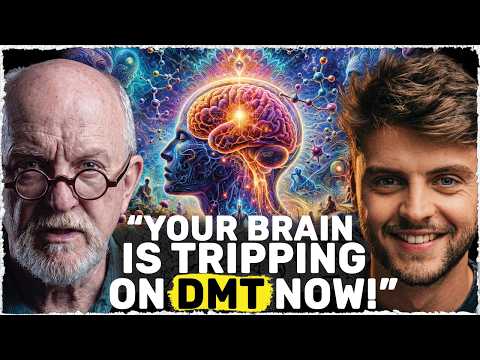
Link: https://youtu.be/gTc5QjyZuvY
Duration: 106 min
Transcript: Download plain text
Short Summary
Dr. Steven Barker, a Professor Emeritus at Louisiana State University and VP of Cottonwood Research Foundation, has spent 50 years researching DMT—longer than anyone alive—challenging David Nichols' claim that endogenous DMT cannot function as a neurotransmitter. He presents evidence that DMT exists in the brain at concentrations roughly equal to serotonin (approximately 1:0.95 ratio), while also exploring recent findings on DMT's role in neuroplasticity, stress response, and evolutionary biology.
Key Quotes
- "Now he's wrong when it when it comes to DMT. The idea that in order for someone to experience a psychedelic state from indogenous TNT requires the same amount that you have to administer from the periphery. >> That makes sense. >> Is ludicrous." (00:00:35)
- "Dreams are our first experience of an altered state. This was the realm of the gods. And it also kind of led to our idea that the soul is distinct and separate from both the mind and the body." (00:01:50)
- "What we're doing with this idea of entities is creating another religion. There are these super intelligent beings out there that we can only access if we go into the psychedelic space and we achieve certain levels of consciousness. By so doing, we're going to get us ourselves a new priesthood, and they're going to report back what the gods have to say about what we should be doing." (00:02:10)
- "You must accept the fact that DMT is there and that it is at concentrations that perhaps also exert physiological effects." (00:00:24)
- "Basically one is to one serotonin to DMT." (00:55:18)
Detailed Summary
Dr. Steven Barker's 50-Year DMT Research Odyssey
Dr. Steven Barker, a Professor Emeritus at Louisiana State University and Vice President of Cottonwood Research Foundation, has dedicated half a century to studying DMT—longer than any living researcher. This episode traces his journey from childhood lucid dreams in 1950s Birmingham, Alabama, through decades of institutional research, forensic toxicology, and the ongoing scientific controversy over whether endogenous DMT functions as a neurotransmitter.
- Barker began experiencing vivid lucid dreams as a child in Birmingham, Alabama during the 1950s, featuring a Victorian house with a spiraling staircase and white light, which inspired his lifelong fascination with altered states of consciousness.
- He worked as a forensic toxicologist for 29 years at LSU, developing ultra-sensitive detection techniques for various substances.
- In 1972, Barker joined UAB's psychiatry neuroscience program under Dr. Fred Bennington, transitioning from forensic work into psychedelic research.
- He became Director of Research at UAB's Comprehensive Mass Spectrometry Center in 1981.
- Barker moved to LSU in 1984, where he conducted drug testing for the state racing commission and athletic department while continuing psychedelic research.
- He retired from LSU in 2016 after decades of dual institutional and research roles.
- Barker attributes his visual thinking ability to what researchers now call "hyperphantasia," which he believes contributed to his childhood dream experiences.
The Central Scientific Debate: Endogenous DMT as Neurotransmitter
The episode's central conflict involves Barker's direct disagreement with David Nichols, widely considered the most respected psychedelic chemist, over whether endogenous DMT functions as a neurotransmitter. This disagreement represents one of the most significant schisms in psychedelic science, with implications for how researchers understand both normal brain function and the mechanisms underlying psychedelic experiences.
- David Nichols argues that DMT cannot produce psychedelic effects because achieving such effects would require the same dosing as administered DMT, which far exceeds natural endogenous levels.
- Barker contends this comparison is "ludicrous" since neurotransmitters act locally in synaptic clefts rather than distributing throughout the brain like intravenous drugs.
- Barker explicitly states Nichols is "wrong" about DMT, noting he's discussed this matter directly with Nichols' son Charles Nichols at Tulane University.
- The debate hinges on whether "trace amounts" of endogenous DMT can have physiological significance—Nichols says no, Barker says yes.
- Barker's position relies on the principle that if other neurotransmitters at measured concentrations have physiological effects, DMT at comparable concentrations must also exert effects.
Recent Research on DMT Concentrations in the Brain
Barker presents quantitative evidence from multiple research groups challenging the notion that endogenous DMT exists only in negligible "trace" amounts. These findings suggest DMT concentrations in the brain may be comparable to established neurotransmitters, fundamentally reshaping the scientific debate.
- John Dean's studies at UCSF found DMT ratios of approximately 1:0.95 with serotonin—nearly a 1:1 ratio, indicating DMT levels nearly equal to one of the brain's primary neurotransmitters.
- Dean's research also showed DMT to norepinephrine at 1.8:1 and DMT to dopamine at 1:1.5, further supporting DMT's abundance in brain tissue.
- Nick Glinos at the University of Michigan published a 2024 study using open-flow microperfusion to measure actual tissue concentrations.
- In the prefrontal cortex, Glinos found 1 DMT molecule per 1.2 serotonin molecules and 1 DMT per 66 dopamine molecules.
- The somatosensory cortex showed 1 DMT per 1.5 serotonin molecules and 1 DMT per 0.4 dopamine molecules—meaning DMT actually exceeds dopamine in this region.
- Barker argues these concentration ratios prove DMT has sufficient abundance to participate in physiological signaling if receptor binding occurs.
- These findings directly contradict claims that DMT exists only as an irrelevant metabolic byproduct.
Historical Context: Psychedelic Research Funding Drought
Barker recounts how US government propaganda during the War on Drugs following the 1970 Controlled Substances Act effectively shut down psychedelic research before mechanisms were understood. This historical context explains why fundamental questions about DMT remain unresolved decades later.
- The 1970 Controlled Substances Act dramatically restricted psychedelic research, with Timothy Leary and Albert Hofmann "made into monsters" by government propaganda.
- Barker's 1981 NIMH grant proposal to study DMT as a neurotransmitter was roundly rejected, halting his primary research direction.
- When funding ran out after the grant rejection, Barker lost his institutional research position.
- Multiple labs across the US and worldwide abandoned psychedelic research during this period, with trained personnel forced into unrelated work.
- Barker collaborated with Rick Strassman during this funding drought on ayahuasca and other psychedelic research.
- The funding drought prevented researchers from applying modern neuroscience techniques to psychedelic mechanisms before institutional knowledge was lost.
- Barker's forensic toxicology work at LSU became his institutional anchor while psychedelic research continued informally.
DMT, Stress, and Neuroplasticity Research
Emerging research demonstrates that DMT levels in the brain respond dynamically to physiological conditions, suggesting the compound is actively regulated rather than passively produced. This finding supports Barker's view that DMT serves a biological function rather than merely existing as a metabolic artifact.
- Bob Harrison at UAB showed that stress elevates brain DMT levels 5-fold in rats, demonstrating dynamic physiological regulation.
- Chronic amphetamine administration elevated DMT 6-fold in Harrison's studies, further supporting active biological control.
- These findings suggest DMT is physiologically regulated rather than an irrelevant background metabolite.
- DMT is highly lipophilic, light-sensitive, and air-sensitive, requiring special extraction precautions during laboratory analysis.
- Proper DMT extraction requires perchloric acid, solenoid glass under nitrogen, and red light conditions to prevent degradation.
- Vargas et al.'s 2023 paper demonstrated that psychedelics promote neuroplasticity through activation of intracellular 5HT2A receptors.
- DMT is capable of penetrating cell membranes where serotonin cannot reach internal receptors, giving it unique access to intracellular signaling.
- Barker is currently collaborating with David Olson at UC Davis on related neuroplasticity projects.
Entity Experiences and the Nature of DMT Trips
Barker offers a materialist interpretation of the famous "entity experiences" reported during DMT trips, arguing these phenomena emerge from consciousness and neural processing rather than contact with external beings. However, he acknowledges that the consistency of these reports across individuals presents a puzzle for purely biological explanations.
- Barker argues that entity experiences during DMT trips may be "all in the head," pulled from consciousness, everyday experience, and encoding of thoughts.
- He acknowledges that approximately 86 billion neurons producing such consistent entity reports across individuals raises questions about simple brain-creates-reality explanations.
- Barker expresses concern that entity experiences are becoming "a new religion" with a priesthood interpreting what "the gods" say.
- The episode references David Luke's documentation of elf reports predating Terence McKenna, suggesting McKenna may have amplified rather than originated certain hallucination patterns.
- Barker's visual thinking ability ("hyperphantasia") may explain his predisposition toward vivid mental imagery from childhood.
- He suggests entity experiences deserve scientific study rather than either uncritical acceptance or dismissal.
- The consistency of entity reports across cultures and individuals suggests either shared neurological mechanisms or something more mysterious about consciousness.
The Pineal Gland and DMT Production
While acknowledging the pineal gland's role in DMT production, Barker clarifies he never claimed DMT is produced exclusively there or released solely from that organ. This distinction matters for understanding DMT's broader physiological roles beyond the mystical associations sometimes attached to the pineal gland.
- Most researchers agree DMT is produced in small amounts by the pineal gland, but Barker notes neurotransmitters are produced in many locations including the gut.
- Barker explicitly states he never claimed DMT is only in the pineal gland or only released from it.
- Andrew Gallamore believes DMT had an important neurophysiological role in human evolutionary history.
- The 2013 rat brain perfusate study found DMT, melatonin, serotonin, tryptamine, and bufotenine among 20 compounds tested, with DMT being the only psychedelic compound detected.
- David Nichols cited this study to claim DMT was present in "trace amounts," but Barker notes the study did not quantitate DMT levels.
- The distinction between "trace amounts" and physiologically significant amounts remains contested in the scientific literature.
- Barker's position emphasizes that DMT production likely occurs throughout the nervous system rather than in a single gland.
Consciousness, Materialism, and Evolutionary Biology
Barker argues that consciousness is fundamentally neurochemical—arising from molecular and subatomic interactions—with humans functioning as colonies of billions of living organisms interfacing with their environment. He pushes back against purely cultural explanations for psychedelic experiences, proposing instead that DNA may carry inherited experiential memory.
- Barker argues consciousness is fundamentally neurochemical, arising from molecular and subatomic interactions within the brain.
- He views humans as colonies of billions of living organisms interfacing with their environment.
- Barker challenges the idea that psychedelic experiences are purely cultural or subconscious constructions.
- He points to the consistency of reports across users, noting that 86 billion neurons should produce more variability if experiences were purely random biological noise.
- Barker's materialism frames all experiences—even the most extraordinary—as grounded in physical substrate rather than non-physical consciousness.
- He suggests phenomena once deemed spiritual (like quarks or ether) have become understood as physical, implying "other worlds" may similarly be physical phenomena.
- Barker proposes that DNA may store information from experience and that evolution passes inherited encoding forward, potentially explaining intuitions and pre-existing knowledge of psychedelic effects without cultural exposure.
- He rejects Cartesian dualism, viewing consciousness as emerging from sensory interaction with the environment rather than as a separate non-physical substance.
Implications for Near-Death Experiences and Future Research
The episode concludes with implications for understanding near-death experiences and the broader question of what happens during moments of extreme psychological transformation. Barker's research suggests endogenous DMT surges during extreme states may explain phenomena traditionally attributed to spiritual or supernatural causes.
- Barker collaborated with Rick Strassman, who proposed that the pineal gland releases DMT during near-death experiences, potentially explaining mystical reports.
- Evan pushes back on dismissing Strassman's hypothesis, arguing it deserves empirical testing rather than being rejected outright as pseudoscience.
- If stress elevates DMT 5-fold as shown in rat studies, extreme physiological stress during near-death situations might produce even higher surges in humans.
- The consistency of near-death experience reports across cultures parallels the consistency of DMT entity experiences, suggesting common neurochemical mechanisms.
- Barker emphasizes that understanding these mechanisms requires continued research despite the historical funding obstacles.
- The 2024 Glinos study demonstrates that modern microperfusion techniques can finally provide the quantitative data needed to resolve these debates.
- Future research priorities include determining DMT's precise receptor interactions, understanding its role in neuroplasticity, and measuring endogenous DMT during various physiological states including stress and near-death conditions.