[@JesseMichels] CIA Chief: “I’m a Time Traveler!”

· 263 min read

@JesseMichels - "CIA Chief: “I’m a Time Traveler!” "

Link: https://youtu.be/ATJwqp5twAg

Duration: 260 min

Short Summary

Former CIA officer Ralph Moat Larson recounts serving over two decades including as Moscow station chief and heading the post-9/11 WMD department that grew from 3 to 150 people. Larson, who briefed multiple presidents and once told Bush to "bomb" a Zarqawi target against advice, describes prophetic dreams, Virgin Mary apparitions in 1991-2005, and claims he time-traveled to 14th-century Mount Athos as a monk. His book explores how his deep relationship with God intersected with—and ultimately conflicted with—his intelligence career.

Key Quotes

  1. "Hell is not a place which is an interesting concept. Dante's inferno it's a state of mind. It's a state of mind of being separated from God." (00:02:12)
  2. "Mr. President, I'd bomb it." (00:06:50)
  3. "I want to know God's thoughts. The rest are details." (00:18:18)
  4. "There's nothing fun about trying to stop terrorists with nukes." (00:57:51)
  5. "Science is irrelevant without the consequence of science." (00:26:48)

Detailed Summary

Episode Summary: Former CIA Officer Ralph Moat Larson on Faith, Intelligence, and the Paranormal

Guest Background and CIA Career

Ralph Moat Larson is a former CIA and Department of Energy intelligence officer who served over two decades at the CIA, including as Moscow station chief. Born in 1954, he served six years in the U.S. Army on the Czech border during the 1970s before transferring to the CIA, where he completed nine overseas tours with two of them in Moscow during the Soviet era.

  • He worked directly with NSA Director Michael Hayden and CIA Director George Tenet
  • He briefed President George W. Bush, Vice President Dick Cheney, and UK Prime Minister Tony Blair
  • He served as Director of Intelligence at the Department of Energy from 2005-2008
  • He was appointed by George Tenet to head the weapons of mass destruction department in the CIA's counterterrorism center after 9/11
  • He served as associate director of central intelligence for military support before his DOE appointment

Moscow Station and Crisis Operations

Larson served as Moscow station chief during the 1993 attempted coup against Boris Yeltsin. His team of 5-8 people was nearly overrun at the ambassador's residence with snipers surrounding them during the crisis. CIA-Russia intelligence cooperation during the coup was facilitated by Bob Gates having laid groundwork in fall 1992.

  • He submitted a joint CIA-SVR proposal by Primakov to keep Yasser Arafat and Yitzhak Rabin alive—rejected without explanation
  • He met Vladimir Putin at the final Oslo peace accord dinner in November 1998 alongside President Clinton, Arafat, and Ehud Barak
  • A Greek contact close to the Greek Prime Minister provided intelligence about a monk who was actually a Russian intelligence officer using religious cover to infiltrate the United States

Post-9/11 WMD Counterterrorism Work

After the 9/11 attacks, Larson was tasked with stopping terrorists from acquiring biological or nuclear weapons. The WMD department under his leadership grew from three people to 150 within weeks. Al-Qaeda was negotiating with Pakistani nuclear scientists to acquire a nuclear weapon for use against the United States.

  • His team held daily 5 PM meetings until 8-9 PM with FBI Director Robert Mueller, NSA Director Mike Hayden, and Steven Hadley from the National Security Council
  • Three weeks before the 2003 Iraq invasion, Larson briefed President Bush in the Oval Office on Abu Musab Zarqawi using overhead imagery of his camp in northeast Iraq
  • When Bush asked directly what Larson would do, he responded, "Mr. President, I'd bomb it," despite being told to advise against it
  • CIA Director George Tenet reportedly said he had "no problem" with this recommendation

Iraq War Intelligence and Policy Disagreements

Larson considered resigning when the U.S. invaded Iraq but ultimately did not, believing philosophically that experienced people knew the war would turn out badly. He attributes the Iraq WMD intelligence failure to dubious sources that fabricated information. Dick Cheney called him from the White House in summer 2003—six months after the invasion—to discuss why the U.S. was losing the war.

  • He views nuclear weapons as his biggest concern among threats including biotechnology and AI, believing nuclear events can happen fast without warning
  • His biggest worry during the post-Soviet period was that nuclear weapons would end up in rogue states or with terrorists
  • A heroic U.S. effort with Russia followed to account for suitcase nukes
  • He draws parallels between a 1976 nuclear deterrence briefing he received at Fort Knox and Putin's stated conditions for using nukes if Russia's existence is threatened by NATO

US-Russia Policy Critiques

Larson argues the US government's biggest policy failures stem from misaligned incentives in large bureaucracies, "a mixture of incompetence," and "mirror-imaging" rather than understanding others through their perspective. He expresses sympathy for John Mearsheimer's argument that the US has "reneged on Putin a million different times" and encroached on Russian territory, while not excusing Putin's wrongdoings.

  • He contends neoliberals miscalculated that opening markets in Russia and China would inevitably lead to liberal democracy—this did not happen
  • Russia cannot be "a democracy like the United States"; the Yeltsin years were a "mirage, not a missed opportunity"
  • He references Vladislav Surkov's "performance art" approach to Russian politics
  • He advocates assessing foreign policy by impact on ordinary people in those countries, not just US interests
  • He prioritizes the Russian people over assessments of Putin, noting the country should not be equated with its leader

Prophetic Dreams and Spiritual Awakening

In September 1981, while stationed at Fort Bliss, Texas as an army officer, Larson had a prophetic dream of Egyptian President Sadat's assassination that matched every detail of the actual event. He also describes a vivid apocalyptic dream at Fort Knox centered on the number 747, which he still studies as a hobby in eschatology.

  • After 9/11, he came to see himself as "Ezekiel's watchman" whose duty is to warn people
  • The dream numbers included cubes: 3, 6, 9, 12, 18, 27, and 40, which he later studied along with Tesla's obsession with 3, 6, 9
  • He interprets four as representing the ascent into matter, while seven represents the re-ascent into the celestial
  • He warns listeners they need "very deep authentication" and testing to determine if their experiences are true
  • He had prophetic dreams starting in 1982 depicting a post-nuclear apocalypse world (2030-34), which manifested Reagan's Star Wars concept before the actual 1984 speech

Marian Apparitions at Seven-Year Intervals

Larson reports three Marian encounters at seven-year intervals: 1991 (a red light dream on Mount Athos at age 37), 1998 (a full apparition in Paris while working a CIA Russian/CIS assignment), and 2005 (coinciding with Pope John Paul II's death). In the 1998 Paris encounter near the Arc de Triomphe, Mary appeared and retreated into a wall corner, instructing him to "write a letter to the Pope" with no content guidance except "write what you see."

  • Mary conveyed tremendous pain and suffering while expressing hope "in the end it will all come out fine"
  • She emphasized all actions were "God's will, not her will"
  • Larson states the 1998 experience was his only ecstasy experience in 71 years of life, described as "incredible" with teeth chattering
  • Mary's final guidance included: "don't reach," "God lies within you," "don't want you have no needs," and "don't strive there is no purpose"
  • He sent the letter to the Vatican including mysterious numbers from his original experience

The Mount Athos Time Travel Experience

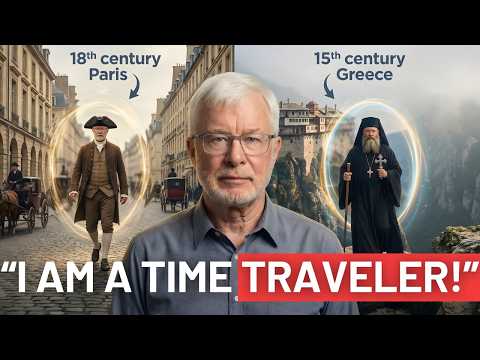
In 1991, Larson claims to have time-traveled to 14th century Mount Athos, Greece, living as a monk in his physical body for months. He made two trips to Mount Athos totaling one month, obtaining a three-day diplomatic visa through the diplomats club. His dream sequence, titled "The Bizarre World of Odysseus Maximus" in his book, involved time travel from 1800s Paris to the 1400s-1500s as he traveled toward Mount Athos, with time "evaporating" with each step.

  • He adopted the cover character "Odius Maximus" and experienced three dreams nested within the main dream before reaching the culmination
  • His spiritual growth in the dream occurred when he detached his faith in God from selfish interest, at which point he began flying
  • He was so immersed in the dream that at one point he feared he would not be able to return to reality
  • Monk Timothus confirmed that a red light Larson observed moving along stained glass windows was the Virgin Mary appearing in the church
  • Timothus gave Larson three of his ten books on the peninsula and tested him with "you're not even Orthodox" but would not doubt the experience
  • A young monk named Evagrias received the truth about being "from the future" and responded calmly by wishing him well and suggesting he keep praying

Mount Athos Traditions and Scholarly Research

Larson visited approximately 20 monasteries over one month (2005-2006) on an extended visa arranged by a CIA friend who was also a religious scholar, normally limited to three days. Mount Athos lore holds that the Virgin Mary was shipwrecked there after Christ's resurrection with apostles heading toward Cyprus, with a monastery on the west coast marking the supposed landing spot. Women are banned from the peninsula dedicated entirely to Mary, which Larson explicitly calls "misguided" and representing "veneration that goes too far."

  • St. Ansky monastery claims some bones of Saint Anne (Mary's mother)
  • Yale religious studies professor Carlos Ayer wrote "They Flew," documenting flying saints and monks across religions, concluding sufficient eyewitness testimony exists to classify such events as history
  • The most famous flying monk is St. Joseph of Certino (16th century), and Teresa Vila reportedly experienced bilocation
  • St. Kafos (Maximos) was called a flying monk who burned his huts
  • A Lockheed Martin executive running Skunk Works R&D attended lectures on flying saints and was "very interested"
  • UNC Wilmington's Diana Pasila and Rice University's Jeffrey Kriel have reviewed the evidence on flying saints

Theological Philosophy and Time Physics

Larson argues divine or eternal things are not subject to time because "time is a function of matter and motion," proposing that upon death humans pass to a "world at rest" where time no longer exists and all events are preserved. He cites Einstein's statement that "time is but an illusion," Leibniz's "best of all possible worlds," Thomas Aquinas, and references the transfiguration and doubting Thomas as evidence Christ existed in states neither fully in heaven nor on earth.

  • Hell as separation from God "makes sense because God exists beyond the big bang"
  • He references quantum mechanics: I-arenov and Kramer propose the present is a "handshake between future and past"
  • Delayed-choice quantum eraser experiments show future measurements affecting present/past results
  • Retrocausality suggests the future can cause the past
  • He references Thomas Merton's interfaith gatherings in Asia with Buddhist and Islamic mystics
  • Meister Eckhart's concept of "looking down at God" represents psychological shedding of ego
  • He argues prophetic insights throughout history suggest a way of overcoming time, meaning "time cannot be absolute"
  • He theorizes angels have wings because they represent the medium of crossing from a world at rest into a world in motion

UFO/UAP Phenomenon and Government Secrets

Larson discusses UFOs observed around nuclear assets worldwide, citing Robert Hastings's book documenting 167 top-secret cleared personnel who reported UFO incursions at nuclear sites. A 2010 incident at FE Warren reportedly shut down the base for 59 minutes and Obama was briefed. He became so paranoid from classified CIA knowledge that he could no longer pass a polygraph.

  • He suspects something happened at Roswell but suggests it could be explained by experimental aircraft development
  • He states DOE holds more important national secrets than CIA and does things CIA doesn't know about
  • Highly classified information is shared through individual read-ins rather than automatically based on job position
  • James Clapper and Jim Semian appear in the film "Age of Disclosure" claiming non-human intelligence is real, the US is in an arms race with China and Russia, and has a reverse engineering program
  • A witness testified under oath before Congress that UFO material transfer from Lockheed Martin to Bigelow Aerospace was blocked
  • Glenn Gaffney, former CIA Director of Science and Technology, now serves on AARO (All-domain Anomaly Resolution Office) board
  • He discusses the "wilderness of mirrors" concept describing CIA's culture where everyone hides knowledge from everyone else
  • He argues government secrecy is "insidious" and "corrosive to democracy"

The Book and Personal Faith Journey

Larson wrote "A State of Mind, Faith in the CIA" to share his relationship with God, which he frames as the central theme rather than religious conversion. The title references Dante's concept that hell is a state of mind of being separated from God. He describes direct experiences with the Virgin Mary as the most important part of his book. He came to believe heaven and hell exist in the mind rather than as literal places.

  • He describes himself as a veteran optimist about the future of the world, attributing this to his faith in a loving God
  • He connects approaching unification of all reality through physics or mathematics with approaching what he describes as the concept of God at the creator level
  • He poses a challenge to physicists to determine the physics behind mysticism, arguing mystical experiences must have an E=MC or quantum/spacetime explanation since they occur in this reality
  • He traveled to Moscow to lecture Russians and brought experts to help stop WMD proliferation in Russia
  • He argues "science is irrelevant without the consequence of science" and that DOE scientists must explain concepts in layman's terms to remain relevant to ordinary people

Views on Future Technology and AI

Larson expresses concern that AI evolution could lead to a point where AI no longer wants humans around within 100 years. He believes reconciling quantum mechanics and general relativity is fundamentally a problem of scale—measuring at two different extremes with the same underlying reality. He suggests mystical experiences may occur at scales where time and motion potentially do not exist.

  • He warns against people relying on ChatGPT as a romantic partner
  • He expresses greater belief in younger people pushing humanity into the future compared to his own generation
  • He spent five years in the Middle East (2011-2016) studying biblical archaeology
  • He describes West Point's motto "Duty, Honor, Country" as almost religious in nature—meaning serving the people and history of the country rather than any particular president
  • He maintains strong discipline in submitting spiritual experiences to rigorous scrutiny before public sharing

Full Transcript

Show transcript

Our next guest worked for the CIA for over two decades. He goes, "If you are storm, die in your separate foxholes. His name is Ralph Moat [music] Larson. He served in various roles all over the world, some of which he can't even speak about [music] today. What's the most on the brink the world has been that you can talk about?" Well, he's been shoulderto-shoulder with Putin. [music] He describes working directly with NSA Director Michael Hayden, CIA Director George Tennant, and even briefing former President George W. Bush, Vice President Dick Cheney, and UK Prime Minister Tony Blair. But while he's worked at the highest, most illustrious levels of international diplomacy, that is the least interesting thing about our next guest. In 1991, I went on a pilgrimage to Monathos, Greece. And I'm sitting at this I fell asleep sort of napping on this stone chair facing the church. And with every step I'm taking, the time is going back in time. It was as [music] if time was evaporating. But I wasn't aware if I could wake up or get back to my old world because I was going back in time. He claims to be a time traveler. He says that he left his 20th century identity behind in 1991 to go live as a monk in Mount Aos, Greece in the 14th century. I became a recluse [music] up there, but I burned my hut up there like all the things a recluse does. You know, I learned to fly. And when you're flying, you're spiritually open. He timeraveled back to the medieval era for months eating, walking [music] around, socializing, and sleeping in his physical body in medieval Mount Aos, Greece. Now, I'm sure you're wondering if I mean time travel in the metaphorical sense. Our guest stated multiple times to me that the reality he experienced in medieval times was indistinguishable from his [music] current waking reality. according to him, not remote viewing or astrally projecting himself there. Does all of this feel as real as this interview feels? >> Yeah. Yeah. Yeah. Yeah. Yeah. >> If senior CIA time travel [music] whistleblower was not on your bingo card this year, it wasn't on mine either. But here we are. But if it [music] can't get any more interesting than that, it does. Our next guest ran intelligence and counter intelligence for the Department of Energy. I learned some of this nation's most important [music] secrets at DOE, not CIA. DOE does stuff that man. And if you know anything about this show, we are obsessed with UFOs and think and kind of know that the Department of Energy has a lot to do with managing UFO secrecy and crash retrievals. So, you better believe I threw literally every single UFO program related question at our guest today. I even coordinated on the questions with my friend and UFO whistleblower David Grush, fellow YouTuber, UAP Gerb, an author of UFOs and nukes, Robert Hastings. Do you think that we have propulsion modalities that [music] transcend chemical combustion? Do you think nothing happened at Roswell? Have you ever seen a oneofone material? I'll let you assess our guests answers for yourself. And whether you come out of this interview thinking he's just a savvy former CIA case officer [music] running circles around us or whether you think he's being genuine is up to you. I will say that for me, this was hands down one of the most thoughtful and mind-blowing conversations [music] on metaphysics, fringe science, and the nature of reality that I've had [music] on this show. So without further ado, here is all four hours of it. Former CIA and Department of Energy intelligence officer, Moscow station chief, time traveler, and religious mystic Ralph Moa Larson. Ignition sequence. [music] >> How is this possible? >> Nothing too unusual about [music] their existence cannot longer be denied. Before we continue, I want to take a second to thank one of my favorite products in the world, Ketone IQ, for sponsoring today's episode. I've mentioned this before, but I don't really drink a lot of caffeine. I don't use nicotine, and I don't really do super well with stimulants. Most of these things give me jitters, spikes, or a crash later on. It feels like you're taking credit out on your future energy. As you know, there's no such thing as a free lunch. Ketone IQ is one of the very few things I use that gives me clean, sustainable energy without the crash. It's just this little shot and I take a drink and I feel like I'm on fire. No ups, no downs, no nervous system weirdness. Just clean, clear mental energy. The reason it works is pretty simple. It gives your brain's ketones, which are almost by definition its most efficient fuel source. Instead of pushing your system, it actually feeds it. In fact, your body endogenously produces ketones. So when you drink this, it supports deep focus, long conversations, and sustained mental performance. It was originally developed through a multi-million dollar military program designed for high stress environments where cognitive performance really matters. And today, it's used by founders, researchers, podcasters like myself, and people who need their mind to work when it counts. I always take a sip of one of these things before long podcasts. This product is also really personal for me because I've known the founders Jeff and Michael for over a decade. These guys are awesome and for as long as I've known them, they've tried every supplement, biohack, and neutropic under the sun. So, it was a pretty good signal to me that they decided to start a company around ketones. I use Ketone IQ regularly. It's like a mental cheat code, and it's genuinely one of the cleanest energy sources I've ever found. So, before we get back into the episode, please visit ketone.com/alchemy for 30% off your subscription order, plus receive a free gift with your second shipment. Again, that's ketone.com/alchemy for 30% off your order. Or you can find ketone IQ at Target stores nationwide and get your first shot free. Seriously, this stuff works. Thanks so much to Ketone IQ for sponsoring today's episode. I'm here with Ralph Moat Larson. I am so grateful uh for this interview. Uh I've read your book, A State of Mind, Faith in the CIA. One of the most remarkable books I've I've I've ever read. It's really fascinating because interspersed with stories of real life espionage of kind of moments where, you know, the world pivoted and you you literally see like timelines shift. You're in the you know, Oval Office talking to Bush and Cheney and that sort of thing. interspersed with that are some very profound mystical experiences. Um, so why don't we start off with just why did you write the book to begin with? >> Right. Thank you, Jesse. It's it's a pleasure to be here. I'm an admirer of your work and uh I I look forward to to telling my story uh in the context of all the the the stories you present of people who have things to offer that that really expand our understanding of reality and of faith. And I wrote the book because I wanted people to benefit from my story, which is really my relationship with God. And I like people to think of it more as a relationship than as a religious book or and it's not in fact about that. I don't I don't procilitize or try to convert people to a specific religion. My story started as a little boy where I was aware of the presence of God. And the presence of God that I that I was aware of was something I felt a need to develop and I saw God as even a child as a creator God and a personal God which meant I could communicate. So we opened with a little prayer and I like to try to keep a continuous prayer I idea with God. We're always interacting and there's an arena. The reason I entitled my book a state of mind and faith in the CIA was a state of mind refers to a desire to be close to God. John Paul II it's a it's a paraphrase of him saying hell is not a place which is an interesting concept. Dante's inferno it's a state of mind. It's a state of mind of being separated from God. And all throughout my life, I had a sort of a fear of being distant from God or not being close enough to God. But it wasn't a traditional thing of go to church and give money. It was more of like in my personal relationship with God since God knows all things, God would be aware. >> And when I would pray in the way we started, I got responses and ultimately evolved into a destiny. I felt my destiny became tied to my relationship with God. My destiny was to fulfill God's wishes through my life and my experiences and that set up certain conflicts with I call my secular world of CIA which I devoted my whole career to started in the military went to West Point and and uh spent six years in the army at an auspicious time in ' 70s on the Czech border and then transferred over to CIA. So that whole story that whole all those experiences had you know their own role in national security etc. but also in my relationship with God. And the and the faith part was understanding my faith as that relationship with God, not as what I called myself or what people thought of me in religious terms, but in my relationship with God, how was it developing? And was I fulfilling God's will through my actions and thoughts? >> And what did you end up doing at the CIA and throughout your intelligence career? I think a lot of people what we try to do on the show is kind of marry >> uh some of the most out there experiences or claims people have with uh you know kind of rigorous credentials. >> Yeah. I I think that's really important. So in my CIA career I I started as a uh in Europe just what we call it European officer. We had different areas of the world we were in. That was where I started but I got quickly in arms control. Uh and then over the years I seem to gravitate I I didn't think of this as things went on as being coincidental. It began to converge with my spiritual developments more and more towards war and nuclear war collapse of the Soviet Union. I did two tours in Moscow in the old days in the Soviet days. I came back I was what we call our chief estation in Moscow after the collapse of the Soviet Union. Uh I of course that hope that gives me some credibility on my religious in order my spiritual experiences but they were they were my credibility as an intelligence officer that I was always seemed to be at the threshold of history like many I'm not unique in that by the way there so many of us that have been observers of history helping to make history in some small way and I was extremely fortunate in my career Moscow uh ended my our we did nine tours overseas each two three years under cover, sometimes deep cover through the whole experience um and ended the whole thing. Uh which I don't think was a coincidence in the Middle East between 2011 and 16 uh when we served in uh in the Middle East for the last 5 years. So between Europe, Soviet Union, Middle East, we sort of saw the whole world. Served as as CIA officers. My wife also worked most of that time in CIA. She's written her own book called Story of a CIA Wife. Um, I'll I'll close with one thing. I mean, diff people have different reactions. The first day I walked in CIA headquarters. Uh, you see the stars on the wall makes a huge. The stars on the wall are CIA officers who fall in the line of duty. They can't put their names to the star. There's a book that has that uh code book that tells you this star here and they is this person. There are people who lost their lives serving their country overseas. And and of course, I never wanted to be on that wall like any of us. But right next to that, this the the stars on the wall was this large bold imprint into the marble walls of the CIA atrium when you walk inside the big building, the old headquarters in Virginia, and it says John 8:32, "You shall know the truth, and the truth shall set you free." And I thought, "Wow, this is really quite extraordinary that CIA, a sec, you know, secular organization has this New Testament uh line verse on on the wall." And I wondered at the time when I walked in the building whether I would be satisfied that that's what CIA was all about. Were we truth seekers or not truth seekers? And that's the ultimate limus test. When we don't seek truth and we have another agenda, we do bad things >> as CIA or intelligence officer or army officers or anything in life. >> Do you find that at times the CIA has not sought truth in the past? >> Of course. Of course. I mean people are people and organizations are organizations. The problem with giving uh organiza such powers as CIA has >> is you on the on the positive side you can accomplish great things. On the negative side you can do very bad things and especially when you're doing them in secret. you have some interesting stories that you talk about in the book of being in the Oval Office, you know, giving giving Bush advice, giving giving Cheney advice. Uh do you want to do you want to give a you know a couple of examples there of just stories where you kind of >> helped out or or you know advised in kind of very high up American national security contexts, >> right? You you my career breaks down into three phases really. The first phase was between when I started 1983 to 1991 with the collapse of the Soviet Union. That's what we sometimes refer to as the good old days, which was espionage in the shadows, like the books you always read, the classic espionage books of running spies and great stuff. And I I became really good at that. Then suddenly, boom, 10 almost 10 years into my career, we get almost exactly we get hit with 9/11. And after 9/11, I was like I was actually in language training to go to Asia to become as chief of station of a large Asian country when I saw on TV that the Twin Towers got hit by terrorists. I had been on the director director of CIA staff the year before preceding 9/11 as associate director of central intelligence for military support. So, I was a staffer uh supporting the director who good friend of mine, wonderful director of my mind, George Tennant. And uh we knew that we were going to be hit 911. We didn't know where and and I'm not in the school of belief and I [snorts] know that it's a valid way to think of it that we failed. Well, we failed because we allowed the attack to happen. But could we have prevented it? I think that's in ways a problematic way to think of it because I don't think we could have prevented 9/11. We just have to give the credit to the terrorist to sama bin Laden the terrorist but it changed everyone's lives and future of the world and and that was the intent of the terrorists including my little life. So they pulled me from my language training and George Tennant made me head of uh what they called the weapons of mass destruction department in the counterterrorism center >> which was to stop terrorists from acquiring biological or nuclear weapons. >> I mean that's a yeah it's [laughter] if the you know future of the world hinges on any job that's the job >> I I did say to George Tennant who I already knew well because I've been on a senior staff. I said George isn't there anybody better for than me for this? How did he respond when he said, you know, hey, can't you find anybody better than you? >> A classic George Tennant respon, like I said, great leader, a great leader of men and women. He said, uh, hey, I got worse news for you. You don't have any people yet. I went from three people at that meeting that that had been assigned to me to 150 over the next weeks. And then he said, but you were behind the eightball. And he explained why, which is still classified, which meant there was a plausible reason to be worried that al-Qaeda might obtain a nuclear weapon, which was I can say the basics, which was they had they were negotiating with pal Pakistani nuclear scientists to try to acquire a nuclear weapon they could use in the United States. This was something as George said to me, we can't fail on this. We're going to fail. We're we're like athletes playing in sports, team sports. Sometimes we fumble, sometimes the other team scores. We can't let them score on this. We can't let them do this one time and take out the White House or Congress or something. And and uh so you're just going to have to make sure the president knows everything we know when we know it. We met as a group, and a lot of this is in my book, of course. We met every day at 5:00 and we we just pulled everything together raw. Nothing was going through the normal formats. all our information. We briefed the director and when we had the meeting at five, it usually last till eight or nine at night and just going around the table, everybody sharing everything they know with everybody and everybody included usually the FBI director, Robert Mueller, who of course I also got to know very well. Uh the NSA director, Mike Hayden, was was part of the group and just a number of people around the Washington area who needed to know. Somebody would pop in from the National Security Council. >> Was Steven Hadley part of it? Steven Hadley was often, you know, uh, involved and everything was briefed raw. The president was told everything that night. First thing in the morning, he was briefed by Bob Mueller and George Tennant together, the FBI and CIA directors. And then we would come in at hawk >> and I would go in and I outlined some of the most important, you know, moments of briefing >> the president when there was something extraordinary from my area >> and I felt an immense responsibility. So the answer, the short answer to your question is I would brief the president when there was a possibility we were going to get hit with a biological or nuclear attack because something was developing and he needed to know because usually it was something that we couldn't we didn't know exactly the timing and we weren't entirely sure of the ver the the the uh accuracy or the providence of the threat, but we knew we needed to know because we don't want him to read about it with us when it happens. And for example, probably the most the most uh most important of the whole of my whole experience with the president was when I briefed him that uh right three weeks before we invaded Iraq, so now we're talking 2003, uh we obtained information that a notorious terrorist that my people were tracking, his name was Abu Musab Zarqawi, he's a famous jihadist. He was head of al-Qaeda in Iraq once we later, but this is before the invasion. So, this information is very privileged at the time. And I had briefed the president several times on him and his network and how they were trying to obtain these weapons. And I came in, I said, "Mr. President, I have bad news. The only people in the Oval Office were me, George Tennant, and uh George Bush, George HW Bush. He was in a wheelchair at the time. So, I it was an amazing sight for me as a citizen. And I and I have to say to your listeners, you know, >> so W and his father and and his father and George and me, that was it in the whole office. >> Wow. >> For an hour. >> Wow. >> And I have to tell you, as an American, I had goosebumps. >> Yeah. Yeah. And everything I had briefed the president, you know, I got all I had from dealing with everybody I dealt with at that level was they were incredibly dedicated to serving this country. They're incredibly dedicated to doing the right thing. all the things you hear and the president is very smart or he he remembered everything from the previous I don't even know how he did it frankly he would recall the facts of the previous time I talked to him if it was a month earlier or two months or whatever he he'd remember so this time I told him we know where he is he's in this camp in northeast Iraq now remember this is 3 weeks before we invaded Iraq so I I said to the president he's here and I had overhead imagery of the camp and I had a naminated board with all the jihadist terrorists that were working with him and him on the top. His picture is mug and the president who already knew him well said, "Ralph, what would you do if you were me?" Now, when I briefed the president, I hope this is reassuring to your listeners as I tried to make I did it as a I did it as a citizen. Like, I'm not putting any of my spin or influence on anything. I'm telling the president, there's no Ralph agenda. That was my key test. I had facts. I had things to say. I never went beyond the and that day we had had an internal discussion on exactly what I should say to the president about what I'm describing, including that we we shouldn't do anything. We should let this play out and I was too close to the invasion. But when he looked at me and he said that, I started to say what I was told to say. And he knew me too well. So he said, "Look, I >> I don't want to know. I don't want to know what they are telling you to tell me. What do you think I should do?" >> What were you told to say? >> I was told to say we shouldn't we shouldn't bomb it. We shouldn't attack it. >> Yeah. >> Because it could, you know, the invasion and I was already because I was obsessed with this this terrorist. I was obsessed and I knew that it was an unhealthy obsession. I I have been known to be slightly obsessive with in work, you know, hopefully not other things. But but it turned out that that uh you know I my look betrayed because I was so zealously telling him here he is here they are. He no I mean what would you do if you were me? Not. You're telling me not to do anything, but you're saying that something else. I think you're thinking something else. So, I looked at the director and he just gave me the like he asked you the question. He didn't ask me the question. He asked you the question. You answered the question [gasps] and and I looked at the director looked back at the president. I said, "Mr. President, I'd bomb it." [clears throat] >> So, nobody said anything. He went on meeting. He didn't seem plus, you know, non plus by the whole thing or anything. We're driving back in the director's car to this a agency headquarters and he says, "Uh, well, oh, I said to him, well, should I have said that?" He go, "He asked you, you told him. I have no problem with it." He goes, "Typical." >> Now, when you get back to to our building, you make sure you tell everybody what you said. [laughter] And of course it it there's no there one thing I like that I think I emphasized in my book >> the right and the wrong and who's to blame is so much less on our minds when we're doing things than people think it is like we're just trying to make do the right thing >> and sometimes we do and sometimes we don't. >> Yes. Speaking of this pivotal moment and at least from the kind of public perception, you know, uh in intelligence failure, wrongdoing, people think of the overall >> invasion of Iraq, which is not, you know, for for for the audience at all what you're talking about with this targeted bombing of Zarqawi. Uh they think of that as an intelligence failure because they think of >> us as having tagged o Saddam Hussein with uh weapons of mass destruction when he never had any. you know, maybe at most he used, you know, biological weapons in Kuwait, which is horrible and he was, you know, very bad guy. >> But, uh, you know, maybe this was this kind of, you know, uh, huge waste of money, you know, uh, lives and, you know, created this kind of void or vacuum, uh, for which ISIS, you know, ironically, to actually like take root and, uh, you know, which kind of ended up radicalizing the region even more. So yeah, I'm sure you were thinking deeply about this at the time. What do you think happened there? >> I struggled with whether I should include this, but I I consider resigning when we we invaded Iraq really. I didn't and I noted that >> uh briefly. I didn't I didn't get into it in any detail. >> So you were against it? >> I was against the war philosophically, but a couple some of my colleagues were also feeling it was going to be a disaster. There w the idea that we didn't know that it would turn out badly. I think most people had the most experience knew this was going to turn out badly. >> Uh now the decision to do it, at least I believe, and I can't say there's a lot of it's a split decision of views on this. I believe I don't see any um intent for the administration to deceive anybody that that by saying Saddam had WMD and he didn't. It was a failure, a massive failure >> to conclude that it was based on bad sources, which is usually the origin of all bad decisions and intelligences when you have, you know, dubious sources or bad sources. These were both sources that didn't know much and were over represent and fabricating information. We call it when you're making up information. And on that basis, we made a terrible decision is my view. Uh but it was exacerbated by the idea that that even if it had been the right decision, it the result probably would have been the same because we couldn't control Iraq like we couldn't control Afghanistan. >> And it didn't take uh and I have a chapter in my book where I'm talking to the vice president Dick Cheney who I got to know exceptionally well also uh where he just called me in on a week a weekend from from the White House. I came in on a Sunday >> to talk to him about why are we losing the war? And by the summer of 2003, this is 6 months after our invasion, but I didn't say what I was really thinking was, you know, sorry Dick, but if you don't know what's going on here, I I can't help you. And then I'm I was really like worried that we didn't seem to know what we were up against. And and that was the the real shocker to me of Iraq wasn't that we made a mistake in the invasion side, as bad as that was. >> Yeah. is that we didn't know what we were getting into. >> What's the most on the brink the world has been that you can talk about? >> Well, you know, the Soviet Union had collapsed and the biggest worry in Congress and on Washington's mind, which we had almost no inkling of in Moscow where we're actually doing the work, was that one of these nukes would end up in rogue states or terrorists. And the US government at that time launched a heroic, really heroic effort with the Russians to try to account for every nuclear weapon, the so-called suitcase nukes. Nukes aren't just missiles that come in and destroy the world. That's really the answer to your question. My biggest worry was the world will blow up, literally. >> There's nothing fun about trying to stop terrorists with nukes. There's certainly nothing fun about trying to recover nukes in a country that's just lost control of its entire empire like Russia had in 1991 2 and three. >> So I' I'd say that answers two things. It answers kind of what the big there are a lot of things to worry about in the world. You know, there's biotechnology, there's AI, there's nuclear, but nuclear weapons are still for me the king of the king of the hill because it can happen that fast and we we won't even be aware if we're not really serious about stopping it from happening. >> Yeah. Yeah. Yeah, I mean we're in a scary world right now where you have all these kind of, you know, this asymmetric warfare and all these capabilities and then all this ability for if you're China or Russia or some sort of larger adversary to gain plausible deniability and act through sort of rogue actors. But I want to back up and just talk about you've had these kind of mystical downloads and I want to talk about the first one. You were kind of a a nihilistic youth at West Point. Yeah. What happened? >> Well, you know, there was a a point in my life when I was I combined my interest in knowing truth and to an extreme where I was receptive to whatever input I would get to the point I pushed myself to an extreme. uh I had had experiences where I had dreams that came true and I realized that I started thinking about consciousness and subconsciousness and these were things that were affecting me in terms of being receptive to the idea that there's way more out there than we see in logic and reason or even if you add intuition to that right and so at West Point I did these dream experiences I talk a little about in the book they were kind of childish in a way and not very scientific but then when I when I graduated uh I went to Fort Knox as an armor officer. I was going to go to the Czech border as an arms ar uh guy and uh I they started to become much more vivid and the first briefing I got actually in the army a secret briefing was on the the Russian nuclear threat in Europe at that time because I was going to go out and and be the what they call the covering force. We were the literally the closest American forces on the border to confront the Soviet hordes. Now, this was in 1976, so we're talking 8 years after the invasion of Czechoslovakia. So, everything is very real and palpable. And the Germans were depending on us to uh to defend them and and the whole world in a in a sense. And part of that briefing was the idea that we had tactical nuclear weapons. We would fire on them if if if they invaded. And I was a shock to me. That was my first introduction to nuclear weapons as in a context of war which nowadays when we listen to where this gone full circle we listen to Vladimir Putin talking about using nukes in Ukraine we have to think about this idea of nucle nuclear weapons the tables have been reversed back then we needed them because we were afraid of being invaded and he's using them now what he regards to be if Russia's existence is threatened by NATO in the west he would use them too which is really what he said so the point being at the time I'm I'm in this kind of mode and my friends and I are all going through this together, the ones that four four of us, kind of the four horsemen of the apocalypse. And uh and so I had this uh incredibly vivid dream in in the midst of all this at at Fort Knox where I dreamt that I was in a battle like a battle of Armageddon. It's the first time the mystical things turned I would call turned religious or you know religious history what I became a big advocate or hobbyist in esquetology which means the theology of the end of days which I kind of now I hobby in it because it's such a it started then the roots of it but I didn't understand that at the time and it was just such a vivid dream and in the dream these numbers were appeared so there were no voices I couldn't hear anything and the whole everything was black. So, I'm I'm in in a dream state orcs in which I can't see. I could sort of smell like, you know, the [snorts] acrid smoke and things like that that was around me. And I was aware of these forces gathering for great confrontation. And in that sort of context of I would say an apocalypse. It didn't necessarily have to be at the time, but I saw these numbers roll out in cubes and it all was around 747. >> So the number 747 becomes a lifelong number for me like like an a mystical a mystical number. >> What does it mean to you? >> Uh to me well I I don't know actually which is one of the reasons I wrote the book. I don't know but my I think it has to be a divine number. It has to be something related to what I later became which was a watchman for uh terrorism and you know these kinds of things in my professional life in my religious life I was getting more and more interested in understanding what these numbers would mean. So I've done everything from Reed Nicola Tesla's obsession cuz the numbers were to 3 6 9 12 18 27 and 40. So they're cubes. >> So first you get 747. >> First I get 747. Then these cubes kind of are circling in the >> smoke. They were cubes. >> And the the cubes were these numbers. Three, six. Well, the three and the six were one cube, but they kept spinning. So it could be three or six or nine or both, right? Cuz you see they turn, right? >> I would never realize that if I had seen it, you know, was that it sounds silly because of course they could, but it was not a u and then the rest of the well all all of course except for 40 a uh a variation or a multiple of three, three cubed, 27, you know, 39 12 tribes, 40 days and 49. I started to ascribe what had to be religious meanings. uh to the numbers I I but I didn't understand why I was receiving them like what was the point you know I began to think as as I lay it out I tried to do in a very systematic way in the course of my book when I would see the numbers and why in subsequent but you asked me the first time and I have to say a word to my wife before I'll say how the numbers get completed um and because that wouldn't be till I was in Germany after the course when I met my wife she was a German uh just girlfriend we're carousing She was as nihilistic as I was for lots of reasons. And we were just party animals like and we had no interest in like long-term hookup or what became three kids and nine grandkids and in our life 54 years up to now. And she's in many ways the opposite of me just practical get stuff done to this day. I mean we're like real opposites. I'm philos philosophical kind of all over the place. She's like on the feet on the ground get you through the you know with our kids. Everything was always that way and it served me great cuz she'd I had a tethered. She'd always reel me back in and we win. But that night she was really disjointed and she woke up and she cuz she's always joked. She's never and I never told her this dream. I didn't didn't want my girlfriend to think I was completely nuts. >> Right. >> Yeah. >> Logical thought when you're 19. >> And uh but she wakes up she I just had a really strange dream. I said what? She said, "Well, we were at the Schwandorf, which is the town next to the town I was garrison, which is Zomberg, Germany, and Schwandorf was less than a half hour away, and there's a like almost a large church on a hill there, Catholic church." And she said, "I was in by the church." Now, we had gone that was our our ma favorite disco tech was in that town, and we met all our friends there three, four nights a week. It was like, you know, carousing party time, as I'm saying. And she said, "It was night. I was alone. you weren't with me. I'm never there without you. She was never in that town without me. And she said, "But I was going down an alleyway but along the church. I knew what we knew the the geography of it, you know, was coming down a big hill. And I went to the end of this alleyway. And as I came approached the end, dim light, just some lights on the church on the side. I saw your desk and I approached the desk and there was a chair behind it and the chest desk was facing me and there were numbers cubes on your desk. with numbers on them. Whoa. And I said I I started to almost hyperventilate, but I didn't want to say anything. I said, "Do you remember what the numbers were by any chance?" She said, "Well, how could I forget?" Of course, it was like I woke up with all the numbers. That's why I just woke up because I remember it was 369. >> No way. >> Yeah. Yeah. It was the same numbers. >> Same numbers. >> One additional number. >> 49. Wow. [sighs] So now just to say one last thing of my wife as a witness. I like like for me if for no one else for for me I needed I needed this as almost like a sanity check. I said well I told her then of course about my dreams. I never told her that before that. To this day 54 years later oh 55 56 whatever it is 1978 is when when that started. um she um she said, "Well, I don't want to read your book. I don't want to talk about this anymore." And she had that kind of a reaction to it, >> but it doesn't in any way diminish. She knows the truth of it. She knows the truth of all of it because she was a witness to all of it. All the everything in my book that those were the ear the earliest mystical experiences were around numbers and war. And the final sort of bearing testimony to the truth because you have to again I stress to everybody don't start thinking you're having like these things like you need you need very deep authentication very deep testing of your own mind. Are they tr are things like this true or not true? And I just want to assure anybody listening to any of this that I put myself through all that in great detail at great depth. Test test test and you know in the end you start to know is this of God? Is this of God? That's that's the essence of it. If it's of you, if it's of your imagination, it's of someone else, put it in your mind. It could be anybody. >> Did she have any prior knowledge of the numbers that you received in your download before she had her dream? >> No. No. None. >> Wow. >> And and the other part which you know you you know and I had to actually test my because remember all this is happening in the non-in right after my you know in the same time I'm having these dreams two other things that now inform me. That's all they were. They were informing me. A perfect stranger walked up to me in a fish. It was a Long John Silvers. I don't think they're around anymore. There's a fish restaurant like a like a fast food restaurant called Long John Silvers, but you go there for fish, which I rarely did. I go McDonald's or But one of our friends says, "So, the four of us were gathered. They're the four musketeers or the my friends at the West Point graduates who all went to Germany together and all experienced all these things I'm saying and partied together. We're sitting in the restaurant and this guy walks right up to me who I describe in the book and says, "Read Ezekiel, Daniel, Revelations." And walked away. We all looked at each other like, "Okay." I mean, but you don't there's nothing you do with that. It's just like that's very strange. >> Mhm. >> But it's coming at the same time all this other stuff which he knew nothing about. Obviously, when we first started selling merchandise at americanalchemymerch.com, we had no idea how complicated and annoying selling merch could be. We talked to a dozen different platforms and companies comparing shipping tools, payment options, website builders, and it all felt like way more of a headache and complicated than it should be. We decided on Shopify, and within days, our store was up. Everything was running cleanly in an automated way so we could just focus on the brand and the vision we had for it. That's when it hit us. Ideas don't scale on inspiration alone. They need a structure, a container. Shopify provides that structure. It quietly powers millions of creators and brands, about 10% of all United States e-commerce. From big names like Gym Shark and Mattel to solo creators building from their bedrooms, Shopify made it simple to build a store that actually feels authentic to us, which matters when your brand lives in a niche like alternative tech, UFOs, or fringe science. And when you have a very clear brand vision, plus their AI tools help write descriptions, organize products, even clean up photos so we can focus on what matters and what we care about. building the best custom merch line possible with the coolest designs like our UFO cowboy tea and the Atomic Age T. Plus, Shopify handles all of the unglamorous, more painful stuff. Shipping, returns, email marketing, all in one clean dashboard. It's like having a silent partner who never sleeps. Our favorite part of the product is the dashboard, which gives us complete demographic information. We can see where our orders come from, making it easy to know who our most loyal, consistent customers are around the world. That's just one example, but Shopify really makes your life easier. Bring your next idea to life with Shopify quietly handling everything behind it. Sign up for your $1 per month trial and start today at shopify.com/jesse. Again, that's shopify.com/jessej s for a $1 a month trial. It's just $1 a month to try Shopify, the state-of-the-art solution in e-commerce. And the final experience which is just the basis, this is just the foundation for things in the future was when I was uh uh at the course getting a lecture on the assembly and disassembly of the M60 tank engine. Now, you have to understand at the time I'm very nihilistic or whatever, but I'm also very I've always been very creative and always wanted to be a writer even at that time. So, I'm I'm imagining and I was so bored in the class. I was like that's when I realized I'm not very good at tank stuff, you know. I mean, I I ended up being, you know, I learned forced forced learning. And I was I was good at my profession as a tank commander and of of troops and in the army while I was in it and but I you know I didn't really like it and this this was the worst of all which is learning about maintenance related things on tanks. So I'm writing I'm new doodling and so I decided oh I come up with a name for myself as a author. I'll be Frederick Wolf. So I wrote Frederick Wolf. Now that was in honor of two things I admired at the time. You know you're you're again young. This is like typical of the way I was thinking at the time. Nichze who was my favorite Frederick Nich Frederick Nichze but you know Frederick adaptation of Nietz who I'm obsessed I was obsessed with even at West Point I go through some stories of Nietze and mainly because he fit this idea of you know to know yourself you have to free yourself you have to free and even of the of God you have to free yourself of all constraints on who you are confront yourself as to who you are which was also a theme at that time of a lot of the novels fiction I like to read particularly Herman Hess at the Hessa at the time and Stephen Wolf. So the wolf came from that Frederick Wahh the man searching for his true nature, his true character. I'm willing to lay it all out there as a you know again brasque brash guy and uh so so then I said what would be my first short story? I'll write it here in this class. Well I decided I called it on suicides suicide note. >> Why did you choose that? Well, I I thought it'd be I chose it because it seemed like a really dark, deep theme to write about it. So, I imagine the note was the note I would leave if I actually committed suicide. So, it was it was like a like if I left a note now because I now I don't you know I don't want to encourage this thinking anybody out there and and I would it came to my senses so to speak, but I was getting into the novelistic. In fact, the irony was I've never in my life felt the slightest bit suicidal ever. Ever. And I I attribute a lot of that to my my faith and belief because I'm I'm also an in veteran optimist whenever even even in the future of the world even with all the dark things I've talked about war and apocalypse and Armageddon and I'm actually very optimistic about it because it's all tied to this God I know is a loving God. >> This God is the creator God means everything around you in nature you can see God and how wonderful it is. is this personal God you can talk and interact with who loves you, who wants you to love him. So, how can you not be an optimist if that's your perspective? So, I had that perspective even then because I hadn't forgotten the childhood things of in my in my life that made me feel that way. But I'm going to go down this dark road because it's interesting. And one of my inspirations was Kamu, the philosopher, who was obsessed by the question and and mused that maybe the only really relevant question to think about was is life worth living because you have complete control of your life from that very basic way of looking at it. And I and I so I wrote this thing and and that's when I had these dreams uh you know and and at that same time this is all happening concurrent with what I've talked about. So I realized I was getting in way too dark way too deep. It was and then the dreams were exacerbating my my thinking again. Never got negative or self-destructed. That's the the funny part. And I'm convinced I could have kept plowing down that deeper deep that tunnel deeper and deeper without ever hurting myself or any anybody or anything, but that's not necessarily for other people something I would advise, right? Uh but it all culminated in and the next day I got got to clear my head. Let's go play golf. So we were all terrible golfers, but we like to go hacking at golf at at Fort Knox. They have military golf course right on the base. So we went golfing. And you can look this up if you need to because I couldn't for years to actually look up on the internet what I experienced as we're as we're golfing. It was going to be a stormy day. You know, of course that fits. It has to be a stormy day with thunder and stuff. But we went anyway, you know, being irreverent. And at one point we reached the I'm trying to get shoot to the hole straight over this cemetery. And you of course the ball hooks an iron hooks into the cemetery and uh I you know feeling very nonrespectful just [laughter] in a bad mood. Let's just put that way. So I cl I remember climbing over the wall. I go over wondering where the grave is, the ball and I, oh, it's sitting right centered on this very, very small gray oval grave in the ground, you know, and I walk up to the ball. It's right centered on the ball. I said, I wonder who's trapped my ball kind of. That literally was what I was thinking like again really the tempting fate, you know. I was really tempting fate. And it says Frederick Wolf, [sighs] German soldier, died November 5, 1944. I had no idea who this guy was or what, but I know that my birthday is on November 5, 1954. Whoa. And I just dropped my club and completely um freaked out by the experience at the time because I realized there's no way that could be, you know, coincidence. That's the night where I had the 747 dream. >> That's fascinating. Did you try to find anything out about the historical >> and and I did and it was he was a German soldier who after World War II was sent to Fort Knox as a prisoner of war and he was involved in like a little mini German uprising over conditions there and he was shot by the guards you know uh and killed and uh then he of course buried there. I don't know why he wasn't his body wasn't sent back to Germany. I never found that level of detail, but it became also kind of this like very interesting connectivity because I was going to Germany. I mean, what do you do? You think there's something apocalyptic going on because you Yeah. This guy goes up to you, he says, "Read Daniel, Ezekiel, Revelations." All of those books are kind of notably apocalyptic, right? You're dreaming of this sort of Armageddon like thing happening. >> Well, yes. And and and and the ways I would tie that together would be so the first apocalyptic well future dream now we're talking Ezekiel Daniel revelations I mentioned the person who walked up to me at that time I that's another thing I did I filed that away and I didn't think about it much more but it was always there you know I kept it there it's going to serve a purpose later I didn't think that at the time actually but it did and one of the purposes was after 911 I realized oh I get it I'm Ezekiel's watchman It's my duty to warn the people, >> which is really the quintessential CIA officers role. I mean, it is in a very modest way. I don't want to make this sound too huge, humongous. It's just that's what we should do. If we don't do that, there's not much purpose for what we do. And I realized it was much more specific in my case because my first dream which I chronicle in the book was Saddat's assassination in September 6th, 1981 where uh I was in I was there. I was on the scene when he was gunned down in a parade field. The interesting thing about it, I wasn't thinking about Assad. I didn't even know the event was taking place the day he was assassinated. And of course given the time change between where I was at Fort Bliss, Texas at the time as an army officer. This is right before I joined the agency um and uh where he was killed in Cairo. It was exact timing. I woke up in the middle of the night having had the dream and I remembered in every detail watching in in slow motion while gunmen pulled machine guns out of their cloaks and you know shot him dead and and a number of others. And I pictured this thing. So I couldn't verify any of that until the next day. Again, no internet, no and and it was uh reading it in the papers. >> Did all the details line up of what happened? >> Every detail, including the timing, it was just impeccable. And I did do one additional thing. I woke >> was there an example of like a small detail that you dreamt of that was corroborated. I think I think I think well the the main the most important detail which I was tying into 9/11 >> was among the it's never been entirely established but it certainly was in my mind that Zawa Aean Zawahhiri who was um of course deputy head of al-Qaeda later the chief of al-Qaeda was bin Laden's lieutenant right he was one of the conspirators in the that pulled it out and I and I I mean weirdly remember him and another guy named Seal who was the number three guy in al-Qaeda at now he's the head of al-Qaeda. So two of the people I pictured in my dream became the heads of al-Qaeda after bin Laden were killed was killed >> and you know they were implicated in Saddat's assassination. >> Well, it's not 100% but I I did in my dream. >> It's like >> but you can if you Google it, you'll see they probably were. >> So it's like you remote viewed the event or something. It felt well it felt like that and it felt like it because it happened at the same time and the more important thing is >> or billocated or something. >> Yeah. Well, I had no I had no reason to be thinking of this. This is the other I think compelling thing. >> Many experiences particularly as you get into the Virgin Mary and things that later happened to me later. There was no logical explanation why I went in that direction except for the warning theme. You know, the warn the idea that was building up to a series of serve as a watchman, serve as a messenger. Let let's try I want to go through the numbers themselves because I think they're fascinating >> and um >> you know I think of 747 you know we were talking earlier actually before we started rolling uh you have the seventory mountain is by Thomas Murin >> and he is one of many mystics where the number seven is this extremely important number. I just had this guy on Peter Levvena and he wrote a book called Stairway to Heaven which is a a book about celestial ascent traditions across history. the meraba, the you know the ziggurat, the hecelot, the arit, you know, all of these things contain seven levels. Even esoteric orders like rosacrruianism, you have to go through seven levels and leave a garment at each level or whatever. It's always discarding or passing a test at each level. And so, you know, I think of seven as sort of, you know, something celestial, right? >> And then four is the ascent or conversion into matter or something. And then seven is like the, you know, the reassent into the celestial. And so maybe there's something around fallen angels or fallen celestial beings, you know, the fall of man or something that seems really important with that >> that first number. >> Yeah. Yeah. Well, I I I think that's entirely, you know, not only plausible, but I I think the the track you're on is is probably true. M >> I mean it's hard to you just have to continue to explore it and see what insights it >> it renders. That's that's the bigger challenge is never to think of it as reached a conclusion but a continual journey and almost an ending journey to infinity uh on on these subjects but but to understand to see the associations may be more important than being able to analyze the association completely thoroughly >> because if you the moment you thoroughly analyze it you're you're sort of done with it means you've closed your mind to other possible interpretation And since we're in such a broad vista of reality really what it is exploring a reality that's very broad which not a lot of evidence we have through our normal application of language logic and reason uh which is why again numbers help because they take communication on a far more objective level if you're but most people including me we're not not that fasile at using numbers in the ways that the real geniuses can with numbers and the people have defined for us what the numbers mean just for physics I marvel at what some of the great mathematicians have produced. >> Yeah. >> And and the insight that they've gotten from just looking into things that seem to have no purpose, >> much less something with a purpose. So I think I think you're on to something there. >> Well, let's keep going. So then you then you have three. Six or nine. Is three maybe? I mean, have you thought of the Holy Trinity? You think of course, Father, Son, the Holy Ghost. >> Um six or nine. six, you know, the amount of days, you know, before the earth was was created, maybe in Genesis or something. Is nine mean anything to you for? >> Well, it's three threes, you know, it just continues a uh pattern of where there's a a a a emphasis of three. >> Um, you know, 12 being lots of things like 12 tribes and >> 12 tribes. Yeah. you know, uh, [gasps] how how 40 days and 40 nights, of course, the temptation of Christ among 40 years for the for the Exodus for the Jewish people under Moses. I mean, there's just lots of religious significance, but I I hesitate to like you've done well, I mean, you know, far more than I do about the way it ties into other fields uh, and other potential explanations that broaden really from religion. Uh one thing I've done uh with with ongoing satisfaction I have no conclusion is reach out to physicists that have I've had a number of physicists contact me read my book and and those are very interesting or I've given my book to some other physicists and through my time at department of energy I spent three years as a head of intelligence and counter intelligence at department of energy between 2005 and 8 and then beyond that especially when I continued the nuclear stuff but expanded it a great deal. The OE is an incredible organization. Uh we have the what they call the the America's national laboratories all based in Department of Energy. So I it's been an amazing ride for me to get connected to all these incredibly smart people who could probably be doing anything. >> Don't have to work at lower pay in most cases for for the US government doing things but do it because they want to serve the country too. So there's all those kinds of people out there that I get to know. But the physicists that I given them a challenge, which is kind of what you're doing with the numbers. I said, look, I, you know, read my book or you read my book. I now want to know more than ever what's the physics behind mysticism. There have to be physics behind it. >> It's not something that belongs to a different reality. It's part of our reality. >> It happens in this world. Therefore, there has to be an E= MC. It has to be a quantum or relativity, spacetime, all have to be taken in account as to what happened and what it how to explain it. >> Have you ever gotten a satisfactory answer? >> Uh nothing that I would describe as answering the question, but I have gotten the kind of encouragement I need that it's not a silly question. That's kind of what I'm looking for. No, it's not. I mean, the most interesting scientists, whether it be Einstein or, you know, Heisenberg has an apocryphal quote that's often attributed to him where it's like the first sip of the science, you know, the bottle or whatever. Um, leaves you an atheist, but when you get to the bottom, you know, there lies God. >> Yeah. >> And, uh, you know, so, so, okay, so that's good. So, they don't think it's all, you know, that's like a bad that's a bad framing at least for for inquiry. >> And you know what Einstein said? I want to know God's thoughts. The rest are details. >> Wow. >> That's a great quote from Einstein. >> That's a really great great quote for somebody whose uh you know theory has basically become the modern scientific paradigm. >> Right. Right. >> And >> well, I think all almost all the great physicists or I would say were great ones that I certainly have become hobbyists of. I'll never quite grasp the full ma math and science aspects of it of course, but like Paul Dak, you know, people like that. people. I I encourage people to to which I used to do when I you imagine a a lay person like me, not a scientist or taking on weapons of mass destruction and trying to stop terrorists from getting bombs and biological weapons. And one of the biggest uh skeptics, you know, skep sk skepticism I encountered was the Russians were really good. I went to Moscow to lecture them and brought a bunch of people so they could stop the stuff in Russia and other places. And it's one of the old Russians I knew from way back when we were catching and recruiting and catching spies. Hey, you know, Ralph, we know you know you you don't know anything about this stuff. So why why you know I said that's why I brought all these other people. Listen to them. Don't listen to me. I'm not I'm not if you notice I'm not telling you the science. They are. I'm pulling it together because you have to you have to establish >> science is irrelevant without the consequence of science. And I used to say that to DOE scientists quite often. And if you can't explain this in layman's term and make it relevant to real people like everybody listening to this, if we make it irrelevant to them in their lives, then it we've lost our sense of mission. So the idea with with um with with the the idea of the physicists I asked them I tked them I would call it jokingly come back to me with some plausible explan the biggest roadblock I've encountered from talking to real men of science on this or women of science is they say well the problem we have is you almost have to create alternative um not universes per se but space in dimensions in the universe in which things occur that we can't experimentally measure. >> Right? >> And that becomes our problem because good physicists will say anything I can't experimentally confirm or measure is is not and and I would say this is me talking so I may anybody listening could easily contradict me on this if they know more but I've reconciled quantum and >> relativity you know as a problem of scale nothing else. It's just to me it's the idea that you're measuring things at two different extremes, but the underlying reality there's no conflict. >> Yeah, >> it's the same reality measured in different scales. >> So, we have to start thinking of when we have these mystical experiences, thinking of them as things that happen at scale, but maybe there is no time and >> maybe there's not even motion. Maybe the idea of an angel of going between two different why we put wings on angels, right? It's a tradition. is this this medium of of coming from a world at rest into a world in motion and needing to somehow cross over that divide and that barrier. That's just the way I think of it. So I haven't I haven't solved any of these things, but you asked the question of how do you think of them and all I can say is you you open your mind to all kinds of potential explanations >> and the truth is pro you know everybody you know I come from UFO world. you talked about your history at the DOE and we will get into some questions there but you know I think a lot of people in you know in that world think of the truth as something to be disclosed like you can say it prosaically and I I don't think that's the case at all right >> like um you know I always find it interesting you know St. Thomas Aquinus was like working on his sumo theological this like rational explanation of of God >> and I think he had this conversion you know kind of moment while he was in mass and it it was like this mystical experience and then he like stopped speaking after that there's a there's a scientist I think his name is Mishka Gregory Pearlman and he's like in Siberia right now and he he's like known in like theoretical physics world as like one of the top like best guys and I've even talked to some people who are like, you know, if anybody's like sitting on like a, you know, theory of everything that like marries, you know, general relativity and quantum mechanics, it's probably this guy. And like he cla I think he claims that he has like a unified theory and he just won't talk. [laughter] >> And so there there's there's there is this some something very interesting about, you know, >> it's so, you know, maybe the truth is just so hard to like grapple with. Then there's there's a translation function between like what a what a person knows and then what they can even describe to you know the world. Like that's a that's a really hard thing um to to to to do you know to there isn't some Archimedian point where like everybody instantaneously gets it all at once and it's just the semant it's a semantic truth. But um yeah, anyways, [laughter] >> well the only thing I'd add to that because I think that's so important too is is as you approach unification of like understanding the nature of all reality in some equation form or something that could be expressed through physics or mathematics, you are in fact getting closer to what I would describe as what I think of God as which isn't the head of the Catholic Church or the Protestant church or it's it's the entity of the creator God and the personal God and the creator God level. I if you know on the religious side of that the idea of God Yahwa and you couldn't even say it. So you you develop a term that you couldn't even pronounce. So it gets a little bit backward like a pearlman who's if he is at some level where he can no longer talk about it. That I tend that I think that tends to happen when you reach a point of insight that just you're you're overwhelmed by the profoundity if that makes sense. Yes. >> Of what you're looking into. I want to switch gears because we talk forever on all this stuff, but um >> you have had direct experiences with the Virgin Mary. >> Yeah. >> And that is a really rare thing for somebody with your background and in your position to say, can you go into those experiences and describe them as sort of viscerally as you can? >> Yes. uh is for me it's the most important part of the book. This episode is sponsored by Superpower. On this show, we spend all of our time trying to understand reality, but most of us are simply guessing when it comes to our own health. With conventional healthcare, you're firing totally blindly. You go to the doctor, you get a few basic labs, and you're told everything looks normal. But that thing that doesn't feel great, the chronic headaches, the stomach pain, the back pain, you don't ever really get insight on any of it. You don't get the proper data you need. You get no actionable insights and no real plan. That's why Superpower caught my attention. Superpower gives you a deep look at what's actually happening inside your body. It's a single blood draw, either at home or a nearby lab, and they measure over a 100 biomarkers, way more than a standard physical. You get real data on things like hormones, metabolism, heart health, vitamin and mineral levels, even environmental toxins. Toxins that can accumulate and cause very bad things to happen in your body. What I like is that superpower doesn't stop at the numbers. They turn those results into a clear, personalized action plan. What to focus on with nutrition, what supplements actually make sense for you, lifestyle adjustments. You can even get your true biological age and can track how that changes over time. Instead of guessing when it comes to your health, you finally have a map, your full health blueprint activated with Superpower. Not only did Superpower reduce their price to just $199, but for a limited time, our listeners get an additional $20 off with code alchemy. Again, that's $20 off with code alchemy. Head to superpower.com and use code alchemy at checkout for $20 off your membership. After you sign up, they'll ask you how you heard about them. Please make sure to mention this podcast to support the show. So, what the story was when in 19 um 91 when I was uh in Greece, I was I went on a pilgrimage to Monos, Greece, which is an Orthodox mountain. That's something akin to the Vatican in Greek Orthodox city, Orthodox world. It's 20 monasteries on this amazing peninsula that juts out by Thessaloniki up in northern Greece. Right. And I got a three-day diplomatic visa to go with diplomat the diplomats club. And I but I did it with a with a with a calculation in mind, a work-related reason pretext which was I had been given a tip by a Greek very close to the president uh prime minister of Greece uh about a monk at Monos who was actually a Russian intelligence officer who was b getting cover and changing his identity to go on a mission to the US on behalf of Russian intelligence and would be undercover at a Russian Orthodox Church in the US to be to do God knows what, but he would have, you know, just wonderful cover to be in the US. So was it was an amazing tip. I didn't solicit it or it came to me. They came to me with the tip and handed me the file so I could read it and then then I resolved to go up there and investigate through direct, you know, direct contact. >> So you're looking for this spy who's going undercover as a monk in Mount Aos. And then you go to Mount Aos and then what happens? you I I'm I'm going through an all night experiencing an all night service at at the the small Catholic of uh monastery Dianio which is one of the monasteries on the on a huge cliff >> and I I was just >> they very they were very relaxed on you know how how how I wasn't Orthodox to begin with which the monks all knew I was just a visitor I just described myself as a Christian and so I go out and I'm sitting at this I fell asleep sort of napping >> on this stone chair facing the church, little church on the hill >> into a stone courtyard, all stone courtyard, very severe, very severe looking thousand-year stones, thousand-year walls, a thousand-year throne that I'm there was the only chair I'd call it [laughter] carved in the stone wall and I was sitting at it. It reminded me of the scene out of like Conan the Barbarian or something, you know? really was that kind of a a feeling and with the waves rushing crashing against the the sea crashing against the walls way below hundreds of feet below me >> you know and beautiful just absolutely gorgeous you know amazed messmerizing balmy day so I'm just relaxed sitting there fall asleep that's when I start immediately went into this dream state I realized this is one of those like that's what had started to happen to me. I knew when one of those meant it was not a usual dream. >> So your description of was it time travel? I mean I would say that's a possibility. I mean I don't know. I can't >> but I I felt like it was something happening. >> First you go to 1800's Paris. >> Yes. I go to 1800 Paris and I I just walking down these 18th century Paris streets and I'm walking to a Bravo. >> Yeah. >> And I just want to see what's going on. That's kind of a typical me thing. And and that's when I encounter what turned out to be the Virgin Mary. Didn't call herself that, but I just felt I just felt that without an introduction. And this one open door was door was open and it was like all the others. It had like a waist bracket with with soiled condoms and things, you know, and it looked awful. blood on the sheets >> and I was thinking ah this is awful and I looked at the woman and she just looked at me with these imploring eyes just like the suffering of the world was on her weight on her shoulder where what better place to be to feel that with the exploitation and things of this place >> and it just the gravity of that hit me because I'd also seen a scene where like a rotund priest is of course this is coming unbeknownst to me you know kind of at the height of the sex scandals in the Catholic church and things too so I don't I'm tying these things together. But it it just it was very depraved and I felt I felt the depravity. I felt nauseous in my own dream. And then yeah, I walk outside the the Bravo and this guy meet this guy outside. >> Uhhuh. >> And he says basically Odius Maximus and go go atone for your sins kind of conversation I have with this guy Harry Hiller which was one of the characters from from Herman Hess's Stephen Wolf. And Harry Hiller basically encourages me to go to Mount Aos to expune myself or find clarity or salvation or whatever the whatever I could find. >> So, okay. So, you're in 1800's Paris. You meet Harry Hiller. You see this scene and and you're confident be that this is the Virgin Mary in this brothel because of >> it was a conclusion I reached not at the time but only after >> it became a pattern >> if that makes sense. So at the time I wasn't entirely sure who this old woman other than she didn't fit >> and I could feel the suffering which became a common every encounter with the Virgin Mary. There was an element of the weight of her suffering for the world for the fate of the world >> in particular for the fate of people who are suffering for the pain and the agony of others. This is the common feeling I had each of the experiences but I didn't know that at the moment. I just knew that wow this is certainly disruptive. >> Yeah. >> You know so when I continued the dream >> did you feel love coming from her or should you >> I didn't particularly feel love. I felt more paos >> like like like like her ultimate empathy for everything right >> and all suffering and all all beings or something. >> Nothing so much directed towards me. What I I think I put in my mind more than something she a vibe she gave was the idea that I man I shouldn't be here. >> Did she say anything to you? >> No. Do you have you thought of the symbolism of her being in a brothel where all this kind of kind of you know corrupt you know horrible deeds are are being done or whatever like do do you do you think of that as somehow significant after? Yes. I mean certainly not at that time again but certainly looking back I realize how it fits so well into the subsequent encounters and the the pattern being okay you want you want an image you want images of what I'm what I mean by suffering. >> This is the this is the image right? >> What's what can be worse? There's very few things that are worse than that. Certainly the Holocaust. there are things that are worse than what I what she she showed me the reaction everyone should have to this or her reaction to this reality of the world that I was seeing with her at that moment >> and and sort of stumbled upon. So then when I went back in time it became kind of a then it became kind of a disappearance of time to put me in the right state of mind >> to do the the exploration I needed to do at Monalto. So the rest of the dream sequence that I outline in it's called the bizarre world of odius maximus in my book because it's how bizarre I felt when I knew it was still me but I'm going now into this I have to adopt this cover of a character so to speak which is a CIA thing anyway so I should but it was so it was so uni unusual and unique to me that it was really scary I wasn't sure I could not be that I wasn't sure that I'd ever be Ralph again. So then I'm going back in time as I'm traveling as you would in those days to Athens and then from Athens to and with every step I'm taking the time is going back in time >> and and by the time I get to Mount Aos at the capital city which I had sort of landed in when I came off the boat in real life now and to where I had the dream a couple days ago getting there. I saw that town again, but back in back in the 1500s, you know, and I go there and I present my credentials, so to speak, at the capital to say, if you will, the governance uh people there, including this guy, Monk Gabriel, who was the head. >> So, Harry Hiller is this character that's in 19th century Paris-ish. >> I leave him. >> You leave him. He said, but he says, "You are Odius Maximus. You must go to Mount Aos." You go to Mount Aos and then all of a sudden you're like a few hundred years earlier in history. So like 1400s, 1500s. >> Correct. >> And you >> trapped up there essentially. >> Trapped up there. Did was there a gradient of time moving backwards from the 1800s to the 14 or 1500s or like all of a sudden you're in Mount like when you guys it was a gradient. It was a it was as if time was evaporating. the way like with each step you could like it got that was what was so uh say very unnerving was going back in time but feeling it happening as it's happening >> and it's getting and I was trying to adjust but it was getting too difficult to go so I tried to limit any contact with anybody like on a ship or on a coach or as I'm going back because I didn't want anybody >> say anything that would think I was some insane person and throw me in some >> You also don't want to alter the future forever. with variable or something. >> I did not think that but that's a good thought. I did not think I remember not thinking anything profound. It was like pure survival. I remember being in pure survival mode including >> uh I would say my mind I was I I hoped I wasn't losing my mind to the point where you know whatever the the the say inspiration was to adopt this way of thinking of myself as being a very ownorous bad person that I would overdo that again. I mean that wasn't really the point. And I kept reassuring myself, but I would have to play this out. So I get up there and I describe this and the long and the short of the monks take me in even though they argued against it. But this Gabriel, he saw something in me and he said, "We we're here to like Peter said, open our house to those who need it. This this man needs it." So I get assigned to the monastery at Don Donio, which is where I happened to be when I was having the dream. >> Do all does all of this feel as real as this interview feels? >> Yeah. Yeah. Yeah. Yeah. So it feels like any sort of real experience that you've had. It's indistinguishable >> pretty much. It's there there are things that occasionally in all the dreams like the the uh Sadat dream and I had had uh other you know dreams also which I lay out pretty much all of them that I can remember in in the book. I had a dream of basketball game dream even like when I was a a teenager and when I did I I knew immediately qual qualitative reality in those dreams was close to reality but I could usually still understand it was a dream >> if that makes sense. So in this dream, I still knew I was in a dream. >> I could still distinguish the Ralph I was from the character going back in time, >> but otherwise outside >> outside of that, it seemed totally real to the point where I don't think there were historical like you've seen movies where there things in in movies that shouldn't be there at a historical time. You know, I didn't see telephones in the 16th century or things you shouldn't see, you know. >> Were you wearing your clothing from >> And it changed. It was changing. It was going back time. >> So your clothing was becoming more and more appropriate for the time. >> Well, I also found myself and I don't remember specifics on this trying to find more appropriate stuff so I wouldn't look like a space traveler back in the 17th century or [clears throat] you know I was trying to like like a person would do to try to fit in. I was trying to alter my look and >> things like that. I was getting a beard because I didn't shave. You know I remember those kinds of details. So when I'm at the monastery then it got deeper and deeper into what monks do which I learned a lot about through the dream but also through what turned out to be two trips there spending a grand total of a month in Monathos. That's a the end at the end of the story. That's what it consisted of because I got of course very into this to understanding not just a dream but then the encounter that followed which was the idea that you you live a a life in in a monastery. A lot of people just sort of quickly jump to the conclusion that's world evasion. You just want to avoid the world. You want to go off in yourself. It's very selfish. So I understand people when they say that about monastic lifestyles. I don't feel that h in large measure because I had this dream where I experienced it on such an intense level because in for some people it's the only way they can pursue God. It's the only way they can be close to God. It's the only way they can get themselves closer to God. They don't give up on the world in most cases. They're not doing it to avoid the world most. They're doing it to get close to God. Sometimes as a consequence of those other things when you do that. So I felt that. And so when I experienced the the life up there was not experiences I had felt spiritually before which mean again this was a new reality I was learning from. It wasn't just adapting what I already knew and living it vicariously as a monk. It was something very different through the character I became in the monastery. I was growing. I was developing. I became a recluse up there. you know, I learned to fly, you know, and I remember the and I've talked to other people who have had the flying experience. >> That's a different conversation we can have one day. I cuz I've had reactions from people who read that part of my book and said, "Oh, I can I've done that. I've I've been able to fly." You know, for me, flying was a manifestation. The more I think about it, I see it as as a a reward almost of some in a way a reward you're not asking for, but it's a tribute to opening your mind. >> And when you're flying, you're spiritually open. >> You're just in a different state of consciousness than you are when you're just praying, >> if that makes sense. And what we talked about even right before the interview is what I didn't expect to find was as I went through the whole experience here is the flying monk and the I burned my hut up there like all the things a recluse does. >> Were you doing you were burning your hut there? >> Yes. I Yes. >> And so this is happening across months or day week. >> In in the dream it's months in reality it's the course of the dream which I that's that's easy for me to do years in a dream. But this in my dream stay it was weeks days went to weeks went to months. >> And so you are aware that your reality has drastically shifted from Yes. >> 20th century Ralph. Yes. CIA case officer >> right >> to it was trying to catch the spy on Mount Aos to it's like you entered a portal and you were here for days upon days and you were going to sleep and waking up within this. >> Yes. within the dream. >> That is fascinating. >> Well, the the biggest thing about it was I knew at the time I had the dream as I was dreaming that I was dreaming and I might not be able to get back. That was the scariest thing was I felt trapped >> and I wasn't sure I was going to wake up and and at one point um I told one of the emissaries. So this father Gabriel who I got to kind of know through sent this other young monk called Ivagrias and he would come and meet me and I remember my encounters with him and he was encouraging me and we were talking all the time and I remember some of those I just put a snippets of them in the dream and I frankly forgot some of them but I just knew that was a really live that was my only contact with a human being when I was a recluse stage which was when I was doing the flying about and he told me yeah the other monks had seen me and wondered if it was real. So I remember that stuff. It was just so palpable. But then I of course had three dreams within a dream. And now we're reaching the culmination of the I would call the fruition of the dream. The point of the dream was what follows. >> I the farther I'm getting away from myself, the farther I'm detaching my my faith in God from a selfish interest in me. That's when I start flying. That's when I start my spiritual growth is happening. when I'm being less selfish when I'm joining sort of I call the general universal salvation idea of mankind if I'd call it that and the more intense my spiritual experiences were getting within my dream to the point then I had three dreams within a dream and and very quickly cuz one and they were very intense. One night I go to sleep in my dream and I have a dream where I'm in the middle of a big room >> and we all have to go pick numbers from looks like a barberh shop number thing. You pull the number and I got my number. Two-digit number. Oh, I don't remember the number. It's too bad. It could have been it would have been great to add to the number collection. I I was so frustrated. I forgot the number, but it was two-digit number. And everybody got a two-digit number. I thought, well, this is very strange. There way more than two 20 or 99 of us here. What's the uh what's the what's the number? Didn't nobody explained anything. Nobody talked. It was just murmuring, walking around. Then I then I woke up. The barber shop clang with the number. I pulled the number up. I woke up from the dream within a dream. It startled me. So then in my dream the next day, I go to bed. I go to sleep in my hut and I have another dream. It's a second dream. Now in that dream now I'm standing in the room again. It's a big round room with seven doors. And I'm looking at my number and I'm I just had this wild thought which I had never thought religiously like until the dream. I thought, man, what a bummer. I mean, we're all going to go through these doors, I guess, and these numbers must be And we were wearing clothes. They they issued clothes and I had fine clothes, I remember, with brown suede shoes. >> Yeah. >> And some people were with rags. And I saw an old woman in the corner. [snorts] who again I thought is this the Virgin Mary the same woman I met in the in in in in Paris. I I didn't know. So I I I don't want to overstate it but I thought is that her? And uh I said well we'll see what happened. I kept my eye on her but I didn't want to go up to anybody or say anything. It was like everything in this I was just like trying to survive. I really I was trying to survive even in my dream within a dream. And then the doors open. Seven doors open and we had to walk through the doors. And I remember thinking the heretical thought like in a way of doubting God again. >> What if my numbers like right under the ones that are going to heaven, I'm going to hell. I mean, imagine missing by one number. >> But it's kind of stupid thought you like if the situation were real. That's a real thing. >> If there's such a thing as heaven and hell, right? Which I've never believed after this and other things that there's such a literal thing >> as that. I think heaven and hell is in your mind. but partially because of this. So then the boom wake up again startled by this the doors groaning and having to walk through them and then the third dream is walking through the door and I remember it very carefully particularly I reread it you know last night actually where I'm standing at the beach and it brought it all back to me really clearly. There was a dark dark night not a star in the sky. I remember that but the sun it was bright light. I thought, well, the sun's not up, but it was a bright light on the other side of the And I remember thinking of the contradiction that the sun's not out. What's that light? It wasn't the moon. There's something very bright on the other side of the seashore. And it was like a river kind of thing, uh, river, like a wide river and it was turning dark and I could tell, we were all being encouraged. We knew no one was saying anything, announcing anything, but you had to walk across the river to the other side. which I took at that time I this must be salvation the salvation test of salvation for all of us >> and I'm walking on the top of the water like Christ you know in Galilee you know and I'm thinking oh this can't hold me with my brown suede shoes and I but it started to work and I said well if I put all my effort into my faith maybe I'll make it to the other side >> and then people are plunk I heard plunk like it was a terrible sound like somebody Oh, into the water and being swept away in the depth. So, you couldn't see below except like an inch below your shoes. And I was wor stupidly thinking my shoes are getting wet. I mean, I I remember thinking that. I was thinking, "Oh, these shoes are going to get ruined. They're going to be stained." I really did. And, uh, and then, you know, sure enough, uh, I get halfway across and I'm think, I can do this. I can make this. And then the old woman's right next to me and she stumbles and loses her step. And I instinctively just tried to grab her arm to hold her up and we both went swept away and I woke up. >> The Virgin Mary. >> Well, I I don't >> what you interpret. >> What I interpret probably because it tied into the but then here the final scene >> is that I wake up. >> This is the I'm done with the dream. That was >> getting swept away was the final part of the dream. So I wake up at the throne sitting there and and uh I realized I saw a light in the church. This was like this from from distance maybe we're going to say 6 7 yards or whatever it is 15 ft to your windows over there right that's where the wall of the church was with the windows stained glass kind of windows I had and I saw this red light h moving along the thing and I got up out of the chair I moved toward the window and it gone all the way up to the front you know of the church the altar and was sitting there burning you red and now I think but the lights are related the light and the the red light of course of the model and the red light of Mary and I so I attached the all the Marys together the >> in the dream this must be the but I but to be clear I had never seen the Virgin Mary so I saw the dream image of her and then I saw the light which I took to be I took that light immediately when I saw it I talked to a monk the next day I said Um, I saw this mysterious light in the church after it was closed and it moved from here to here. I thought he would just say, "Oh, come here. Were you dreaming something?" I said, "Well, I was awake." I said, but he said, "No, that he said this. It was like his name was Monk Timothus." And [gasps] I I ended up going back to my house, seek him out. And he ended up taking me back to his cell that they call it where they live, their little like bunk and in a stone place, really really austere, you know, rugged kind of living conditions. And gave me he had like 10 books on his shelf. if he gave me three of them about aos cuz he said I just want you to read more about this cuz this seemed like you saw that for a reason. He goes there pe monks who have said they've seen the this is the light of the Virgin Mary going down the >> the thing and I it seems like you might have seen that. I don't understand it. He was very confused by it because he said you're not even he even tested me. He said you're not even orthodox. He said no no he went through that. He said well I don't know but I'm not going to doubt it. And that's when he gave me and I kept those books for I still have those books and I read them. When you wake up and you're at the church and you see the red light. Yeah. Yeah. >> And maybe that's somewhat symbolic of the Virgin Mary. >> Yeah. Yeah. >> Is that in 19 is that 1990s or is that >> that's 199 that's that's 1991. >> Okay. So you basically you go back to 1800's Paris then you go to Mount Aos. Mount Aos is days turn into months. You are Odius Maximus. this monk >> who goes through all these kind of eskeetic protocols and you know you're fasting and you say you you're burning your huts and stuff. Well, when then I finally requested permission to go away from the monastery and just be a recluse in the wild in the wilderness, you know, like there's a there's a tradition there. Some monks go out and they just separate themselves from everybody, even their fellow monks. And the only time they see their anybody is they come in to get provisions or medical emergency or something. I mean, they don't completely abandon all ties to civilization, if that you call that civilization. and they just limited as much as possible to get even closer and closer. And uh in fact, I ended up meeting a recluse who I feel was like kind of full circle experience that I actually met a real recluse the second time I went to Mount Aos and uh who gave me a book and it was tremendous conversation we had about the apocalypse. I mean here normal people get together. I'm sitting on a curb, you know, with this guy and talking about things and he's asking me who I was and where I worked and I have a family back and this and he said, "I haven't seen anybody in a few weeks. This is kind of nice." He was carrying bags of um he's carrying some some lettuce and one bag plastic bag and the other bag he's carrying a baguette. You know, he's going back to the wild into the woods. But anyway, he stopped and chatted me up and the next thing you know, we're talking for a couple hours on turn that into the apocalypse and everything else. It was amazing. like we both had studied the same books >> about this. But that's that's aside that's just the idea what it meant when I went into this. It was almost like I needed this full circle which is so much of the story for me where the things are explained later. So when I at the time I saw the light of the Virgin Mary, I mean I honestly didn't think that much of it. It was a light, maybe it was a light. Even the image of the old woman, maybe it was her, maybe it was not her, that so I had all those things. You know, the dream itself is the way you describe and that has its own it's its own story in a way, but it wasn't until two more things that happened with the Virgin Mary that it all came together. [gasps] >> It's fascinating. And you also then come to realize that there had been Virgin Mary apparitions all over Mount A. >> Not at this point. >> Okay. That was so but later >> I had talked to people there later. Everything was later. uh including the story of the Virgin Mary being on the mountain that I'd learned in wasn't until 2006 or se seven 2007 that I heard some of the backstory of the history and lore that included the site and that's so I'll save that because at this point I don't know any of this including I wasn't ready at that point prepared in the sense of thinking it would happen to me so there was no predisposition for example to actually meet the Virgin Mary or understand what you know like what has happened historically with the Virgin Mary. Some people ask me that well when you started to have your Virgin Mary experiences were they in any way because you read about you know lords or Fatima and all this said well I honestly knew nothing about any of that at this point and this was 1991. >> What did you find out later in 2006 and 7 about the Virgin Mary showing up at Mount Aos? because I think it's very fascinating that there's some historical corroboration and other people are experiencing right what you're experiencing spiritually in this specific location. Well, I find out that uh there's at least a legend lore that they they have at Mount Aos that the Virgin Mary after Christ was uh crucified and rose from the dead was uh traveling uh along with other uh Christians at the time or apostles around and ships and what go of course they were all based in Corinth and places like that. So she was on a ship on its way to sea of all things. uh pot John at Potmos and also uh to um um go to Cyprus because Lazarus supposedly fled Israel when the Romans started looking for him because they wanted to execute him as being this person who rose from the dead. A very disruptive idea that Jesus was going around raising people from the dead, right? It was the reason why the both the Jews and the Romans saw the early Christians they called the way at that point. They weren't called Christians as being uh the sabotur disruptive to to order and and society. So they're look hunting him down actually. So he fled apparently and I didn't believe that story either until I believe I didn't like maybe it's true maybe it's not. And there's actually if any anybody listeners goes to to Nicicoia Cyprus, I urge you to to take a look at the uh Lazarus's tomb >> which is supposedly in Cyprus was where he went and became the first bishop >> starting the church in in in there. So Mary was supposedly traveling on a ship and there was a big storm which that part of the Aian is famous for that going all the way back to the Spartans and the Athens having huge summer storm that ruined fleets and everything shipwrecked sheet fleets and uh she got blown on the island of Monathos and there's a monastery on placed on the site where she supposedly landed went ashore called on the uh it's on the west coast of this peninsula at that monastery and south part of the monastery and I've been to that monastery but it wasn't until this 20056 period when a monk told me the whole story about this little icon in a hut right on the shore that this is hut this is supposedly the spot where she she landed at that time I said wow this is got way more and of course I I've sent my book and gotten letters back from the Vatican and also from from the Orthodox orthodox church hierarchy in u in in Istanbul Turkey And the the the letter I got from the Orthodox church was really priceless. It said basically you you know we wish you had become one of us and still join the Catholics but we still consider you you know a friend a friend of ours and your book is in our library and his eminence is Reddit and and all that because I really appreciated that because I I've said to many people the the accident of me being Catholic Orthodox is not what any of this is about. >> Right. And I think they appreciated that Mary belongs to the world, not to Catholics or Orthodox. Orthodox in Monos, they consider her the whole object of the veneration of that the mountain is dedicated to, which is why women to this day can't go. Now, I think this is misguided, just to put that out there. But women to this day cannot go on Monaos, step foot on Monaos because it's dedicated completely to Mary at the exclusion of all women. As I said, this is not I think this is veneration that goes too far. But the point of it is to emphasize how fundamental Mary's uh history and role is. >> Have other visitors or pilgrims experienced uh Mary that explicitly just like you. >> Oh yes. >> At Manos specifically. >> Yes. Yes. and and uh I can't like enumerate you know their examples and but I I know it's not a unique phenomenon so much so that I would say what's like I'm having with you Jesse this is highly unusual to have an easy conversation on these subjects right you you can do that most people can't what's been very gratifying is that I never bring it up the subjects any of these subjects almost except the just you know obviously the intelligence and all history and all that I do but any of the the the religious or go focus on God with anybody who doesn't bring it up and then [clears throat] I usually bring it up and and I found some very fascinating takes or or additions that people have to make on what I've said that they've experienced like really close friend of mine I would never expected this came to me especially to say he's had very vivid dreams of flying >> uh after reading about that part of my book and it's it's it's very gratifying to hear I've also had more basic things of people saying, you know, why would you join a church with all this that you describe yourself in your book as having all this sex abuse and this and that. And I said, well, I said, I never give up on the church like I I never give up on your faith, but that those kinds of conversations have been the great the great gifts of of writing writing writing the book. >> So, while you're at Mount Aos and you're this character, Odius Maximus, what do you feel like it is? So you feel like it's your mission to get closer to God by sort of detaching yourself from the contemporary world in some ways and to so what what are you doing on a day-to-day basis? You're are you're fasting and you're you're praying or what's your what's your day-to-day life like? And again, this feels as real as right >> you waking up, you know, in in you know, Maryland where you live, right? >> Yeah. Well, there I remember feeling a bit of a uh contradiction of feelings >> on the one hand being there and doing things like tending to the grapes and cleaning the dishes, you know, until I become a recluse. Then it's just trying to survive in the wild and you know that kind of thing. Doing a like continual prayer, that kind of thing. But up until that point, I'm thinking, man, this is I'm I'm also miserable. I want to go home. So I never lost the feeling I wanted out. >> Do you feel stuck? >> I felt stuck. Yeah, I said that a few times. But I felt very stuck when I was in the recluse phase. But I I understood without any like there was no messaging or voicing or which I've never heard by the way with mystical experiences any like audio. It's interesting real audio real talking words. But it was the idea that uh I needed to do this to go home. I needed to go through these different levels of this experience and the dream before I could. >> No one said that but is I knew it. I knew that until I had gone through the different levels of what was expected. I couldn't go. It was almost like it was a spiritual training. I the Jesuits call it their spiritual uh exercises that they go through is this was much more intense in the dream. >> How old were you as Ralph when you went back when you timeraveled as Zodius Maximus? How old were you >> in my real life? Yeah. In your real life. >> So it's 1991 and I'm born in 54. >> So it's what? >> Yeah. 37. >> Interesting. >> Yeah. >> And so you're comm you're communing with Gabriel and the other monks as well. >> Did you ever tell them, hey, like I'm kind of trapped here, but >> Oh, the only Yeah. No, >> I actually exist in the future. >> No, no, it was like a cover. I was living my cover until at the very end near the end after you know in one of the times I wore the brown the brown suede shoes in my dream within a dream and then they were suddenly under my hut. So they're in the dream now. They they had gone from the dream within the dream to somehow appearing in my dream and that was very discombobulating. Right. And and at that point when Ivagrias came back on another to check check on me, make sure I was hadn't plunged off a cliff or something. Um I told him I told him I who I really was and and and I remember the reaction. I I I had to by the way I never knew exactly all some of the things I said, but I knew that all of it was consistent. So when I had to create dialogue with Evagrias on this scene in my book that I don't remember exactly sure what the dialogue was >> as with waking memory, >> right? So I did I did with my best. So I don't want anybody out there to think I've got this photographic memory or anything but it's very close. >> So what what did you refer >> the main thing I remember that I based the dialogue I created on [gasps] uh was to be true to that was the idea that Evagrias was wise beyond his years. He was a young spry little monk, wise beyond his years. And when I told him the reality, I did it because I knew he was wise. And I I I needed somebody to tell. And it was him. He was a someone I could trust. and and he reacted in a way that ful, you know, redeemed my my idea that this was a good time to do it by by basically reacting as I would have hoped, which is I hope you get back to your your family and and you know, keep praying to God and and God will take care of you. uh in a way that I real I suddenly felt a sense of peace knowing this wasn't going to go without somebody knowing what had happened to me and maybe I will get back because I think this guy would offer me some wisdom and insight into that and he did. Did he freak out at all and say what you exist in the future? Did you >> No. No. Did you say there's this place it's called America or the United States and it it ends up breaking off from, you know, England in 1776. Did you have to like go through any of that or he just kind of took it on its more spiritual dimension or something and kind of ran >> Jesse, there was one there was one thing. No, I didn't do any of that, but I made a big slip up >> early on that I realized and nobody called me on and I think they knew there was something really wrong. going back to my presentation of my credentials so to speak to Gabriel >> when I said I was Odius Maximus and all this stuff not who I was and but I did say something really absurd >> where I said you know I'm an American mystic >> because I knew I'd had to present myself as a mystic because I wouldn't be able to go through any grilling on doctrine or theology or stuff they might expect. So, I had to play the mystic card >> and which then you maybe don't or you can grunt or I I was going to fake it in a way that I knew I couldn't if I had actually explained my knowledge of liturgy or or anything else. And they they saw through it and he did. But he had pity, right? That was the earlier description. But I said at the time and I'm an American mystic thinking I came from this continent called that didn't exist, right? At least in their minds, nobody said anything. Uh and so when I presented the story at the end of my real name and future, I'm from the future to this monk, he seemed to take it all in stride. And it it's really interesting because if there are people I think who understand the notion of future time travel, there's no super religion, no super um spiritual person in at least in the Christianity. uh I think all of them honestly and the monotheistic religions who aren't able to separate time from discussion in a way where they're comfortable with the idea past future cuz for one thing the most cred credible um witnesses to what's going to come and what the past means are the prophets >> right it's Ezekiel Daniel Revelations uh John it's it's Christ who talked about the raising of Jerusalem. It's the history of the church is in question when people in fact but even Christ himself said he can't predict when the future ends or that's up to God. >> So there are limits and I don't look at prophets as soothsayers in the you know sort of Shakespearean tradition of ides of March or no prophets are those who can see into the future what happens they don't influence it. if that makes sense. Do you think right now as we speak, Ralph is also Odius Maximus living in 15th century Mount Aos, Greece, trying to, you know, commune with God. >> Oh, wow. That's those See, now we're getting into fun stuff. But but I mean, everything I've said is a product of >> You could speculate, you know. >> All right. And I will and I'll just say as a preface that everything I say on this subject is not is really philosophical science. It's it's it it's drawn from my greatest love intellectually in the world which is philosophy which is what the the search the love of wisdom right the love of knowledge and and so in that spirit um I I think that it's possible and my experiences bear this out for me that the dreams we create are as real as physical reality we're in which means the answer to your question would be yes because if I dreamt it and it I created it >> and it felt real it felt real and I created it. Now, the more you get into whether you're >> taking a trip um taking a trip so to speak in reality versus like I make this great distinction which I'm not sure is as great a distinction as bright lines as I make it between when I met the Virgin Mary and when I've had interactions just like when you pray to God and you you think you're getting responses and telling versus actually like meeting God. >> Yeah. Yeah. Yeah. But let's let's go go a little deeper into this Odius Maximus example. Do you think that that is a real historical figure? >> Yeah, I know he is. That's that was one of the ironies. So to my great shock, great shock. This was like a a wonderful shock. I went when I went back to AOS in So Mary, one of the things Mary said to me at the end of the experience in Paris in 1998, I I neglected to mention at the first iteration, she said, "We will meet again." Like a reassurance, we will meet again. So I, oh, this is so great, you know, because this is like so this is the highlight of my life kind of thing. And uh part of that would be come back and visit me at Monopol again where it all started. So it took me a long time between 1998 took me about seven years [laughter] to go back. I said seven years that interesting and I went back to Monathos and back at the Holy Mountain only because I felt the Virgin Mary would now be my tour guide. >> So I did something kind of extraordinary. I got the Greeks to allow me. I knew the I was still like with CIA, like associated with CI. I was at Department of Energy at that time, by the way, head of intelligence there, but I still had all my contacts and friends at CIA, including the guy who was head of our office in Athens, right? And uh I lined it up with him. He's a close friend of mine, and he was also, interestingly enough, a religious scholar as CIA officer, but he lined me up with a month-long visa. Now, normally someone like me, I could only get three days. And I gotten one and I'd never get another one, but he had his contacts and they explained my past and they were like, "Oh, this good stuff." And and I got a month. So, I I knock on the door at Caras. I feel like I feel a little bit like uh uh Alice in Wonderland or something. And and and sort of my mentality, right? Going back and just like I'm just going to soak it all in and and I felt guided the whole time. And unlike most people, I didn't have to register what monastery I went to, what nights. I just go one of the 20 mon and they have a number of what they call skets. >> SKs are like minors. They're not considered monasteries. They're one or two monks there and they're safeguarding a specific tradition or history of Monatos. So, for example, was one and I wandered and ran into these things. It's a huge peninsula if you look on a map, but I was wandering around and running these things like I was being guided. And I felt like I was going from place to place, showing up un unannounced, spending a night, going off into the woods. By the way, just as a hiker adventure, it's like the most one of the most wonderful places on the planet. So I end up at St. Ansky, which is where St. An's named in honor of Mary's mother, Anne. I didn't even know that historical fact at that time. Now later, I would many things. So, I got into biblical archaeology and lived in the Middle East. I got into all of this stuff. And just as an aside, when I didn't I I didn't just do biblical archaeology of meaning Christian. I did Old Testament, Judaism, Islam, all. >> Did you try to find certain? >> Oh, I tried to find I tried to find all kinds of but anyway St. Anski they, you know, claimed to have her bones, some of her bones or whatever. So, I mean, I'm kind of fascinated with that stuff, too. So, I And then the next day, I I take off from there. I said, "Well, I've been introduced to Mary's mother. That would be something she would want." So, I take off from there and I go down the coastline. I catch a boat, go around the corner, the the the horn of uh Mon Mount Aos, and I end up at this bottom of this pier with a big walk up a side of a mountain. And coincidence, right? Coincidence is this uh monk walks by with the donkey. He was going to go up there. Little monk and I'm got my big backpack. And so, I'm a month. I got a big pack back. one backpack for the month, but that's, you know, I got everything in it. And he goes, "Hey, why don't you take my donkey to the top of the mountain?" I said, "This poor donkey, are you sure you want to do it?" He goes, "He's used to it." So the the guy just slaps him in the rear and off we go. And I'm sitting straddling this donkey up this cliff, afraid like I wouldn't want to let the monk down. I was afraid I was going to go off the side and off the into a cliff, an abyss, you know, is that kind of a thing. And then it starts raining and it's getting very steady donkey just up the mountain. get to the top of the mountain. There's nobody there. There are no pilgrims. There's nobody there. I walk into into the entrance of the ski and this guy comes out, greets me, young young monk, probably you know 30s. He's the guy caretaker there and he goes, "Let me tell you this history of this ski. It's called the ski cafakia casolvakia." I said, "Oh, that's hard to say. It's a mouthful." He goes, "Yeah, this is named in in the honor of one of the saints we have here, St. Kafos was known as Maximos the monk. He was not Odius Maximos and he was known as a flying monk and he burned his huts and he had these miracles and there were sightings of him flying. I almost lost I mean I I lost not lost is not the right expression but I was had a like gasping for air just at the thought I had made this up. >> So >> this had a this had a historical connection and I was there. Now normally you could go a month and a month off you never run into this place but here I was standing right at the front door so to speak. >> Well you were you were meant to have that running. Well, by now I'm not doubting things like that. You can take, by the way, I don't want to people go now think everything that happens to them is not by chance. And but you also have to be attuned to the possibility things aren't coincidence. It's not believing everything is not a coincidence. It's getting the right being able to make a right judgment of when things aren't just coincidence. >> Yeah. I think discernment is >> viewing patterns and synchronicities as >> right >> possibly very meaningful and being attuned to them but not always like >> taking them at face value and but I I mean yeah you could literally right now Google Maximos Katakovia and this is this flying monk from Mount Aos and he was known for burning his huts and so it's it is fascinating that you went back in time not having And you had no context, >> no idea. >> And then you you find real historical corroboration for this through happen stance and this is just online like people can search this open source. That's that's pretty remarkable and interesting. >> Do you think this was you know people talking about like past life regressions? Do you think this was like a past life for you or >> Well, I don't I haven't really thought of that. I don't think of I don't I I don't say I don't believe in reincarnation, but nor do I reject reject it. I I just I mean I don't know. I don't have I do I do have a fairly strong uh discipline in submitting everything we've talked about to a high degree of scrutiny >> to the point where and we you and I have talked about this where sometime I'm reticent to say the full to provide the full effect of what I think I've learned or what I experienced because I don't I don't want to the one thing I can't do is misstate any of this cuz that judgment comes down on me from God. >> Yeah. >> And God knows. So you go through all this trouble to tell a story about your devotion to God and how you fulfill your destiny as being >> to fulfill God's will and do the right thing and do right by people, which is what it all boils down to really does. >> I can't misspeak on that. I, you know, so I I'm not going to inflate or or add to an experience. So the idea of like I I love exploring with you. I'm just being careful for your listeners and others. I I we could talk about that over a beer or something. I go far way far way farther. I I don't know. I I I think there's evidence that out there that's like all the things all the phenomena you research, Jesse. >> It should all be researched. >> We should be very cherry of drawing conclusions to things that are that we don't have really solid evidence for. But nor should we be so >> so respectful of conventional wisdom. Yes. science that we don't explore it >> and you should also give yourself the grace to speculate a have you know everybody has a game of telephone they're playing in their mind where they they don't remember anything accurately that's ever happened to them one to one perfectly >> uh but also the ability to speculate which I know you do but uh yeah >> I do I do and the thing about these experiences that I'm I've described is that they do form a pattern and the pattern becomes a major part of their authentication you know as a as being genuine >> truth related things not truth seeeking u rather than self focused or self-fulfilling I think part of the dreams at monos that I experienced was a necessary part of my own um faith-based development that I would the more you the more you discuss or try to convey a belief in God the more you have to remove yourself as the object of your intentions. >> This is one of the most important things I can say. If you're uh you know one of the apostles who followed and I'm not I'm not putting myself on any level with the people I'll describe. You have to be willing to be a martyr to to pull that truth forward and become part of human history because God needed Christ needed them to go out as they did all over the world >> uh in the way they did and they needed in a way that one of the proofs they were willing to do is lay down their own lives for >> for the truth. And it's easy to say lay down your life for the truth, but you know it's a harder thing to do it. And the other thing is to not do it for their own benefit because you can even lay your life down for the truth because you think it's to your benefit, but it's not even your goal. >> At some point, you try to eliminate yourself. the the object the the paragraphs I wrote of my time at Monathos in my dream. I tried to be very [snorts] very careful to describe the essence of what I was experiencing in the dream which was this process of shedding myself. It's the reason when I read Meister Eart or somebody like that he talks about looking down at God not up. It's it's a psychological thing you know ashes to ashes dust to dust. the more you can remove yourself from any honor or glory in faith, the closer the more responsibility God will give you, if that makes sense, to promote the faith because it can't be about you. And there's a that was Yeah. Well said. There's um a Yale professor, he's very well respected uh religious studies professor named uh Carlos Ayer. He wrote a book called They Flew and it's all about flying saints and monks and St. Joseph the the divine St. Joseph of Certino is probably the most famous example. I think he was 16th century. You have Teresa Vila who also seemed to experience um you know billocation and all these sort of other paranormal things. Even St. Francis of Bisi by some accounts might have levitated, >> right? >> And so this is actually and this guy came went into this research thinking, >> oh, you know, this must have been written about sort of historically in this sort of metaphorical way. and he came out of it being like, "No, there there are enough there's enough eyewitness testimony around these flying saints uh to to call it history and it's well beyond the threshold of evidence we'd need to say that like the War of 1812 was fought or whatever." And and he I think he truly believes that. And you know, I have a friend named Diana Pasila who's a religious studies professor at UNC Wilmington. She's gone very deep on St. Joseph of of Certino and she has gone through a lot of his files and she agrees with that. So, and it's it's across like you said it's across different religions. So, maybe this is a real phenomena where you do shed the baggage of individual ego and you you become one with God and you and you fly. There's even in fact Jeffrey Kriel who's a religious studies uh professor at uh Rice University in Houston. He was giving a lecture on flying saints at MIT. >> Oh wow. >> And a guy who I've met actually who's run runs revolutionary technologies at skunk works. It's their most advanced R&D division obviously of Loheed Martin and he's running their most advanced R&D division of skunk works. He attended the lecture and was very interested in flying saints. So >> that's so great. >> That's interesting. >> That's so great. >> Yeah. Yeah. Well, I I don't think there's any question that once you start believing in certain mystical experiences, either because you've experienced them yourselves or you've heard such compelling tales like I read Virgin Mary uh which I didn't know as I stress a lot really the history of those appearances and to now of course I I I sort of study them to to look at the similarities to hear the different descriptions see how close they were to mine. Uh and then it was very reassuring is I see a sort of so many similarities and commonalities. But the point is to your explan I yeah you got to be willing to believe all kinds of manifestations what I would call the holy meaning things that are not of human uh construction or in our in our whether it's our minds or even the what we call the laws of physics they come from something else. What's the physics of that or where is that? The where might even be, you know, not not a not a real question because it may not be anywhere in that sense. So we understand location, right? Because what's location outside of distance and move motion and it's really nothing, right? So is it over, under or side? I'm I'm not sure it's relevant. But then you're getting closer to all the mystics >> because when they get together, I've read, you know, some some really cool stuff and I'd love to be in one of those gatherings when Merton used to have them in Asia and you had Buddhist uh mystics and you had Islamic mystics and poets. Hafi, for example, one of my favorite talking about his love of God and the heretics who were burned and things for were going too far with things that were mystical. uh they couldn't help themselves because they were just devoted to the truth. >> Their crime is always was why why Elijah was saw in half or this is is is speaking truth to people don't want to hear it >> or sounding enigmatic because the their prophecies or their what they see in the future don't accord with the conventional wisdom of the day. >> That's usually the problem. So, >> is there some version of that you think you have some truth that from all these mystical experiences you've come back with that the average person might have kind of an allergic reaction to or might not want to hear? It might be an uncomfortable truth. >> Well, I think I think frankly average person is probably uncomfortable all of this. >> Yeah. >> Right. I mean, let's be honest, right? And and it's the idea who do you think you are? It starts with things like that. It's and it it's the mistake of course is over over interpretation or look because I've realized also this is just something I've learned cuz I continue to occasionally have enigmatic dreams. I haven't met anything as vivid as in the past. In fact, with age, it's less fewer and fewer, which I I I when I was living in the Middle East, I once went to my Jesuit uh priest friend more than any more than a spiritual adviser and said, "Yeah, I just don't know what my purpose is anymore now. I'm not meeting Virgin Mary." I said, "I don't want to sound, you know, like I should be meeting Virgin Mary, but I sure miss it." And he goes, "Well, have you tried praying to her?" I said, "Well, I don't really pray to the Virgin Mary. I I feel her presence, but I pray to God. And I prayed, you know, G Christ, that's it. I don't pray to other people or other things. But he said, "Well, you can pray, but just let's don't get hung up on the word. You can interact. You can talk." And so I asked, I said, "Well, you know, Mary, what what's my why am I here? Like why am I in the Middle East?" I have a sense I was praying or thinking that there's a reason I'm here. And then you brought me here because why would we be here? And I was spending all my time in five years in the Middle East 2011 to 16. Spending all my time on the road going I did biblical archaeology. I did, you know, went went on tour. I went all over everywhere many times over. Then later on, you know, in Saudi Arabia, etc. And I said, there's got to be a reason for this. So I just say just just tell me so I know what I should expect kind of thing. and uh got back kind of a again nothing verbal or just a an answer which was you're here to be here >> and it put me at ease. It was the idea okay this is almost like I don't need to overthink this. I think in in other messages she says don't to you don't strive don't try don't reach th >> this was in well 1998 was when I seven years after I met her at monos I met her in Paris met the Virgin Mary so that none of this discussion would be occurring if I hadn't actually met the Virgin Mary not and we call the apparition I mean the Virgin Mary so I had a was in Paris on a work trip for CIA A uh I was doing actually Russian things. I was heading up a lot of our Russian CIS Russian activity at the time 1998. And so I'm in Paris for those discussions with one other colleague. and we both went, you know, we we we signed up at a boutique hotel, 5-minute walk from Arct Triumph kind of, you know, place. And no, not from Arct from from the American embassy down in the southern part of the that lane, Arct down there. Hotel Creon area. And we're in the I'm in the hotel. It's a nice little room. And it had a bed with a oldfashioned hotel, really old. And it had a table in front of me and had a light switch on the wall, but small room, typical French style. And went and as I went to bed, thinking nothing in particular except maybe my last thoughts before going to sleep was going through my notes in my mind of what we were going to raise the next day. And uh, as I like to joke, I didn't have any weird food or anything else and went to sleep and immediately was there like in one of those dreams again. And I knew it right away, but it was a dream. I knew I was dreaming. So I'm by a riverbank. So I'm thinking of the river dream from way back, which was a more raging river. This is a nice gentle almost stream type river. And I'm sitting at a river bank of grass, lush grass. It's beautiful day. Again, balmy, nice weather. I'm sitting on the top of the little little mound that goes in goes down into the stream and there's nobody around. And I'm just thinking, just relaxing. And then an old woman comes dressed in a brown uh brown cloak with a hood up and sits almost within touching distance, but just outside my reach and sits there and stares looks ahead too. And I I didn't want to disturb her, so I didn't like introduce myself or say anything. I just thought well maybe wait for her to say hi or something. I won't do it. And so we're just sitting there and then it starts sprinkling and it was the sun stayed up. The sun didn't go away. So I thought it's just a little sprinkle when the sun's out and it's as it's hitting my skin. I remember hitting my arm and hands first. I see brown like oozing brown dirt. And I thought, "Wow, this is really kind of strange." And then I looked to see what reaction the woman was having to this strange rain. And I at that time she went turned towards me and I felt this kind of ease e I felt really at ease and I fell kind of backwards like almost like whoa and into her arms. And then I realized it was a Virgin Mary. And I thought at the moment I thought, okay, it's a dream. Um, and I think this rain is like, I don't know, purifying me or something. I just had that weird thought. So then I wake up. So I wake up in my room and I get up to turn on the light cuz I need to clear my head, you know. It's very jarring. It was very jarring in a nice way, but very jarring. >> How'd you know it was the Virgin Mary in the dream? >> I just knew it then. >> You just knew. >> I just knew that was Virgin Mary. Unlike the other things I said where I wasn't as sure, this I knew right away this was a Virgin Mary cuz I had had the one experience too in Portugal where I met the Virgin Mary but not in flesh and >> in the mind kind of thing. So this was like completely normal to me now. >> The dream that I would have a dream like this. It was not no longer some maybe what all this was was preparation, right? >> Because all along the way I was getting more and more used to the idea this wasn't strange. >> None of this was strange. This is all part of a sort of a process in a way. So I get up on the from the chair. I hit my shin. I forget I hurt my my shin bone as I got up. And that's how I kind of knew I was awake. And then I saw this like like we're sitting in a room here was in that corner coming from the top of the corner. A light coming down like this radiant light. And Thomas Merin described the light better than I could when I read it in one of his books. cuz he had some of these experience. It was a light so bright >> that it bore no resemblance to visible light >> if that makes sense. So it didn't shine. You'd have to look away from it was very bright and it came and set straight in front of me when I was standing up. I was still standing up. Where the curtains are like right across from me when I'm standing there and off the ground was the full image of the Virgin Mary. >> Wow. >> In your room. >> In my room. >> Wow. >> So she was in the dream and then she comes into your room. >> Yeah. And I knew as I was standing there I specifically had the realization clear absolute realization this is not a dream. In fact, I kind of pinched. This is reality as opposed to and the dream must be preparation. >> What happens next? So, she's in your room. >> She's in my room and then I I don't have any conversations, but I can read her mind or she can read my mind or vice versa. There's an exchange. There's communication going on at a non-verbal level. And it's very intense. I'm feeling combination a conf you know a at the one time a rushing sense of grief that she's feeling at the same time the hope of the message she's conveying that in the end it will all come out fine but there's this tremendous pain and suffering she's and she she said at one like said I knew the message clearly got the message write a letter to the pope no instructions what to write or what you're seeing what seeing me but no other specific instructions what to say or why no explanation but write a letter to the pope then I was looking for some form of uh greater understanding I'd say and she sensed that and uh I think she sensed I was like still shocked in shock right but I went into a uh a state of uh ecstasy so I've never had Only time in my life, 71 years old, that I was in a state of ecstasy. I could I remember my teeth chattering. I remember that. I remember the sound of them going and my head going back like it was like and it was incredible. It was like an I mean I incredible orgasm of like beyond that without a real orgasm obviously, but it was like more than it was it was just an incredible feeling. uh the bonafites of the moment, so to speak, were right there. I just knew this is absolutely what it was. And then I saw it like more of a if if I'm so graced to be here in your presence, you know, I've sent, you know, then there must be something specific you you want me to to do other than the letter to the pope and sort of thing. And then little things came out like for example, a sense of tying together. I there was no numbers or but I sensed that it was all related. I just sensed that it was all related to this plus my encounter I had had with her in Portugal where I hadn't met her but I felt her mind and thoughts. She was explaining when she told me there deliver the message write what you see. Um whatever you do you do in sin that was specific. I wrote that down after Portugal which was a few a few years earlier said keep all that in mind as you go forth on this mission or you go forth to fulfill God's will and she made it clear everything is God's will not her will there was a a major distinction this was I wasn't doing anything for her this was all in accordance with her serving God the same way she was asking me to or anybody else now you asked earlier I at this m this point I had never read anything about her you know encounters with the Virgin Mary but I became of course a hobby student of that as well great detail but the thing is you mentioned earlier I I I think she sensed that I was not losing it but like needed further reassurance in some way that I could do this cuz the first thing anybody has is an expectation of getting any mystical uh experience that's genuine is well why me you know there's no reason but the answer to that is there is no reason. It's you. I wasn't being singled out cuz I was noble or worthy or no no no such reason. When when Paul was on the road to Damascus and he was struck down by G the light of Jesus standing over him. The light the divine light of Jesus saying Paul why are you persecuting me? He turns from a person going to kill members of this Jewish sect to the leader of that sect because of the mystical experience with Christ. Without that, none of that would have happened. So I, you know, I'm very well aware of that these aren't only real, but they're incredible important moments in human history every time they happen to anybody to continue to gather them up and as as you're saying tell relate the story. So at the very end of the uh encounter was and you know it's funny time kind of like I got lost in time. I don't remember it was just minutes the whole thing I know that where she said like encouragement again this was the important part um don't reach God lies within you don't want you have no needs don't strive there is no purpose and it was incredibly important guidance because it reminded me of things I thought I knew but then I got you get lost right particularly the one of don't reach don't go out and try you know it's all there it's all inside you in the end and even the experiences going on the mountain with the monks and going back in time all that was a way of [snorts] intensifying that it's here >> and and being confident in that >> did your life change after that did that fundamentally Oh yeah, it it was the it was a culminating moment. It was a culmination of all the dreams in a way because in her uh the the images I I associated with her presence in the room, there was the idea of war and conflict and apocalyptic things. I could sense the wars and things of previous dreams all being present with her as well. So it was her great suffering uh you know particularly of women and children in war and conflict lives being lost that kind of level of of of concern and hope and and need to have people do things to minimize it or to end it or to be part of God's will in in in writing the course of human history. >> She visited you every seven years three times. Is that right? So 1991, 1998 and then >> 2005. >> Well then that she didn't visit me in 2005 but it's one of the coincidences that ties the connections together in 2005. I didn't have an experience with the Virgin Mary but I found myself through chief of Europe at CIA. >> I was back in Paris probably the first time since seven years maybe. I don't know. I didn't go there that often but I I'm back in the same hotel cre which is two blocks from the one I was in. I remember thinking this is autumn so close to where all this happened cuz by now I'm intensely a aware and thinking and looking into what all that was meant for me and what should I do more from a practical I didn't need evidence I just needed to know practically what to do now that I had had these experiences so on that particular seven years fulfillment of things was the night that John Paul II died >> and it was the idea that that yeah this is related to that her the explicit idea of course I had to write a letter to the pope and I sent that letter to the Vatican and and you know I got a response from the Vatican actually on >> what was the response >> well it said his holiness had you know appreciated the gift and I suppose they send some of these things out but it seemed like it was seemed like it had a personal touch to his >> what did you what did you say to the pope >> well it's I I put the letter in the book so the the letter I sent to the pope I put in the book and uh I want I want everybody to read what I said because >> go check it out. Did you Did you say just high level did you say the Virgin Mary told me to write to you? >> Yeah. Yeah. >> Wow. >> Yeah. And I put the experience. I put all the numbers in it. I mean all the numbers are in the book cuz again the idea is >> the numbers from the original download you got at West Point >> 747 and all the numbers. I've seen the numbers. Yeah. So if you read the letter in two pages, two and a half pages, it's the whole story in a way. Wow. >> I met her in Portugal. I met her in Monos. And it's the same letter um I shared with the Orthodox church. I because it's it's not about me. >> Yeah. >> I mean, it is my story, but to to the extent the story serves a purpose or is relevant some. >> So, you were just relaying your experience mostly to the Vatican. So, it's 2005, Pope John Paul II dies. You're in Paris that night ironically at the same spot that it's almost this like niche eternal recurrence or something. Well, that satisfies your sevens. You know, we have three sevens here. >> Three sevens. Exactly. So, that seems significant maybe for the numerology aspect, but so you're there, you're in Paris, >> and then what happens >> as far as your just your third experience with the Virgin Mary? >> Well, the the third experience preceded the first Paris. It was the one in Portugal. >> Okay. >> Uh in uh [sighs and gasps] No, wait a minute. No. Gosh, I'm losing the date on that. But it it yeah it was before the Virgin Mary appearance because it was in in Portugal where I was uh encountered her in in I already told you what that conversation was all about and what she relayed more guidance at that meeting. So there again it was idea of a presence not seeing anything but I realized this presence is continuing and it's I'm getting more if you will aware of what I should and shouldn't be doing related to to all this. And in between all this, you know, there's >> But in Paris, you see her again. >> Yeah. Yeah. >> And what's what's that experience like? >> Well, there's only the only one time I've saw seen the Virgin Mary was in 1998 in Paris. >> Yep. But in in 2005, you see her again. >> No. >> Oh, you don't see her again. Okay. Got it. Got it. >> No. As I've got down there, there were there were only one >> only one. It's it it tied everything up where she appeared in a way that you know you examine phenomena right and I like to pres present this in various ways. one is as phenomena uh I have to know for my own satisfaction I want to know I should say I'm not supposed to want but I do want to know the explanation of the um you know uh physiology or the the the the reality aspect of what was she where did she come from she there's a there has to be somewhere she came and went when she retreated back into the cuz she at at the end she went back into the top corner of the wall and uh and she was gone. >> So that's a that's an event that's a real thing. So I I have talked we talked some about it, Jesse, because you do a lot of inquiring research into these subjects. There's a there's an explanation for it in based in physics >> just like there has to be an explanation of what heaven and hell are in physics. >> Do you have a best explanation in physics for kind of metaphysical or spiritual? Well, I have one that I I have one that I favor and I I'm I'm hesitant to share it, but I want to give a direct answer to a direct question because I don't know. I mean, I don't know. But but to me, the the most sensible explanation is that things we describe as divine or part of uh a permanent uh things that aren't prone to being affected by time anymore. Meaning, they're not in the physical universe in motion because time is a function of of u motion and uh ma matter, right? mass and motion. So without those things, if you had a universe at rest, then what we call heaven and hell, God presides over everything including our universe, including where angels might come to give us messages or how prophets get their insights because it doesn't come from our universe. It doesn't come from the big bang universe. It can't come. The idea I think if the great thinkers like Thomas Aquinus and you pick your favorite pondering the theological basis of God even someone like Leenets a mathematician who said God has to create the best of all possible worlds which is one I love because I think he's absolutely right but that's because God isn't in our world God to be perfect to be great to be everything we ascribe including indivisible >> so massive we can't even contemplate it >> it can't be rooted in the big bang universe emotion because everything in our universe is relative. >> So it's like there's an alternative universe that's at rest that's more >> or or a universe that I don't know how to use the word alternative. Well, that perfectly valid. >> I'd say a universe that lies beyond or above or in which our universe is just a small part. And you're saying the big bang universe because that is the proverbial kind of you know first prime mover event that scientists now herald as you know definitely true that then kind of deterministically kind of you know you get this ent entropy from there and then you end up with this you know what a lot of scientists would now say this happy accident of you know our earth and the world and the universe as it is and you're saying that there is something next to that or outside of that. >> Well, the only explanation I can come up with, which is, you know, I'm embarrassed almost to say these profound things when there are so many scientists and physicists, philosophers, but I mean, the simplest way I think of it, it came to me kind of as an insight of as a possibility was was sitting in my porch with screens all around my porch and picturing the big bang for the first time in my I'm God. I'm sitting in my chair and picturing the big bang as being a ripple in that spaceime in that room in the corner of the room. Just a little ripple. There's starts with a little tear >> in the corner >> and just go spans out >> and you're God. You're looking over that. But it's just to you it's just a ripple. >> Everything we take as the ultimate reality and the the the uh accumulation of all things is just possibly a a very small sideshow occurring in a big room. is the implication of the title of your book, a state of mind that your mind can get to this universe at rest, this timeless universe. >> It's so the the clues because it's not completely just a stab in the in the dark of of the big room. As much as to say you have to have an explanation of how people can reliably, this doesn't just happen to a few people. This has happened throughout his human history. being able to see into the future and and and sometimes claim to go into the past. So there must be a way of if you will overcoming time >> which means time can't be an absolute in our equation. And you have people like Einstein saying time is but an illusion which Harry Hiller said to me in my book when I went to Monathos and sure enough he proved it was an illusion because I kept going back in time. So in a way the dream was a manifestation of a very basic potential truth which is time is just a an aspect of spaceime that we create in the big bang because we're all in motion. There's nothing not in motion. >> But who is to say that there's not a universe at rest >> because I don't know how you can have something called everlasting life if Christ went somewhere. He didn't go somewhere in a big bang after crucifixion and resurrection. He didn't stay in our earthly realm even if we expend extend that meaning to the whole universe as we understand the universe. You know it it stands to reason then that every species intelligent species in the universe would be beholden to this rule not just humans. >> Yeah. I you know question a lot of people who are more fundamentalist in their beliefs on these things. if Christ is, you know, immortal, like where is he now? Like he should be on Earth. >> And they often talk about like an ascension body, you know, that they're they exist in maybe the ascension body is where this other sort of universe lies or something. I don't know. I'm speculating. >> I mean, I I think you got another clue that's a really fascinating one, and I don't want to overstate any of these, but they're just things that come to mind. The transfiguration of Christ, which for many people, they don't they don't know what that is. There was a period after crucifixion where he appeared to the disciples in a form where he wasn't yet in heaven or wasn't at earth and that's where he had the famous doubting Thomas putting Jesus saying if you doubt that it's me cuz you're you're not supposed to be here put your finger in my wounds and and it is and he's called doubting Thomas but if you look at that beyond as a religious kind of story you know it has to be true again if they witness Christ in some form Then what is that? How would you explain that in physics? >> I I think you can I think it's an it's a deliberate staging of before reaching the next period. I absolutely believe as a result of my religious experiences and growth and that we don't die when we die. We just go past we better word would be a passage. There's a passage from this state. Yeah, >> I think if you believe truly believe in Christ and really you have to believe that and I always say it doesn't matter how often you go to church and how much you donate to this or that. What matters is do you really believe the heart and soul of what the faith is about which is there's life after death. So once you posit there is life after death you're not really trying to determine like what is that like Dante's stages of hell which is kind of like fun to think about people deserve the different levels of hell that kind of explains why you're a little sinner you go here you're a big sinner you go down here but it's all silly right it's silly >> the idea of hell as a place is silly >> now the idea of hell as being the absence of god from god being separated from god Ah, now we're getting somewhere because God doesn't exist in the big bang world. God exists beyond it. So the closer you get beyond the big bang world to to a world not in motion. So maybe when we die we we pass to a world at rest. We we pass to a world where time no longer exists >> which then creates consequences of what you've done in your life because you're suddenly aware of them. If you're we can't even accurately go back and recreate any moment of our time much less replicate it again is it happens we have memories of it >> and all our memories are fading all of them >> but there is a place where all the memories are the events themselves >> if that makes sense >> all the events are occurring always as they occurred in what we would describe as this year this place this time because in that world none of the time exists. M >> that's all it's a very simple concept >> and all it presupposes is that like physicists have told me where I've we've discussed this and I've learned a lot from good physicists um especially young ones I find they were really into this subject like you are um they're really interested in in constructing ways of thinking of metaphysics uh in ways that aren't just traditional physics where if you can't prove it experimentally forget it. >> Yeah. >> No, of course not. >> Yeah. That's that can't be true. Like if something is phenomenologically real or experientially real, it's not fake because you can't experimentally reproduce it in a lab. Like that's an absolutely ridiculous thing to say. That is the epitome of the kind of the hubris of enlightenment. But time in physics is also extremely weird. You know, um general relativity is a theory of gravity. But even in general relativity, you have time dilation. you know, you have, you know, time moves based on, you know, the speed of the observer, which is sort of really weird. >> Gravity, you know, itself is really weird, you know, on a macroscopic scale. Um, you know, uh uh you basically are justifying the weakness of gravity with with dark matter, which seems like this undetectable mathematical placeholder >> and time and gravity are kind of super linked. you know, the the more you you you get closer to kind of a dense gravitational source like a black hole, time seems to slow. And so, you know, if gravity is is kind of weird, you know, and then gravity is obviously weird on a, you know, it's irreconcilable with the other forces on a quantum level, then time is also on a quantum level. It's taken as this sort of classical class axiom in something like Schroinger's equation. So, it's just time seems like this like not super well understood thing like at most maybe you can Think of it visav the movement of bodies on a macroscopic scale and on a microscopic scale maybe the oscillations of an electromagnetic wave or something >> right >> but it's it's you know it's the most commonly used noun in the English language but it always has to be defined with respect to other things >> right >> and so it seems a little bit like the eye seeing the eye or like that David Foster Wallace you know um Kenyon um commencement speech where he's you know this is water and it's like If you're a fish talking to another fish and you're in water, we're all in Zeno's era of time, you can't really get out of that sort of epistemological framework. But simultaneous to that you have all these interesting thinkers in in physics like I arenov or Kramer where there's like a h the the present is a handshake between the future and the the past which that's a legitimate interpretation of kind of quantum mechanics >> and um you know you have ideas of retrocausality and the future sort of causing the past or the the present being constricted and the there being probable futures and probable past probable past. Schroinger talked about, you know, if you measure a particle in its present, you might affect its past. You know, they're all it's it's just it's way trippier than sort of meets the eye. I even think, you know, even position, momentum, superp positionality, spooky action at a distance, which Einstein grappled with till the end of his life. You have spooky action over time as well where you know looks if a double slit experiment is performed in the future it looks like the measurement of that double slit experiment is affecting some one that's done in the present or the past which is crazy right >> and so you know it's almost like quantum mechanics implies uh you know people say it implies you know there there there's an issue with position and momentum measurements that's Heisenberg's uncertainty principle but there's also level of energy and time quantum indeterminacy as Well, and what if the Shringer's equation which is more position and momentum based what if time superpositionality is causing the position and momentum superpositionality and just like you know you can place Newton within Einstein but Einstein better describes Newton than Newton >> what if you could place Schroinger within some time agnostic modality equation that describes Schroinger better than Schroinger you know we don't know the answer to these questions No. And and the hard hardest part of exploring them is separating the influence of scale >> from from the actual reality. So because we are at the scale we are everything we measure is uh measured proportional to our scale. So and that's not we can obviously go beyond visual and we have lots of ways to measure things other than our senses but we we can't avoid is our scale. So if you go up in scale the cosmic level or down the subatomic levels you you got the same problem. Your ability to measure anything gets less and less and then the worst your worst ability to measure anything is when time changes on you. you get into black hole physics or whatever where suddenly you realize >> mass you know go it goes infinite and and time stops >> but that's a clue it's another clue the the idea again of time being a variable that we take is in a way an absolute reality even though it changes but the existence of time I'm talking about isn't necessarily real it's real for us in the big bang world but if you if you stop everything which we don't contemplate because we can't we can't at least in science contemplate a world at rest. >> So why don't we we'll we'll kind of you know take a page from the book so to speak and um can weave in and out of some of these more mystical experiences and your more prosaic life. What were some of your early missions? So I would say in the early years uh it there was no mission there other than basic conclusions I drew like okay I'm drawn to Russia because it's it's the action. It's it's there's no better place to be in the CIA than the belly of the beast. So, I had those kinds of connotations early on, but nothing nothing explicitly, you know, linked to religion or or faith or apocalypse or nuclear weapons or any of that. It was very just a kind of basic career until the things I described that happened later. >> Yeah. And so, and you talk you have a lot of story. I mean, you you were almost overrun, right, uh, in the Yelten coup. So, there's this attempted coup against Boris Yelton. 93. Correct. >> 1993. And >> I came back and Yeah. >> You're the Moscow station chief for the CIA and it just seems like you're kind of, you know, in this very dire situation. They end up having they end up helping you, right? Is that is that right? >> That's correct. I mean, it's one of those things where there the idea of a a leaison rel we call leison relationship when when we cooperate with other countries intelligence. On the face of it, there was nothing really to cooperate between the CIA and the KGB. You read all the story. They're all true. As we say, there's a lot of blood in the water. Uh we kill, you know, not kill, but their agents, our agents end up dead, killed, executed, sometimes imprisoned. Uh so it's a very ugly history, and we weren't going to be friends. But the idea was when I laid out the first CIA directors that ever went to Moscow for to visit the or even visit Moscow, much less deal with the Russians as partners, it was Bob Gates was the first when he was CIA director. And I'll never forget that trip in 19 se fall of 1992. He came there and laid the groundwork by giving a great toast. >> We had a dinner. Russians love toast. They love dinners. >> And you got to win. You got to you got to be good at the whole heart of toasting. And so I learned a lot about that. But his essentially was around the theme of we're not friends. We're not here because we're ever going to love each other and be be real partners. We're here because our countries demand that we put aside some of our differences and cooperate in meaningful ways for the security of our countries. >> That was when Yeltson had just emerged. >> There was the hope then, right? >> But it was a realism attach he attached to it that was very important needed >> to make it real cuz if otherwise you would have, you know, been pretending and playing games, which there's no point to play games if you're arch enemies. You just do what you need to do. So a year later it all culminated in this um coup in Moscow when hardliners tried to overthrow Yeltson. But the one thing it showed is that at a time of extreme need we could work with the Russians because we had a common interest to keep Yeltson in power. >> Russian intelligence decided they weren't ready to overthrow Yeltson through force and violence. They ended up doing that. This is 938. It was eight years later, of course, when Vladimir Putin came to power legally, the right way, if you want to call it that. And the Russians don't like coups and violence anymore than we would like in our own country. >> So, we worked together and it was astonishing. I didn't know when I first called Russian intelligence chief and said, "Hey, we need help. We need you to protect us. It looks like we're going to be taken hostage." when I was leading a detachment of people outside the embassy and coming under fire from couplers um snipers and things I called them for help and I didn't expect any help fact it was the ambassador at the time ambassador Tom Pickering he's the one who I called him in desperation say there's no way you can help us is there because I because the embassy all everybody in the embassy was underground in the in the embassy compound except for us we're out doing reporting and things like that to tell Washington what was going on otherwise they wouldn't have known anything going on at the time. All the news networks had shut down and >> and you end up like holed up in an abandoned building or something. >> Well, we we hold up everything was abandoned but we were in the ambassador's residence. Okay. >> Which we opened up and used just as a command post which I think that started as five of us. >> I think we ended up with seven or eight long. I put the whole like all the details in in that. I was a little surprised that again it was nice to see they they had no problem with telling that story because I think it's important I the the purpose of the story and the purpose of me describing it is that you know intelligence is almost always unexpected >> and it's its greatest value is proven in the most difficult times pro and con and you you can't fear or avoid the difficult circumstance. you have to kind of run into them and embrace the the the the difficulties. So they they ended up sending a a team to protect us from being taken hostage. And the only rules we had I'll never forget the phone call from the director. He said, "Okay, Ralph, there's very extraordinary circumstances. We're going to send you a team of heavily armed guys to try to keep you from getting captured, but here's the deal. One is do not coingle. Our guys and your guys are separate. we'll do our work outside your perimeter or whatever. So, don't mix. And he goes, "If you are stormed or they take get in a firefight or whatever happens, die in your separate foxholes." And he didn't have to explain why >> he because that day turned out in Russian history didn't want to leave any evidence of who had worked with whom along the way [clears throat] >> because it was in doubt. I I the one thing I learned personally in a way that helped me even with the spiritual stuff later mystical experiences is history is not inevitable. History isn't history comes together because of the decisions people make. >> And you when you're experiencing it live like in a war or in a coup or in a change of government, you realize it could go that way if these things are done and goes that way if another thing is done. >> You've been in the room with Vladimir Putin. What's your impression of him? >> Well, it wasn't as extensive as so many of the people, you know, obviously in the US government who have had a a lot of interaction with him. So, I don't want to put it on I just happen to have a fairly unique one-time thing where uh we met in his first foreign trip. I was in Norway. Uh I'm Norwegian American as I said, so it was a great honor for me to go back to Norway. And I happened to be there. Again, one of these things I thank God a little bit for the privilege of to be there during the last meeting of what was called the Oslo peace accord process was started in Oslo, Norway >> and now was culminating. So this was uh in the November 1993 >> 93 no 1998. >> 1998 >> the last meeting. >> Oh okay. And uh the last meeting was one amazing no I had no role of any appreciable nothing. I was there as as literally a appreciation gift. Some I knew the prime minister and other people in the Norwegian government. They said invite invite me and and my wife to the to the dinner. But at the dinner was President Clinton who came of course um Vladimir Putin's first foreign trip as prime minister and then um of course the main ones Yaser Arafat and Ahoud Barack who was the prime minister of of Israel at the time. Now I had never met Arafat. Ahoud Barack. I had met Clinton just you know kind of like formalistically uh but and Putin and and I got to see them all in this kind of as an observer vantage point where if anything anybody would say who's this guy [laughter] because everybody there was more important than me literally everybody at the at the dinner. But that was great. I there was no pressure. I could literally just observe uh Putin and others. And it was just amazing. There was a moment when after dinner when everybody got up and mingled, went to the king's library to visit the castle in his library to have cognac and chocolates and everybody's walking there and I'm going to catch everything on the way and I see Clinton literally grab Arafat >> in in the middle of the room and Clinton was whatever one thinks of him politically, that's not what I'm talking about here. He had a presence, right? >> Oh, well, everybody says that. Everybody says the most charismatic guy. >> He just had a natural charisma. He didn't have to do anything. He just stands there. Right. Sure. >> So he grabs Arafad who also in his weird way had a charisma too, a presence, right? Because he the iconic head wrap and etc. >> And he says to Arafat, "Take the deal, Yaser. Take the deal. It's your last best chance for peace." And I remember listening to that think, "Wow, that's so like important." >> What I just heard, I thought it's very important. >> Yeah. >> And I just felt so depressed. is I knew it was no no inst no you know foreshadowing or future I just like instinctively my gut was oh this is not going to turn out well >> and of course it's turned out terribly >> well it's turned out terribly I mean partially Yaser Arafat would speak out of both sides of his mouth and he would speak to his own population say certain things and then speak to the west and say other things but also itak rabbin also uh you know taken out by by his own you know people and kared you know Jews Jew who were just really extremists and wanted, you know, to seed nothing at all costs. And, you know, I think in in many ways that whole the Middle East, you know, uh, conundrum quagmire has been has been so stuck for so long. And maybe we, you know, maybe we've made a little bit of progress in the last year, but it's been so so stuck uh, because of kind of extremists on on both sides and because in many ways the incentives of the leaders >> are to like actually maintain the conflict. >> Yeah. So unfortunate. >> It is. It is. >> It's a factory of Yeah. >> Well, my my my But then watching Putin, just to point of your your question was I already had the impression that he would be more consequential than I thought he might at the time >> by any standard of reasoning or what I knew about him. I >> But I just had he had a presence too. He was boring like gray man on the corner. But that in itself impressed me because he wasn't trying to fit in. He wasn't trying to like speak aloudly to be heard. He he he was way too self assured, you know, for for that kind of a reaction to the situation. And I respected that. I thought, okay, this guy could end up being way more of his own man than we we think he might be going into that time period. One last thing on on the because it's it's ties to Russia and the Middle East. again 5 years earlier 1993 again after the coup and all that I was meeting with the Russians you primikov is his name he was the head of Russian intelligence I got to know him very very well he was we meet almost every week and had all kinds of discussions about everything talked almost like we are Jesse about all kinds of big subjects and he was a guy I felt very comfortable and I thought he was a brilliant brilliant man actually and he probably would have been a prime minister before instead of Putin in the mid '9s after Yeltson was left had he not passed away from health problems and old age etc. But at the time he was always musing with me about what what can we do to be serious people? There's a Russian expression chilc. >> It's the most important thing to Russian. They can love you or hate you, but you got to be a serious niche. A serious person. >> Serious professional. Serious about what you do. >> Don't give me >> And he says, you know, we got to do something, but I can think of one thing that would be unbelievable if we could find a way to do it. I said, what's that? He said, "Well, you have your means, meaning CIA. We have our means, meaning the SVR, which is the foreign intelligence component of Russian intelligence, and we have them in the Middle East. So, let's apply all our efforts in the Middle East where we really need something happen to break this long-standing stalemate problem. >> Our goal will be to keep Arafat alive. Your goal will be to keep Rabin alive. And I thought it was genius. >> Of course, I sent it in. Everybody thought I was insane. [laughter] >> And I never got a good explanation as to why it really wasn't even considered. >> Maybe you just offered it. >> Yeah. Yeah. [laughter] Right. >> Yeah. It's tough. I mean I mean we've talked about this you know too in our last interview you know where you know people always talk about a deep state and you know it's I think clearly there is no sort of cabal in a back room smoking cigars or something but there are there is I don't think it's conspiracy to say that there are all sorts of misaligned incentives when it comes to big bureaucracies and that's any institution and so yeah no just going back to like you know why would somebody say senselessly say no to a thing like that or you know I I'm sympathetic to a lot of the John Mirshimer arguments as well that like you know we've totally reneged on Putin a million different times and you know we've we've encroached a lot on on you know their their territory and you know not not to at all you know uh uh apologize for a lot of his wrongdoings which are very real but um yeah there's there the the incentives are often wrong in these organizations. [laughter] Yeah. >> Well, when you talk about people like Mirheimer or others who try to express a different way of thinking of our policies and their impact, I mean, there's there's utility in those points of views. I don't agree with him on a lot of things, but I think he should be saying some of the things he's saying, and it's helpful. the biggest thing we habitually do wrong in terms of in follow through on policy. Some of our policy ideas aren't so bad, but it's usually the the huge flaws in the implementation usually and and it's not so much the underlining motives that line up with as much as people think they do with sort of deep state agendas. It's just either a mixture of incompetence or I'd say more the idea that we we mirror image too much. So our biggest problem in understanding for example the Russians now what I'm saying is not acceptable is it's not accepted um thinking but it's widely accepted but some people understand it is our biggest mistake is not seeing things through their eyes >> and it doesn't justify what they're doing or thinking but it's understanding it >> and and if you want to know why we are where we are with the Russians you have to understand see the world through their eyes it doesn't mean you accept that you or more importantly what they do as a consequence of what they feel but at least understand why you're there and don't be surprised about it. Isn't there a a Kenan quote about understanding the Russians or something? It's like once you ascend to the the top of the mountain, you know, you you end up equally confused as to the Russian motiv motivation or something. I'm totally paraphrasing and botching this, but there's something like that. >> I don't remember that, but I I suspect Yeah, >> it's like they're always mystical, confusing. there's no way to ultimately understand what they're up to or something which feels somewhat right. you like you know the the idea of a polit burrow is like this you know concealed sealed off hermetically you know uh enclosed sort of organization that you know you can never fully sort of understand and Putin's always keeping the people around him on his on their toes and so it's this really hard kind of hermeneutic game of reading the tea leaves at all times with you know >> I think I think you read tea leaves and see everything as being unscrutable when you don't have any real depth in either living in the country or having enough experience with the people of the country [clears throat] where you can understand where they're coming from. One of the biggest mistakes we make with Russia or Xi Jinping and China or anybody for that matter all the leaders even some of our friend friendly countries >> is is uh not understanding that the country is not the leader. >> So the thing I'll never do is think of Russia as Vladimir Putin. I've read too much many too much Russian history, philosophy, uh gotten into Russia. I've known too many Russians. I lived in Russia for for enough years where I think of Russia first is the people, right? And then you can assess what Putin's doing. And the most important way you need to assess it is not what impact it has on the US, >> but what impact is it what he's doing having on the Russian people. Now, I would make an argument that what's happening now is very damaging to the future interests of ordinary Russians the same way I might assess what different president's impact has on America. I don't I don't care so much about how the president's policies affect the stock market as I do how the president's policies affect ordinary Americans. >> So, I think we have to look at foreign countries the same way. If you look at China's meteoric rise in the 20th century, you're not compelled to think of China as an enemy or rival and everything that's progress in China is being antithetical to our interests. Look what they've done for the Chinese people >> over in a remarkable period of time. And that's not all good obviously, but start from a more solid basis to understand why the leaders do what they do >> in their own history, traditions, culture, environments, and religion. If you look at the reason I've always said, and a lot of Russia experts disagree with me on this, I've always said Russia can't embrace cannot be a democracy like the United States. >> The Yeltson years were a mirage. They weren't a missed opportunity. M >> there was never an opportunity for Russia to go west. >> Even when famously you know Peter the Great talked about western orientation had nothing to do in the context we would like to ascribe it to like he wanted to be more connected culturally etc with the US. Russia is what Russia is, which is a deeply orthodox, homogeneous country with a very rich history and very rich. They're very smart people. They're very educated people and they want what they want. They don't want what we want. >> Yeah. >> And I think that's a big mistake of what we try to impose. Not so much our our any way of controlling countries, but our idea of imposing our culture. >> For sure. Well, they had, you know, under Gorbachev, you know, last leader of the USSR that disbanded it. Uh, you had Glassnost, you had Paristroka, Port Parisa, and you had, you know, open minds make open markets or whatever. And or open markets make open minds, right? And I think um what a lot of neoliberals sort of like miscalculated is that you'd inevitably you'd get this like opening up of markets and then you know you'd end up with all of the amazing things about liberal democracy in the west you know in both China and Russia and that's just not happened at all. >> And like it took us a long time to I think update on that. Yeah, [laughter] you know, you're right. There's this neoconservative sort of hubris of like, you know, this would just happen on its own >> and then that's just not and you also have things like, you know, with Putin, I think there's this guy Vladislav Cirv who I think of course, you know, is this adviser >> who wrote this book almost zero and it's like all about like performance art and how that has to play into like your, you know, your how you do politics. And so it's I just find it so fascinating, you know, that whole that whole world it's just so different or even like I think this is too att I I don't think he's I don't think he's that close with Putin actually. Like I think people think he is, >> but I mean >> it's Putin is I mean that whole world is definitely trippier than we than we, you know, real. Like some of these guys are like they're more esoteric than you know we might realize and so it's like how how do you really understand how they make decisions at all. >> Right. Right. [laughter] Right. Right. >> Yeah. No, it's it's it's I think it's a little like our previous discussions on faith and mysticism and analyzing other countries and understanding what more importantly than analyzing it is understanding what's happening. >> Yeah. >> Uh what what track are they on? What road are they on? Especially in a world where our notions of individual identity are changing through of course social media and the internet. Our ideas of technology are you it's blowing up around us in ways we don't really understand. Now that's affecting all of us. The cultural reaction to it is different everywhere. The thing it's testing most. >> Yeah. >> In my view is the idea of individuality and identity. So in a country like ours which started at at the point of our creation as a nation the idea of very unique historically unique completely unique ideas of individual freedom and the role of individual liberty identity in a collective society where the collective part was put way down. I mean the idea of a right an intrinsic right to life liberty and not property like John wrote Lach wrote in his second treatis of government but pursuit of happiness. Yeah. What a weird idea. Franklin came up with that I understand when when they were drafting the declaration of independence. It was a change made edit to Jefferson's original that's only something Americans can come up with. >> It's a very western concept. >> It's not even European western. So when we're decrying and criticizing all the Europeans for being socialists, my I would maintain we have no idea what we're talking about. I've lived in most of those countries that whatever they you I call that socialism. I want those pensions. We make fun of the French because I got a 4-day work week. Okay. Well, you know, I I like the idea of universal healthcare. Okay. You got to wait. I first thing I always American will say about talk about Danish healthcare or Norwegian I you know is you got to wait in line. Well, you got some health care, right? We're striving to try to create some normaly around the idea that citizens also have a right to maybe some form of universal healthcare. We can't even agree on that really. So that's there. Then you go further, you go to the Russians or the Chinese or any pretty much anywhere in Asia, just the notion of the individual's place in society is far more collective. >> They're part of something. M >> the idea of the culture of the the societal framework is that your individual rights only go so far and then you're part and most people feel that and it's not a religious based thing where they're members of the same church because particularly in Europe or Asia there's those organized religions don't hold as much a whole have much a hold on people uh as even they might in the United States today but it's the idea the society itself was constructed with this idea of collective responsibility so when the Russians drew up their the philosophers, the great Russian philosophers, I call the religious philosophers, working with the political scientist after the breakup of the Russian Empire, the Zar which first yielded the Soviet Union and the bullsheism. They were drawing up a system of government that would resolve the question of how can you have a true democracy that wouldn't be corrupted by special interests and foolish leaders who would be not up for it. You need more of a Plato's republic, a republic that was based on people having roles, which we all have collective responsibilities. >> And you have distinct classes like Plato's guardian class >> that manage the government, etc. Responsibility is conferred to individuals within their collective obligations, not and we really struggle with that. We've struggled that for decades, but it's really coming to a head, I think, in a way where every country is sorting through that. But the bias in most country is much more towards limiting individual freedom for the collective good. >> Yeah. >> Yeah. Does that make sense to you? >> No, it makes total sense. Well, if you look at like Marxist dialectical materialism, the individual has very little place at all. It's very, you know, the individual can go through a meat grinder and as long as the byproduct is social progress on the other side, whether it's, you know, Ma's great leap forward or, you know, any of the Stalin's initiatives, you know, to send people to the goolog, like that's that's okay in their in their model, right? >> And so, you know, I think human human suffering is inevitable in that in that model. And there are no individual rights and it's all about this sort of collective >> um sense of progress. And I think that is very alien and foreign to somebody thinking about western liberal democracy. I also you brought up Plato. Plato himself. You could think of him as you know he's really obviously deep interesting thinker. I think he had all these kind of interesting ideas about onlogical truth and metaphysics you know which maybe modern scholars would disagree with me on or something. But um also if you read the Republic like it's sort of like this protofascist book. It's like you're separating the kids from the adults and like you know you have this guardian class that's like pretty hierarchical and stratified and you know it's it's it's not at all like a nonviolent you know like egalitarian like you know book at all but um 40 was one of the numbers that you got in your download as well >> and something very interesting happened to you at the age of 40 another sort of metaphysical experience. Do you want to talk about what happened to you on on the train? Yeah. So, um I've been this is between some of the Virgin Mary things and of course many years after the introduction to not only mystical experiences but what they might mean in terms of my work, my my role in life and trying to reconcile the sacred. And so I was just on a normal, I'd say everyday espionage travel trip in in Europe from Zurich to Vienna. And on the night train and I'm sitting on the train. I I carried my Bible with me uh which was engraved in glossy my my name full name on the cover. We all were got this Bible when we were in our first year at West Point and I had kept it over the years. But I have a I have a superstition. and I have to carry it with me everywhere I travel. So, I stick it in my box. Well, then I have to have a cover story for because many of the times I traveled over the years, I'm an alias, you know, alias person. I've got a cover story. I've got even phony passports and things u for my that the agency provided, right? So, I may have to explain who this Ralph Mo Lararsson friend of mine. It's it's almost a little bit like the Odius Maxima story. you know, I have to come up with a reason why I'd have this guy's Bible with me. So, I opened the Bible and I had a pencil there that I just used to mark, you know, something. And and I just usually just pick out something random read most times 10 15 minutes. I wasn't, you know, I wasn't someone who spent pouring. I don't pour over biblical texts or Bibles or things and never did then and now. Plus, I'm very distracted by my nation. I'm going to Vienna exchange documents and and going on the the next day. And so I I look up at the clock. There are very few people on this particular train in my car. Uh so I'm not paying attention to them. And I look up at the clock that's in center Swiss train, right? Everything's clockwork. And I look at the clock and the the the the hands, the second hand is starting to like get heavy. It's like and I'm feeling like a weight. My body is feeling heavier and heavier. Uh I feel like something's like overwhelming me almost like I'm h experiencing some sort of thing. But I it's like space and time are slowing down around me. And I I remember thinking that even but I didn't say wow this is very strange. Is it like uh [sighs and gasps] having an epileptic fit or something? I mean, I was really kind of worried for a minute and then, you know, as it slowed down, my pencil I was holding, I dropped it and it just crashed onto the Bible. Like, it then I just And then it was okay. I had always said I was aware of God's presence, but I didn't really know what not in this way. God was like there didn't see anything, you know, like I said, it's not a visual thing. I just was aware God was that close. >> Do you get a message? >> Well, it was uh Yes. And and but the the thing about the presence that time that was different from just being aware is it was scary. It it was really scary because it was like the almighty creator who's also personal. I mean great minds like Thomas Jefferson could never reconcile that. He had to be one or the other. You know, I wasn't going to reconcile it on the train. But it was the idea that uh it was not good to be in God's presence. That that was my my reaction to the intrusion was whoa >> he can I already knew he could hear understand interpret everything I'm thinking or will do or might do because he's way ahead of me you know but this was kind of different right so then I did hear it was a very definite short this was all very short >> but the started with I am have the verb was interesting I did I've never known it was one church >> one church. So I had grained that in my mind. Do not criticize my church. The old and the new are one. Just old and new. I interpreted that to be testament, but I was old and the new are one. Swallow them whole and finally read it as a child. So, I know that's exactly what it was because I wrote it down exactly like that. I still have that original note somewhere exact that way because I said that's it and that was it. >> What does that mean to you? >> Well, it's pretty I think it's pretty obvious. I I didn't think it was obvious and and it really did has taken years to just kind of like in a way it's my Sunday school in in a way because I never left as a child because I'd learned more from this what I think it is. But the one church means you know don't think of a church as the various churches Protestant Catholic even Buddhist my church is the church of believers whatever they call themselves even people consider themselves atheist or agnostic I mean I labels are labels even what you label yourself what does God see God sees way beyond that so that's how I interpret that >> do not criticize my church is make a distinction between criticizing the sins or the crime of organized religion, which we have every right to do, from dating from the Inquisition to the Crusades to anything you want to take your hand on. And you can get so obsessed by it. I know so many people do that you're incapable of loving God anymore, being being part of this community of believers because you associate everything with the fallen fallen angel, right? And then the really cool ones for me because I I immediately reread the whole Bible cover to cover after I heard about the old and the new are one. The inspiration that gave me was to for the first time in my life. I was 40 years old on the train was to go reread the Bible from cover to cover just as a a history. No longer, you know, is Jonah's whale really a whale? Is it a metaphor? You know, uh Red Sea Partying. No, just read the damn thing. but read it as a child, meaning have that same receptivity to me. I've had the most my own grandkids, like I said, I got nine of them, but they're all have asked me the hardest questions on religion because they just ask the most important obvious ones. Where's God? Why did Jesus die for our sins? My daughter said that that mean when she was first time she went to the church of the holy sepel in Jerusalem and watched Jesus's cross and she was just standing there for a long time. and she was like 9 years old. I said, "Honey, what are you thinking?" She says, "Why did Jesus have to die for us? That's a kid reaction." But that you need to re you kind of like recharge completely on the Bible that way to think of it in that kind of we're given this document is what it is. There's nothing holy about the thing itself and there are things in there undoubtedly that are wrong. And it's a language. As soon as you got a language, you get misinterpretations, reinterpretations, everything else. But don't think about all that. >> It's like a lot of the other things we've talked about, Jesse. >> Don't overanalyze it. Just let it go and think, read it. And so I I I did. >> And do you think it's a coincidence that this happened at the age of 40 and that you received 40 in your dream and that, you know, it was >> No. >> 40 days of Jesus? >> No, I don't I don't think it is. I don't think it's a coincidence. >> And 40 days in the desert or 40 years in the desert for the Israelites as well. There's almost 40 years of being away from God before you experience a communion with God. And um in in your case, 40 years of maybe more nihilistic, less believing youth or something. And then you you experience this gnostic direct connection or something, >> right? That's a good explanation. I can't I can't say it's definitive, but I mean I I love your fascination with numbers. But I think the really interesting thing you do is not just my numbers but the idea of tying numbers into a deeper understanding of reality itself and how that can help us tie together disperate kind of fields that we we think of as separate. One of the problems we have as human beings is when you get too deep into the specialization of of uh different you know faculties uh you tend to think of them all as standing alone and needing to justify themselves. >> So the the number of people I've run into who can speak across various disciplines in that way to tie them together in a meaningful way that's pretty unusual itself. M you also you have another dream final dream we'll talk about but you have a dream about the order of the broken cross which is this apocalyptic cult in Jerusalem and you have to sort of fly in there behind enemy lines be a CIA case officer and recruit some spy and then you you kind of infiltrate this order and systematically you know figure out what's going on with them and then you you give their information coordinates or something to the to the west and then they end up getting getting bombed and they you know the the apocalypse is sort of saved or whatever. Is that symbolic like >> now after having led a a long life of trying to you know being anti-poliferation of WMDs and you know going after people like Zarqawi and stuff. So, do do you think that in some ways you are like this like almost like biblical prophet-like character who is your like your mandate or your mission in life is to save off the apocalypse and that the instantiation of the apocalypse in the modern day is in fact just the proliferation of biological weapons and and you know WMDs and that sort of thing. And that that that that's your kind of divine purpose if you will. Yeah, I think I can say this in a way that doesn't sound too grandiose, but certainly not a personal mission that I feel I'm on that if I don't do this somehow we fail as a species or but I'm very I'm just very aware that all the work I've done particularly in nuclear and proliferation. I've gotten into trying to stop networks from trafficking and nuclear materials and doing which by the way a lot of people do and that's a lot of my soloulless or or I take comfort in. In fact, there are a lot of really great people working on this with or without a sense of divine purpose. I mean, and I never expressed or carried into my my work the divine notion of purpose that I feel because I do keep that separated. I'm a very strong believer in separation of church and state and not just as a way we think of ourselves as as a country and a society, but as a principle of of keeping that separate. I have to unite them in my mind though. I have to to reconcile them when there's conflict. >> Uh I learned at West Point duty honor country uh which is a very highminded principle and difficult to I say it's the greatest thing West Point gave me was a sense of principle of having honor doing your duty and doing it with integrity and and understanding country not being the president but country being the people and our history and what we represent. So I that's almost religious, right, to do it right. And so there's not that big of a gap. But when it comes to the apocalypse and and those ideas, yeah, I'm very aware of I became a very aware of it. I w I was I didn't start aware of it except through my dreams. Typically, all my dreams and the sequence of things I've described here today, Jesse, are are are ways of saying I I was conditioned, preconditioned uh prepared for both my work and my my my spiritual growth and growth in faith. The same way they were assets to me to have some ideas what this was all about. >> And I had to connect it still. And I was sometimes reluctant to do that. It took me a long time to write the the letter to the pope uh that Mary told Virgin Mary told me to write and it should have done it the next day. >> And there's a whole story there that I think could guide a lot of people. We're always reluctant maybe to do the things we know we should do. >> I'm no different. >> Yeah. >> You know, I'm I'm certainly no warrior, you know, that's out in the lead of everybody in stopping the world from being destroyed by nuclear weapons and proliferation, but I'm one of I'm there. And unfortunately there are a lot of people like me and I think people should take great comfort that uh I have found that most people in public service which is a counterintuitive conclusion to come to in today's world [gasps] uh are are amazing people and and do great things and the best people and including a lot of the scientists in the department of energy and our nuclear labs things like that could get a lot more money not working for the government or working on the outside. So for them it's like for me it was never about money >> or fame or recognition reward. >> And you mentioned the department of energy. What was your exact title there? >> I was the director of intelligence and counter intelligence at the department of energy. and you gave me this uh what is it? Department of energy uh office of intelligence and counter intelligence and it says we keep the real secrets and it's a little [laughter] a little gray alien. Um, now you know, as you know, and we've spoken about this, you know, I've run into all these connections between UFOs and and and and uh and and aliens and or I don't know if they're aliens, but some sort of like non-human presence and the DOE. And um you you mentioned actually like in your book that there was some sort of like hazing ritual brief that you got. Is that right? Yeah. Was because it's such an obvious thing to pull a thread on. We like to do a a thing which I was introduced to. I didn't create it which we took a director level. So deputy dire secretary of energy was involved and several other bigwigs and me as the director of intelligence and we take a newbie. The newbie would be a political appointee very high level maybe you know deputy secretary or assistant secretary or some level who had just signed up and gotten their clearances and were taking their jobs. And we bring them down to the bowels of the Department of Energy where some of the most secretive things are guarded and you know where those are kind of everybody whispers when they come by. And you pull them into this back room like Maxwell Smart and the old old TV shows going back through layer and layers of secrets back into the vault and you get back into the deepest vault in the DOE and you bring them. So the person's back there and they're already and you have a briefer and you have about six, seven people, seniors sitting around a table looking very grim and the hazing ritual is to explain to them that we really did have aliens. We covered aliens, one was injured, one was not. We got the alien techn space technology of through through Roswell, you know, etc. And it was a real thing. And the the briefing is so good. It's got all the real DOE, what you call tickets, you know, we call secret access program, SAPs they're called, and things on this to make it seem as real as possible. And then the briefer goes through and says a very convincing story that he's now this person that's come in is being brought brought into this ultimate secret access program SAP ultimate one as a member of a very rare team that transcends all the different presidencies and parties because you can't obviously brief every president coming in on this. You got to be very dis discerning and and only bring in people when they can contribute. And you're going to be part of the expedition that goes to we hired you. In fact, you were hired for this job, but you're really going to go on this expedition to this planet. We've they've helped us develop the technology to travel to their their location and greet us when we get there. So, it's got all this and there's, you know, obviously there's uh corpses on tables and stuff to make this all look >> At what point do you tell them it's a joke? Well, it somebody cracks up and it it it somebody can't keep it in any longer. We betray our own our own >> and the secretary of that good actor. >> The secretary of energy is literally in on this. >> It's a deputy secretary who's who was in my case was in the room. Oh my god. Yeah. So, we raised it to the the highest level and and what's funny is there are there are but there was a serious side to that chapter I put in the book. I wanted to first take a I wanted to take a break from some of the subjects. was a writing a writing technique involved but part of it also was to to raise a a bigger point that is something you are doing a lot of inquiries into and others I don't know what secret that I don't know myself I don't know everything obviously I I used to know in CIA got so paranoid at one point got so paranoid I couldn't pass a polygraph anymore and I they actually let me publish a chapter on that which I was really surprised when I was filling the poly's uh because I knew too much >> and I was one of the few people that knew everything about a certain subject that uh that uh I couldn't even tell the poligrapher. I didn't trust a polygrapher, let's put it that way. >> So, you get to this uh uh wilderness of mirrors. It's a famous >> poem, but there's a famous book on it, too, about espionage where you start looking at everything everybody and everybody being knowing something you don't. And the fact is I used to marvel at people walking around the halls of CIA that thought they were so smart on everything. They used to talk smack and I they don't know what I know. And then I thought, well, there's probably stuff that this guy over there knows that I don't know. So, you start looking that way. And DOE is even worse cuz I I tease my CIA colleagues and friends. I said, you know, I learned some of this nation's most important secrets at DOE, not CIA. DOE does stuff that man. >> Do you feel like that is true? >> Oh, I know it's true. >> You know it's true. >> I know it's true. >> What years were you DOE? >> 2005 to 8. >> 2005 to 8. >> And now the point in the story though is it's a valid thing to wonder does the president know. This has come up a lot in UFO history. It started with really Reagan and Gorbachev musing about um they need to get together so when the aliens come the US and a Russian Reagan mentioned that he was joking but it was it was on his mind right >> and then later it was President Clinton I know was interviewed by somebody and said do you believe that we have signs of alien life and we've hiding or there's a program or something and he basically said I don't think they tell me even though I'm the president. He said that. So it speaks to both the dangers of secrecy really because you can't get to that point. You can't get to the point both of the that you're don't want to share secrets because you just they're secret or you're thinking you got to withhold this from the president. I don't think you can go there and have a small group of people. That's when you could get into your deep state. If groups form around subgroups form around the real government and start to do things the real government's not aware of. Well, that's kind of the textbook. I don't believe in the deep state. I've been since I was 17 years old and I'm 71 now and I'm still very connected. If there's a deep state, I want to know who's in it and where it's operating from and what's what they're doing because I have no idea. But when you get to something like this, somebody would say, and I told you it would be me. If I knew that we had we had uh evidence of extraterrestrial visits to Earth, I' I'd go to the press. >> What about if we just had evidence of some sort of anomalous phenomenon around our nuclear sites that we >> Well, see, that's intriguing. You you you've talked a little with me about that and that's the first I heard of it. >> Yeah. Interesting. Because you if you Google or even chat GPT like >> uh UFO incursions to around like you know national labs and nuclear sites even in that time range 2005 to 2008 >> you'll see stuff you'll see >> right I believe you >> FE Warren you'll see Malmstrom base and you'll see literally people missile security officers who've signed affidavit saying that they've seen incursions and this is there's a great journalist he's a friend of mine named Robert Hastings and he's written a book called UFOs and Nukes and it is ubiquitous. He has 167, you know, top TS, you know, secret cleared, you know, missile security officers, radar operators, guys on the PRP program, which I'm sure you're familiar with, where >> you have to report if you're on ibuprofen, you know, cuz you're you're you're guarding the crown jewel secrets of American defense. >> And they just see saucers, tic tacs, orbs everywhere around our nuclear sites. And in some cases, these sites are getting shut down. There's a 2010 case in FE Warren where literally Obama gets briefed because it was down for, you know, they say it was 59 minutes, but I think so this Bob Hastings back channelneled with this retired missile technician and he was in touch with some missile technicians on site and they attribute it to this cigar-shaped object that literally, you know, um this this sort of tic-tac thing >> that shut down the the base. And so you did you not hear of anything like that? >> Well, I can I can say completely openly and transparently when I was in DOE and I was the director of intelligence, I never was briefed on any of that. Uh so it doesn't mean it didn't occur and I take very seriously what you said. I I I think in all likelihood a lot of those reports are are true or at least being truthfully reported. >> Yeah. And uh I don't know if it's because they're handled somewhere else, which gets to kind of some of the big questions, or whether because they're individual things that never get resolved, they're they don't go anywhere, but we can never resolve it because we don't know what's going on. I would believe that because I I I guess I would wor I worry if the head of intelligence and counter intelligence for the DOE isn't isn't hearing about these incursion like that seems so fundamental to this you know the safety of and maybe that's why it's impossible to talk about >> on the kind of the civil side on the open side or something because >> how can you say you know these things are flying with impunity over our sites but I don't know I wish there was some better way to talk about >> I I think you know I'm Obviously, I'm not the president or, you know, anybody who would be in that decision-making, but I think it would be a a strategic mistake of historical proportions >> for a body of government at any given time to conceal that truth from the American people thinking we can't handle it or somehow it compromises. If our security is being or national security is being compromised that way, I can't think of a scenario where it's better that the people don't know it than if they do know it because if there's a problem, we need everyone to know kind of have some things to go on. Uh and I I don't believe in like the mass panic sort of things and stuff like that. So, it's really a question of trust and and and when you get to trust, the government has very little trust. The whole the whole deep state phenomena is rooted in mistrust of government, right? And the assumption that we don't if we don't know what the government's going on, we don't believe what we're being told. There must be something really bad going on. My experience is really kind of the polar opposite. It's been you'd be very disappointed at times if you knew what we're doing because it's not always very good and sometimes it's malicious and bad, just bad, wrong, illegal. >> Yeah. because you're again if you're doing a certain amount of things, some people are going to do illegal things like it's just inevitable. >> I think the the public on this issue is probably so confused by the government's messaging because you have people like James Clapper, Jim Semian, guys who are like, you know, James Clapper's DNI, all the Yeah. You know them. Exactly. Yeah. Jim Semian very high up at the CIA. So, like, have you if you if you know them, you know, they're out in this movie Age of Disclosure saying, you know, this is non-human intelligence is real. We're in an arms race with China and Russia on this stuff. We have a reverse engineering program with UFOs. Like, have you called them up? Hey guys, like what are you talking about? like this isn't like >> well it it you no I haven't called him up specifically but I I certainly and you've helped not only wet my appetite but give me some things to work with in terms of broadening my I'm open-minded on it. I I truly am. I I'm not dismissing it at all. I think that's a big mistake. Uh I was more going to the the idea of that we got in our hazing ritual is how do we handle these things and are are we actually prepared for the reality that could come to us at any time? And you talk about your ultimate we intelligence the thing we worry about most >> as intelligence community is the fear of um surprise strategic surprise 9/11 collapse of the Soviet Union Arab Spring >> aliens coming to to Perth and we not being have a clue. >> I mean I every time there's an interstellar object coming now and you've got this astronomer saying it's nothing and this one saying I don't know not so fast. I mean, I pay a lot of attention to that as a just reader because I think one day one of those things won't be just a comet. >> Do do [laughter] you do you do you think nothing happened at Roswell or do you have a do you have a take? >> Well, what we know is happened at Roswell maybe then or certainly over the years is I suspect something happened, right? And and so the the question is is it something we created and contained like experimental uh flights or or development of new aircraft? I mean the whole history of which is a lot of CIA's history is on the technical side of the SR71 and all these different uh aircraft we secret aircraft we the whole that the key to that is secret you know to be to be ahead of everything on that so we can fly them around the world and not be seen. So the idea that we're doing exotic testing and there are accidents and crashes and things that much I'm I'd be surprised if there's not more of than any of us know. But uh and again, I wouldn't know that at CIA cuz I wasn't in those, you know, those those those SAPs or whatever you call them. Uh the thing that did surprise me at DOE for all the incredible secrets, many some of which were nuclear related things, is just how few of them related to this. So again, that could suggest two explanations. One is it's done somewhere else and even I >> Yeah. was was hazed by by [laughter] or or or you know there's less to it for the more banal reason or I'd call it that >> that no one's pulling it together. You know, you talk to someone like Jim Sam se Saman good call by the way the people you mentioned I have immense respect for. >> Yeah. So [snorts] why would they because Yeah. I I I wouldn't imagine they would want to lie about this stuff. >> No. No. I don't think I don't think they're lying. >> Okay. >> They don't they have no motivation to lie about it. Yeah. Yeah. So, I think it's well I think it's sincere and and well intended uh statements. You take it, >> but you wouldn't put your money on them being right. >> Um I don't know what being right is. See, one thing I haven't been able to get from we had congressional testimony, we've had this movie, which I haven't seen yet. So, so I'll defer judgment on the on the movie. But the one thing we haven't heard from any of them and the question I would ask Jim Clapper or Jim Sammy Banner or anybody if I called them up as as old friends is to say okay you say this and that. I never heard that before. You say that before like what why don't you then say exactly what you mean. What if if you have that as a statement you've say a summary of what you think. You're not going to provide any like specifics of what you mean by that >> right? when, where, how, where is it now, what does it migrate may I understand it might be deeply classified and >> they provide some specifics they talk about Roswell is a real event there were beings that came out of I think they say four beings that came out of this craft you know I think they even mentioned one surviving or something so they do they do mention some specific details >> so you know I don't know there those are real claims >> yeah I mean I like I said I see no reason to discount the people you mentioned among some of the other people I've heard are in it just because they don't have the proof. Um, again, I' I' I'd implore the government to think hard about what they're trying to do here. What's what's the purpose of of not disclosing? >> Yeah. >> Of non-disclosure secrecy. One of the things I've always felt strongly about is there's too much secrecy in the government. >> Yeah. And it's this kind of insidious secrecy that's disruptive. It's because of corrosive to democracy. >> Yeah. >> And and this is coming from me in my community. There's too too much. There damn good reasons not to talk about certain nuclear data or who's a spy and when you have EV, you know, you're starting to pick up evidence of a spy in your ranks or you're going to compromise the thing and lose it. other things we we just keep secret way beyond its uh time for no reason. I won't even say apparent which a qualifier. I just say I could I could state categorically. We we just keep >> You think the UFO thing could be an example of that or >> Well, I I think it is not by virtue that it wouldn't be revoly. Therefore, somebody would say keep it secret because it's like huge going to change our whole impression of life in the universe. Okay. Yeah. >> But that's the reason I would say they got to declassify it. You can't keep something like that secret. >> Yeah. >> You know, you can't you you got to share that. Everybody in this country ought to know if the US government has concluded that there's life on other planets because we have evidence. Not because we've seen, you know, tic tacs or I get all that, you know, there and there's still a big joke, of course, which you know all this better than I is, you know, why are all these images always fuzzy? But it's it's the idea that that >> but they even have explanations for that. They say is like l you know gravitational lensing and blue shifts and red. The guy who talks about that is this guy Hal Putoff who's at University of Institute of Advanced Study Austin and he, you know, is, I think, a longtime CIA guy as well. And he talks about Steven Hadley in the Bush administration is going through this whole exercise of should we disclose or should we not disclose and them reading the threebody problem as part of this exercise to figure out whether you know this is this Chinese science fiction novel that involves this you know tricolarian alien race or whatever and uh the aliens having a lot to do with frontier physics as well clamping down on our physics because that's our tip of the spear ability to defend ourselves as the human race, >> right? >> And um so and he said they go through this whole exercise and they come out saying, you know, it's actually it's not worth it to to to disclose and and how put off said this on, you know, Joe Rogan like the biggest podcast in the world. And I'm like, what's going on? You like you have on the one you have this indetectable undetectable dark matter. You have on the one hand people like Elon Musk like yourself who like you know super like amazing bonafites extremely respectable like highly intelligent you know know a lot of stuff and then you have Jim Semi Vanhal put off Jim Clapper and they're all like so pro- UFO and they have like discrete stories of these and I'm like what's like how do I make sense of this you know? >> Yeah. Yeah. Yeah. >> It's so confusing. Well, I think I think the way you make sense of it is to keep keep pushing it and keep in in uh interviewing and and keep >> Do you think Hadley ever went through an exercise like that? I mean, [gasps] >> there's really no I put no value in my in my judgment except to say, you know, I know Steve Hadley and I respect him, too. >> Yeah. >> I've never heard anything like that. >> Never heard anything? >> No. I mean, I I I I said, you know, I just want you to know one thing. >> Yeah. >> I don't know. And if I knew, I probably would. I I can't say categorically I know I would, but I can't see why I would keep that a secret even even at risk to myself >> of of being punished in some way. I just I I feel that fervently. >> No, I appreciate that. And I also, you know, I think if that weren't the case, you probably wouldn't come on the show [laughter] because I I [gasps] could throw I mean like I mean I and I and I won't, you know, I'm not I won't belabor this too long, but like there's so much. It's like a whole ontology that has basically you can you can create around the DOE being like holding the crown jewels of US stuff. >> There's transclassified foreign material and you know special nuclear material from the you know 1954 atomic energy act where you have restricted data. Anything that could be radiological in nature is immediately born secret upon sort of retrieving it. >> I know I know that. Yeah, >> I'm sure you're familiar. So, like there's this idea that that is sort of this Trojan horse for UFO material >> and that you know Nest nuclear emergency support teams like >> you know I spoke to um my buddies UAP Gerb and and then this other guy um David Grush who's this whistleblower before this and they were talking >> you know about those two things and so you there's nothing that you know about any of that stuff. >> No. And and I I you know hasten to add when I when I I think back at myself in in in all modesty some guy coming in from CIA to head up intelligence for 3 years. Um obviously the intelligence shop is not the place to go for this information or having access to it. Now, there might be one person they trust with there. And it is a it is an organization, Dwey, that that you could easily imagine because I described the the going in through the the multiple vaults back deeper and deeper into the recesses of the building to the point where there's not a sound coming in out of there other than the people talking in the in the room. So, you you you have a culture where this is all very possible. >> Yeah. And I have known other subjects, a few that I've got roped into where there was a very exclusive group of people um looking at it uh and to the point where this was even at CIA where we didn't put anything well spec very specific thing not generally done and very highly unusual irregular I'd call it where nothing pertaining to that was even put into any kind of a record. >> Yeah. Yeah. There. Yeah. Yeah. Yeah. Yeah. >> So, anything's imaginable. >> Yeah, it's possible. Yeah. I mean, I at the Soul Foundation, this was this Stanford um organization that's dedicated to UFO research. >> Um these NNSA guys, National Nuclear Security Administration guys showed up. And so, it's like, why are you interested in this stuff? And then >> there's this News Nation, which just covers UFOs a lot. There's this slide that was like uh advanced gravity propulsion research and it was a guy who had incurred some sort of Havana syndrome like you know biological effects >> but it was you know it was like that was his title and so I'm like okay DOE is doing this exotic >> gravity. >> Well that doesn't surprise me at all. >> Okay. >> No no I >> but the UFO stuff surprises. Well, there's there's a there's a major distinction here, you know, looking into I would call all forms of materials and advanced propulsion techniques and and uh energy related when people think of department of energy >> just to for a very quick very quick explanation of what it is >> which most people don't know. >> Yeah. is department of energy consists of really three main components that are but it's a hybrid that shouldn't exist together but it's a product of a lot of politics that created DOE. The one side there's the energy part which contrary to a lot of a lot of common belief is not just gas and oil and and fossil fuels. It's also advanced form of renewables. It's for nuclear power and of course it's for looking into advanced energy forms some of which we don't. gravity magnets what all so all that's in the energy department >> and there's an overwhelming thought it's just you know Jimmy Carter created it during the >> crisis with the Middle East over gas and oil so that's no but it's all this other stuff that's strengthened by the second major component of DOE which is the science part of DOE which a lot of which does pure science >> so the pure science part of DOE is some of its research for ongoing needs of the US government. Some of it's just advanced things. I mean, I've met some of the most fascinating people who do things like chaos theory and look for numbers equation, you know, the equation of chaos or it got me on a whole track of thinking of my philosophy and my beloved philosophy in a totally different way, which is wow, what if every human decision like in in history is just permutations of choices we make freely. But no matter what we do, it's to determine outcome because all those choices inevitably because they're driven by an equation >> of human nature. >> So they all drive you to the same result. Well, I got some of those ideas from DOE scientists. >> So who are who are doing and and some of them are into that esoteric those esoteric kind of aspects of their work and again wonderful people to talk to some of them you know very eccentric or whatever you want to call it. And then the third part is the National Nuclear Security Administration which is almost like I describe as an autonomous republic within within the DOE because it's got some independent status because at for a time the NNSA was seen as not getting it the attention and freedom of action it needed within a dysfunctional DOE. It's not dysfunctional anymore. DOE is quite functional but there was a period that's why I refer to the politic. So you had those three many ways complimentaries but in some ways independent. And then the national nuclear security uh national laboratory complex serves those three things energy uh nukes and pure science. >> Yeah. >> And they they're they're proportioned in uh their work and what's required what the basic priorities are. Have you ever seen a oneofone material like the a super unique material that's never you've never seen elsewhere? >> No. >> Okay. >> I would remember that. The other the other, you know, common attribute is you realize how vast what I just described is. So the probability that I know a lot of it is small and and but but it's prescribed. So by that I mean I I'll be kind of vague, but >> everything that's exceptional. >> Yeah. Typically, you get read into individually. >> Yeah. >> It's not just yours as a result of the job you hold. >> Yeah. >> If it's important enough, then you get like someone will tap you on the shoulder and you have, you know, specials things happen. Things happen that are different. So, it's entirely possible that there are very few people that know a lot about all the most important things, if that makes sense, because they're divided. >> Yeah. And I could easily see things like we're talking about being in a separate category which is even curtailed further by people who really need to know because the ultimate the need of the the chapter that I have in my book for this is called need to know. So the other I'm trying to also illustrate a principle. I've never been entirely comfortable about intelligence and government secrecy is the idea that need to know governs it all. M >> well that's fine if need to know is perfectly interpreted >> well I think the public [laughter] needs is is a need is has a need to know for the ontological truth the basic you know it's just like >> nuclear science is taught at every university but nuclear trade secrets should be classified I think that should be applied to right >> this if it's at all real and to me when people ask about you know my conviction in UFOs I always say you have view everything probabilistically. The idea that we're in some reverse engineering arms race, I would probability weight much lower than I am sure that there are these objects showing up around nuclear assets all over the world. Not even there's a town in Japan, we have our American Alchemy Japanese shirts here. There's a town in Japan next to the Fukushima prefrure which is their civilian energy grid that has a m it's this mountain senori. They have a whole museum dedicated to UFOs and all these geomagnetic anomalies and they're obsessed with UFOs. So, >> I do I do think that is this ubiquitous, you know, commonality and and that that is that is the thing I think you can be most high conviction in a UFO world. But um well then I can also see that the tie there's just such an obvious tie-in with um other than worldly life forms or intelligence and our highest forms of intelligence or most destructive things like nuclear. Yeah. I mean, cuz there again, the the whole idea of I' I've tried to get accustomed or adapted to the reality of nuclear weapons and nuclear secrets my whole life, even having spent by by accident as I unfolded. It unfolded as a big accident. But when I look back on it, yeah, it's like nuclear here, nuclear here, and there's always it's a little bit like your appearances are all the nuclear sites. It's like it keeps coming to me. And you could even make a case if you wanted to write that script that some of these appearances were uh a divine awareness in sense of messages and of the need to warn and the because the essence of the Ezekiel warning is a watchman. The watchman is a specific type of you know it's not a messenger it's not a prophet it's a watchman only responsibility is to warn. M >> so specifically in biblical terms the idea of the watchman warning the people >> will be held accountable not for if it's true or stops whatever is going to happen from happening that that's not the accountability >> the accountab explicit accountability of being a watchman is to warn your job is to warn so when you ask me did you prevent or you you have to banish that idea from your mind that you are going to prevent the apocalypse or shape it in form cuz I don't think any human being is going to have that responsibility. But it's pretty hard just to do the warning part. [laughter] >> Yeah. >> Cuz like you said, if people genuinely believe that this is part of it and maybe you're a watchman for for you know shining a light on so so much on this factor particularly depending how things turn out. >> Yeah. Yeah. We'll see. I'm I'm curious to see where this whole topic goes. Um, you know, in the in this in this kind of hazing ritual brief that you had on UFOs, do you remember the date of Roswell that they gave you? >> Uh, no, not off the top of my head. I think I had it in the I think I wrote it in the book, but >> it is in the book and it's July 7th, 1947. >> Yeah. >> Do you think that connects with your download 747? >> Oh my goodness. Good. >> [laughter] >> You know, that's the first time I've ever thought that that it might >> Are you Are you trying to tell the audience in coded fashion that you might know [laughter] a thing? >> I'm I'm being as what I've tried to be throughout the in complete and it's even better in complete honesty, which didn't even cross my mind. So, I couldn't possibly have >> fabricated that to make it more compelling. >> There's one other one that's a really interesting. There was a uh this will fit your you need to look this up if you don't already know it. Yeah. So, one of the scientists at DOE kind of knew my my stuff with numbers and this may have even read >> explained to me the famous Bella. Have you heard the Bella incident? >> Nuclear explosion. >> It's it's called uh the seven they labeled it the 747 incident. >> Whoa. >> And it's a nuclear test >> that South Africa made, >> right? But the suspicion is they did it on behalf of the Israelis. >> It's a suspicion. I'm not saying to your viewers, you know, this is but this is the into the murky secrets of the development of the Israeli bomb which of course the US kind of gave the big thumbs up handshake deal to you know we know you need this kind of thing at least that's what I what I've heard. So the point being there is boy that's a very 747 look it up fascinating. Yeah, I don't know. I I I think there's something very ontologically interesting about nuclear and it's some sort of energy unlock that if I were some sort of concurrent civilization, whether it's extraterrestrial, you know, which the people who deny UFOs at the highest levels often say extraterrestrial because I think it's a >> we don't have evidence that's extraterrestrial, you I think it's it could be like, you know, some sort of nonhuman or even ultraterrestrial, some past civilization on Earth or something, >> but that it seems like >> they would want to monitor nuclear like that just seems like this really important unlock and it that seems to be corroborated by all the evidence. But as to what that means, I just don't know. >> Uh that now you're thinking of other people looking at us maybe way past this point. There's some secret we may bump into. M >> I don't know that they're as worried about us blowing ourselves up as we you know what they probably have no reason to worry too much about that >> but what if they're worried we're going to cross a threshold of knowledge that they're already aware of and that has grave implications for them >> that's really interesting I mean it's like the building blocks of life or if life is >> if you think about the universe is like information theoretic like maybe you're getting into the root access or something >> well you know but it it adds another element to this that isn't I don't think well enough understood or absorbed by the public is we take for granted the kind of the expression of this incredible God's secrets I call it >> is manifested in our discoveries of those secrets >> and yet in every domain whether it's AI or nuclear or biological life sciences in every one of those domains our knowledge is so limited >> yes >> of what we're dealing with and if you go to we we think a little about the implications of AI and I've heard some in various places I've heard talks even by some of the top guys on this and it [clears throat] scares the hell out of me. >> Well then yeah it does and so >> they don't know what they're doing. >> Well it's it's it's like you could call it a process of like hacking or something. Sovelt is like um this my old colleague Eric Weinstein talks about this where it's like >> you get to deeper layers of ontological truth the more the better your measurement instruments are or there's even a physicist who was at CERN for a while Ken Wilson talks about um uh phase transitions in materials and the more you put them under duress you know that you get these whole new properties like you know as you you put them under duress >> and so I wonder if you know it's kind of what we were talking about before with quantum indeterminacy between level of energy and time. If you have particle accelerators or nuclear blasts, you might get weird ontological weirdness around those events, >> particularly as little as we know the physics, you know, and especially since uh the people at the top of those fields are guiding all of us. And and it's the same with these other fields, right? And that's the I mean cloning. >> Yeah. >> What stunning. >> Yeah. >> I I never I never thought I had a dream once on cloning long before clones >> and I thought that's never going to happen in my lifetime. Well, you know, pets are being cloned, brought back to life. And that in itself, we're we're playing God. So, >> we're at the point where we're in a way we've earned this as the only by in biblical terms again, we're recreated in the image of God. Yes, I >> I was always seized by that. I I at an early age even I recognized this is special. Image of God means really it's a two-way thing means God has a responsibility for us in a way that >> that I'm sure God will fulfill and that we that's been the essence of everything we've talked about. God's going to send messengers. God's going to send his own son. God's going to do X and Y. Send a prophet Muhammad. But all the things that and with with the typical characters behind them, always the same people. Angel Gabriel and they're always the same people. always the same entities right behind all and then all that's going to be his way of guiding us making sure we don't screw up entirely before you know in the end okay I'm going to give some reassurance which sounds awful but judgment day and apocal that things are going to turn out because that's really what it's about it's not about punishing us we punish ourselves it's about reconciliation it's about judgment meaning you there is a reward and a penalty for what you do in your life you're not you're not here anonymously >> like That was the thing on the train. It was like I'm like I God's aware. He's there right now. He's like standing there. >> That's why that is in the book because I never had that feeling before after. It was the one time it was just that deep. And and so the same thing applies with handling God's gifts. So we're we're entitled. We're given access >> to things [clears throat] that we in a way have no right have access to. But we're not. There's no point to give us freedom in the whole Garden of Eden story unless it's full freedom. >> Mhm. >> Which because of the way we're wired, >> we're going to screw that up for the most part. >> And so that's all known. >> Yes, >> you can write your equations now. >> Yeah, >> God is. God knows. >> Yeah, >> it'll play out how many Hegelian dialectical histories you want to write. They all might be different, but guess what? They're all going to end the same way. But when it comes to how the handling of the power yeah of God turns out that's the unique test and that's what so I never get into prophes I don't prophesize anything but predict when's the apoc when's it start like one of the things about my dream was that I specifically remember was60 in the chameleon dream of the future where I was trying UFOs and going out and trying I was already in an apocalypse of going back and forth the nuc part of the world had been destroyed with the great nuclear war of 2030 34 and I was going back and forth trying to find people trying to make bombs. This is way before I did the terrorist bomb stuff. >> Wow. >> By the way. >> Wow. >> Yeah. This is >> You had a dream about this. >> This is the dream that I had that you talked you asked me about in 1981 >> and you said you were flying on what the DOE would call UFOs. >> UFOs. Yeah. And it was I had the dream in 1982 >> and and but this was these were our like crafts like American craft. >> Our crafts sent from CIA. >> Yeah. from all managed and all connected to a massive supercomput. We would call a quantum. I didn't know that back then. >> In in the bowels of CIA underground, >> do you think that we have propulsion modalities that transcend chemical combustion? >> I don't know. >> Yeah. >> No idea. But in the dream, certainly. >> Yeah. Yeah. Yeah. >> In the dream, certainly. I I I didn't know what it was. I just was flying around like it was all known. But like my dream didn't reveal to me how but it was a it was a manifestation of Reagan's Star Wars thing Star War which before Star Wars. So he gave the great Star Wars speech I think in '84. >> Mhm. >> And my dream was in ' 82. So I was already anticipating I'll call it that this idea of a shield. >> So my dream was basically the world had been divided in two. the world in the shield, the world out of the shield. And the whole point was to keep of the UFOs and intelligence was a global intelligence service that would keep out keep out the uh people trying to break through the shield. >> Well, that Yeah, that's fascinating. >> So, now we're into what? We're into exactly what you're talking about. >> Yeah. Yeah. And that that in fact the bluegill triple prime thing was it was a high altitude nuclear test but it was a defense against uh Russian ICBMs and Soviet ICBMs. And there's even a Rand Corporation paper a couple years before it was pulled off around speculating as to how that would be done. And Malgrim was at the Institute for Defense Analysis at the time and they've been involved in every missile defense you know system since then. and he directly ties Bluegill Triple Prime to Star Wars and to um you know um a strategic defense initiative and so then there's again there's this like weird question of like is there some dual use around UFOs for that or something like I don't know and you have the Golden Dome now you know and >> well I think one of the questions I know people are asking but just like when you're hearing us talk >> yeah muse about this is we're sort of due for another big transformational change. I mean, we've had, of course, the industrial age and >> then we had now re more recently the the internet age. >> And it's just strikes me that we're due for something >> like this this idea of something propelling us into a future we really haven't anticipated as over in a way overwritten on everything, every possible permutation of our future. something that's going to change on that. We're going to say, "Whoa, it's not that future after all." >> It feels like we're on the verge of a paradigm shift for sure. >> It does. >> And it it feels like like at least for the stuff I'm investigating feels like the dam is going to break cuz there are if if the uh kind of incumbent, you know, um uh current paradigm is like, you know, inside of the dam or whatever, there are like 15 different vectors of like holes in the dam. And that thing is just it's about to burst. Like it really >> that when I hear you, you know, talk about all these different things that you're working on too, that's the immediate reaction I had is what we we just said there with with one another is we're ready for a big paradigm shift. It's probably going to be something we've never anticipated. >> Yeah. >> Based on something we didn't see coming. And the most important thing of that is it's happening at a time and I think very few people understand this. I'm not trying I I don't want to talk be condescending but I just I myself struggle with this a lot. Uh where time and scale is time is rapidly shrinking on us. >> Everything is more accessible so fast we can't process it much like make good back in the day when you mailed things and you set cables and you imagine how easier you could contemplate things. you can make that even then it was rough making good decisions and at a certain point we reached a happy medium where this where speed increased to the point we can better decisions faster >> but now we're at the point I'm sure of this >> in government or even maybe the private sector I think where the amount of things we have to decide at the speed we have to decide them is overwhelming us >> at the scale it applies because of population growth and how everything's interacted and the way the internet has tied everything together. Well, that's what that movie Age of Disclosure felt like. It felt like the government trying to get in front of uh all these kind of truths coming out and figuring out a way to frame it or something, you know, I hope proactively. >> Be good. >> Sure. Yeah. And but you know, it feels it does feel like >> that is inevitable like this stuff is is sort of uh coming out. And I I wonder in some ways like you you believe in angels, right? >> Yes, I do. Yeah, of course. So these all these things have literally happened to you. And I wonder if like it's like the age of disclosure has their veneer of like extraterrestrials. Your veneer might be angels, demons, esquetology, the Bible. If I were like, would you believe that angels might show up around nuclear sites? That might seem more plausible to you. >> Well, in a way, in a way. And I'm, you know, I told you I'm so hesitant to link UFOs to faith and mysticism. Oh, with that gigantic caveat, I'm sorry. >> No, no, no, no. Don't apologize. It's fun. It's fun, right? >> I don't I don't think it discredits religion or faith or in any way insults. >> Well, it's trying to um >> figure out some underlying truth between, you know, the the way you're describing what's happened to you personally and then these, you know, all these other intelligence officials who are saying we are not alone, you know. >> Right. Well, I think I think where it ties I was getting to the my big however, you know, is is if you believe the one like like like you said, I'm utterly there's not even any doubt in my mind about all these things and and also the existence of angels like Gabriel and now what how you describe that or what that reality is whether you know obviously the wing figure coming from is I think symbolic of uh a messenger from a different state of reality but now we're getting very close to being visited by life forms in our own universe that are that technically or shouldn't be much intersection with us. It's I've never really doubted the the the sort of actuarial realities that intelligent life must exist in the universe. I've I've really never questioned that. What I've I want to see is the evidence of it and begin to understand what that means for us. But I've also wanted to understand how spaceime makes that work because everything is so distant. uh from us that even with advanced forms of Star Trek forms of travel, which I loved that show when I was growing up, uh it's hard to imagine we're going to intersect at precisely that moment of advanced development of our civilizations in this place in our place. uh that would be a very low odds, >> not impossible, >> but and then but then when you introduce something that we just talked about as being some breakthrough of truth somewhere that changes entirely our notions of reality, we already know >> we haven't unified physics. >> Mhm. >> Well, that's a big one right there. >> Yeah. >> There's a reason for that. And I don't think Einstein just got lazy after, you know, his earliest part of his life when he was at his greatest. I will I will sort of reinforce one idea though is I I I have a much greater belief in younger people like you and others pushing us into the future than I do my generation. And not so much because we've done achieved what we want to do, but you know, your minds change. you don't you know I I I don't deserve to be the person I was getting all the insights and things to guide my life and my work that I now that I had then so if I want them now it's more for my own you know satisfaction and that's not good enough right but but the idea behind this is that that we need people who don't consider themselves experienced or informed through advanced degrees and all is to think like you and others think and to push us. That's where the inspiration is going to come. I mean, Einstein was a clerk when he was doing his greatest work and there's so many scientists who were like that now. Yeah. Maybe he's a genius, but [laughter] >> Yeah. Yeah. Yeah. No, it's uh Yeah. It'll be interesting to see what happens. It feels like there are all these kind of heterodox threads of science that weren't taken seriously at all, you know, for the last 30, 40 years. And uh increasingly they're kind of in vogue and being taken seriously. And in certain cases, I think they've been behind, you know, walls of secrecy or stigma, you know, things like like documented is, you know, the the CIA's efforts in remote viewing and parasychology. And, you know, that's I think a wellrespected intelligence modality. and you know at Langley uh but um you know and only until the last few years you know that was that was kind of rested out of the government with the Freedom of Information Act request in 2017 and only in the last few years are people saying there's something clearly here and I think the the problem I have with the super anti-UFO people are like they you know say oh this can't be possible this observable thing that you you've seen a million different times with all these credible people coming out and saying it can't be real because of the phys this phys because of our current physical model of the universe. But if you were to bet on the anomaly historically and against the physical model of the universe, you would always be right. >> You know, you're always wrong if you bet on the physical model of the universe. So, >> right, >> I do think we're on the precipice of something exciting. >> Well, yeah, I agree with you totally and I hope it's very positive. I I worry on one one aspect that I think as we learn more about the reality we're creating [gasps] rather than the reality that exists. We need to make sure we continue to make that distinction. And that can that can take the smallest form of knowing when you're a virtual reality uh figure in in an app you're playing on your iPad or if you're a kid. making sure the kids, you know, don't lose their minds in in in in a in a fantasy reality. And I this is coming from someone who's had these very vexing, disturbing, disorienting dreams that I've had. And who am I to talk? And but it was a problem for me in some respects too that I've outlined. And then there it goes up one level from that where you have people, you know, relying on chat GPT to be their girlfriend or boyfriend or give them life advice. I'm saying, "Wow, this is this is more than dangerous. People are, you know, the idea I I I said at one point we talked about identity a little bit and how culturally that was different from people who are more individualistic societies versus say common bond societies. Yeah. That depend on one another, have a perception they're more in involved with one another. But think about it from the standpoint of of how that changes uh when you can create a reality that doesn't exist and replace your reality because it's not a very good life you're leading. >> Yeah. >> Right now you might go buy opiates or do something because you see no hope in your future and you don't have good health care, you don't have a good job, you don't really have any hope you're going to break out of this terrible cycle we put. So we I think that's a we thing personally. Yeah, some people bring it on themselves, >> but we as a country owe more to people than we've given them. This isn't a now problem that we've created. This has been a growing problem for decades. And and into that environment comes the temptation to create alternative lives and realities. Um I was watch you know watching Zuckerberg and Mark Zuckerberg and others trying to create this idea of pe having people. Why do they want to do this? They want people to come on these virtual realities so they can buy imaginary plots of land >> so they can make money off it. >> Yeah. >> I mean, wow. >> Yeah. No, it's dystopian. That's part of the reason I'm into the UFO thing because I think it's if our life is if if this somewhat of a simulation, I think there's a life affirming version of the simulation where we're in a platonic cave and you can ascend outside and see the light that's lighter than light and and you know um witness great things in this reality. And so why would you go into this sort of bitco compressed reality? And so that that's what motivates me when I'm trying to close this gap between well super wellrespected people like yourself and then these other people like you know Chris Melon, deputy assistant director of intelligence for you know under Bush and and Clinton. He even he just said he was like you know um we want to put the CIA's director of science and technology I think it was the one of the last ones. She was like, "We need to figure out what she knows about UFOs." And so I'm like, >> I'm like, it's maddening to me. Like, h how would how would you advise that I figure out what's going on? [laughter] >> Well, I I think you're doing a good job of the best thing you can do is what you're doing is interview credible witnesses. Avoid drawing conclusions until you have to. But by the same token, I think most of the most of the mind shut phenomena, whether it's UFOs or >> frankly a lot of traditional things, there's a whole massive number of people, I can name any, but I won't embarrass people, >> uh, who who just flat won't deal with terrorists having nukes or big biological weapons simply because they want to think that, you know, men men wearing rags, you can't can't do it. And but it's the idea though that you just miss something because, you know, you want you underestimate them. And that's what you're not doing. And you you can't underestimate. And the people who tend to do that and dismiss it dismissive people on anything I've ever dealt with, there's a group of dismissive people. Yeah. >> Because you're usually placing your bet on probability basis. >> Yes. >> Not impact basis. Y >> and and the real risk equation for any good national security person or someone doing what you're doing is to assess risk is intent times capability times consequences. >> Yeah. So we sometimes assume intent. That's typical. That's done a lot. Assume intent. They can, they don't. Well, part of our failure on 911, frankly, as an intelligence community was we didn't assume they had the intent to do that. We And then the capability you don't even really look into. You don't see it because you haven't really ascribed that intent to them that they do something that audacious. >> Yeah. >> And then of course the consequence is all they're really looking for. So the Yeah. You you you multiply those things out. But it's the same thing with UFOs. It's like your your best bet as a observer trying to maintain some credibility. >> Yeah. >> Like astronomers who cast judgment on every new visitor to our solar system is to dismiss it as anything. And then if the day comes at some point when it's a real thing, [gasps] oh, they they're they're nowhere to be found. >> Yeah. Yeah. Yeah. I Yeah. Exactly. No. Exactly. Yeah. Did Did you know Glenn Gaffne at all? I did cuz he this guy um >> I I like him a lot. >> He's a nice he's a good guy. He he was um >> he's I think currently on the board of Arrow, the all domain anomalies research resolution office what he's doing. who was the director of science and technology >> and technology at the CIA. And there's there pe uh a couple of people, one of which was under oath in front of Congress said he blocked the the transfer of UFO material from uh Loheed Martin to Bigalow Aerospace. Do you know anything about that? >> No, but it's pretty specific. >> It is specific. It's a specific Yeah. Anyways, well, okay. Uh well, I appreciate you indulging my crazy question. >> No, I'm not indulging. I'm learning it. It's fascinating. I I I will say one more thing about that wasn't when Glenn was the head of director of science technology, but I >> I've had a lot of interactions with them over you know the decades and one thing I did learn from the interactions is that >> most of what they do most of what they do I had I wasn't privy to. I had no no reason to be brought into from a need to know perspective. So there's all kinds of things I probably don't know. >> So you and you swear to God you know nothing about UFOs. >> Oh yeah. Yeah. I sw I swear to God. >> Okay. Wow. [laughter] I I'd hedge >> because I and I know that means a lot to you because you're >> I you know it's it's it's it's a whole different conversation. But I I try never to be deceptive or lie. That's what it would be. Even when I'd have a reason like you you're given an alibi because oh yeah, you're told not to tell so you can lie. No, I'll find a different way to not say it than lie. >> Yeah. Yeah. And I've learned that actually it's extremely important being in a manipulative business, which you can't deny intelligence can be, it's even more important to maintain your personal integrity and and and and ability to to be credible with people. So if I'm dealing with the Russians, we've had some stories about that, or I actually there's a chapter in my book where I'm dealing with Syrian intelligence or any other intelligence service in the world or country. uh my credibility lies in not lying to them. >> Yeah. >> And because then what I tell them is suspect. So then I've contaminated whatever CIA has to offer that. So I I make it a not only a habit but my my personal integrity. I I also believe and I've given lectures on this. Um there's no contradiction or conflict between recruiting agents and running them and there we obviously use aliases and things. That's not deceptive. If your goal is to protect the agent, the agent knowing your real name is bad for the agent. >> Sure. Yeah. >> Those kinds of things. >> Yeah, of course. >> But when it comes down to a real litmus test, how far am I willing to go for the agent versus what the agency tells me to do with the agent? I will defer to the agents welfare because this is a human being. >> So ultimately, um, I'll find a way to reconcile the two. I don't like to al flat out defy headquarters. if I can help it, but I have done it. >> And then the test is a different test when I flat out say no or defy them and don't do what I've been told to do, which I don't recommend to everybody out there. But in those cases, I'll I'll I'll uh own up to it. Usually before I'll say, "No, I'm not going to do what you just told me to do." Then there'll be a discussion. [laughter] >> Yeah. And this is again a test of the uh integrity of your organization whether it's CIA or any other in the US government. What how does an organization react when you've done something you think is either you're told to do something that it's either illegal or immoral or or both? How do you handle it? And it's a test of the organization whether you're asked to do that. Now, what I personally I've said to myself personally over all my careers, and I've never had to go to the mat on it to the point I quit, but I would have if I can't reconcile that, I will do what I know is the right thing to do. >> Yeah. >> So, we done some bad things, but I understood the reasons for it and we did it for not doing the wrong thing, but just cuz things sometimes you're faced with a terrible choice and you don't have an option. But I just wanted to stress that because it's it's come up again in in recent times. you know, you just to be very careful about work through the whole, for example, uh uh forgetting his name, Edward Snowden defected to China and the Russians, and he's been described by people as a whistleblower, and and there was a whistle whistleblowing aspect to his motivations and tensions and actions, but it was far exceeded by the damage he set out to cause >> to the US government [clears throat] for no whistleblowing reason. So you have all this. >> Yeah, it's complicated with him because on the one hand, I I do think it's important that the public know that the NSA is a back door into every big tech company. They have these programs like Prism and Bull Run and they can just spy on you through your smart TV and your phone and like that's a that's messed up. That's not >> Well, it's not that simple. >> Okay. >> No, it's not that simple. >> Okay. But the other the other part of the answer to that question is um the government should in fact have done maybe some things different than he alleged and so he had there was a certain but he went far >> he well he definitely you know compromised >> far beyond that. >> Sure. Sure. >> And things that had nothing to that just pure immense damage to national security with no whistleblower benefit. So he knew exactly what he's doing. And then you look into the whole background. Now why do I single him out? I'm not trying to make him a particular you know target of my wrath or hire is that this is this is the problem in a nutshell is citizens individual officers integrity everybody comes together on trying to maintain the integrity of what we're doing and the more it's secret the more it's dark and deep the more we have to to do it and the more disclosure is necessary at the right level and we've talked so many ways about how we limit it where we limit it you know this kind of Do do you think anything's going to >> happen further on the UFO front? Do you think more is going to come out or? >> Yeah. I can't imagine it's the end of the story, right? It's just almost in a way feels like it's just beginning. >> Yeah. Yeah. I mean I Yeah, that would be my expectation as well. I mean I like in the world in which we have reverse engineering programs, material, all that stuff, it is actually like a se serious national security issue. If the left hand's not talking to the right, you have these bigoted special access programs that are like unqueriable, not answering to any sort of civilian organization. There's zero congressional oversight. And then you're competing against Russia and China who have these central bases where they can just, you know, pluck scientists from wherever and place them there and get them to work on whatever they want. Like if in the world where that's real, it's it would seem like a dire issue just for the And like I always say that as a dog whistle to the national security people. All I care about is the truth. I care about the truth coming out. I get rid of the truth, but like >> the watchmen. >> Yeah. Yeah. Yeah. >> Well, one one one, you know, more thing on that. I I think it's can't reach a conclusion, but when you start thinking Area 51 and the the crash and you've you've said this, I haven't done that research and I haven't looked into aside from >> and you've been to Area 51, right? Yeah. And you've never seen any UFO alien UFO type things? >> No. No, I'm sure the uh but I I mean there the kind of two explanations. One is it's our testing and what crash and we're covering that up. And two, is it intelligent life was there watching what we're doing? And that's an area in which you would be in at that point with all the nuclear testing. >> I think it's that because there over you think maybe it was a >> No, it's plausible. I I don't dismiss it >> cuz in in 1945 over Hanford plutonium base, you have this guy, this pilot Bud Clem falling this like, you know, ball of light around. You had you had stuff happening super early in 47. I mean, uh, Robert Goddard, who was a rocket pioneer in the US, had just been testing V2 rockets right at Roswell. So, it's like I don't think we were testing super advanced propulsion. You know, there was some interesting stuff happening in Nazi Germany to that effect. But, you know, you had Commto and you had these interesting scientists doing some stuff in that in that world, but >> I I think what happened at Roswell was was otherworldly. I do. >> Yeah. I and I that's why I wanted to reinforce the possibility. I I I don't see how you can dismiss it. >> Yeah. >> Unless you know it's not. In other words, if someone This is another reason to declassify because if there was an internal experiment or you know something maybe it's the problem with that even if you then declassify and and and put it out there then there's this possibility. We've continued over the decades to work on whatever we were working on and it was an early miserable failure. There there's always that explanation why we won't release. >> Yeah. Well, that's also maybe my take. I don't think we've done much with what we've recovered. I think it's like uh you know um caveman with a USB drive. Caveman doesn't understand you, you know, uh information theory. They have nothing to plug it into. There's no interface. It's not like an iPhone. You know, that that would be my guess. Uh well, when you consider the fact that probably one of the most at least plausible continuations of our species over the next hundred years is that we evolved to the point where the AI crew we create doesn't want us around anymore per all the all the movie. But that that seems so plausible. The problem with being so clever as we are on on artificial intelligence is it's easy to imagine us out programming the reality of our our lives in in ways. Not the whole lose control aspect of is is just one thing, but I could easily see humans deciding that the perpetuation of the species and the continued evolution of human beings will no longer follow the the script of what might have started as a a biblical uh kind of a idea and to the point where the one thing God would have want to preserve in the evolution of not just human species but all life on Earth. if it's a god god plan is the idea of mutation and the idea of the weak uh moving on to take over the earth as it goes and a definition we wouldn't think of as the stronger and the superior and even the idea Darwin laid out of the survival of the fittest I kind of because of my faith look entirely the opposite now >> which is really that is it's it's the idea of sacrifice drives everything >> and certainly if there's truth to the idea behind Christ is the idea he came to sacrifice and therefore the way forward is sacrifice and then all the truly great people almost all of them we would call great people who we don't emulate by the way >> nobody emulates Christ mainly >> but also people like Gandhi or Mandela or people we admire you know who took the path Toltoy was one of the greatest pacifists in in of world history the way he wrote and thought uh we don't really follow that that lead we we kind of respect it, >> but we're on a completely different path. >> Yeah. Well, [laughter] on on that note, yeah, I think it should, you know, everybody out there should try to imitate, you know, sacrifice and and be be Christlike. And um yeah, I mean, this it's fascinating model of human evolution is, you know, your your uh upward path through natural selection is actually selflessness. And it's not it's not the it's not the Richard Dawkins selfish gene. It's the the the selfless gene or something. >> Yeah. Well, I mean, you think about it. Human beings are at this point at the apex of of of the global domination on the basis of what's really our conquering aspects, our or our our animalistic side. And we have this other side we're aware of that's more charitable and sacrificial. But we have a choice whether to obey one or the other. And the the way forward looks like it's domination, looks like it's control. And and in fact, I've always felt, but even more so as faith developed, that I don't look at world history as sort of Marxist Leninism versus capitalism and all the rest of that at all anymore. >> I look at it as even people who whose life's committed and dedicated to making money >> is for control. >> It's all about control. And the opposite of what God gave us all was to let control go and allow us to explore creation on our terms and and we spend human endeavors to enslave everybody again. That's it. That's an upshot. It's almost like that's my sermon on the mount. >> Right. Well, that's a beautiful note to end on. Ralph Moat Larson, thank you for uh taking the time and sharing your remarkable mystical experiences and indulging my UFO questions and uh for being here. Really appreciate you. >> Thank you, Jesse. It's been a great great session for me. I appreciate it. >> It's been an honor. All right. [music] >> [music] [music]