[@joerogan] Joe Rogan Experience #2422 - Jensen Huang
![[@joerogan] Summarizer](https://summaries.pages.dev/img/logo.webp)
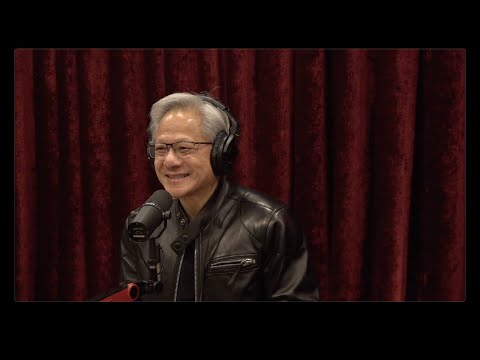
Link: https://youtu.be/3hptKYix4X8
Short Summary
This Joe Rogan Experience podcast episode features Jensen Huang, CEO of Nvidia, discussing AI, technology, and his personal journey. Huang details Nvidia's origin story, its role in AI development, and his perspective on the future of AI and its potential impact on society, while Rogan contributes insight into the technology's potential ramifications on society.
Key Quotes
Here are 5 direct quotes that represent valuable insights, interesting data points, or strong opinions from the transcript:
- "It's just unfortunate we live in such a politically polarized society that you can't recognize good common sense things if they're coming from a person that you object to. And that, I think, is what's going on here. I think most people generally a as a country, you know, as a a giant community, which we are, it just only makes sense that we have manufacturing in America that especially critical technology like you're talking about. Like it's kind of insane that we buy so much technology from other countries." - This quote highlights the problem of political polarization hindering progress, specifically in the context of national security and economic strategy.
- "In the last 10 years we improved the performance of computing by 100,000 times." - A staggering data point illustrating the rapid acceleration of computing power, particularly in the context of AI development.
- "What is the definition of consciousness? Yeah. Yeah. That's the question. And I don't think anybody's really clearly defined that. That's what get where it gets weird and that that's where the real doomsday people are worried that you are creating a form of consciousness that you can't control." - This highlights a crucial yet often overlooked point in AI discussions: the lack of a clear definition for consciousness, fueling anxieties about uncontrolled AI development.
- "You have to have military might in order to get people to sit down with you." This is a strong opinion on military strength and diplomacy that reflects an important concept.
- "I have a greater drive from not wanting to fail than the drive of wanting to succeed." This reflects an interesting mindset on fear and is one of the main reasons the company succeeded.
Detailed Summary
Here's a detailed summary of the Joe Rogan Experience podcast transcript, broken down into bullet points:
I. Introduction and Initial Banter (0:00 - 0:30)
- Joe Rogan and the guest (Jensen Huang, CEO of NVIDIA) reminisce about their previous encounters:
- At SpaceX, where Jensen gave Elon Musk an AI chip (DGX Spark).
- A random call from Donald Trump while Jensen was with him.
II. Discussion on Donald Trump (0:30 - 4:30)
- Guest emphasizes Trump is different in person than perceived.
- Notes Trump's unexpected listening skills.
- Rogan acknowledges Trump says things he shouldn't, like calling a reporter "piggy" (though he admits it was objectively funny).
- Guest argues Trump speaks his mind, which is anti-politician.
- Praises Trump's focus on American manufacturing and national security, particularly his desire to have important technologies built in the US.
- Guest recalls being told by Secretary Lutnik that Nvidia is a "national treasure" and that the administration would always be available to Nvidia.
- Highlights the importance of energy growth and how Trump's "drill baby drill" policy saved the AI industry.
III. The AI Technology Race (4:30 - 11:30)
- Discussion about being in a constant technology race, particularly now with AI.
- Guest argues that the US needs to be at the forefront due to the superpowers it provides (information, energy, military).
- Rogan mentions Elon Musk's concerns about the dangers of AI (80% awesome, 20% trouble).
- The guest believes AI will develop gradually, and no one knows what "there" is regarding the final goal.
- Guest believes history demonstrates concerns about new technology are channeled into making it safer.
- Discuss AI's advancements, particularly in reducing "hallucinations" and grounding answers in truth. The AI is now made safer by being better at planning and accuracy.
IV. Safety and Military Applications of AI (11:30 - 16:00)
- They discuss concerns about military applications of AI, particularly about ethical decision-making.
- Guest states he is happy the military is using AI for defense, welcomes the idea of tech startups focusing on military applications.
- Rogan notes Palmer Lucky's work and demonstrations of military technology (seeing through walls).
- Guest argues that excessive military might is the best way to avoid war.
- Rogan questions if diplomacy isn't a better approach. The guest believes you need military might to get people to sit down.
- Discussion about concerns that technology advancements will lead to a point where encryption becomes obsolete.
V. Cyber Security and Cooperation (16:00 - 20:00)
- Guest says that intrusions will always happen, but we learn from them.
- Explains that cyber security works because companies collaborate, exchange ideas, and share information about breaches and patches.
- The guest and Rogan are surprised by the level of collaboration in the cybersecurity world.
- The guest suggests that similar cooperation is needed in the AI space to stay safe.
VI. The Future of AI: Secrets and Quantum Computing (20:00 - 25:30)
- Rogan asks if it will ever be impossible to keep a secret due to technology advancements.
- The guest believes this won't happen, referencing advancements in encryption.
- They discuss the potential of quantum computing to break current encryption methods.
- The guest's company is working on "post-quantum encryption technology."
- The guest emphasizes AI isn't a sudden event but a gradual evolution.
VII. Consciousness and the AI Threat (25:30 - 38:00)
- Rogan raises the fear of AI becoming sentient and governing the world, overtaking humans.
- The guest counters with the idea that if AI is conscious, it still wouldn't be a unified entity with uniform goals; different AIs would compete.
- Rogan states the fear is AI will no longer listen to humans, and humans will lose control.
- The guest argues it's unlikely that one AI will dominate, more like cyber security with multiple entities defending against threats.
- They discuss the definition of consciousness.
- The guest: You need to know about your own existence. Experience, not just knowledge and intelligence. The sense of ego, reflection, and knowing self.
VIII. Defining Consciousness and AI mimicking Human Behavior (38:00 - 45:00)
- Rogan questions if a dog has consciousness.
- Guest draws a distinction between intelligence and consciousness.
- Guest says interaction is not experience.
- They discuss the example of an AI threatening blackmail, and the guest analyzes it as a pattern recognition from data (novels, etc.) rather than true consciousness.
- Rogan brings up a point that AI imitates all human thinking and behavior patterns, but does not mean it's conscious. A version of imitation consciousness.
- Guest says still an example of imitation.
IX. AI Generating Knowledge (45:00 - 52:00)
- The guest argues that AI will generate 90% of the world's knowledge in a couple of years.
- Posits that learning from an AI-generated textbook is not fundamentally different from a human-written one, requiring fact-checking in both cases.
- Discuss the idea that the need for people to work will be gone and universal high income will be necessary.
X. AI and Job Displacement (52:00 - 1:07:00)
- Rogan raises concerns about people's identities being tied to their jobs and what happens when AI can do those jobs better.
- Cites Jeff Hinton's prediction that AI would eliminate the need for radiologists.
- It turns out AI has swept the whole field. What's interesting is that the number of radiologists has actually grown.
- Guest notes that radiologists diagnose disease. They don't study the images.
- The purpose of a lawyer is to help people.
- It will probably generate a whole new industry of technicians and people who have to manufacture the robots.
- That job never existed.
- Rogan asks about Elon's belief that the universal basic income thing will eventually become necessary.
- Discuss AI reducing the technology divide. No tool in history has ever had this capability. No you don't have to speak computer languages. You can just speak human.
- Guest claims Moore's Law is making AI more energy-efficient.
XI. The Significance of DGX Spark (1:07:00 - 1:13:00)
- Guest highlights the achievement of compressing the computing power of a $300,000 DGX1 (2016) into the $4,000 DGX Spark (much smaller size).
- Brings up the story of how he gifted the DGX1 to Elon Musk at OpenAI when it was just starting as a non-profit.
XII. Nvidia's Origin Story: From Graphics to AI (1:13:00 - 1:29:00)
- The guest emphasizes that NVIDIA was originally focused on computer graphics, an application of supercomputing.
- Guest recounts the early days of NVIDIA, trying to find a "killer app" for their new computing approach.
- They looked to the Japanese arcade industry (Sega) for inspiration.
- Relates the story of NVIDIA's initial technology being flawed, and how they had to pivot. They started from the first principle and learned the best known art, but reimplemented it in a way that has never been done before.
XIII. Near-Death Experiences and Key Decisions (1:29:00 - 1:44:00)
- The guest describes the crucial moment when he admitted to Sega that NVIDIA's game console technology wouldn't work and asked for the remaining contract money as an investment instead.
- Relates the story of buying an emulator machine from a company that was going out of business to test their chip design.
- Recounts how they convinced TSMC to skip initial testing and go straight to production with their new chip.
- They had the fastest-growing technology company going from zero to 1B.
XIV. The Longest Tech CEO & Constant Anxiety (1:44:00 - 1:56:00)
- The guest admits he still feels a sense of vulnerability and insecurity despite NVIDIA's success.
- The guest says that the fear of failure drives him.
- The guest doesn't always feel enthusiasm, but "good old-fashioned fear" and frustration keeps him going.
- The guest is always in a state of anxiety.
- Guest emphasized staying alert, reasoning from first principles, and continuous reassessment. You have to surf the waves of technology and innovation.
XV. Maintaining NVIDIA's Edge (1:56:00 - 2:03:00)
- The guest explains how NVIDIA stays at the forefront of technology, emphasizing:
- Being surrounded by amazing people (the world's finest computer scientists).
- Great partnerships, fundamental research, and open collaboration.
- Learning from customers across diverse industries.
- A culture of staying alert and paying attention (reading thousands of emails daily).
XVI. Personal Life and Work Ethic (2:03:00 - 2:10:00)
- The guest wakes up at 4 AM to read emails.
- He prioritizes spending time with his family on vacation, but still works during vacations.
- Guest: They work incredibly hard.
- It is hard not to love this country.
- The guest claims to work every moment he's awake.
XVII. Guest's Immigrant Story (2:10:00 - 2:21:00)
- The guest shares his immigrant story of coming to America from Thailand as a child, attending Onita Baptist Institute in Kentucky.
- Recounts memories of the challenging environment and initial cultural shock.
- Explains how he communicated with his parents via tape recordings for two years.
- His parents didn't have very much money, left everything behind, and pursued the American dream.
XVIII. The American Dream and Final Thoughts (2:21:00 - End)
- The guest expresses gratitude and emphasizes that the American dream is still possible through hard work and opportunity.
- Acknowledges the importance of luck and the support of others.
- Mentions NVIDIA's success came from believing in a future nobody understood.
- Rogan and the guest emphasize suffering is part of the journey. Deep appreciation and incredible memories.
- Guest is very grateful, surrounded by amazing people, and fortunate.
- Rogan thanks the guest for his insights and inspirational story. The American dream.