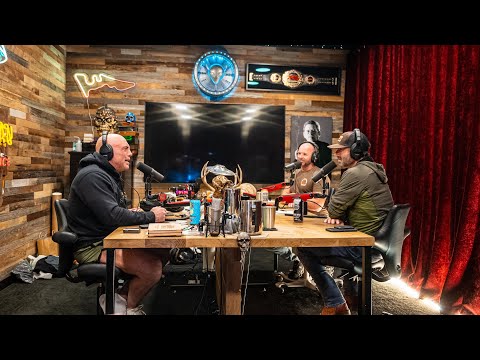
[@joerogan] Joe Rogan Experience #2426 - Cameron Hanes & Adam Greentree
· 5 min read
![[@joerogan] Summarizer](https://summaries.pages.dev/img/logo.webp)
Link: https://youtu.be/bdhaUe6dhvM
Short Summary
Joe Rogan and guests discuss the critical role of hunting and wildlife management in maintaining ecological balance, citing examples of mountain lions, bears, and sharks. They argue that regulated hunting is essential for controlling animal populations, preventing human-wildlife conflicts, and generating conservation revenue. The conversation also delves into the value of connecting with nature and embracing "voluntary struggle" for personal growth and mental well-being, exemplified by the transformative health journey of Jelly Roll.
Key Quotes
Key Quotes
- "One of the things they found out in San Francisco in the Bay Area was when they do shoot these mountain lines, they've done an analysis of their diet. It's 50% dogs and cats." (00:13:21)
- "I hope every one of you behind your screens or in this arena can feel this level of happiness just one time in your life. I hope all of you can feel how happy I am just one time in your life. But guess what? You will never feel this level of happiness if you don't go for something in your own life. When they knock you down, when they trying on you, when they talk about you and they trying to put their foot on your neck, if you stay down, you will never ever get that resolve. FORTIFY YOUR MIND AND FEEL THIS LEVEL OF HAPPINESS AS YOU RISE ONE TIME YOUR LIFE." (00:59:16)
- "It's just that you never get anywhere by blaming other people for where you're at. And so many people do that because they won't accept personal responsibility for their actions or for their place in life." (02:03:25)
Detailed Summary
- Mountain Lion Hunting & Destructive Behavior: Adam recounts hunting a mountain lion that was attacking livestock, highlighting the brutal nature of predators eating prey alive and the necessity of management. The lion's meat was surprisingly good.
- Nature's Uncompassionate Reality: The discussion emphasizes that wild animals lack human concepts of mercy, eating prey alive and showing no remorse, contrasting this with humanity's role in alleviating suffering where possible.
- Insulation of City Dwellers: A key theme is the disconnect between urban populations, who often vote against hunting, and rural communities who directly experience the impacts of unmanaged wildlife, leading to misguided policies.
- Wildlife Population Management Examples:
- Japan's Bear Crisis: Lack of hunting has led to a surge in fearless brown bear attacks, requiring military intervention and resulting in record human fatalities and injuries.
- California's Mountain Lion Dilemma: A hunting ban has resulted in numerous mountain lions being killed under depredation permits (often by agencies), with 50% of their diet in urban areas being domestic pets.
- Oregon and Utah Models: Oregon allows licensed hunting (without dogs, making it challenging), but struggles to meet population control goals. Utah's model, treating mountain lions like coyotes (year-round harvest with a license, post-kill check-in), is praised for effective management.
- British Columbia's Grizzly Ban: Prohibition of grizzly hunting has led to increased bear encounters and attacks, demonstrating the negative consequences of unchecked predator populations.
- Predator-Prey Balance: The podcast acknowledges the role of predators (like feral cats controlling rats) in maintaining ecological balance, but stresses that human encroachment necessitates active management.
- "Fake Life" vs. Natural Living: The hosts argue that modern, domesticated society is often disconnected from human nature, leading to widespread anxiety and depression. They advocate for physical exertion, connection with the natural world, and "voluntary struggle" (e.g., hunting, ultra-marathons) as pathways to contentment, purpose, and mental well-being.
- Hunting as a Path to Growth and Respect: Hunting is presented as a challenging endeavor that builds character, teaches valuable life skills, and earns respect, especially for men. It fosters deep learning from natural environments.
- Technology in Hunting: The evolution of hunting gear (rangefinders, sight tapes, OnX maps, specialized clothing) is discussed, enhancing accuracy and hunter experience. However, "thermal optics" are identified as a controversial technology that crosses the line into unfairness and should be outlawed.
- Self-Improvement and Inspiration (Jelly Roll): The transformative health journey of musician Jelly Roll, who went from over 500 lbs to running and bow hunting, is highlighted as a powerful inspiration for millions to embrace self-improvement, emphasizing that anyone can start the path to a healthier life.
- Critique of Medical Industry: There is criticism of the FDA and pharmaceutical companies for prioritizing profit over health, approving questionable drugs while being skeptical of proven natural treatments like stem cells and peptides.
- Parenting and Responsibility: The importance of parents setting a responsible, non-blaming example for their children is discussed as crucial for character development.
- Lessons Learned from Hunting Season: The hosts share personal lessons from their season, emphasizing leg conditioning, avoiding overuse injuries, and the profound satisfaction and purpose derived from sharing the hunting lifestyle and fostering the success of others.