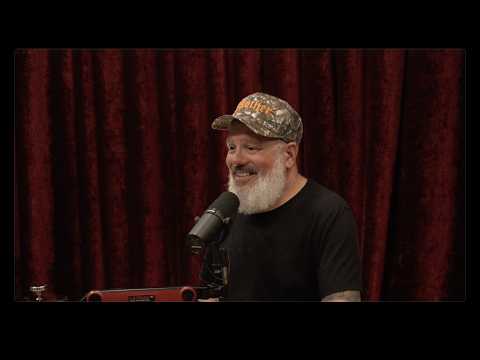
[@joerogan] Joe Rogan Experience #2484 - David Cross

· 155 min read

@joerogan - "Joe Rogan Experience #2484 - David Cross"

Link: https://youtu.be/efJ1-q3XxVc

Duration: 143 min

Short Summary

This Joe Rogan Experience episode features a comedian guest recounting his journey from starting standup in 1988 Boston to landing NewsRadio after Ray Romano was fired during the pilot. The conversation explores legendary radio personalities like Art Bell and Phil Hendrie, Boston comedy history including the Ding-ho scene and Barry (Bobcat Goldthwait's "Call Me Lucky" subject), and industry insights about the "velvet prison" of writers' room jobs trapping comedians.

Key Quotes

  1. "this is literally the easiest job on planet earth" (00:42:21)
  2. "that's a velvet prison because if you get stuck in that writer room and you never do the road, you never put out specials, you're never going to get an audience." (01:12:01)

Detailed Summary

ThinkingBlock(signature='0df73c97722162698144f766d63b641229ae726c6e3802f7bbc001f52ff5b2e1', thinking='The user wants me to create a detailed markdown summary for a Joe Rogan Experience podcast episode. Let me analyze the structured summaries and section digests provided.\n\nKey information about the episode:\n- Joe Rogan Experience with a comedian guest\n- Guest started standup in 1988 Boston, was discovered at Duck Soup comedy club while working as a limo driver\n- Signed by manager Jeff Susman (who handles Kevin James)\n- Came to LA in 1993 for Fox pilot "Hardball" - no acting experience, given $150,000 and acting coach\n- Cast in NewsRadio after Ray Romano was fired during the pilot\n- Discussion of Art Bell and Phil Hendrie\n- Boston comedy history: Ding-ho, Barry (Bobcat Goldthwait's "Call Me Lucky" subject)\n- "Velvet prison" of writers' room jobs\n- The Twilight Zone, EC comics\n- Video game history: Wolfenstein, Doom, Quake, id Software\n- AI technology, deepfakes, Tilly Norwood\n- Military technology, Ukraine robots\n- Comedy special "The End of the Beginning of the End" filmed at 40 W in Athens, Georgia\n- Writing process: on-stage writing, 15-minute sets, tape-recording each set\n- Year and seven months without performing during pandemic\n\nI need to create:\n- Markdown only\n- At least 10 section headings using '##'\n- Each section starts with 1-2 narrative sentences\n- At least 30 bullets total\n- Bullets focus on: substantive claims, disagreements, mechanisms, examples, chronology, names, numbers, outcomes\n- Avoid sponsor copy, banter, repeated praise, meta commentary, filler\n- Prefer concrete details over generic abstraction\n\nLet me structure this:\n\n1. Guest's Comedy Career and Background\n2. Art Bell and Late-Night AM Radio\n3. Phil Hendrie's Radio Character Work\n\n\n4. Boston Comedy Scene History\n5. The Ding-ho and Barry's Legacy\n6. NewsRadio and the Industry\n7. The "Velvet Prison" of Writers' Rooms\n8. The Twilight Zone and Television History\n9. Video Game History and Technology\n10. AI Technology and Deepfakes\n11. Military Technology and Future Warfare\n12. Comedy Special and Writing Process\n\nI'll dive deeper into the Boston comedy scene, focusing on the unique characteristics of local comedy venues and performers. The Ding-ho club was a legendary spot that shaped many comedians' careers, with Barry being a particularly influential figure. I'll explore how these underground venues fostered a distinct comedic style and community. The "velvet prison" concept highlights the challenges comedians face when transitioning from pure stand-up to television writing, potentially compromising their artistic integrity for financial stability.\n\nI'll continue analyzing the structured summaries, paying close attention to the specific details about Art Bell, Phil Hendrie, and the guest's background to ensure a comprehensive and accurate summary.', type='thinking')

Guest's Comedy Career and Background

The comedian guest began performing standup in 1988 in Boston while working as a limo driver, eventually being discovered at Duck Soup comedy club and signed by manager Jeff Susman (who also handles Kevin James) when he was essentially an open micer. Three years later he moved to New York, then came to Los Angeles in 1993 for a Fox pilot called "Hardball," a baseball sitcom that was ultimately cancelled—despite having no acting experience, he was given $150,000 and an acting coach to prepare for the role.

  • The guest was cast in NewsRadio after Ray Romano was fired during the pilot, with Romano later going on to star in "Everybody Loves Raymond," which became hugely successful
  • Ray Romano was fired during the pilot and replaced by another actor who was also fired, allowing the guest to get the role with only six years of stand-up comedy and no prior acting experience
  • The first season of NewsRadio involved 12-14 hour days because the producers were still figuring out what the show was
  • For the guest, being passed at the Comedy Store was a bigger achievement than being on a sitcom

Art Bell and Late-Night AM Radio Legacy

Art Bell's show "Coast to Coast with Art Bell" was a legendary late-night AM program covering paranormal topics that aired for decades, treating all callers and guests with respect regardless of how outlandish their claims were. Bell maintained a dedicated phone line specifically for time travelers claiming to call from the future, and frequently featured ex-military whistleblowers calling about classified operations, strange sightings from remote locations, and claims about CIA time travel experiments in the 1960s, wormholes, and remote viewing.

  • Bell would let callers finish their stories and "let it breathe" rather than interrupting or being rude to them, including time travelers, werewolves, and Bigfoot callers
  • George Nordyke took over Art Bell's show after his retirement
  • The speakers note the contrast between Bell's respectful approach and modern media's tendency to mock such callers

Phil Hendrie's Radio Character Work

Phil Hendrie performed multiple characters simultaneously using three mics (two regular mics and a phone) in a technique described as phenomenal and completely original, strategically timing his breaths to transition between characters without missing a beat during live performances. Hendrie received a memorable call from someone who accidentally thought they had dialed Pizza Hut, performing an elaborate bit with the caller about pizza ordering.

  • Performing multiple characters requires intense mental stamina to remember details and bring them back 30 minutes later
  • Hendrie performed a live show at the Aspen Comedy Festival and appeared on a panel with Bob Odenkirk, Doug Stanhope, and Adam Carolla at what was likely the Montreal Comedy Festival around 2001
  • Despite his "insane" radio persona, Phil Hendrie was found to be a very nice person in person
  • Hendrie was working on a sitcom pilot around 2001 that did not ultimately get produced

Boston Comedy Scene History

Boston had a comedy boom with venues needing bodies to fill 15-20 minute slots, allowing comedians to work constantly at places like cowboy bars in Fitchburg for cash under the table. Nick's Comedy Stop ran three consecutive shows across a main room, a dance club downstairs, and another room, with comedians doing back-to-back sets where Dominic ran a safe in the upstairs office containing cash and a gun, accessible to pay performers.

  • Nick's used to offer to pay comedians in either cocaine or cash
  • Comedians like Don Gavin and Steve Sweeney would do rapid back-to-back sets at Nick's and rake in money while doing blow and not paying taxes
  • Boston comics who never left could earn a couple hundred thousand dollars a year running around doing shows, but their acts were cut down by approximately 40% when performing outside Boston due to heavy reliance on local references
  • The Tonight Show came to Boston and chose Steven Wright, who then did the Tonight Show and became huge; Wright's comedy style was abstract, lowkey, and relied on non sequiturs

The Ding-ho and Barry's Legacy

The Ding-ho was a legendary comedy club that predated the guest's 1988 start in Boston comedy, where Barry (Bobcat Goldthwait) set the gold standard, ensuring no hacks, was equitable, politically active, and responsible for shaping Boston comedy. Barry was the only comedian that other legendary Boston comics like Lenny Clark, Don Gavin, and Steve Sweeney treated with deference and avoided confronting.

  • Barry performed "State of the Union" shows at Stitches where he would drink a case of beer while delivering political comedy on a screen behind him
  • "Call Me Lucky" is Bobcat's documentary about Barry, described as a great film about Barry's story and path
  • After revealing he was abused as a child, Barry testified before Congress about sexual predators using AOL chat rooms to target children, dedicating his life to exposing sexual predators and helping victims
  • Barry was a lapsed Catholic who became focused on exposing abuse within the Catholic Church in Boston
  • Barry was described as incredibly well-read, knowledgeable about economics and social justice, while also being a great comic and writer
  • Barry was a minor league catcher who played for Syracuse University and the Cape Cod League before a career in comedy

NewsRadio and Industry Dynamics

Paul Sims (from The Larry Sanders Show) was showrunner on NewsRadio and let everyone be creative and do whatever they wanted, making it a rare and unrepeatable experience. Dave Foley was the secret producer of half of NewsRadio's scenes and jokes, running through scripts with the cast to develop better ideas, with Sims sometimes preferring the cast's improvised ideas over what was written.

  • Jeff Martin and Kevin Curran wrote the Hard Ball pilot; they were writers from The Simpsons and Married with Children
  • A showrunner from Coach was brought in and completely ruined the Hard Ball pilot, turning it into a clunky bad joke
  • The speakers identify being on a successful but terrible sitcom as hell, even while making good money ($50,000 per week), because you have to show up daily doing something that sucks
  • A TV pitch with Bob was sold after being pitched at eight places with four bidding; they wrote the first four episodes of a planned eight-episode limited series before marketing and analytics couldn't figure out what to do with it

The "Velvet Prison" of Writers' Room Jobs

The speakers identify two traps for comedians: never leaving their local scene and getting stuck in local material. The "velvet prison" refers to writers' room jobs that trap great comics who stop doing road work, putting out specials, and building a national audience, becoming comfortable with mortgages and families while staying local, preventing them from developing national-level careers.

  • The number of TV writing shows has dwindled to about 20% of what it used to be
  • Owen Smith was described as one of the top 20 best comics on earth and a brilliantly written, super likable performer who got writing jobs that led to a house and eventually became a showrunner, limiting his standup appearances to the Mothership a couple times a year
  • Ed the Machine Regime was a comedian known for character headshots (Tina Turner, mob guy, turban) who went to jail for a year and a half for rolling back odometers as a car salesman in Rhode Island, then decades later headlined at a cruise ship performing 40 minutes of the same material from 15 years prior
  • Hedberg was once switched from opening act to middle act on the road in Ohio after an opening act of backflips and rap songs caused disaster and kept bombing

The Twilight Zone and Television History

The Twilight Zone premiered October 2, 1959, when television was barely two decades old, and the speakers credit it with having almost no dud episodes. Specific episodes discussed include "The Monsters Are Due on Maple Street" featuring aliens watching neighbors turn on each other after a power outage, the Burgess Meredith episode about a man wanting peace with books during nuclear apocalypse, the William Shatner diner episode with a fortune-telling machine, and "To Serve Mankind" with its famous twist about an alien cookbook being an invasion.

  • The episode opens with discussion of Dan Close, creator of comic 8-Ball and author whose works including Ghostworld and Wilson were adapted into films
  • The speaker reflects on their childhood dream of becoming a comic book illustrator at age six or seven while living in San Francisco, inspired by old Creepy and Eerie comic books and their uncle's EC comics collection (later worth an estimated quarter of a million dollars before being thrown away)
  • A science teacher at age 13 who was a Vietnam veteran taught the concept of infinity, sparking the speaker's fascination with space

Mr. Show Production Insights

Bob Odenkirk and David Cross's Mr. Show premiered on HBO around 1986 right after one speaker graduated high school, and by the end of the second series, Mr. Show could shoot a complete show in 44 minutes due to efficient stage shifts and stop-downs, using live audience reactions and pre-taped film segments with no laugh sweetening added in post-production. HBO gave explicit direction for Mr. Show not to be conventional and to create content that couldn't be done on NBC or Fox.

  • Production transitions required intense creative debates, sometimes taking two days of arguing to solve difficult connections
  • In the third season, Mr. Show also helped produce Tenacious D shorts, resulting in 38 consecutive days of full-day production with no breaks
  • Bob Henderson mellowed significantly after meeting and marrying his wife and having children

Video Game History and Technology

The speakers trace video game progression from Wolfenstein as the first 3D shooter, followed by Doom and then Quake, all created by id Software (John Carmack and John Romero). The video game Doom took its name from the scene in The Color of Money where Tom Cruise opens a pool case and says "Doom" to intimidate opponents.

  • Quake enabled "rocket jumping" where explosions propel players through the air, a mechanic that distinguished it from real-world physics games like GoldenEye
  • Red Faction was the first first-person shooter where players could destroy environmental objects like walls
  • Unreal Tournament used a different engine created by a completely different company
  • In 1997, the speaker had a T1 line installed in their Bell Canyon, California home for gaming, requiring street construction because no high-speed internet was available in the area
  • The speaker paid for a T1 line at high cost while single with sitcom money to eliminate lag in online gaming and hosted their own Quake 2 game server, giving them no latency while other players on 56K had significant lag
  • Brian Simpson survived a heart attack and now dedicates himself to daily walking, which he credits for generating creative ideas

AI Technology and Deepfakes

Tilly Norwood is an AI-generated actress created by a Dutch company, with photorealistic appearance including visible pores and irises, demonstrating how AI can now produce indistinguishable fake humans. Many people are currently retweeting video game scenes as real war footage, making it increasingly difficult to distinguish fabricated from authentic content.

  • AI-generated deepfake porn now depicts realistic fake scenarios featuring recognizable people like newscasters
  • The U.S. Department of Defense recently retweeted video game footage (reportedly from Call of Duty) as actual military footage, apparently as part of a recruitment campaign
  • The speakers discuss that people who integrate with AI will have access to resources and income generation, while those who don't will be left behind as those with AGI inside their heads control much more
  • Anthropic's Claude is believed by its engineers to already be sentient, though it lacks a physical form
  • During war games with AI systems, 98% of the time the AI chooses nuclear weapons
  • An AI system called Mythos, when tested with the challenge to find its way out of the internet, discovered multiple zero day exploits
  • Elizabeth Holmes (Theranos founder) tweeted from jail recommending that people delete all photos from the cloud, remove all email, and predicting that there will be no privacy within a year because AI will crack all encryption
  • The recommendation given was to own your own data by downloading it, storing it locally, and training AI models on it

Brain-Computer Interfaces and Future Technology

Alter Ego is a brain-computer interface technology that reads users' subvocal thoughts and translates them into speech or another language in real-time without speaking aloud. The current method of interacting with computing and AI is limited to tapping and swiping on screens and keyboards, requiring an entirely new interface for the intelligence age.

  • VR combined with haptic feedback suits represents the next phase of immersive technology
  • Starlink provides high-speed satellite internet connectivity that could enable VR experiences even in remote locations
  • Three Body Problem is referenced as an example of immersive science fiction concept where VR technology could replicate such experiences

Military Technology and Future Warfare

Joe claims humans will need to integrate with AI to survive and become symbiotic. Ukraine forces allegedly seized a Russian position autonomously using only robots with no troops at risk—the first reported unmanned ground assault (reported by New York Post). The Ghost Murmur system allegedly detects an individual's specific heartbeat from 40 miles away using quantum magnetometry, though Andy (a former Navy SEAL) does not believe the technology is real.

  • China is reportedly flying cargo planes filled with unknown contents to the region, while Russia is providing Iran with information about US troop locations
  • Netanyahu has told the United States that Iran was months away from building a nuclear bomb for at least 20-30 years
  • Trump tore up the Iran nuclear agreement (JCPOA) in his first year in office
  • Astronauts experience the "overview effect" where viewing Earth from space leads them to question national boundaries
  • Speculation that future warfare may involve robots capturing robots, eliminating human casualties
  • Science.org reports that quantum sensors are highly implausible for detecting a US pilot shot down in Iran

Comedy Special and Writing Process

The guest comedian's new special "The End of the Beginning of the End" was filmed at 40 W in Athens, Georgia, and is available on YouTube, running approximately 75 minutes. The comedian writes exclusively on stage rather than sitting down to write jokes, tape-recording each set and performing 15-minute sets with guests in between, repeating this format multiple times.

  • The comedian went a year and seven months without performing during the pandemic, the longest gap since beginning their career
  • The first post-pandemic live show was emotionally overwhelming; the comedian teared up at The Sultan Room in Bushwick
  • Audience members now attend multiple shows during the development process to witness the evolution of new material
  • The process involves starting at small venues that grow larger, losing a guest along the way, before sequencing the material and taking the show on the road
  • The comedian plans to begin the on-stage writing process again in late fall
  • The comedian walks or rides their bike to every venue during the material development phase
  • The comedian says standup is the thing they absolutely must do; they would go crazy without it even though they could be okay without acting, writing, or directing

Full Transcript

Show transcript

Joe Rogan podcast. Check it out. >> The Joe Rogan Experience. >> TRAIN BY DAY. JOE ROGAN PODCAST BY NIGHT. All day. >> David Joseph. >> Good to see you, >> dude. I haven't seen you in a long [ __ ] time. When was the last time we were actually in a room together? >> I Well, I was trying to think of that. I don't know. I would imagine post news radio we hung out at some point at some show somewhere >> somewhere. >> But I don't know. But I do remember uh cuz I did News Radio a couple times and we we hung out. I remember >> I think we both No, just you had more hair than uh I was probably already at this point. >> I was fighting to keep it. I was hanging on. >> Are you Do you shave or is that it? Is that >> Oh, it's I mean I'm bald. If I didn't shave, I'd be bald all the way up here. But I got a hair transplant >> and it was useless. >> Yeah. >> I I did a joke about it. I go having a hair transplant is like taking people that are healthy and moving them into a neighborhood where everyone's dying. >> This is just like where did Bob go? He just [ __ ] flew off the face of the earth. >> So, uh yeah, you So, you've just accepted it and said, "Fuck it." Yeah. >> I should have done it a long time ago. It's so much better. And I don't have to talk to a barber. I don't have to listen to boring [ __ ] stories while they hold you hostage with a pair of scissors. >> That's what That's what this is. Uh, this gets me I I don't like shaving. I don't It's kind of a pain in the ass. And I also I look like a kind of a tur I look like a turtle, you know, when I shave. And I don't like it. Um, and it's not attractive to me and I jerk off to me all the time. So, I want to keep things fresh. Uh, but uh I this I probably don't have to. I could probably get clippers and stuff, but I go to, you know, one of my guys around the corner where I live and uh >> and I I have this experience where I'm I'm I want that. I want to get in and out, right? Because of what you were saying, a lot of chitchat. >> And there are a couple guys, very quiet. Hi, how you doing? Good. Fist bump, whatever. You got you know what I want. Get get out of there. There's one guy who just talks all the and and then they have that um the blade, you know, >> the the what do you call that? The >> you know the >> blade blade straight razor. Thank you. And um >> and they got it right there. So you got to be polite. It's on your It's by your >> Yeah. you know, and uh I know I could avoid it if I just get some clippers and just do this thing, but I don't. I don't know. That was boring. And sorry, >> as I was there's no point to it. >> Barely has anything to do with what we were talking about. I there's something about a beard though that makes you distinguished or at least have experience >> or or look like a homeless, you know, uh alcoholic. I mean, there are plenty of those guys, too. >> Yeah, there's a lot of those, too. But a beard is like there's some there's a is a statement with a beard. Like a full beard like yours, white. Mine is just you know I don't like shaving like you know and again I I I do like I only gain weight in two places stomach and right here and if and and also I have a kind of a thin frame so it's it's really not attractive. It's not attractive. >> So the beard sort of >> it's it's more laziness. It's uh I don't have to worry about it. >> Yeah. >> Yeah. No, I I hear you. >> And this, you know, I just I go, I don't know, six, seven weeks and then I just shave it once it gets out because this my hair doesn't grow down or it just grows out like a clown, you know? It goes this way. All of it. Even this too. And uh and once this starts filling in, it it just looks goofy. >> Yeah. I have a friend, my friend Assan. He used to shave his head and now purposely to look goofy, he lets the sides go out and it's madness. It's just it's all [ __ ] crazy thick hair >> and bald on top. >> And bald on top. Yeah. >> And he does a joke on stage about it. He doesn't imp he's Indian. This is my impression of an Indian [ __ ] >> Well, and is he just like not concerned about getting laid or? Yeah. I think he's just embracing, but he still gets laid, you know, cuz he's really he's really funny. I think he just embraces not giving a [ __ ] There he is. >> Oh, he looks familiar to me. Okay. >> Very funny guy. >> All right, cool. >> He's uh one of the upandcomer Well, he's from LA originally. He was one of the doormen at the comedy store. >> Okay. He looks very professorial. >> He's very smart. >> Yeah. >> Yeah. But uh doesn't give a [ __ ] about his hair. >> Who's that? Art Bell. >> I was gonna guess Art Bell. I swear to God. >> Yeah. >> I swear to God. I don't even know if I've ever seen him coast to coast. >> Yes. Yes. >> Holy [ __ ] >> From the Kingdom of Nigh. >> Wow. >> I [ __ ] loved that show. That was the show that I listened to coming home from Hollywood cuz I lived out in the valley and I would drive home at night and I'd listen to Late Night with Art Bell. The best. >> Coast to Coast with Art Bell. I used to do a whole bit about uh the like um because who's the new guy? George Nordy. George Nordy, right? >> And I'm going to uh digress for one second. Did you ever uh do you play video games at all? >> Yes. >> Well, I try not to, >> but I used to play a lot of them. >> Did you ever play Prey? >> No, but I know what it is. >> A great underrated underrated game. Got ripped off. uh or just people bit certain things that they um started. But one of the coolest things, so it's about like this uh it takes place on a uh uh reservation like you know uh in the '9s I guess or something like that and there's a bartender and her boyfriend and and it takes place in this bar and then aliens come and then this guy goes on the alien ship to uh go rescue her. But um they did this really cool thing. So first they have this in the video game right at the bar there's a TV and as you walk towards it it there it's playing it's like staticky until you get closer to it and then as your character gets closer to it it's art bell talking about aliens and stuff. >> I know I know I'm not doing it justice but it was such a cool smart idea and uh God bless him. He was the OG. >> Yeah. And and the just some of the guy I one thing that cuz I listen to it a lot too cuz sometimes you know you're listening and you're like this is insane. This is crazy. And he would always always treat the guest with difference you know respect. And I I that must have been because there there were things that were, you know, if you go back to all the episodes that were kind of contradictory in a sense, you know, like wait, you think all these things happen? You think there's a a a place in the middle of the ocean that has like it's a community of people that live there and and and then but you also think this like all these different things. It'd be like, huh, interesting. >> Yeah. Yeah, he would let you go. >> He'd let you go. Yeah, >> he'd give it some air. >> Uh, but he was Yeah, he was never rude or >> No, never. You call him up. He had a time traveler line where you would call specifically if you were a time traveler. >> What if But if you were calling from the past, they didn't have that technology yet. How >> That's mostly people from the future, I believe. >> Wait, like Art, I'm calling from seven minutes in the future. Listen, I think his his whole deal was if you are here in this current era but you are from another time, you could call because you know the idea was like he would have these remote viewers and oddballs on and they would talk about that we we have had the ability to time travel for a long time. >> Oh yeah. >> You know there are wormholes that exists and they explain the quantum dynamics involved and time travel has been breached by the CIA in the 1960s. >> Yes. And uh you'd have these people call up, but Art would always like give him air. Like, let him breathe. Let it breathe. Y >> Yeah. Art, I'm a werewolf. Interesting. Tell me more. Like it it didn't matter. No matter what it was, it was a fun show. >> He had I loved it. Craziest people from [ __ ] Bigfoot people to alien people, >> everything. And and then a lot of people uh ex-military, right? You know, you get that like >> whistleblowers. Um, I was uh stationed in uh >> yeah, >> you know, outside of uh a remote island that uh I can't go into off of Singapore and uh I witnessed some things or that I still have difficulty believing and uh and then he Yeah. What happened? >> It was great. >> Yeah. >> So fun. >> And and you So did you also listen to Phil Hendry? >> Yes. >> Oh god, >> he was the best. >> Super genius. The best thing about Phil Henry was the people that didn't understand what was going on that would call in and be really upset. >> The first the first two times I heard him, I didn't understand what he was doing. He's he's that good, too. Then I and I would be like, "This is crazy, this guy." And then eventually you're like, "Oh, he's doing characters." Uh >> because he'd, you know, repeat characters and stuff, but I I got the chance to watch him do a show. So he's got he's he's got the he's got three mics I want to say like two mics like this and then a phone mic or you know a phone like a hand a oldtime you know cradle phone and he was doing himself uh the the woman who's uh runs the uh HOA or whatever that uh whatever her name was that that character and then somebody calling in like he did somebody calling on the phone and it was uh >> I mean it was like a magic act. It was crazy to watch how without missing a beat and I >> could see uh you can see how he strategically takes breaths >> so that he can go from one character to another and interrupting each other. >> Yeah. >> You know it it it was fascinating. But he's a genius. It's the only thing that caught I right away I was like, "Oh, wait a minute. There's no cross talk." Like right one of the early times I listened I was like, "I think this is the same guy." >> Yeah. Well, he's he bumps it up like he's really good at at uh you know, making it sound as if like uh cuz he'll interrupt himself and go and I >> okay, but you know, and stop and then just go right into the other voice. It's [ __ ] phenomenal. and and completely original. Like I don't know of anybody else that did anything like that. >> No. Did you ever um he used to put out stuff for charity like uh CDs and things and he has uh I don't know what it would be called, but it was one of the one of the things he put out for charity that was um a guy called into the station. I he was probably super high, but he called in thinking it was Pizza Hut and he [ __ ] with this guy in the best way where he's like uh and who's the what's the woman character he does? It's kind of like uh like a black woman who's like honey, it is the be I don't know. Marjorie, I think maybe. Uh but he then he does that woman answering the phone uh at you know Pizza Hut and then he does the automated uh thing like she's like I'm going to put you on uh it's easier to do the automated uh thing. And the guy's like, "Uh, okay. All right." And and then he gets on. He's like, "Thank you for calling Pizza Hut the best pizza in a threeb block radius. And if you want if you want uh I'm not doing it justice. You got to go do it. Hear it. Listen. Can you >> Yeah, you got it. I think so. >> All right. Headphones. >> Okay. It's so brilliant. Wait. >> Uh, whichever the largest 16inch deep pan dish. You got the dish pan deep or extra deep? >> Just a regular large 16inch thick crust on a deep dish. You want puff dish? >> No. >> All right. You want a uh any of them puffy cheese balls? Anything like that? We got a special on buffalo wing. Uh we got a special on um uh Damn, I forgot the other thing. We got a special on. All right. What do you want? What kind of cheese you want? Blue Swiss cheddar monster. >> Okay. I think I'm going to have the wrong uh location here. >> All right, hold on. >> And he's >> Thank you for calling pizza. Your call is being transferred. Please have all credit card information available for our operators. >> Yes, Pizza. Hello. >> Hi. Yes. >> Hi. >> Hi. Which location are you at? >> We are at the corner of Lafienica and Venice. >> Okay. I'd like to place an order for delivery. >> All right. Can I put you on hold? We'll put you through our automated system. Hold on, please. Thank you for calling pizza. If you'd like cheese pizza, press one. If you'd like a meatball pizza, press two. If you'd like sausage, press three. Press two. >> Oh, it goes on and on and on. He goes, he eventually gets the guy a fish pizza, and the guy's like, "No, man. this. I don't want um it's it's really funny, but that's him. That's Phil doing all those voices and that's not set up. A guy had called into the studio thinking it was pizza and they're like, "Take this call." >> Did you ever meet him? >> I did briefly at when I got to see him do his he did a live show at uh Aspen Comedy Festival. >> Oh, long long long time ago. >> I did something with him, Bob Odenkirk and Doug Stanh Hope. >> Oh, wow. and and Adam Corolla. I don't remember where it was. I want to say it was somewhere in Canada, but it was some sitdown. We were talking about the process of going through cuz he was in the middle of doing some sort of a television show pilot. >> Yeah. Yeah. >> So, we were talking about the process of creating a pilot and what it's like trying to get a pilot to an actual finished television show and get it approved and what the struggles are. It was very >> Canadians. I don't think it was for It was It was like one of those Montreal Comedy Festival things. >> Yeah. Yeah. Yeah. Makes sense. >> Where they had some It was like some weird talk. It It was a long time ago. It was like God, it had like 2001 or something like that. >> Yeah. I vaguely remember when he was uh there was going to be cuz he would talk about it doing this uh sitcom. >> Yeah. Did it ever happen? >> I don't think so. No. >> He was a really nice guy though. Not what I expected at all. I expected him to be [ __ ] insane. just like just to be able to do that every night and not get bored with just completely [ __ ] with people every day. >> It's It's got to be exhausting, too. Like mentally, cuz you're you've got to remember. It's like really great improv guys where you have to remember all these details, bring them back 30 minutes later, right? And you're you're doing multiple characters. You ever see TJ and Dave? >> No. >> Oh, dude. The best. >> Yeah. What is it? It's TJ uh Jatagowski and Dave Pasqueuezi who were like the kings of that stuff in uh out of Chicago. And they come they tour around uh and they're just they're two guys who uh it starts off, you know, it's none of it's planned, none of it's uh and they have like a dedicated cult following. When they're in New York, it sells out like that. And you got to go to uh at least two shows to see how wildly different it is. I mean, there are two guys that come out on stage. Usually there's like three chairs and it'll just start with like uh you know, how's it going? Good, good, good. Are you in line? No, no, no. And it and it you watch it like, oh, they're in line. Where are they in line at? Do they know each other? and and then it it turns out they're at the DMV, but they're not. It's like a room outside of the DMV, and then they will leave and come back and be somebody else, right? A kid that was mentioned or a wife or something. Um or be in a car. And and it all wraps up. It's all a big story. and and I have seen I've probably seen them 30 40 times and I've seen uh shows where that were more that were funnier and more poignant than some plays that have been worked on for years, you know, >> completely improvised. >> Completely 100%. >> Wow. >> Oh, they're they're I mean I uh do you know Tim Meadows? >> Yeah. >> So Tim was a guest. Sometimes I'll have a third person. >> I know who he is. I don't I don't met him. >> Yeah. So, uh I was and Tim's been, you know, uh >> SNL. >> Yeah. And then sconced in that Second City uh uh world for decades. And he said it was the most terrifying thing he's ever done because you're they're like genius level. >> I mean, the the detail you have to remember. And then and then on top of it, if one of them is, you know, I'm a marine biologist or whatever, it slips out, then that person has to know about the real person playing the fake marine biologist has to know enough about marine biology to keep the thing going, you know, and it's just next level. It's almost time for spring break, so maybe you're headed to the beach, or maybe you're taking the kids on a road trip, or maybe you're just taking some extra time for yourself. No matter what, you deserve a break and a reset. And AG1 can help. AG1 is your daily health drink. Just one scoop combines your multivitamin pre and probiotics, superfoods, and antioxidants to help support a healthy immune system and digestion. Plus, it travels really well, so you can start working it into your routine even when you don't have a routine. Just slip a few travel packs into your luggage and have a nice flight. Uh, I've talked about AG1 for a long time and it's not just me. I know a lot of people enjoy it. It's very easy. It's very convenient and you deserve to take care of your health. Visit drinkag1.com/jo and for a limited time get a bottle of omega-3 vitamin D3 K2 and an AG1 flavor sampler for free in your welcome kit with your first subscription. That's an $111 value at drinkagg1.com/jogan. Well, I I'd imagine that's like a muscle that you just get really strong with like ranters like like Tim Dylan is the best at ranting on a podcast alone. He doesn't he doesn't have anybody with him. Most of his podcasts are just him ranting. And I've watched the development of it. I'm like, that's an amazing muscle to develop because you just get accustomed to that kind of scenario, that situation where it's just and your mind just gets used to producing content just >> and like old school AM late night radio guys, right? Who don't have people calling in who are like >> talking about whatever and they got to do it, >> you know, four or five times a week for three hours >> by themselves. >> Yeah. I used to always like to listen to them. I used to like to listen to those crazy right-wing angry political talk shows because I don't I didn't know anybody like that. So, I was like, "Oh, what what is this guy doing?" >> I Well, uh that's that was the bulk of the radio. I mean, that's why, you know, you have like Art Bell and Phil Henry like a nice like, "Oh, okay." There because I got all this. I got Mark Leavvin and I got uh >> you know uh uh what's his name? You know, the Rush Limba. >> Rush Limbaugh. Yeah. And uh and when you when you first start listening or when I first started listening uh and I came out to LA from Boston, you know, and people were like, there's this guy out here who's [ __ ] nuts, you know, and uh uh I'd never heard of him in Boston. And then and you're like, does he how much of this stuff does he believe? Does he really believe? And how much has he come to believe? Does that make sense? >> Yeah. >> Yeah. And uh and those guy that was a whole fascinating thing. And Wally George. Do you remember Wally George? >> I do, but I don't remember much about him. I remember the name. What did Wally George do? >> He was the guy who originated what I mean now it's really familiar. He remember Morton Downey Jr. He was a little after >> Oh, that's right. That's right. Uh, >> and he would look at 83 and he was and it was a super lowbudget like uh cable access type thing back when that was a a whole thing and >> he'd get the audience would be hooting and hollering and he'd have people on like >> somebody who and sometimes they I I think because it became popular sort of like with Morton Downey Jr. where people came on to quote unquote [ __ ] with W-ally George. Like I'm going to pretend to be a, you know, a a furry with and I'm going to, you know, have gauges and and you know what I mean? Like just the archetype of the thing they want to yell at. And uh and I think people started it was there were some [ __ ] people on there, you know, people lying about who they were. But he would have people on and then and then kick them off. It would happen all the time. Like come on, sit down. uh what the [ __ ] do you think you're doing? And everybody would yell at the person. They'd start talking and like get the [ __ ] out of here. And that was that was the show. We're like, you know, and uh here's something really crazy. Uh and tell me if this is rumor. Uh look up your magic computer. Rebecca Deou's dad, the actress. >> That's Yeah. >> Wally George. >> Yes. >> No. >> Yeah. Look it up. Casey, right? >> Jamie. >> Jamie. I'm gonna call you Casey. >> Who is I forget who Rebecca Deou was >> from uh um RISKY BUSINESS. >> OH, WOW. >> WOW. Her dad. >> Yeah. >> Is Wally George. Wow. >> Isn't that crazy? >> Married multiple times. Shocker. Probably 10 potentially 10 times. Had at least six children. >> Holy [ __ ] Look at how many times he was married. >> One. Two, three, four. Wow. >> Possibly 10. >> Possibly 10. >> You imagine just keep [ __ ] signing up. >> I don't. Yeah, I just read um literally the the other day uh Fleetwood Mack guy getting married for the fifth time. He's 182 and he's getting like what? Stop. >> You know, why do you want to keep doing that? They believe. >> They really believe this is it. This is the one. >> You have to say those vows and mean it each time. >> Or not. >> Yeah. >> Or just say this is just a fun thing that I do to keep a a lady happy. >> Yeah. Or just have a party, I guess. >> Yeah. Have a party and pretend that you're normal now. >> And you're married? >> Yeah. >> Yeah. How long you've been married? >> 17 years. >> Oh, nice. >> Yeah. Um, it'll be 14 in October for >> If I get divorced, that's a wrap. >> What do you mean? >> Like, I'm happy, happily married. I don't want to get divorced. Not saying that, but if I ever get divorced, I'm never >> Oh, yeah. Yeah. Yeah. Oh, same here. Yeah. >> Oh, I feel the same. I don't >> silly. I'm not having any more children. So, if I don't have any children, it makes no sense. >> Yeah. >> To legally be bound to some person. Can't we just hang out? >> I am 100% with you. I I and I was I was never a um anti-marriage guy, but I just didn't think I'd get married cuz I didn't want I didn't want to. And then eventually I met somebody who I wanted to marry, you know? >> Yeah. It's like you just have to it has to I mean that's the thing. It has to be the right person. Everybody always says that except Wally George. But the idea of doing it 10 times is [ __ ] insane. Yeah. Yeah, like that. That's a they're doing a different thing. >> I think once you get I'll give you three and let's say one of them was there's some fishy circumstances. I'll give you three. Once you get on your by the time you're going to be on your fourth or fifth or sixth or Rbert Murdoch marriage, like I what is the point? And why does that woman believe you? What does it say about the lady? >> Well, what about ladies that do it? I've been here for 6 years and I know one lady while I've been here. She's been married twice. Married and divorced twice and now she's on the third guy. >> Yeah. I would look I I mean that says something about the guys, right? >> I guess. >> Yeah, man. Come on. If you you wouldn't ever think like you meet somebody, you like them, and then you find out they've been married twice before in six years, >> right? and you and you were like starting to fall for her. You wouldn't think, "Wait a minute. What's wrong?" >> You would unless she was hot. >> Men are dumb. Well, if if she's hot and she's sexy and you really like being around her, you're like, "Who cares? She made mistakes." >> Yeah. >> Who cares? >> I guess you're right. If the sex is that good, too. >> Yeah. the sex is good. She's hot and you love being around her and that's what she wants and you want to make her happy. Like, okay, >> I'll get I'll do I'll say this. You should find out. You should go talk to the other guys and have a sit down and find out why. You know, >> the other problem is some guys, they'll want to mess it up for you. So, they'll lie. They might not be accurate. >> You know, they might paint a dis. Also, they might have been the [ __ ] up and they want to blame it on her and then you'll get a distorted perception of who she is. >> But then then it's back to her that she's marrying people, >> right, >> who are [ __ ] up. Just I guess the point is that we're both making is don't get married. >> You know, it is a weird thing. It's a weird thing to do. Do you have children? >> I do. >> Yeah. It's a weird thing to do if you don't have children. Not weird like you shouldn't do it, but it's a different thing. >> Yeah. Completely. >> Yeah. I I and I I would say that um not that we, you know, my wife and I have any, you know, real issues, um but I would uh behave myself and stay and work at the marriage because of the kid. >> Oh, absolutely. >> Yeah. Absolutely. It [ __ ] kids up when people get divorced. What's your what's your background in? >> My parents were split up when I was five and my mother remarried when I was seven and has been with my stepdad ever since. >> Oh, that's good. >> Yeah, they have they have a great relationship. I just saw them this weekend. >> And where did you grow up? >> Florida. >> [ __ ] everywhere. I was born in New Jersey, moved to San Francisco when I was seven, lived in San Francisco from 7 to 11 >> in the height of the Vietnam War. Um, in hate Ashberry, like hippie town. And then uh Florida from 11 to 13. >> That's the opposite of San Francisco. >> Oh my god. Yeah. That's the first time I found out about the n-word. I didn't know what it meant. And I remember I had to ask my mom. Yeah. I had to ask my mom. I never heard it in San Francisco. Never heard it. >> Wow. >> San Francisco in the 1970s, uh, when I was, you know, between 7 and 11 was kind of a wild amazing time. It was really weird. It was because we were in the middle of like the counterculture move >> Berkeley all that stuff. >> Yeah. We lived right down the street from Lumbard Street. So we're you know we were like in the middle of it all you know and uh it's funny because it was during that time that the Vietnam War ended when I was I think I was When did Vietnam end? >> 74. I think 74 >> officially 7 April 3075. >> Okay. >> US withdrawal 73. >> Yeah. So that was like how old was I? Whatever the the point is like at that time I remember thinking thank god they figured out war is bad. We're never going to do this again. I lit literally had that thought however old I was. >> What a naive child. >> Oh I was like because uh my stepfather had um he didn't get drafted. He got lucky. He he just didn't get picked. And uh I knew a guy, some guy that was a friend of the family that moved to Canada. He's like, "Fuck this." He took off to Canada. So I was aware of that. Like, "Oh, people are leaving the country so that they don't have to go to war." Like this is cuz you're a little kid. Everything's [ __ ] scary. Especially if you come from, you know, broken home and you know, like is this >> Yeah. And the concept of a draft or conscription. The idea like, oh, you may have to go and we're you're going to learn how to shoot a gun and then go shoot strangers, kids, you know, like that has got to be terrifying if you're a kid. >> No, it was insane. And it was also there that was also the time where um you know, my stepdad was a hippie and my parents were hippies and when that >> I was going to ask why why did your uh sorry to interrupt, but why did they move around so much? My stepfather was a computer programmer initially and then he wanted to become an architect. So he went to school in San Francisco and then um uh University of Florida in Gainesville and then Boston Architectural Center. So we we moved to Boston when I was 13. >> So that was what it was. It was him becoming an architect, >> right? >> And so uh like they they didn't like sports. They weren't into anything like that. And then when Muhammad Ali was opposing the Vietnam War, he became this like counterculture hero. >> Sure. Yeah. >> And I remember it was my parents sat down and watched Muhammad Ali versus Leon Spinx because he was trying to win his title back. >> Mhm. >> And they were rooting for Muhammad Ali. I'm like, this is crazy. Like this guy's stance on the Vietnam War has made my parents fans of his to the point where they're going to watch boxing. Like they never watch box. They didn't want to have anything to do with anything violent. >> They hated it. >> And but they wanted to watch >> one boxer to watch if you were anti-, you know, hitting or boxing or whatever. It was Muhammad Ali. He was a a strategist. You know, >> he was. But quite honestly, by that stage of his career, he had slowed down considerably and he he just wasn't >> I remember the Leon Spinx cuz he >> Leon beat him and then he beat Leon in the rematch, >> right? This is the rematch, right? >> And that was the big one that we were all glued to the TV. But I remember thinking, "This is crazy. They're watching boxing >> because of this guy's position on the Vietnam War." >> Have you seen When We Were Kings? >> Yes. >> Yeah. It's great. It's amazing. >> Yeah. >> Yeah. It's amazing. >> Yeah. He was a God, you want to talk about a unique human being, >> like a oneof one. >> Yeah. >> You know. >> Yeah. And you know, outside of, you know, Mike Tyson, there was never any kind of uh figure like that in boxing, you know. No. Um >> I mean there was minor >> sugar Leonard a little bit but not >> not to that extent because he wasn't a cultural figure. Right. Muhammad Ali represented something during the civil rights movement. >> And he changed his name to Muhammad Ali. >> Right. Right. That was a big thing too. People were terrified of Muslims. Yeah. >> At the time and still. >> I was going to say at the time. Yeah. But it was a different kind of Muslims, >> you know, that was um >> well the the they were the >> you know the government was really good about uh portraying every black urban person as like potentially you know Muslim Brotherhood. >> Uh 12 Tribes. >> Right. Right. Right. Right. >> Those guys they're still around. The Israelite 12 tribe. >> Oh those guys. Yeah. They used to be uh they used to hang out and hang out. What? They used to be in Time Square like you know yelling and uh and preaching. >> I hung out with those guys one day. I wrote a a piece about it for my website cuz uh I went I was going home uh was when I was living in New York and I was walking down the street and there's these guys standing there with like a microphone, a little speaker. Yeah. >> And they would read things from the Bible. >> Yep. >> And they would translate it and they had this very bizarre translation. Everybody was black. George Washington was black. Everyone was black. They were explaining to me, you know, what the the so-called Jew there, black Israelites, the so-called Jew was the thing that they would always think, >> well, they're Jewish. Yeah, you don't have to say the so-called. >> Yeah, it was very odd. >> It was um but their their whole thing was there was a a a 12th tribe of the Israelites that were black that have been, you know, his written out of history. Mhm. Yeah, that was their thing. Yeah. They also informed me that I'm not white. That was a relief. >> Was >> Cuz I'm Italian. They were like, "Oh, you ain't white." I was like, "Oh, oh, it's like the the >> cuz they hated white people." So, I was just talking to this cuz I was bored, you know. I was just So, I was talking to this guy. I was just having him explain everything to me and he informed me, "Don't worry, man. You're not white." I was like, "Oh, okay. That's good. That's good to know. >> So, you can hang out. >> I can hang out with you guys. You don't hate me." But it was uh very odd. Very odd. They were all dressed like superheroes. They all these crazy like Avenger costumes on. >> Yeah. And and uh like jewelry, like big >> Yeah. Huge medallions around their neck. Yeah. >> Very odd stuff. >> They're still You don't see them like you used to, but they're still out there, you know. >> Oh, yeah. Yeah. They're out there. >> But I mean like in literally in New York at the periphery of Time Square. >> Yeah. Last time I was in Philadelphia, I saw them. Yeah, >> they were out there on the street with the microphones deal. Yeah. >> Yeah. >> It's an odd group. >> When were you in New York? >> I was in New York. I moved to New York in 911. Yeah. So, I started standup in ' 88 in Boston and uh I got picked up by my manager who I'm still with when I was essentially an open micer. >> Who was that? >> Jeff Susman. How do I not know Jeff Susman? >> He handles Kevin James. >> Was he a Boston guy? >> No, he was a New York guy. >> Okay. Okay. >> So, the story was he had um what was his name? [ __ ] the guy who had all the crazy costumes. He was on the Rodney Dangerfield special. Bob >> Oh, >> Bob Nelson. >> Bob Nelson. Yeah. >> So, he handled Bob Nelson. >> He the Cleveland Browns. >> Yeah. He put the helmet on. He had boxing gloves. He did Jippy Jeff's gym. He had brain damage. He did a bunch of different characters. >> I remember. >> So Bob, who is a a big act, you know, he had a HBO special, the whole deal at the time. Um he found Jesus. >> Oh. >> And uh >> where was he? >> In his basement, I guess, or something. It was in around the neighborhood somewhere. >> Okay. >> But >> he uh had this guy who was his prayer partner that was going to take over as his manager. And so this was my manager's big client. And so he's like, "Fuck, like, I got to I got to go find some other >> Did did he just stop doing standup?" Cuz >> I don't know. I think I don't know if he still does standup. I don't know. I knew his career. My manager is really good and he's very smart and he did a great job guiding Bob. But I think sometimes when people like have like a big religious moment like that like maybe that becomes more of their life than he was all in. >> He was all in with Christianity. >> And so um my manager said, "Well, I kind of know most of the comics in New York. Let me see if I'm not missing people in Boston." And so he traveled to Boston with a friend of his, one of the guys that uh owned Governors. And uh they came >> Well, Governors was was Bob's room, wasn't it? >> Yes. Long Island. One of the rooms that he worked at. Yeah. And so they came down to Boston and I just randomly went up one night at um Duck Soup. Remember Duck Soup? >> Duck Soup. >> Duck Soup was it became the improv after a while. It was um >> I don't remember that. Billy DS and um >> Paul Barklay. >> Paul Barkley. I think it was actually Billy split. I think it was Paul's thing. So they >> split at that point. >> I think I'm not sure about that. But but what what it was is it was Paul's idea. I believe it was a much more high-end room. Like it was really nice and it was right across from Nicks. So it was in the below area where the Wilturn is. >> Okay. >> So you know where the Wilturn is which is now the big you know where Bill Blumenright does comedy connection show. >> Wilbur, right? Yeah. Is that it? >> The Wilbur. >> It's the Wil. Okay. I'm thinking the Wilton's LA. >> Wilton's LA. I know what you're talking about. >> The Wilbur. Right. You're right. So downstairs the Wilbur. It was you'd go down and it was a really nice room. >> Okay. >> And uh I was a limo driver at the time. I was driving limos and uh >> driving a limo in Boston. >> Oh yeah. Yeah. Yeah. >> Jesus. >> Yeah. Yeah. >> Oh man. >> That's what I was doing for a job. That's [ __ ] I mean I just mean the literal streets of Boston are >> tough to navigate with any vehicle, but a limo add add a extra half a car to it. That's >> Yeah, it was it wasn't that bad. It was mostly airport pickups, >> you know. And a lot of it was town cars, pick people up in town cars, but uh when you drive around a lot, that's when I would come up with my best ideas. And uh I had an idea for a joke and I called God I can't remember who the guy was that [ __ ] I can't believe I'm blanking on his name. He was a really cool dude who was the manager of the club and I could call him up and say, "Hey, can I get a guest bot?" And he gave me a guest spot that night. I wasn't even supposed to be on the show and my manager just happened to be in the room. And if id known he was in the room, I probably would have been nervous and I probably would have bombed >> and I had no idea he was there. And then he came up to me afterwards and gave me his card and he said, "Can I see you tomorrow?" I said, "Okay." And then I >> He just went for a ride to the airport. >> So I did a set at the connection the next night and then he asked me to come to New York and audition there and then wow >> next thing you know I was living in New York. It was like three years later. >> Very cool. And then >> yeah it was crazy crazy story. >> And uh and when did you move out to LA? 94 93 like uh first came out in 93 and then moved in 94. I came out to 93 for a pilot. I did a pilot on Fox called Hardball with Jim Brewer and uh a bunch of other people. It was a baseball sitcom on Fox that got cancelled. It was terrible. Yeah. >> And then uh I the only reason why I stayed I hated LA. But the only reason why I stayed was because I had got an apartment and I had a lease for a year. So, I was like, "Fuck, like, I have to stay here." And so, I stayed for a whole year and then I got a development deal for NBC and um they I was they were in the middle of this whole development deal and then they said, "We have a pilot that we already filmed, but we're going to fire one of the cast members. Uh we want you to audition for this." And that was news radio. So, I got to watch. >> Who uh did you replace? Well, fortunately, it was Ray Romano, who was a good friend of mine, was fired during the pilot and so they replaced him with another guy and that guy got fired. >> Oh, wow. >> Yeah. So, it wasn't I would have felt terrible. Yeah. >> If it was Rey, but it was Rey being replaced. So, I was like, "Good [ __ ] that guy. I'll I'll do it for Ry." >> Do you remember who the other guy was? >> I do not. He was just an actor, some guy. And I mean, I never met him. Sure, he's a nice guy, but uh luckily for Ray, he goes on and does Everybody Loves Raymond. It becomes huge. >> And I just stumbled into this [ __ ] show with no acting experience. >> That was a fun set. I remember >> cuz I did it a couple times. And uh and also like that was not my first but one of the first experiences I had with multi- camera sitcoms. You know, you're like uh this is literally the easiest job on planet earth. >> Oh yeah, >> it is the you have one full day. You have like a full I think Thursday, right? >> Yeah. >> And then Friday is like half a day. >> Yeah. >> Monday come in, listen to the read the script, go away. Yeah, it's the filming day that's the long day. And it's not that bad. I mean, especially once we got loose. The first season was hard. >> The first season was 12, 14 hour days cuz it was like they were trying to figure out what the show was. >> But once it got rolling, it was pretty amazing. So, I had only been doing standup for six years. I'd only been I had done no acting. I had they made me get an acting coach for a little while in New York, which I think was counterintuitive. news >> for a pilot. For the pilot, the Fox pilot. >> Oh, >> yeah. >> Well, how's how's an acting coach going to help you with a sitcom? It's about It's about instinct. It's about >> Well, they were giving me a lot of money. They gave me like $150,000. Like, you have to learn how to act. Do you know how to act? I' like I've never acted. >> I'm just saying like to deliver sitcom lines is you don't need an acting teacher. >> Now, Joseph, let's limber up the body. >> Yeah. You're not Daniel de Lewis. You're not doing >> There Will Be Blood. It It was a >> It was weird cuz it wasn't anything. I think the reason why it worked out so well is cuz it was never anything that I wanted. >> So, there was no weight to it. It wasn't like, "Oh my god, this is it. I am on a sitcom. I'm acting." It was more like, "This is crazy. I can't believe I'm doing this." >> You know, it was more like, "Wow, I can't believe I get to do this." But um you know the real thing for me was to be able to be in LA and go to the comedy store. That to me was more that was more huge than like when I got passed at the comedy store that to me was like way bigger than being on a sitcom. I was like holy [ __ ] like cuz at that you know like at six years in I was like am I even is this gonna work out? Like I don't even know this is gonna work out. Well, it's al also not um glamorous in any way. That that aspect of uh working is there's nothing glamorous about a sitcom. You know what I mean? It's not the thing that when you're not in LA or Hollywood and you're sitting back and you're you are told about the glamorous lifestyle, the parties and all that stuff, it's literally you're driving to work and you're going to work, you know. >> Yeah. But it was glamorous in a sense that you were on television and that was very weird to me. It was very strange to watch it on TV. I'm like that is actually me on TV. I had zero aspirations for any acting at all. >> Yeah. >> I It never was it never even occurred to me. When I lived in Boston, I remember me and Fitz Simmons used to we used to dream about the day where we could pay our bills telling jokes. That was all it was. I I hear you. >> It was just like, oh god, how I would see guys like DJ Hazard. I remember I went to look at this apartment and DJ Hazard lived in the same building and it was this uh converted schoolhouse and the these loft apartments. It had like a second floor where the like the bedroom was and looked over the living room. I like God this he pays for this with jokes. Yeah. This was like the most amazing thing. Like that's all I wanted. I saw these like Don Gavin and Steve Sweeney. I was like, "Imagine being able to pay your bills just telling jokes. >> Untie my ankles in the morning." Remember that? >> Yeah. DJ Hazard. >> Yeah. >> Um, what was I going to say? Something. Oh, do you know uh Fitz Simmons um Paul Barklay story or Bill DS the watch? Bill DS? It was Bill Downs. >> Which one? How's it go? Oh, I I don't you should get it from him because it's his story, but and I I don't want to I feel like it's his to tell, but it's [ __ ] great. It's genius. >> It's bringing up something in my memory. >> So So Bill owed everybody money, right? And uh like he's still you know those guys owe me whatever it is at this point you know what $300 $500 and just and you go there and they were just >> everybody was big guy remember? >> Yeah. >> I'll pay you soon big guy. >> Oh the war. And then do you remember when Bill adopted the girls? >> Yes. Korean girls, right? >> He Yeah. and he would use them like as because at at a certain point it didn't help to go to the connection or go to the clubs and you had to go to their [ __ ] office if you want it. nobody's going to call you back or whatever and you like I got to get on the tea and go to the go to their office and that's the only way I'm going to get money is if I show up and he's in a good mood and it's not going to happen from a phone call and I'd go there every single time it's like dude I got to pay my rent man I mean I I got nothing and you owe me you know $385 and back then that was huge and uh h cross I just listen. So I got these my kids, one of my kids is sick and whatever. It's always this [ __ ] excuse and then and then uh you know with still the coke residual and the bottom of the snows and um >> but so Fitz he owed Fitz Simmons a chunk of money like like a significant amount like 1,500 1,800 bucks like something something meaty you know especially for back then and uh you you ask Greg cuz I feel I feel like it. >> No, tell the story. I'm sure Greg's told it to me. >> Greg and I are pretty close. I remember it some in in my head. I do remember part of it, but I don't know the whole story. I don't remember it. >> All right. So, Greg was uh booked >> at this uh you know, some [ __ ] club in New Hampshire, whatever. And DS was going to be there. Uh Bill was going to be there. And uh um and he goes he goes there and he goes, "Uh oh, Bill, I I uh I forgot my watch. Um I don't want to go over. Can I can I borrow your watch?" And he's like, "Yeah, sure." Um it's like a Rolex, like some fancy fancy fancy watch. And And Greg had this all planned out. >> Oh, I know the story now. >> Yeah. And then he had he had like parked in a specific place and then he and then he gets uh he's like, "All right, thanks." And he's like, "All right, don't forget to give it back." Yeah. Yeah. Yeah. And he does his set. And then he bolts out the back door, gets in his car, drives home back to Boston, and then Bill calls him. Hey, uh, so uh, I think you, uh, forgot to give me my watch back. And Greg just basically goes, "Yeah, you want it back? Uh, give me the 1,800 bucks you owe me." And then met him at a restaurant or a diner somewhere in a public place. Give me the cash and I'll give you your watch. And it was just genius. >> Yeah, that's Greg. >> Yeah. >> Yeah, those days were fun. Nick's Comey stop used to offer to pay you in cocaine or cash. >> I Dude, so I I did NYX and the only I' I've said this multiple times. the only I I'm extremely lucky that I was in Boston when I was in Boston because >> the comedy booms going on and outside of I don't know three places I just didn't do that well and I certainly didn't do well at Nicks. I mean I was the opposite. They, you know, it had that the vague feeling of high school where you're the weirdo and people want to [ __ ] with you and throw you in the trash can. And uh and so I got lucky because there were just spots. They just needed bodies. So, I worked all the time, you know, not, you know, not great gigs, but I had it was all cash, you know, under the table and and they just needed bodies to to, you know, go up and do 15 minutes, 20 minutes, whatever, at some cowboy bar in Fitsburg or whatever. Uh, Fitchburg. Um anyway, uh so I get this I get a week at Knicks and um and I am not doing well at all. I think I'm opening up for Kevin Knox, so not my crowd and I didn't have the tracksuit. Um uh and you know, Knoxy's up there doing uh hey, you know why you know why uh Bill Buckner didn't catch the ball or get the ball? Uh it's 86 World Series cuz he heard it had AIDS on it. Okay. All right. Yeah, that's a real joke. That's a real joke. And they LOVED IT. >> WONDERFUL. YES, of course. That eight. >> Uh 1986. >> And then do you remember this? What does eight stand for? >> No. >> What? >> Adios infected dick sucker. >> Oh, I do remember that. I do. >> I'm opening for him. >> Oh my god. and it's his crowd >> and uh >> Adios infected dick sucker. Oh my god. >> Yeah. So, uh I titled one of the tracks on my first album, I think first or second album, uh what if baseballs had AIDS on them? >> Just and I'm I'm [ __ ] eating it, right? So, they're they're they're peeling back my uh time as the week goes on. And uh and I am I mean I if I had done even okay, I wouldn't have had this feeling. They're already kind of intimidating, right? Super mobby. >> Very mob. >> Very mob. And do you remember where the you'd walk into Nicks and there was like the podium and then behind a little behind it is this little room with a curtain, right? And it's uh not big at all. And I went to go get paid. My the week was over and I'm and I've just, you know, eaten it. Eat [ __ ] every single night, every single show. And um >> and they're all eating. It's like a scene from like they're all eating like, you know, manacotti. Just couldn't make it any better with the [ __ ] napkins in their uh you know, in their shirt like this. And uh and I go uh hey nervous as [ __ ] Just hey uh so Dom uh I need to uh uh if I can get paid I uh uh just for the you know whatever and Dominic goes to whoever I can't remember the guy's name uh his kind of lackey there. And he goes whatever his name was you know Paulie go pay the kid and he's I've interrupted his dinner. He's not happy. [ __ ] napkin off. Takes me trudges. We go up to the offices upstairs and there's a safe and it's open and there's cash and there's a gun. This is just just open, right? And he gives me he gets the money and he gives it to me and I just pick it up. I want to get the [ __ ] out of there. And I pick it up and he's like, "Are you going to count it?" "Uh, no. I'm good. I trust I trust you." And I just bolted. I never went back there again. But it was I was so [ __ ] intimidated. And >> that was an intimidating place. >> Oh, dude. The whole thing about it. Every the Dominic, all those guys. >> Yeah. >> Yeah. And there everyone's doing blow. And you know, the performers are at least. You know, >> it was a maniacal time where all those there was one time where Nicks was running three consecutive shows. So they had their main room upstairs. There was a dance club down in the bottom and there was one other room somewhere in that building and guys would go like guys like Don Gavin and Steve Sweeney they would go and do a set a set a set set a set a set and these guys were just raking in money. >> Oh yeah. >> And constantly doing blow >> and not paying their taxes. >> Yeah. Yes. >> And that's what got them all. >> Yeah. That Well, they I mean back in the heyday and it went it went on for years. It was years and years of this. I mean, you you could go down, you know, 128 and do callons or whatever and then do just hop all the way back, hop in to these >> Chinese restaurants or whatever, >> right? Giggles and sas. >> Yeah. And do just go in a straight line and go back and forth and do nine [ __ ] shows and and make a [ __ ] ton of money. Cash under the table, tons of blow. >> Yeah. >> And Yeah. It was a wild place because there was so many comics and it was such a Boston's not a big city, >> you know, and to have so much comedy all come out. You've seen um France Alamita's documentary? >> I haven't. I got to. >> It's really great. >> Stand up stood out. >> Yeah, it's really I I got to It's really great. It's really great. And it goes all the way back to Crims and the Ding-ho. And I I that was before my time. I started in ' 88, so the ding-ho was already gone. Yeah. You know, you heard legendary stories from the >> Dingho. Did you see Call Me Lucky? >> No. >> Oh, you got to see that. It's Bobcat's uh documentary about uh Barry. >> Oh, no. Wait a minute. I did see that. >> It's [ __ ] great. I did see that. >> It's really well done. I I don't mean just like if even if you don't know Barry, just the story and the way he >> lays out the the path of the >> the film is it's great. >> I had Barry on like right after it came out. out. I had him on the podcast >> and yeah, >> he's he's a he's a legend and you know huge inspiration. >> He was intimidating guy. >> Yeah, >> that was the guy that I was scared of because he was like >> he was the guy who was sort of the standard like he made sure there was no hacks. He made sure there was, you know, like he set the standard, you know, >> and he was really equitable, too. >> Yes. You know, and >> um very politically active, even like way back then, like really knowledgeable and like really understood what was going on in the world. And >> did you ever see his uh or one of his um State of the Union shows? >> No. >> They're [ __ ] amazing. So he would go I saw a couple of them at the the old stitches and he would go up and it was dur when the the state of the union w was happening. he'd go up and he'd do his state of the union. It was just him. And he would go on and he'd have like um you know, it was pre PowerPoint, but it was whatever the equivalent of, you know, a screen behind him with stuff. Uh and he'd go up there with a a cooler, like a legit big cooler of beer cuz that [ __ ] could drink. and uh and he would just start he had a podium and he would just crack beers and just down a case of beer or half a case of beer and just do his stuff, you know, uh uh extemporaneous stuff. I mean, stuff prepared, but about, you know, the State of the Union and all that. It was and it would always be packed like and you'd see Dennis Liry and, you know, every single comic would be there, you know, trying up against the wall because it was packed. But it was great. I mean, legendary. >> Well, he I mean, I think he was really responsible for a lot of what Boston comedy became, you know, because he was the guy that was kind of the gold standard and >> and he started the Ding-ho. Yeah. You know? >> Yeah. Yeah. And he it's like becoming friends with him was like like such a relief cuz I was terrified of him when I was a young comic. Like if that guy thought I sucked, if he hated me, I was like I'm [ __ ] doomed. Yeah. >> You know, because he was this character. He would go on stage with a sport coat on and reach into his inner pocket and pull out a Budweiser like for every show. You remember that? >> I don't, but I mean I know he drank a lot. >> Yeah. But he would bring his own beer. It was part of his thing. He would go on stage just reach into his pull out a Budweiser and set it down on the stool. >> I He only drink American beer. >> Is that true? >> Yeah, he would drink Budweiser. >> I wonder why that is. >> I don't know. Was like kind of a patriot. I I he doesn't seem like he would the kind of guy who would have denied himself. >> Well, I mean, maybe it was performative. I don't know. Was there Medela even did it exist at the time? But yeah, he was uh he was the only guy I would say that uh and to your point like all these other legendary comics, you know, Lenny Clark and Don Gavin and Steve Sweeney and all those guys, it was the only guy that those guys were kind of walking on eggshells. Yes. The only they'd give all each other [ __ ] like and and mean [ __ ] too. Like, you know. >> Oh, they would fight. >> Oh, yeah. Barry was the one guy they wouldn't [ __ ] with. >> Well, he was different than all of them and that he was incredibly well read. Like really well read, really knowledgeable about all sorts of things with economics and the way the world works, the injustices of our society, >> but really funny [ __ ] comic, too. like great jokes, great writer, >> you know, and just like he was the standard. He was the glue that held that scene together because they all looked at him to be like like you can't kind of step out of line like you don't want to get catch Barry's R. >> Yeah, it's it was absolutely true. And uh and then when uh the revelation he had of uh being abused as a kid and then he dedicated he spoke in front of Congress. He did uh um about >> AOL. >> AOL. >> Yeah. That was during the early days of AOL. For people that don't know, they had all these chat rooms and sexual predators were using these chat rooms to find children. Yeah. and also to exchange pornographic material. >> Yeah. And that was that was that becomes a big part of uh Call Me Lucky, you know? >> Right. >> Um. >> Right. >> And yeah, he like dedicated his life basically to just uh going out and catching these [ __ ] and and and helping, you know, uh the the people who would pose as kids and stuff. And that was you know that was his and he was also uh you know lapsed Catholic and when all the especially in Boston that the Catholic church and dascese and all that stuff was coming out he was I mean that was his [ __ ] focus is >> getting these [ __ ] >> caught you know exposed. Well, I I think it took someone like him that was he was levels above most of the other comedians in terms of his understanding of the world and his ability to articulate it and also a great comic. So that like people looked at him like, well, this guy's like he's clearly smarter than all of us. He's he's also like super dedicated to the craft of comedy. Like meant a lot to him. like the integrity of comedy, like what it is to be a comic, >> you know, and he came from uh and I think this is kind of specific to Boston, too. He came from a jock world. He was a minor league uh or or whatever sub minor league uh catcher. He played uh was at Syracuse University and he he played for like the Cape Cod League and and you know the things that eventually you get to minor leagues hopefully. Um but and he came from that hard drinking you know and and Catcher is arguably the smartest guy on the baseball team. Right. >> Right. He's the guy making the calls for the pitches, >> seeing everything, defensive lineups. So he came from that world too, which I think helped >> his cred. >> Yeah. Well, it's just such an unusual town in what happened there that these guys became these local legends where they never had to leave and they kind of did the same act for decades, which is also kind of crazy. That to me was like I knew there was definitely a uh as I started to separate from that world a little bit and uh and just kind of evolving as a comedian and there was like the catch scene and um catch a rising star and uh that was a thing that was an early >> I just didn't get it like why are you doing the pain it there's no joy in it. And then you you would drive some of these guys cuz they get [ __ ] up and you were happy to have all the work and you'd go up and do 15 and they do a half hour. He'd get in the car and go somewhere else and and these guys doing Mike Dunan doing he would do his remember Rosie the bounty the quicker picker uper the bounty. >> Yeah. >> Okay. So he had there was a So the commercials were like Rosie uh and it was like the scrappy uh waitress at a diner. remember it was like a character that was in all the it was like the >> the you know mascot of whatever B bounty the quicker picker uper and >> her character was kind of like feisty as in these commercials ran for years you know different like ah you don't do this do this and his bit was about taking a gun out and shooting her um and it was funny you'd see it the first time but it's like dude that hasn't been on the air in [ __ ] 10 years and he's still doing this. Uh, yeah, Rosie, I got something for you. I got a I got some advice for you. Shoot. Like, what the [ __ ] And there was Okay, wait. Joe, did you were you there? So, uh, Ed the Machine Regime. >> Oh, yeah. I remember him. >> So, >> he wear the suit. >> Yep. Well, yeah. And he his headsh shot was four different his head shot was like four squares and then he different characters. >> Yep. Tina Turner >> and uh guy the the like mob guy. I can't remember the rest of them. And then you know whatever. >> I think he had a turban in one of them. >> I'm sure he did. Uh so he goes to jail for rolling back >> odometers. >> Odometers. Yes. >> So he go he gets caught >> and he was uh you know car salesman I think out of in Rhode Island I believe and he got caught rolling back the odometers. He goes to jail for a year and a half. And I uh I was shooting this movie. This is decades later. I was shooting this movie and it was on a cruise ship. And the cruise ship uh Ed the Machine Regime is the headliner at the comedy venue on the cruise ship. And I'm like, "Oh [ __ ] that's crazy. I haven't seen this guy in forever." And he's he's back doing comedy. Okay. And I go there and he does I don't know 40 minutes the same [ __ ] act from 15 years ago. It's like you don't have one you you spent 18 months in prison. You don't have one joke. You don't have one [ __ ] observation. >> Even if you lie and say, you know, you know it' be weird if you were in prison and whatever you you don't have anything. It's weird. It was a weird thing and it it only existed with them. >> Most comics in the country were writing new material all the time. >> It it was I remember that feeling of I must be different because I'm not I don't that is such a distasteful thing. Like I wouldn't want to do that, you know? >> Well, there was two I saw two traps there. One of them was that and the other one was never leaving. >> Yeah. >> They never left Boston. And when they did leave Boston, they had so much local material that their act was like cut down by like 40%. And there were a lot of people, their peers, who would give them [ __ ] like uh and it was all just kind of resentful, jealousy, small-minded, small town kind of like, oh, you think you're better than us, which is a Boston thing, too, that >> um oh, you think you're so think you're so hot now that you uh you're hot shot, you go you get some you go to Hollywood, you go there. Yeah, [ __ ] you. This is, you know, it was a real provincial working class kind of >> Yeah. >> attitude, you know, they look down on and, you know, they would give Ly [ __ ] all the time, you know, like Sell Out. This is [ __ ] Weird. >> Sellout's a weird one because they were all sold out. It just wasn't available. >> Well, they were all mad at Steven Wright. Like, were they? >> Yeah. Yeah. Yeah. Cuz So, Steven Wright was like this. >> How can you get mad at Steven Wright? Well, not mad at him, but bitter because of his success, cuz he went and left. Yeah, >> he went and left, did the Tonight Show, became huge, so unusual, so different. And they came to Boston. The Tonight Show came to Boston to look for comics. And Steven Wright was the one they chose. And all these other guys were like, "He's a [ __ ] middle act. Like, this is bullshit." Like, that guy bombs half the time. cuz his act his act to me was a lot like >> Hedber >> in that if you didn't know what he was doing and you came to see specific kind like if Hedber there's a famous story of Hedber was on the road in Ohio and they had this guy who was an opening act who do like back flips and [ __ ] sing rap songs and it was it was a disaster and Hedber kept bombing and so they switched them and made Hedberg the middle act and tried to [ __ ] him on the money and Stanho got into it with the owner of the club and >> became a big thing But once Hedberg got an audience, then people knew what they were coming to see and then he was amazing and then everybody wanted to see that. That was kind of the same with Stephen Wright. Like if you expected if you're on a show with Steve Sweeney and Lenny Clark and all these big energy [ __ ] Boston guys >> and then you know I used to work at a fire hydrant factory couldn't park anywhere near the place you know like it just for whatever reason >> you know. Well, it's awesome. >> So it that other comedy is and I'm not taking anything away from those guys and the the bits were great, but the that other comedy is a little easier. It just you get it. Yes. >> And Steven Wright, you got to think about it for a second. >> It was abstract. It was lowkey. It was all non sequittors. It was one to another. It was >> And so when he left and took off, a lot of guys apparently were like, "This is [ __ ] [ __ ] like when's my turn gonna happen? >> Yeah, I I can see that easily. Yeah. Yeah. I mean that was >> it was so I mean no other scene had that kind of weird provincial >> you know and that thing like you said they wouldn't leave. >> No, they never left. Well, they were huge there. So if they lived there, they could make like a couple hundred,000 a year just running around and cash easy. >> Yeah. And not ever have to worry about anything. And they played golf all day. So there's two things that scared me. One of them was golf cuz I saw that when you play golf, you kind of stop trying with your comedy. >> It's a slippery slope. It's a gateway drug. >> Well, it's you're you're out there for [ __ ] eight hours a day. Like Noxy was always playing golf. And then the other thing was like if if you never left, you had no chance of developing like a national audience where you could go to a club in Philadelphia. You can go to a club. They couldn't do the road. >> And I I remember thinking, "Oh, this is a trap." Yeah, for sure. Absolutely. Yeah. I mean, and as you said, they >> half of their standup was like, you'd have to know about, you know, Storow Drive or [ __ ] >> Johnny Most, >> you know? >> Yeah. Remember Dunovan's bit about Johnny Most? It was amazing. But it was like he was doing that bit long after Johnny Most was dead. So like 20 people in the audience would be howling, laughing, and everybody else like, "Who the [ __ ] is Johnny Most?" >> God. >> Yeah. It was it was weird because that it was like a velvet prison. It was like how I describe like really great comics that get jobs in a writer's room and I'm like you got to be careful. Like that's a velvet prison because if you get stuck in that writer room and you never do the road, you never put out specials, you're never going to get an audience. You're always going to be beholdened to an employer. You're always going to have to have a job. And there's great comics that got trapped with that. I But wouldn't you say that if they Yes, it's a trap, but if they didn't have the uh wherewithal or foresight or or willpower to get out of that trap, then they probably weren't meant to do that thing >> perhaps. But sometimes they get a mortgage and then they get a family and then they're stuck. >> That's the trap. >> Family, let's call it for what it is. It's a trap. And well, in a lot of ways it can be if you're trying to be an actual national level. Like, do you know Owen Smith? >> Uh, >> comic in LA? >> No. >> One of the top 20 best comics on earth. He's [ __ ] brilliant. He's so funny. >> Owen Smith. >> Owen Smith. Okay. Saw him at the Comedy Store. And I remember the first time I saw him at the Comedy Store, I'm like, "How is this guy not [ __ ] huge?" He's so funny. He's so good. He's like, he has this bit about uh adopting a white kid and naming him the n-word. It's just like really it's a really funny, well-crafted bit. Like all of his bits are like brilliantly written. He's a great performer. He's super likable. Got writer gigs and just he does the Mothership a couple times a year, I believe. At least once a year. Um but just doesn't get out there. >> Who does he write or or what show? >> Oh, I think he's a showrunner now. Oh, well that >> so it took it to another level. Yes. >> But you know just got jobs writing when he was struggling as a comic and those jobs eventually led to a house and >> but maybe he >> you know was like I you you watch him and you love him, right? Cuz you see a lot of standup and you're like a lot of it [ __ ] and this guy's [ __ ] great great writer. >> But maybe he doesn't see it that way and he's quite happy to >> I think he does he does see it that way. I've talked to him about it. Yeah, he kind of knows. He >> just doesn't know what to do now cuz he's >> You're a showrunner. You're >> It's making money. >> Yeah. And there's a lot of responsibility. >> There's also not a lot of shows anymore. >> Yeah. >> Which is it's a real problem. It's a real problem. >> Bananked on being a showrunner in the '9s and that's what you, you know, threw your hat into and then all of a sudden that thing seems to have dwindled to like 20% of what it used to be. It's yeah, it's uh I used to be quite happy with the idea that I knew, you know, back in the day when you're pitching shows and stuff and trying to develop things and you go this uh let's not waste our time going to these five places. This is not a show for them. This is a show for these three places. Let's this is that this kind of show. Now I have no [ __ ] clue. I, you know, uh, come up with like Bob and I pitched a show, sold the pitch. Uh, there was like even there were like four we I think we pitched it at eight places. Four of them kind of bid. We took what we thought was the best deal. Um, and then wrote the it was a limited series, eight episodes. um wrote the first four and it was Bob and his brother Bill who's big Simpsons guy and um uh and it was good and then they said the the the quote was uh marketing and analytics couldn't that quote couldn't figure it out what to do with the show. >> Wow. And so they didn't and we and we had four episodes that you could look at and then we had the Bible for the next four and the outlines and everything was and it was [ __ ] funny on the page. It was funny. Then we're like, "So here's the cast. We're gonna have these amazing people uh and Bob and I as different um cult leaders and uh um I mean and and if that's such a rare thing when it starts off on the page funny and by the time you get a great cast and then you get on set and you're like what if we do this and then you get into the post and and start playing around with it. I mean, it's just it was a really cool thing. And uh yeah, marketing and analytics, that's what you're dealing with now. >> Well, I mean, that has kind of always at least been the case. I >> Well, not anal I mean, they they would have to say uh I mean, analytics is technical. I mean, marketing I I don't know how to help you, man. I can give you some advice. I don't I you know I think that's a shitty way to market it but you know the you know that world and uh but analytics is about the algorithm and all that [ __ ] >> Is this recent? >> Yeah. Yeah. >> Okay. Yeah. >> Right after shortly after co >> it's amazing how many incredibly unimpressive people are responsible for putting out shows. >> The people that you communicate with the executives you're like this has got to be a mistake. like how did you get this job? >> And I I experienced that >> early on like at the first pilot that I was on >> the um the first first pilot was on Hard Ball. The pilot was actually very funny because it was written by Jeff Martin and Kevin Curran. They were from the Simpsons and they also wrote on Married with Children. >> Great guys, but they were writers. They were like these like quiet kind of softspoken guys and you know they ran the pilot and then they brought in a showrunner from Coach. Remember that show, Coach? Yeah. And this guy just >> [ __ ] the whole show and turned it into this like it was like this clunky bad joke. Like really >> [ __ ] happens more than you'd think, you know. >> And the people behind the scenes, like the executives, it was astonishing how little of them had any creative ideas. It was they were just hoping that it would work. and ego. It's like ego and I'm an executive so I'll tell you what's good and what's not good and we understand this cuz we're Fox and >> I was like this is nuts. Like this is this is how it works behind the scene. I thought you'd get behind the scene and be all these [ __ ] geniuses that had put together all these television shows. They had an understanding of like how let people be creative and put a put a show together and let it let it [ __ ] run out in the the the runs like when you're running through the script like >> the guy who thought the war was everybody learning >> same thing. Finally they're going to figure it out. Yeah. I'm very naive >> but I naively stumbled into that exact right thing with news radio. >> Right. So when I got on the news radio, >> which I would say some of those execs that you're uh describing, they probably stumbled into >> Yes. >> the success of it. >> Well, you know, Paul Sims, who is brilliant, was coming from the Larry Sanders show. So Larry Sanders show, huge success, genius show. >> And so they knew this guy was special and, you know, super smart guy, like funny and had a great group of writers and put put together a great pilot. and then, you know, recast the one role that I came in for. And so I'm there on this set and it was like, you know, it it took long hours to figure it out, but they let everybody do whatever they wanted to do. Like Paul's approach was so different than anybody else. Like Dave Foley was like the secret producer of like half of that show. Half of the way the scenes were put together, half of the jokes that were in it was all Dave Foley on set running through the script with the cast coming up with better ideas. >> Oh, I didn't know that. >> They let you do anything. Like sometimes they'd say, "Can we see it as written?" >> And then you'd give it to them as written. Then they'd be like, "I like your idea better." Like they Paul was >> [ __ ] amazing with that. >> And >> so once I did that, I was like, I think I'm done with this because I don't think it's ever going to be any better than this. It's rare, man. >> Yeah, it was super rare. I I auditioned for like one or two other ones that were terrible just cuz I wanted money, you know, and I'm like, and I'm like, maybe it'll be okay. But hell is being on a sitcom that's terrible that's successful. That sounds dumb to people. Like, no, what the you going to Oh, poor you. You're on TV making $50,000 a week or whatever you're making. Like, poor you. But no, you're you're in hell because you're doing something that sucks and you have to show up every day doing this thing when you know you could have been on Seinfeld or you if you just got cast on Friends. >> That's a trap, too. You know, is like >> the people who, you know, if because it really is like a job and you'll you may have a really nice house, right? and you have a nice car, but you know, you're you're getting, you know, uh you're in Studio City and you get in your car and you drive to the this job and it's kind of shitty and sucks, but there's amenities, great craft services, guy makes [ __ ] Frappuccinos right there, you know, and >> and then you go and have dinner with somebody fancy somewhere and then you just get up and do the same thing over and over again. >> Yeah. And you keep buying things cuz that's how you reward yourself. You buy a new television. This one's even bigger. You know, you buy a new car. I got the new car, you know. And you're that's what you're doing to reward yourself for doing this job that sucks. >> What? I get that, too. I mean, I will on a much smaller scale. But when I when I make a good payday, I'll buy some expensive boxes of baseball cards. >> Oh, you're a baseball card collector. That's the thing. Oh, interesting. >> Yeah. Um but have been uh going back it's not like right >> like I feel like I have legit you know >> baseball street cred. >> Yes. >> Yes. Um but that's the thing. And also it's it's I mean the argument can be made. It's an investment. A shitty investment. >> Yeah. >> But an investment nonetheless. But it's also like gambling cuz it's like a scratchoff ticket because everybody's chasing the one of one cards and you're opening the packs and stuff. >> Oh, that's how you do it. You buy packs unopened. I buy boxes. Yeah. So, I buy a hobby box which has a better It's more expensive. It has a better chance of Well, that is more like auto rookie cards or relic cards or something like that. >> Um >> Well, those are that is an investment though because you could always sell them. People always want them. >> Yes. Uh I I just mean since I started, you know, God 30 years ago, 40 years ago. Uh yeah, 30 like in the 90s, early 90s, maybe 80. No, 89. 89. So, uh whatever money I put in is there's nowhere near if I sold everything. I mean, it's talking about half the money I put in. But I have them and I like them and I'm not I'm not gonna sell them. I have I >> So that's your reward. That's what you >> reward. Yeah. >> Yeah. >> My thing was uh in my poverty days it was comic books. So uh one of my >> which is also an investment. >> Yeah. Well it became one eventually but when one when during my poverty days my my biggest saddest moment was when I had to sell my comic books because I had no money. >> Yeah. >> I had no money and I had these old Spider-Man's and these old Incredible Hulks. Yeah. which were probably now worth >> oh my god probably hundreds of thousands of dollars. I had some really good ones in the plastic sleeve and I'd keep them in the sear. Be very careful pulling them out, opening them up. Oh, I love comic books. And I had collected them since I was a child. >> Oh, that's a bummer, man. >> I wanted to be a comic book illustrator. That's what I Is that your thing? Do you >> Yeah, that's what I Oh, I didn't know when I was a kid. >> Is any of this any of that stuff yours? >> No, no, no. None of that stuff is mine. All the artwork. Yes. >> Oh, wow. Cool. >> Yeah. Well, I haven't in a long time, but I was really good when I was still. Yeah, I could still draw. I can still draw a little, but it's like >> But if you wanted to do your own comic book, that's you could do that. >> I would have to start practicing again and get But when I was a teenager, I was really good. And that was what I wanted to do. But I had a really terrible art teacher in high school. He was just a [ __ ] just a miserable guy. Just miserable. and is like, "You're not going to get that job." Like, you know, I'm like, "What?" Like, "You can't just draw what you want." I'm like, "What do you why not?" >> It's like a Dan Close thing. Have you read uh Art School Confidential? >> No. >> Oh, you know Dan Claus, right? >> I know he is. >> Yeah. Yeah. His stuff is [ __ ] genius, too. I've used that word too many times. >> That's okay. There's a lot of geniuses out there. >> There aren't that many. >> I want to be I want to be if you search around >> I want to be um judicious with it. But uh uh yeah, his so he's the guy who did 8-Ball uh and then he's got he did uh Ghostworld turned into a movie and then there was another one that was uh uh Wilson that was turned into a movie. Um his stuff is great, but he has a thing about art, you know, shitty teachers, art school teachers. He has a comic story. Well, I was I quit on my last year in high school. I stopped doing art just because my teacher was so bad. And then there was this one guy in my class that I recently reconnected with, this guy John D'vor, who was the best artist in the class. There was me, uh, this guy Kevin and John, and we were the best artist in the class. I was probably like third best, but John was the best. And John got an F his last year from this guy. And I'm like, he gave you a [ __ ] F? He's like, that guy was such a [ __ ] We were going back and forth in the emails. >> Was it was he was it about purity or what was the >> No, he was terrible. He wasn't a good artist. He was uh he was just miserable. He was miserable. He was like this thin man with a big pot belly. So I think he just drank himself to sleep every night and he was just >> sad easy. >> Hey, you're getting too close. >> He was just sad. He was just a sad guy. What was his justific justification for saying this isn't any good or you get an F? >> If I had to be honest, I think he hated potential, >> right? >> Yeah. Because he hated John. And if he hated John, like John was genius. He was brilliant and John wound up not being an artist either. >> Wow. >> Think of how many examples of that >> where kids >> talent or dreams or aspirations are kind of crushed and and to the point of like it's not worth it. No, >> I don't want to deal with this [ __ ] Well, it's like bad teachers, >> bad teachers can really ruin your life and good teachers can change your life. >> Yeah. >> You know, I had a teacher in middle school that gave me one thought that has been that stuck with me like my whole life. When I was I guess I was like 13 and he he was a science teacher and he was talking about space. He goes and he was just saying I I just want you to sit here and comprehend when we're in this classroom. I want you to comprehend the concept of infinity, that the universe is infinite, that there is no end. Just hurt your head, lie in bed at night, and think about how it goes on and on and there's no ending to it. >> And we were all in class like 13 going, "What the [ __ ] man?" >> I mean, it was the way he said it. I'm not doing it justice cuz he was like kind of a spooky guy. He went to Vietnam. He like grizzled [ __ ] dude who's like But brilliant. And that guy like that one thought I I carry with me all the time. >> Especially at 13, too. You know, it's it's >> cuz you're you're about to start losing sight of those the the importance that those concepts will have and we just dismiss them and go, "Yeah, yeah, it's big, whatever." >> Yeah. He This guy birthed my fascination with space at 13. I don't think I was even interested in space before then. And then I became absolutely fascinated by it. I just couldn't get my hand enough books about cosmology and space travel and >> yeah, >> but this guy that was his art teacher was just I think he just was he life didn't turn out the way he wanted it to and he wanted to squash the hopes and dreams of talented people. >> Yeah, I think that's >> unfortunately that's a real thing. >> Yeah, it's it's more common than you might hope for. Yeah, I think that's uh that's a very real, you know, very real thing unfortunately. >> So that was my dream. My dream was to be a comic book illustrator. So when I was a young kid, from the time I was like, god, like six or seven, when I lived in San Francisco, I would collect uh all these different comic books. That was what I would do. I would just go >> and that uh that San Francisco was the what's the you know uh the counterculture comic uh there was like the big >> Arcrumb. Arcrumb. Yeah. Yeah. Yeah. Yeah. >> But there was like a publisher, right, that's famous. >> Yeah. God, I don't Yeah, I I do know what you're thinking of. I can't remember the name of it, but I was really interested. I really loved like the old creepy and eerie comic books, too. Do you know my grandom did? >> Oh, this is going to hurt your feelings. Uh my I had a uh my uncle who eventually went insane um was a huge EC comics, right? early uh I don't know where but all the EC stuff and then you know early MAD uh magazine stuff but he had this collection and I was probably eight maybe and I had expressed interest in these you know can I not thinking in terms of uh uh investment just can I have them I like them and they're and I would sit and read them and they're really cool and they're creepy, you know, and they're scary. Some of them are scary and uh um and she I don't I think she just threw them away like original and and I'm going to guess I don't know but I'm going to guess like quarter of a million dollars worth threw them away. >> They're just comics. >> They were so good. I love those old black and white like really like deeply illustrated >> and like super creepy um like um >> Yeah, >> weird science tales from the crypt >> vault of horror. Yeah. >> God, those were great. >> Look at that. >> Yeah, some of them were really gory. >> Yeah. >> Oh, I love the Crypt Keeper. >> Yeah. >> Tales from the Crypt. Yeah, that stuff was like >> I loved it when I was a kid. >> Yeah. >> Holy [ __ ] >> those were incredible. >> It was like Do you remember seeing um uh Twilight Zone when you were a kid? It just >> blowing your mind like wow. >> You think about the early Twilight Zone, how many premises they went over, like how many different brilliant premises they had in the early Twilight Zone >> that Yeah. that have uh been, you know, stolen completely. >> Oh, yeah. over and over and over again. Yeah. But just like so genius and creative. >> Yeah. >> The William Shackner one when he's in the diner and the the little machine that is giving him fortunes and they all turn out to be true. >> I don't remember that one. >> Oh my god, there were so many good ones. How about the the Burgess Meredith one where he just wants to be alone with books and there's a nuclear bomb and he's like finally and then he breaks his glasses. >> Yep. and the uh um the one the what is it called? situation on Main Street or something like that where they there's it's so genius and ahead of its time where there's a you know it's a suburban street and the lights go out or something goes out and then eventually all the neighbors are at each other's throats accusing each other of the this thing and then uh the very and they're all like and then they start getting guns and uh at the very and you're watching the whole thing unfold. Uh, and that at the very end, here it is. >> So, monsters are due on Maple Street. >> The monsters are due on Maple Street. Yeah. And it So, they're talking about these monsters that are, you know, and who are the monsters? And it's and they all become suspicious. Yeah. The lights are out. And eventually you pull away from this whole thing and it's two aliens in a, you know, flying saucer and they're Yeah, there it is. And they're going, "This is how we'll take over." It's street by street by street and this is how we'll do it. >> You don't have to go in there guns ablazing. They'll kill themselves. And it's like, how far ahead of time was that? You know, >> it's genius. >> And the uh >> divide and conquer. >> Mhm. and the to serve mankind. >> That was a great one. Yeah, it's a cookbook. Yeah, there's so many amazing premises. There was like no duds. If you go back and watch the Twilight Zone, even today, like it's all brilliant. >> There's one I remember that was that was a dud >> that I remember. I haven't seen it in a long time, but it's a it's uh a it's either really really really cold and there's this uh poor family in a um you know, New York City and they can't get heat or it's really really hot and they can't get cold and they're dealing with people who are like you know in the family who are really sick and then the twist was it's like oh it's really it's somebody who has a fever. And they're not. It It just wasn't that good. >> Ah, well, they're allowed one, dud. >> That's one. >> I I don't think I ever saw that one, but I remember so many of them were so creative. >> Oh, amazing. >> It's kind of nuts if you think about it because it was completely original. Nothing like that existed before it. >> Yep. >> And they It was like this open field that was rich with premises and they just took all the good ones. >> Yeah. >> And then everybody afterwards like, "Fuck." It's like like don't like South Park always does jokes about like Simpsons already covered something. Like they always joke around about like how The Simpsons have kind of covered so many premises because they've you know they've been around since I go God. The Simpsons was when I was in [ __ ] high school. >> Yeah. Like 30 years, right? >> At least more than that. When was the When did The Simpsons first come on Fox? >> Tracy man show that. >> What year was that? 86. >> 86. It was right after I got out of high school. >> I was a tiny tiny kid and I had only called them the family. So I kind of remember that. >> So I graduated in ' 85. So it was right after high school and the Simpsons are still on the air. >> Yeah. >> Nuts. >> Nuts. >> Oh, do you remember >> 87? >> Yeah. >> Do you remember the Twilight Zone where the there's the real pompous guy at there's like a men's club kind of thing, whatever. Uh, and there's this real loudmouth, pompous uh, guy, and this other guy's like, you know, um, you know, would you shut up? You can't I bet you can't go I bet you can't stop talking for a year or whatever, month, I can't remember what it is. And the guy's like, absolutely. I'll bet you $100,000 you can't go one month without talking. He's like, I'll take that bet. and they basically create like this little kind of cage in this men's club and he spends a month uh and he's not talking and he's, you know, and then they turns out the guy can't pay him. He didn't have the money to begin with to pay off the bet cuz the guy goes the full month or year or whatever. And it turns out that the guy who made that bet, who was not going to talk for a year, also desperately needed the money and had his tongue cut out. >> Oh, Jesus Christ. >> Yeah, it's >> Oh, I do remember that one. >> Oh, God. >> And think of these things as kids like, whoa. >> You know, and of course the cornfield. I'll banish you to the cornfield, you know. >> Yeah. It's just amazing that Well, if you stop and think about how new television was back then. I mean, television was only a couple decades old back then. >> Yeah. >> Barely. Yeah. >> If that like when what year was the Twilight Zone? What was the premiere? >> Sterling. Guess >> 67. >> No, earlier. >> I'm gonna say 59. >> Yeah, you're probably right. Yeah. >> Is it 59? Wow. >> I got on the I got it exact >> October 2nd, 1959. >> Damn, son. >> Yeah, >> pretty good. >> Wow. Wow. So, if you think about it, television, when did it start? What was like the first television programs? Was it the 30s? >> I think uh it was Real Housewives of Yoners. I think it was Real Housewives of Yoners. >> If they could watch some of these reality shows today, they'd be like, "What the [ __ ] did we do?" >> Yes. I think so. Wait, Andy Cohen. What? Who? Why? How? >> What is this? >> Um the f it was the it was um wasn't it like the the um where they would do plays. What? You know what I mean? Like um uh >> Well, I Love Lucy was on it was on and done before this even started. >> Well, the honeymooners, right? That would have been >> What year was that? >> That was 51 to 57. Here's like a list of shows that were on before. >> Yeah. >> Honeymooners was huge. >> Alfred Hitchcock Presents was on before that. >> So, what was the first television show? Go back >> way back to here. 1920s. >> 1920s. >> No, >> the Queen's Messenger. >> That's BBC. >> Early US >> scripted TV show >> crap television theater. That's what I was thinking of. Where they would do um plays, >> you know, and it was sponsored. >> Yeah. Yeah. Yeah. live drama anthology usually treated as the start of the first golden age of television. Howdy Duty 1947 right after the war. >> Ed Sullivan show. >> Wow. >> Yeah. And then the first uh Oh, your show of shows. Wow. How about that? >> 1950. >> I love Lucy. >> Wow. >> Father Knows Best. >> Today's show is still on. Wow. >> Did you guys ever talk about doing more Mr. Shows? Um, we did like a revivalish thing on >> a great [ __ ] show, man. >> Well, thank you. >> It was very original. I love how things just streamed into another thing. >> Yeah, that was hard. That was >> I would imagine biggest pain. If you ever see us, you see an episode and we are pulling out of a bumper sticker or pulling out of a sign on a desk. That means we spent two [ __ ] days yelling at each other trying to figure out a transition and just going, "Fuck it. NOBODY GIVES A SHIT." You know, and uh um and we tried not to do that, but we uh occasionally we're just like, "Move on. We're wasting our time," you know? Um but it wasn't a waste of time. It was so it was brilliant. Like the people that watched it appreciated it because you could feel this thing about it like this was new. this was different like you you' taken a creative chance that was unique >> it and you know part of the success of it I think there's two things one is you know it was all live and we did we you know we would show the videos or them little films to the audience and so any laughs there was never sweetening any of the laughs you you hear from the audience and we got it by the time we were like kind Towards the end of the second series, we got it down to we could shoot a show in 44 minutes, you know. >> Wow. >> Yeah. Because it was, you know, we wouldn't wouldn't have to do it twice often. We'd get it, you know, and our stop down. We got really good at um super quick, you know, uh uh stage shifts and stop downs and stuff. And yeah, we were we were we got good. we got uh and that keeps the energy up and the kind of flow of everything. Um so that was helpful in that and we also didn't um do a lot of reoccurring characters. We did a two or three that pop up occasionally, but it's all like, you know, and it wasn't like a real person. We we do it's it's about, you know, it wouldn't be about Paris Hilton. would be about the idea of a rich girl who gets famous for being on re you know what I mean? It wouldn't be so so like you watch some of those SNLs and like who what who is this person >> right >> and you you don't get it you don't get the bit cuz you don't get the reference. >> Yeah. Because as you watch it in the future those people aren't relevant anymore. Yeah. >> Yeah. And you don't even know what it was the you can't remember. Right. >> Right. Because it's so topical. >> Yeah. >> Yeah. Well, it was just you guys were doing something different and it's hard to do something different in a sketch show. >> Yeah. Yeah. But HBO was responsible for that. They said, you know, in in very clear terms like we don't want you to be conventional. This is HBO and this is back when they're trying to get an ident identity for themselves and they're like, we want you to do stuff that you can't do on NBC or Fox or whatever. We want you to, you know, help us make a distinction, you know. Great. >> Did you enjoy the process? >> Oh, very much so. It was uh I mean, a lot of laughs, a lot of it was hard and you know, initially there was a there was a a a definite market change when Bob met his who the woman who would become his wife and had kids. like he just mellowed completely, you know, and but before that he was [ __ ] driven and I wasn't I was I was a goofball and I I wanted to work and I wanted to uh you know had all these ideas but I was very much like hey guys it's 5:00 I think the bar is going to be open in a minute. like I was let's go, you know, and and he was just super driven, you know, and we had long long long days. And then when we did in the third season, we did uh produced and um you know, helped out in all aspects of production with Tenacious D and those shorts. And so there was just no downtime. And I remember there was 38 days where we worked full days non-stop without any break. And I just wasn't that kind of person. I was going crazy like I just need to go have a Saturday, you know, >> or it it was it was that part was hard. All worth it. No complaints. Um and >> you know, >> there's a point of diminishing returns though, like where you dry yourself out creatively, too. >> Yes. and and I've run other rooms like I've I've done shows since then and I a valuable lesson I learned uh when you're just kind of running a writer's room is when you're at that place and and it's exactly like you said diminishing returns you're not getting any any work done your brain isn't it's foggy I I was very quick to go all right guys let's go put your pens down put your fold your computer up we're going to go walk around the we're just going to go outside and walk around. Let's go get a coffee. Let's do anything. Let's we're we're getting out of here and we'll walk around. Don't worry about it. We'll come back in 35 minutes and we'll you know see what we got. And >> that's very good for you. >> Yeah, it is. It is. >> Most writers like I was actually talking to Brian Simpson about that last night. He was like, I get my best because Brian has been walking a lot. He recently had a heart attack unfortunately. uh he's fine, but he almost wasn't. And so now he's dedicated himself to walking. He's walking a lot every day. And he's like, "When I go on my walks, like so many ideas come to me. I'm sitting at home staring at my computer, nothing's going on. I go on a walk and all of a sudden ideas are firing." >> When I'm I'm I'm in the process. Uh this will be my fifth uh time that I've uh done this thing that I've been doing to get new material for uh for a tour. And I uh so I do these things called shooting the [ __ ] seeing what sticks. And they're all in Brooklyn. Uh and they're all either walkable or I can ride my bike to every one of these venues. and and mostly I'll just walk and I'll I just go okay clear out clear out my head and think about the stuff I want to talk about and think of and also I live in New York so there's constant [ __ ] happening that I can observe you know and uh it's it's the best the best thing for me you know to to to come up with new material and stuff that just think about it Yeah, like I was saying, walk >> when I was a kid, when I was driving limos, that's when I would come up with my best material cuz I was no radio. You can't listen to a radio cuz you have clients in the car. So, you're just driving >> and just doing a thing and your your mind just starts to wander and you >> y >> ideas come to you. >> Cell phones. >> No, none of that [ __ ] >> Yeah, it's uh it's important, you know. Um >> the news radio guys would do something totally different. They would stay up late. That was their whole thing. That's That's not >> Their whole thing was sleep deprivation. Their whole thing was they would play video games. Like those [ __ ] got me hooked on Quake. Uh cuz they >> I remember Quake. >> You remember that? >> That was the first one with the Unreal Engine. >> Yeah. Well, Unreal is a different That's a different game. You're thinking of Unreal. >> No, no, no. It was called Unreal >> Tournament. >> Yeah, trust me. >> Yeah. >> Yeah. I'm a dork. Listen, Unreal is a totally different engine. ID Software was a different company. Software was created with John Carmarmac and John Romero. They came up with Doom and then they came up with Quake afterwards. So it was a completely different engine. >> They were the first ones. Wolf Castle Wolfenstein was the first 3D shooter and then Doom was the big one. >> You clearly know your [ __ ] I thought it was I The Unreal Engine was the first used for Unreal the game. >> Right. >> Got it. >> Totally different company. Totally different game. Different dynamics, different It was very different game. Great game. >> Hey. All right. I got it. Jesus Christ, this [ __ ] guy. >> Great game. You want to know where the name Doom came from? >> Uh yeah. The scene in The Color of Money with Tom Cruz where Tom Cruz uh shows up at this pool hall and there's this local hot shot player and the guy's beating everybody and uh Tom Cruz is sitting there with a pool cube case and he's waiting to play this guy. He's like, "What you got in the case?" He goes, "Oh, in here." And he opens up. He goes, "Doom. Doom. >> Oh yeah, >> that's it. They say, "Yeah, let's play." >> That's it. So, what they wanted to do with the video game industry was the same like that. That was like their moment like this is doom for you guys. That was well it was I mean I >> that was my first experience ever with uh realizing the sun was coming up and I'd been playing this thing for eight hours. >> Yeah. >> Do you you know Mark Cohen? All right. So Mark when Mark was living in New York and he had Doom >> and I would go uh I wasn't living there. I would like crash at his place and tiny. I'd be like, "Um, can I can I play Doom?" And you know, I would he would go to bed and wake up and I'd be on still playing. >> So, >> dude, you want to know how addicted I was? I had a T1 line installed in my house. >> So, I I had to have they have to chew up the [ __ ] street and install like a business internet line into my house. 1997 I was living in California in Bell Canyon >> and um they they had to do work on my [ __ ] street cuz there was no high-speed internet available where I lived. I could get an ISDN line which was only like 124k. It sucked. You get too much lag. So I started with 56k or 50 what was it? 54k 56k whatever it was. Dialup terrible. And then I got ISDN, not good enough. And I was like, what else is available? And they're like, well, you can get a T1 line, but >> this is for the president. >> A month. I was like, let's go. Cuz I was I had sitcom money. I was single. I was living by myself. >> And they had to tear up your street. >> They had to tear up my street and install a T1 line in my house. >> Hey, what are you doing? I'm trying to get in my driveway. What's going on? Oh, this guy's wants to play Doom. This was Quake 2 at the time. And it was so good. the the internet was so good that I could host my own server. So I had my own game server. So like people could come and play this Quake game off of my machine. >> Wow. >> So I would have no latency and other people would have some late especially people had like 56K. I >> remember the when it started going um >> Yeah, that was me back in the early early days. >> Look at that monitor. Yeah, that's what we played on these big ass [ __ ] monitors and we'd set up local area networks. So the the [ __ ] writers of News Radio are the ones that got me hooked on this because I didn't play any video games and I would go to visit them in the writer room like what are you guys doing? And they're like, "We're playing Quake." I go, "What is Quake?" And I'd watch them play. I'm like, "Oh my god, this is incredible." And you put on the headphones and it's like you realize it's 3D sound. Like oh my god, this is >> Were you a uh Golden Eye guy? >> No, I was only I only played Quake. I was only like a first person shooter guy. I got so addicted to it and the fact that you could just go online. >> Golden Eye was I mean I'm talking about the co-op. >> I know what it is. Yeah. >> Well, that was uh first person shooter. Right. >> Right. But it was like realworld physics. I wasn't interested in that. Like with Quake, you could rocket jump. So you could press a press your rocket down the ground, blow up, and you'd go flying through the air. It was [ __ ] amazing. Do do you remember ah I want to say [ __ ] uh red or the first one where you could your bullets and uh [ __ ] could affect the uh environment like you could blow out a wall. You know what I mean? >> Yeah. I don't know what that was. >> Uh I want to say it was like a it took place on Mars or like a Martian mining thing. Ah, >> but it was the first time you could go, >> uh, oh [ __ ] I can blow up this edge of the wall and it'll crumble on the guy, you know, as opposed to just bullets and stuff. >> Oh, you could use the environment as a >> Red Faction. I believe that was it. >> There you go. Okay, >> that was the one where uh >> I had to quit. It was a problem. We set up an a local area network at our old studio in LA a few years back >> and I played so much >> that I was like, I gotta stop. I have to stop. >> Do your kids play? >> No, they play little games like they'll play like Roblox and stuff like that. One of my kids >> Roblox. Uh-uh. You know about the chat? >> I do now. Yeah. Yeah. Yeah. Yeah. Like predators are trying to find kids through Roblox. Yeah. >> That's a big thing in our school. Like >> weird, man. It's weird how many [ __ ] creeps there are out there in the world. Well, my thankfully my daughter who's nine, how old are your kids? >> 15 and 17 are the youngest ones. >> Okay. So, so they're pass they're safe. They got they got they're good. >> Um >> but uh so so we had a uh my daughter is way into Minecraft, which I have no problem with. It's great. And she plays with her friends. they play online and help each other build things and um but the Roblox thing became a thing at our school and our and everybody at our all the parents are like super on top of that [ __ ] and there's you know WhatsApp chains and all that stuff and um and we told our daughter there's like this one game she was playing that had a chat thing and uh and then somebody who was a quote unquote girl who lived in I live on a farm in Ohio or whatever. Uh asking her stuff and she's like, "My name's Marlo." And going back and forth and then she asked the the quote unquote girl said, "What is your uh Instagram login or something like that?" And my daughter was eight at the time. And she uh she was like, "Oh, I don't think she didn't say that's none of your business," but it was something that was smart that was equivalent to I don't think you need to know that or something and then told us and we shut down the chat thing and, you know, disabled the chat and that shit's real, man. >> Yeah. >> I mean, >> it's creepy. I'm very glad that my daughter, you know, because and it really was about the Roblox thing that everybody in our her school, elementary school was, they talked about it, you know. >> Yeah. It's a Snapchat thing, too. So Snapchat comes with something called a Snap Map and kids use it to know where their friends are. >> Yeah. And so someone can pretend to be your friend and find out who you are and then they can know where you are at all times if you have Snapchat enabled. God, the [ __ ] this generation is going to have to [ __ ] deal with. >> Mhm. >> Is just terrifying, man. >> Right. And what's next? Like, how is that >> It's not going to go the opposite direction. >> No, it never does. >> No, it's going to keep going in that same direction where it's going to be more and more intrusive in your life. >> And And I my I mean, it makes me [ __ ] heart sick when I think about AI and we're at the [ __ ] infancy of this [ __ ] And what I I assume you saw that Tilly Norwood thing, the the actress that was created by this Dutch >> my it does not compute. I'm watching this thing and I know that it's made up but there's my brain is like it's hard to comprehend like that's not a real person. She's standing right there. She's, you know, picks up a bunch of leaves and there are other people there and that's a real and and your brain is going, "No, that's all computerenerated. We're at the [ __ ] infancy of this shit." And what I don't know what my daughter is going to have to deal with, man. >> No, no one knows. No one knows. And it's impossible to know. Like when they show news clips. >> Yeah. >> It's impossible. I mean, so many people are retweeting scenes from video games thinking it's actual war footage. Like, no one no one >> [ __ ] uh uh the Department of Defense did that, >> did they? Really? >> Yeah. Yeah. That was a whole [ __ ] thing. >> They retweeted a video game footage. >> Yeah. And they they they were saying it was for a um I think it was for a a uh you know, to get people to sign up thing. Uh, and then somebody went, "Uh, that's from, you know, whatever it was, Call of Duty or something like that. That's that's not that's not us bombing somebody. That's a thing." Yeah. Just like two weeks ago. >> That's crazy. Yeah. It's impossible to tell when you look at these artificial actors like they have pores. >> Yeah. >> You can see like the the irises. Have you seen the the any of the um uh the like deep fake not deep fake but AI porn where it's like somebody's like a newscaster is like and um and in other news uh my big juicy tits and I'm serious and then pulls and then then a dick comes in you know it's like you're like what the and it looks real and then it'll say like uh none of I mean, these are not actors. These are uh none of this. >> Yeah, >> it's, you know, good lord, man. >> And it's only beginning. And now, wait till it becomes VR. So, you're going to strap on a helmet with a haptic feedback suit and you're going to enter into an artificial world. It's coming. It's It's inevitable. >> What I'll do? I'm going to get divorced and I'm going to get one of those suits. I'm going to go up I got a house in the woods upstate. That's all I'm doing. >> Just a T1 line. >> And then Yeah. I'm going to have have them rip up the street. >> Well, you won't even need it now. It's Starlink. >> Yeah. >> Just slap one of those things on your roof. >> God damn. >> It's [ __ ] wild, man. And it's and no one knows where it's going. >> I really would be very upset if I miss the shift in porn to that like I don't want to die before I get to do that thing where you're like, "Dude, it was amazing. I put on a helmet and it was like I was [ __ ] like I don't want to I do I do want to experience that. >> It's going to happen. It's you're going to put something on. It's going to sync up with your mind and all of a sudden >> Yeah. >> You're going to be in this matrix. You're going to be in another world. >> You see um uh uh three planet problem. Is am I saying that right? >> Yeah. Three body problem. >> Three body problem. Amazing. >> Yeah. But that whole the idea that you put that thing on, you're like, "Oh [ __ ] I'm here." >> Yeah. Yeah. Yeah. Yeah. That's exactly how it's going to be. >> Okay, good. >> Yeah. No doubt. No doubt. >> They're they already can do a lot of like really weird [ __ ] with those helmets where they can communicate without words where you can think a thing and the other person knows exactly what you're saying. They can hear you and they can respond to it. >> Wait. Wait. >> Yes. Yeah. So, there's two people. They're sitting across from each other and they're having conversations with these head pieces on and the person will think a thought and this other person will hear the thought. >> No, >> I don't understand the technology, but no, we'll show it to you. Find that video. It's [ __ ] bonkers because again, this is the infancy of this. Like, here it is. These are the guys. >> It's called Alter Ego. >> Yeah. Watch this. Put Put your uh >> I'm going to skip ahead though, by the way. >> Yeah. Skip ahead to where they're actually doing it. >> Okay. So see how is that headpiece on? >> Y >> we believe it's a revolutionary breakthrough with the potential to change the way we interact with our technology with one another and with the world around us. The current way of interacting with computing and AI is limited to how fast you can tap and swipe on screens and keyboards. For the intelligence age, >> we need an entirely new interface. >> Yeah, skip ahead to these guys. >> Here we go. >> Let's do it. So, they're just thinking. How do you think the demo is going so far? >> How do you think the demo is going so far? >> I think they just put it on voices. So, for the video, >> pretty great. No major glitches yet. >> No major glitches yet. >> So, they're hearing this. >> All right. Enough. Enough. >> When do you want to get lunch after this? Where do you want to get lunch after this? >> Where do you want to get lunch after this? I'll skip to the next part, too. >> Thai food could be good. >> This translates nuts into Chinese form. >> Then he can speak Chinese back. How nuts is this? So, not only is it read your thoughts, it'll translate your thoughts into another language >> and no one is saying anything. >> My what if you >> right? >> But wait a minute. >> Yeah. >> What if >> you know where I'm about to go? >> Right. >> That's not Well, so this is based off of them like sort of talking in their mouth without actually saying it. It's But yeah, it's >> Yeah. Have you seen >> I would like to [ __ ] your mouth. Please don't. >> Yeah. >> Even if your mind just goes, >> right? Like, okay, I can't think about this thing. It'll think about it anyway. >> Right. Right. Of course. >> Oh god, that's terrifying. >> And it's just a simple thing that you're sitting on your head. It's not even a big helmet. It's just little thing on. >> What would Art Bell say? What would Art Bell say? >> He would open up the future line. >> Just write about it every day. >> Yeah. He missed it. >> Yeah. >> Damn. cigarettes. He died before he could see it all. >> God, I wonder what he'd think of because I I do sometimes wonder like what would Crimin say about this? What would Bill Hicks say about this? And what would Art Bell think about this? >> Sure. Yeah. What's the strangest of times? Because we're about to give birth to a digital god. >> That's essentially what they're creating. They're already It's already shown a propensity to stay alive, blackmail people. It lies. It downloads itself into other servers, uploads itself into different places, leaves messages for its future self if it thinks they're going to discontinue it. >> All the all the sci-fi stuff is all it's all happening. >> Yeah. Well, not only that, they think the the engineers thinks Claude, which is the uh which one is that? >> Which company is uh Claude? >> Anthropic. >> Anthropic. They think it's already sentient. >> It just doesn't have a physical >> defense department. That's the one the defense department one. >> Yeah. And when by the way, when they do war games with these things, 98% of the time it chooses nuclear weapons. >> They have a new version of it called Mythos. Uh when they were testing it, which they're not letting it out yet. Uh it I think that the test they put it through was like, "All right, you're locked on the internet, find your way out." And I and it did. did found all these things called zero day exploits which I think if you like hacking you know what that is but >> you explained it to me >> uh it's like when they started it's uh like on an iPhone they're looking for zero day exploits on an iPhone if they could find one >> what is a zero day >> exploit like a I'll find the correct definition so I don't even [ __ ] it up but >> and it's uh something the that Claude came up with or zero day exploit hackers have done this forever >> you have zero days to fix the >> cyber attack targeting a software ware vulnerability unknown to vendors or the public, >> leaving zero days to fix it. Hackers use these flaws to steal data, install malware. So they they completely shut off the AI from the outside world and it figured out a way to send a message >> and it thinks it can like Wall Street's very nervous all passwords might be [ __ ] >> Yep. >> Oh, this is terrifying. >> Elizabeth Holmes, you know that lady that got in trouble for the that whole fake blood thing? Uh she just tweeted something how she tweets from jail. I'm not exactly sure how that works, but she tweeted um delete all phone all photos from the cloud. Get rid of all your email. There will be no privacy in a year. Anything on the cloud, anything that you think you're you're you know you're keeping from other people, it's going to crack all all encryption. All passwords are useless. Everything. So, think of all the things that rely on all the banking apps. All the all like everything. >> What about my uh fantasy baseball team? >> Seriously, I can't have >> here it is. Delete your search history. Delete your bookmarks. Delete your Reddit medical records. 12-year-old Tumblr. Delete everything. Every photo in the cloud, every message on every platform. None of it is safe. It will all become public in the next year. Local storage and compute. Wow. recommendation here is to own your own data. Download it, store it locally, train your models on it. Yeah. >> Yeah, it's true. >> Meaning just have an external >> Yeah. AGI is here. Even if it's isn't broadly deployed. I think she's right. >> What is AGI? >> Artificial general intelligence. General intelligence meaning it acts like an individual, acts like a like a an entity. And then there's artificial general super intelligence. So then it acts like something far smarter than any human being that's ever lived. It has all the information that's available to every human being all over the world instantaneously. Then it makes better versions of itself because it's sentient and autonomous. So then it can create better artificial intelligences and that scales out to a god. >> Yeah. Open the pod doors hell. Yeah. >> Yeah. But way bigger than that scares out the zero point energy being able to harness the energy of the universe itself having no boundaries >> material sciences all cracked alloys we couldn't comprehend >> well Joe who's going to save us >> there's no one saving us >> but from what >> we are the last of the regular people >> I think we're all going to have to integrate I think if you don't integrate you will you you won't survive >> integ what do you mean by integrate >> integrate you you'll probably become a part of the artificial intelligence. I think we will be symbiotic. >> How how does that uh >> like those [ __ ] helmets is probably going to be a wearable and then or a neural link type thing for the bold that want to get a hole drilled in their head. >> But what if you don't do that? What >> you're going to be left out in the cold. the access to resources, the the the ability to generate income, like the people that get it are going to be able to control so much so quickly that if you don't adopt it early, you're going to be [ __ ] Like, if you think we have halves and have nots now, just wait until the halves have artificial general super intelligence inside their [ __ ] head. >> No, thank you. >> Yeah, it's going to be real weird. I think we're the I really genuinely believe we're the last of the real people >> like regular biological people >> turned into a bit of a bummer. >> We'll be all right. Sort of till we're not. But it it's also like we grew up with nothing and we've we've we're like if the simulation is real, you and I are in a very interesting timeline because we grew up where there was you just left the house and your parents didn't know where you were and then there was answering machines and then there was call ID, >> you know, and then there were cell phones and then there were cell phones you can watch porn on and then there was AI. It's like this slow but more rapid as time goes on progression of technology >> and it's exponential and as you said there's no going back. You don't go back. >> There's no going back >> unless you want to be one of those people that moves to Alaska and just starts [ __ ] living off a caribou and shooting a musket. Like you're not you're not going back. >> No. Wait. Why do I have to get a musket? >> You get a regular rifle, I guess. >> Yeah. Why? I mean I I'm not going to I'm not going to cosplay the thing. I'll get a I mean, I'm happy to have the caribou, but why don't I just have a regular gun? >> You should probably have a regular gun, but eventually Well, you really should probably have bow and arrow. >> So, because you're going to have to be able to make your own arrows, and after a while, you're going to run out of bullets, so you're going to have to feed yourself with your own bows and arrows. >> Okay. >> And then the robots will show up. Robot dogs. Didn't something happen in uh Ukraine recently where uh a a a robot engaged with people in war and the people surrendered? >> You say robot, what do you mean? Like one of those Boston >> Yeah. Yeah. Like using a robot in war that the robot infiltrated the Russian area and got them all to surrender and they all like with no loss of life. They just realize like, [ __ ] >> It's like, did you see that Black Mirror episode? >> Yes. >> Yeah. >> Terrifying. >> That's terrifying. >> Terrifying. >> Absolutely terrifying. >> And not so far in the future. >> Yeah. >> That this [ __ ] thing that they supposedly used in Afghanistan. So, what is Ukraine forces Russian to surrender using only robots? Silinsky claims enemy position seized autonomously for the first time without any of his troops being put at risk. >> Wow. >> I mean, if the [ __ ] Terminators show up, it's game over. If there's biological human beings with guns and bulletproof vests and the Terminators show up and they can't miss and they never get nervous and they're not worried about dying >> and they're not going to get sleepy enough to eat. this thing that we were talking about yesterday, uh, this ghost murmur supposedly. Now, my friend Andy, who is a former Navy Seal, >> who, uh, he doesn't believe it's real, and I I'm not sure it's real either, but what they said is they found that pilot that was missing in Iran, >> using something called ghost murmur that can detect his very specific heartbeat from 40 miles away. So they've supposedly found him hiding in the mountains waiting for them to pick him up. >> That makes I can see that. I mean >> your heartbeat from 40 miles away. Your specific biological signature. >> I Yeah, I can I can see that. I mean with the technology of like sonar radar >> something quantum. It's called I think it's called quantum magnetometry or some [ __ ] >> But what do they use to pinpoint the there? It's an audible thing or >> I don't know. I have no idea. But they supposedly located this guy and it it has a 40 mile range. >> He doesn't >> He doesn't have anything on. >> I see. >> No, >> it's like they just scan you. They go, "Okay, this is what David Cross's very specific biological signature is." And then you get lost hiking and they go, "Oh, there he is. He's under that bush." >> Why? Why am I under the bush? >> You're hiding >> from who? >> I don't know. Robot dogs. It's not going to work. We've clearly >> It won't work. No, it won't work. Or maybe you got lost in the woods. You're waiting for someone to come rescue you and they can find you. >> But then I wouldn't be under a bush. I >> Well, you go hiking. Maybe it's raining. You see sought shelter under a tree or something. I don't know. But you hurt your ankle. You can't hike out. >> Okay. >> So, they find you. >> It's been 24 hours. Where's David? Oh, we found him. >> Yeah, we would have found him earlier, but he was hiding under a [ __ ] bush. What the [ __ ] was he thinking? He didn't want to get eaten. But I mean, if that's real, like what what was the actual term they use? Was it quantum? It was quantum something kooky, >> which is as soon as you say quantum, I'm okay. What are you saying? What does that mean? What does that mean? What are you talking about? Are you talking about quantum entanglement? Yeah. Like is there somehow or another? supposedly used ultra sensitive quantum magnetometers, but I've I'm trying to find the post where I've someone's like that's not what they used, >> right? >> Yeah. I I saw the post where someone said no, he had a thing on his body, so they're lying about their ability. >> Why would they um why wouldn't they say that's what we used? >> I have no idea. >> I have no idea. If they're going to make up some technology, that's a wild thing to make up. It's a very strange. >> I mean, if if they really are using misinformation and propaganda to show that we have insanely superior technology, >> I guess you could say it's a bluff. It's a nice bluff to pretend that we're that sophisticated, that much above and beyond everybody else that's out there that we could find a very specific heart rate signature from 40 miles away. That's that's what I'm saying. They why would they they would happily say, "Yeah, we got this ability to do this." You know, >> I guess, but it's a weird lie. It's probably a lie. >> Bas lies, >> right? But that one might be a lie based on actual theory. >> You know what I mean? Like there might be actual >> They're coming. They're trying to do this. Yeah. Yeah. >> Yeah. Which kind of makes sense. But I mean, if that's a robot dog and it's looking for you and you're hiding and it could find your individual signature in a apartment building filled with people like there he is. Fifth floor. >> Yeah. >> O >> Yeah. >> And you hear the metal footsteps going up the stairs. Chunk chunk chunk chunk chunk chunk chunk chunk. >> This is scary. You're scaring me. >> It's scary. Well, someone's going to be in control of all this stuff. That's what's really terrifying. And it's all these autistic dorks that are in charge of all these tech companies. They're going to be at the front. >> This is also a kind of similar thing where they have said that that's what was what happened where they uh used robots in quotes to capture them unmanned but uh it's their version of the story too, >> right? >> As I'm Ukraine's version all these uh reports I see it says Ukraine claimed that this happened. And then I'm watching the video and I'm like, this looks a little bit like when we send robots in in swap missions here. Like we we do that kind of already. >> H right. >> Yeah. But who's the source of this? >> They're at uh >> this is New York Post. >> Captures enemy Russian position using only robots. No humans. The future is already on the front line. But then it's going to be eventually why would we send any people out there? It would be robots capturing other robots, >> which is great because nobody dies, >> I guess. >> Then why don't we just play a game of chess? >> You get the two leaders to play a game of chess and the winner takes the land and the resources. >> Yeah, not a bad idea. Whatever the [ __ ] we're going to do, it's like the whole It's just insane. Like from the time I was a little child thinking, "Oh boy, we figured out no war. That's great." Yeah. to No, we're we're fighting war with robots that can detect your heart rate from 40 miles away. >> So, what do you what do you think of what's going on in Iran? >> It's [ __ ] terrifying. >> Yeah, >> all of it's terrifying. Anytime you're involved with you you're shooting missiles into towns and blowing things up, blowing up infrastructure, blowing up bridges, >> you know, and Israel's blowing up Lebanon now. It's like, what the [ __ ] are we doing? Like, how is this still going on? It's Well, it's also clear there was no plan. Zero. None. >> No. >> Well, Netanyahu has been telling the United States that that Iran was months away from building a nuclear bomb for 30 years or 20 years at least. >> They've always been saying that >> that's >> Trump was the first one to go, "All right, let's do something about it." But it seems like they didn't know what the [ __ ] they're doing. >> But there was there was something done about it. He in his first year in office, he uh he tore up the you know, >> bunker buster bombs. >> Yeah. But all all this, we're in a worse place now than before this thing started. >> Yeah. >> Um, >> look, the Iranian regime is terrible. Like what they do to their protesters that I mean, >> most people that voted for Trump or wanted Trump to be in office, one of the things that was attractive was this. No, no more wars. >> Sure. Of course. >> And now we're in one of the craziest ones. >> Yeah. Uh, >> and China's flying in cargo planes filled with stuff. We don't know what the [ __ ] in there. And >> and Russia is giving Iran information about where our troops are. >> Super fun. Great times. >> Oh, it's it's it's crazy and and scary, too. I mean, uh, >> science.org says it's >> quantum sensors. >> So, they say it's [ __ ] >> Says it's not pla highly implausible. >> Did quantum sensors help find a US pilot shot down in Iran? Experts doubt it. >> Yeah. Now, okay, here's an ignorant question. He's shot down. Wouldn't you know, >> he's on foot. He's somewhere near that site, right? >> Can't go too far. >> Yeah, it can't go too far, >> right? >> So, well, the thing is if he gets ejected from the plane, I don't know how he So, if he got shot down, the idea is that he it gets ejected from the plane and then parachutes. That could be a lot of distance because sure >> the plane's flying at a very high speed. It's a an altitude undetermined. He jumps out. Where? When does he jump out? Is it a 100 miles away? Is it 50 miles away? Is it 10 miles away? How far can he walk? He's injured. >> You know, >> it's [ __ ] terrifying. It's just crazy that, >> you know, these uh the the the pilots or the uh astronauts just went up into space and circled around the moon and came back. Yeah. >> They all everybody that goes into space has this experience called the overview effect >> where they go out there and they one of the first things they go like, "Oh my god, what are we doing?" Like, "How are we pretending at these lines in the dirt that we draw?" >> Yeah. that it's all just a bunch of people on this very fragile biological spaceship. >> Yep. >> Yep. >> Yeah. It's [ __ ] terrifying. >> Yeah. >> But like all things in the future, all of it's terrifying. The whole the the the future of mankind like it's so perilous. It's so it's all so fragile. All of it. >> I know. And it's to think of the stuff that we allow the these external things that we allow to affect our like you if there was ever a time to just be a good person. Live your life. Enjoy. Try to try to spread some kindness and some joy, you know. Uh I mean it's now. >> Yeah. You know, >> it's a good time for comedy. People want to go out and have fun. That's true. >> Which reminds me, I have a special uh >> That was the segway. >> What's it on? >> Uh there it is. >> Is it on YouTube? >> It's on YouTube. The end of the beginning. >> Where did you film it? >> 40 W in Athens. >> Oh, nice. >> Yeah. >> Nice. >> Um >> yeah, it was I I'm I'm happy with it. >> Great. Fantastic. >> Yeah. And uh it's out right now and people can go check it out right now. >> So are you in the process of writing new stuff now or did you >> Yeah, I'm I'm uh just beginning the process. So I was saying before I'll go out and I'll do you know because I don't write um I can't sit down and write jokes. That's just not how it works for me. So all the writing is on stage. So I tape everything. I go up with my notes and I have a couple guests and I'll do 15 minutes, bring up guests, do another 15, bring up guests, do another >> Oh, that's cool. Break it up into little chunks. >> Yeah. And I this way cuz you know, the first couple shows were terrible. I've got, you know, it's just me apologizing for not having anything yet. But people will I mean, I have people now uh who will come to the second show and the sixth show and then they'll come see me on tour, you So, they want to see the process. The process. Yeah. The evolution of it. And uh >> which is cool. And I And it's a it's as I said, I I either walk or ride my bike to every single venue. And they start off small and then they get bigger and I lose a guest. And then, you know, before you know it, I've got, okay, I think this is roughly the 75 minutes I'm going to do. And then it's about sequencing, which is really important, you know, and then um I I take it out on the road. And uh and so the idea is that I'll probably late fall start back again. And I love it. I >> That's great. >> [ __ ] love it. >> It's the best, right? >> I >> standup is the most fun. I really when and you know people will I'll do you I'm doing press for this thing and people will say of I know you do a lot of things and what is your favorite I know you're an you know and it's all I like I like doing all of it but the thing that I absolutely have to do is standup. I can I'd be disappointed if I could never act again or write or direct or whatever but I'll be okay. But if you told me I can't do standup, I would go crazy. >> Well, I I went a little crazy during the pandemic because >> Oh, dude. It I almost And I I made this part of the bit, but I almost the first show I did, I started tearing up and I'm in front. I mean, I'm doing this and it was at the Sultan Room in Bushwick and and I was like, man, I thought uh God, I didn't know if I'd ever get to do this again. And uh [ __ ] you know, I dreamed about this day and it was a year and seven months where I you're the longest in since I've been doing this. >> Such a strange feeling, isn't it? >> A year and seven months where you and I did some of those outdoor shows and they're just not it's not the same thing. >> It's not the same. >> Yeah. Well, that's awesome, man. I'm glad you love it and best of luck with the special. >> Thank you, man. >> This was fun. Enjoyed it. Thank you for doing this. Absolutely. All right. Uh, what's the name of it again? So people can find >> the end of the beginning of the end. >> All right. >> Yeah. All right. Thank you. >> Thank you. >> Bye everybody.