[@lexfridman] DHH: Future of Programming, AI, Ruby on Rails, Productivity & Parenting | Lex Fridman Podcast #474
![[@lexfridman] Summarizer](https://summaries.pages.dev/img/logo.webp)
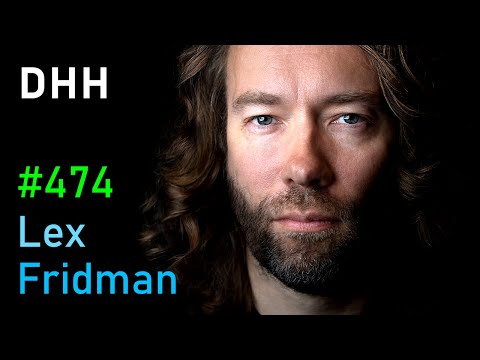
Link: https://youtu.be/vagyIcmIGOQ
Short Summary
Here's the requested information:
Number One Takeaway:
Embrace creative pursuits and build things you genuinely find interesting and useful, focusing on personal satisfaction and productivity rather than solely chasing financial success or external validation.
Executive Summary:
DHH emphasizes the importance of personal enjoyment and meaning in one's work, advocating for individuals to embrace both creative coding/building and personal life balance over solely pursuing financial success or adhering to rigid structures. He highlights his experiences with Ruby on Rails, the value of small teams, and his approach to racing as examples of prioritizing authentic engagement and flow over conforming to external pressures or traditional success metrics. He further encourages people to take the jump into parenthood with the reminder that life satisfaction comes with the combination of different responsibilities in life.
Key Quotes
Okay, here are 5 direct quotes from the transcript that represent valuable insights, interesting data points, surprising statements, or strong opinions:
-
"How did we lose the sensibilities that allowed us to not just work this way, but get new people into the industry to give them their success experiences that I had, adding a freaking Blink tag to an HTML page, ftping a PHP page to an Apache web server without knowing really anything about anything, without knowing anything about frameworks, without knowing anything about setup, all of that stuff have really taken us to a place where It sometimes feels like we're barely better off." (This highlights a concern about the increasing complexity of web development and its impact on new developers.)
-
"I don't care. First of all, I don't write code with tools. I write them with text editors. I chisel them out of the screen with my bare hands. I don't autocomplete. And this is why I love Ruby so much. And this is why I continue to be in love with the text editor rather than the IDE. I don't want an IDE. I want my fingers to have to individually type out every element of it because it will force me to stay in the world where Ruby is beautiful." (This expresses DHH's strong preference for simplicity and control in his coding environment and it shows that typing helps to maintain a beauty.)
-
"Ruby is a luxury language. It's a luxury, the highest luxury in my opinion. It is the Koko Chanel of programming languages. Something that not everyone can afford." (This provides a unique and memorable analogy to describe Ruby's nature and its potential cost.)
-
"If you're creating something of value that a lot of people love, you must create an equal and opposite force of haters. You cannot have people who love what you do without also having people who hate what you do. The only escape from that is mediocrity." (This articulates an interesting perspective on success and the inevitable presence of criticism.)
-
"The good intentions behind the GDPR in Europe currently has amounted to what? cookie banners that everyone on the internet hates that helps no one do anything better, anything more efficient, that saves no privacy in any way, shape or form, has been a complete boondoggle that has only enriched lawyers and accountants and bureaucrats." (A strong opinion on a widespread internet issue.)
Detailed Summary
Here is a detailed summary of the YouTube video transcript in bullet points, excluding advertisements and sponsorships:
Key Topics:
- Cookie Banners: The speaker expresses frustration with the ubiquity and ineffectiveness of cookie banners.
- Programming Career: DHH recounts his early struggles to learn programming, his eventual success with PHP, and the magic he found with Ruby.
- Web Development & Simplicity: A longing for the simplicity and ease of web development from the late 90s/early 2000s. A critique of modern web development's over-complication.
- Ruby on Rails & Philosophy: DHH delves into Ruby's design principles, its aesthetics, dynamic typing, meta programming and the philosophy behind Ruby on Rails, focusing on programmer happiness and productivity.
- Static vs. Dynamic Typing: A passionate defense of dynamic typing in Ruby, its meta programming abilities, its support for more direct humanly readable code. A rejection of static typing.
- AI in Programming: A discussion on the role of AI in programming, the balance between using AI and retaining competence, and AI as a helpful pair programmer.
- Scaling & Performance: Debunking myths about Ruby on Rails' scalability, discussing Shopify as a prime example, and highlighting YJIT.
- Cloud Exit (37 Signals): DHH explains the decision to move 37signals infrastructure out of AWS, saving money and returning to a more distributed internet design. Discussing the home labbing potential.
- Team Dynamics & Management: Emphasis on the importance of small teams, the negative aspects of management, and the long partnership between DHH and Jason Fried.
- Jeff Bezos Investment in Basecamp: Recounting how he received Jeff's investment with a high valuation.
- The Importance of Family & Balance: Reflection on the impact of family and the importance of work-life balance.
- Apple Controversy & Monopoly: DHH’s history with Apple, and thoughts on Epics victory with Apple
- Open Source Philosophy: Discussion of core principles of Open source and WordPress.
- Vision & Passion: Emphasizing the importance of passion, authenticity, and the joy of creation in both programming and life.
Arguments and Information:
- Cookie banners are universally hated and ineffective.
- Failed to program several times before the third attempt.
- Commodore 64 inspired him.
- Programming back then involved typing code from magazines.
- He understood constants but not variables.
- Amigga was his favorite computer of all time.
- He discovered piracy, which delayed his programming attempts.
- He was part of the demo scene, competing in graphic competitions.
- He ran a BBS (Bulletin Board System) for sharing demo software and pirated games.
- Piracy was culturally accepted in Europe.
- His third attempt was creating things for the internet.
- Making text blink in HTML was a reawakening moment.
- His first dynamic website was with ASP.NET, then PHP.
- He believes late 90s PHP represents the pinnacle of web developer ergonomics.
- Modern web development has become overly complex, turning developers into "CRUD monkeys."
- Rails 8 and "No build" are attempts to recapture the ease of 90s web development.
- JavaScript community churn and build pipelines from 2010-2020 were perverse.
- Browsers are now powerful enough to handle raw JavaScript, making build pipelines unnecessary.
- Google's Chrome played a pivotal role in the web's survival as a premier platform.
- Antitrust efforts should focus on bigger problems than Chrome.
- Dynamic typing is essential to Ruby's beauty and flexibility.
- Static typing makes meta programming harder and results in aesthetically unpleasant code.
- Unit testing and integration testing are sufficient for catching bugs in dynamically typed languages.
- Active Record is the crown jewel of Rails, simplifying database interactions without hiding SQL.
- One of Rails' objectives is to lower the barrier to entry such that users can see stuff on the browser without understanding anything.
- The key factor to being hired as a programer is not his resume, rather the writing skills and codes provided.
- Rails provides great defaults and integrated systems, offering a "menu" of solutions rather than a box of Legos.
- Monoliths can be understood and run by individual humans.
- Microservices injected more complexity, better to start with a single monolith and decompose if needed.
- There should not have been splitting of Front End and Back End.
- Open web needs a trillion-dollar champion (like Google).
- Shopify used Rails because of its high productivity.
- He calculated that people making programmers productive are more beneficial.
- AI will potentially shift focus, programming will be more editing rather than writing.
- Meta programming helps with adding keywords to the language.
- You can start with building smaller things and move on to a bigger entity.
- He stated YJit made Ruby more efficient and said ruby is a luxury language.
- High bandwith between machine is crucial. So use Ruby so machine can produce something comprehensible.
- He believes you still learn with your fingers.
- Learning with AI can make you half a percent dumber as the person would let AI drive.
- AI shouldn’t replace you but work with you.
- Pair programming with AI provides confidence, it's like being a beginner again.
- If you put AI all the code you cannot learn or build good stuff.
- It would be better to ask the AI to explain it to you instead.
- It is better for junior programmers to work with it and make AI better.
- There is no shortcut. You have to write and touch the codebase yourself.
- There should be beauty in the artistic level for Ruby language.
- There should be a positive vibe to increase your output and productivity.
- People lose competence the moment they stop typing on their computer and start managing.
- The best thing a company can do is leave people along to work on problems that they enjoy.
- For smaller codebases 1/2 million lines or less, it is better if the whole code is understood and the same for monoliths.
- In a successful relationship is important that you both have trust and are working independently with not a lot of meetings.
- Get a wife to have some companionship and to not have a void of love in the life.
- The family keeps everything leveled and more humble.
- If you had no family it will be better to have code by yourself
- He took a 400 hours to create the first version of Basecamp and that was worth hundreds of millions of dollars.
- He had no prior experience in Basecamp but he was able to bring that in reality because Ruby and Rails are about productivity, they're a product of having it the human on center not the machine.
- You can't do some of the things like with PHP, you just have to look on your desktop to code, there's no need to have a fancy setup.
- The best advice he can give is if you like coding then learn it.
- His 10 year plan is to be content with everything the same to what the outcomes are.
- He likes that Jeff Bezos saw the long-term version of the company.
- I am not an engineer, occasionally I dabble in, but mainly it is writing a software for the consumption of the human, he can make things better for all of human nature.
- The world runs by individuals with no engineering managers and full of highly skilled individuals
- Sometimes it is important to disagree and commit and then the project has a higher chance of success.
- Taking Venture Capital brings responsibilities and obligations.
- The biggest challenge is balancing coding and learning.
- Vibe coding or prompt engineers will not work you have to program.
- It has been a goal to make a community endure by recording and saving its values and practices.
- Ruby is about humanity and programming is about creativity.
- Ruby gives a bar to a language what that can do and has the most human like experience and feel.
- In software, it is important to make great defaults such that that could invite new people.
- There is a trade-off between code and beauty, but beauty still will win.
- It is important to learn all types of tools to be the best.
- DHH has 9 points to make a programmer awesome.
- Do not chase 100% because that is not for what humans are capable.
- His take on Chrome and DOJ is that of all the problems with forming a monopoly, Chrome wasn't one of them.
- It is important to make the web a better place by making things easier.
- It is important to see which way something is going by making small test runs.
- Progress over stability is an important factor, there has to be room for churn.
- If you focus on the current trends then the next 5 years everything could be obsolete.
- You have to be content with all outcomes to build software.
- If you have to retool and reskill at least be able to change the path of learning.
- If you like programming, you should be learning programming.
- There is a mix of responsibility, and fun all with the best tools.
- Take the best approach you can and make the rest a thing.
- Small teams are better and have a great influence. Less is more.
- He made a pact with is that their relationship wasn't going to lead to that, and it didn't
- Be content with all of your outcomes and know that is an excellent result.
- You really have to take the leap and go for it.
- Greatness can always be in an area for which there has to be that specific field.
- His story with Apple is not well, what's the well well, what's the bad is better.
- There's a reason for the success of Apple and all the greatest thing that the company has.
- Everything needs a new path with the knowledge of what's known.
- All aspects of life need to be addressed. That's how he was able to get to where is he at. He thinks we spend a lot of time in an office because of that.
- The reason he switched Linux from Apple is because there's no limit for Linux and that is better because it lets you access all levels of code.
- He talked about a lot of the great things with people that do not want that has been in any of that at first.
- Make sure you listen what your soul to what and be there for the times that it needs you.
- The main thing is to have a reason why. It can help you understand it all because in the end we're all running on that.
- The best thing is for you to be more open and to help you make the choices.
- His passion is to race and to make programs. And because he has kids in the family it gets to make that passion so much better.
- His reason to get married was there. Is his wife Jamie. And then all the blessings that came with it.
- Sometimes the most honest thing is what you need to think, know, and all comes down to your decision.
- People have different brands of thinking for programmers.
- If you want to learn learn the hard things from the start.
- Sometimes you have to go all in to make it happen and just find an opportunity that is there and just push.
- You don't want the same thing, but you really care if you do in all the ways that are about him.
- It can be difficult to learn something to put things with it.
- You would be in great in a boat and just do that by also knowing some things there.
This summary provides a comprehensive overview of the video's content and should be helpful for understanding the key points discussed.