[@PeterAttiaMD] 355 – Skincare strategies, the science of facial aging, and cosmetic-intervention guidance
![[@PeterAttiaMD] Summarizer](https://summaries.pages.dev/img/logo.webp)
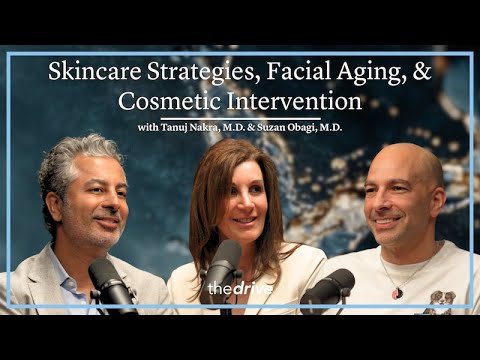
Link: https://youtu.be/9iHxTvG1_3k
Short Summary
Here's a summary of the provided transcript:
Number One Takeaway:
Protect your skin daily with mineral sunscreen.
Executive Summary:
The podcast explores the science and psychology of aging, specifically focusing on facial aesthetics. It emphasizes the importance of preventative care, particularly daily mineral sunscreen use and avoiding social media beauty trends, and highlights the structural changes in the face, including bone and fat loss, with aging. The experts offer insights into various rejuvenation treatments, stressing the need for ethical practitioners, individualized approaches, and managing patient expectations.
Key Quotes
Here are 5 direct quotes that represent valuable insights or interesting data points from the YouTube video transcript:
-
"Cheapest trick in skincare. You can go to Walgreens and spend $6 on Aquafor and your skin will look better in 30 days, guaranteed." (Highlights the importance of basic hydration and barrier function).
-
"The images that are being posted are not real." (Addresses the unrealistic beauty standards promoted on social media.)
-
"The companies will tell you that filler only lasts one year in the face and you have to refill it. That's definitely not true." (Challenges a common misconception about the longevity of fillers and potential overtreatment).
-
"From 50 to 60 or 70, women will age about 20 years faster than men." (Highlights an important differential in the biology of aging).
-
"We're fighting biology. We're fighting genetics. We're fighting the unnatural existence that we have as a luxury of being born in this era." (Expresses how cosmetic medicine fights the aging process).
Detailed Summary
Here's a detailed summary of the YouTube video transcript, focusing on the key topics, arguments, and information discussed, excluding advertisements:
Key Topics:
- The Biology of Facial Aging: Understanding the physical changes that occur with age in the face, including bone loss, fat atrophy, and changes in skin elasticity.
- Evolutionary Perspective on Beauty: Exploring the biological and societal factors that influence our perception of beauty.
- The Impact of Social Media on Aesthetic Trends: Discussing how social media and influencers shape beauty standards and the demand for specific procedures.
- Preventive Skincare: Emphasizing the importance of sunscreen and retinoids in maintaining youthful skin.
- Addressing Existing Facial Aging: Outlining various treatments and procedures for addressing existing signs of aging, from non-invasive options to surgical interventions.
- Acne and Its Treatment: Discussing different types of acne and appropriate treatment strategies, including Accutane and photodynamic therapy.
- The Importance of Holistic and Ethical Aesthetic Care: Highlighting the significance of understanding patients' motivations, providing realistic expectations, and prioritizing their overall well-being.
Arguments and Information:
-
Facial Aging Process:
- Bone Loss: Bone density in the face decreases with age, especially in women after menopause. This affects the scaffolding of the face.
- Fat Atrophy: Fat pads in the face atrophy over time, leading to a loss of volume and increased visibility of underlying structures. Unique metabolic characteristics of facial fat pads differentiate them from body fat, resulting in atrophy despite overall weight gain.
- Ligamentous Changes: Ligaments that connect skin to bone tug on the skin as volume is lost, creating deeper lines and wrinkles.
- Skin Changes: Collagen and elastin are damaged by UV exposure and other factors, leading to thinning, wrinkles, and loss of elasticity.
- Stress and Aging: Stress, cortisol levels, and inflammation can accelerate facial aging.
-
Evolution of Beauty:
- Beauty is genetically hardwired: Infants show a preference for beautiful faces.
- Universal beauty standards: Symmetry, facial proportion (averageness), and sexual dimorphisms (strong jaws in men, full lips/big eyes in women) are universally appreciated.
- Societal influences: Trends and social media contribute to conditioned beauty ideals.
- Dietary impact: Modern diets requiring less chewing can lead to changes in jawline and teeth alignment.
-
Social Media and Aesthetic Trends:
- Unrealistic expectations: Filtered images on social media promote unrealistic beauty standards.
- Overfilling: Overfilling with fillers is a serious problem, distorting natural anatomy.
- Early intervention: Teenagers are increasingly seeking fillers and neuromodulators, even when unnecessary.
- The importance of ethical practice: Physicians have a responsibility to educate patients and avoid perpetuating harmful trends.
- Social media dysmorphism: Patients are coming in to clinics with pictures of themselves with a filter and asking if you can make me look like this picture.
-
Preventive Skincare:
- Sunscreen is crucial: Mineral sunscreens (zinc oxide, titanium dioxide) are recommended over chemical sunscreens due to concerns about hormone disruption.
- Sunscreen usage: Should be a minimum of SPF 30 and reapplied frequently during sun exposure.
- Sun Damage: UVA rays cause aging, UVB rays cause burns, but High energy light can also be damaging.
- Retinoids: Retinoids (retinol, retinaldahhyde, retinoic acid) stimulate collagen production, normalize melanocytes, and improve skin turnover.
- Retinoic Acid: Prescription. Gold Standard.
- Retinaldahhyde: Middle Step. Less Irritating.
- Retinol: Weakest.
-
Existing Facial Aging Solutions:
-
Aesthetic Changes Categories:
- Skin: Topical skin care regime *Volume: Fillers / Fat
- Bony
- Gravitational
-
Five R's:
- Relax
- Refill
- Resurface
- Renew
- Redrape
-
Fat grafting: Involves transferring fat from one area of the body to the face to restore volume. *Flanks is the best area. Not Abdomen.
-
Fillers: Used to add volume to specific areas of the face.
-
Bluffroplasty: Procedure to help remove droopy eyelids, even to the point of getting coverage by insurance due to how extreme this is.
-
Bio-Stimulatory Fillers: Fillers that build volume by promoting collagen build up.
-
Skin Resurfacing (Chemical Peels, Lasers): Designed to create controlled injury in order to induce growth and volume of the skin.
Lasers Vs Chemical Peels:
- Lasers: Riskier for high FitzPatrick skin types.
- Chemical peels: Better for overall faces or those who want to blend near ears/hairline. Safer on darker skinned individuals.
-
-
Treatments to Avoid:
- "I caution my younger patients, the ones who are under the age of 40, even up to 45 in some cases, to really avoid doing things such as ultrasound tissue tightening, radio frequency tissue tightening at that young of an age because there is some fat atrophy that happens and I would caution against prematurely aging their face."
- "I agree. I mean, those are the categories that are probably have the most hoopla with the least effect."
-
Acne Treatment:
- Acne: There's comedonal acne and cystic acne.
- Treatment:
*Cystic acne can be treated with Accutane. Can create toxicity in the body. This is rare. There is also photo dynamic therapy.
- Non-Cystic acne can be treated with various topical options.
- Always focus on treating it early because acne causes scarring in the long run.
-
Ethical and Holistic Care:
- Understanding patient motivations: Essential to provide appropriate treatment and realistic expectations.
- Building trust: Developing a strong relationship with patients is crucial for guiding them towards sustainable and ethical choices.
- Managing complications: Skilled practitioners should be able to effectively manage potential complications.
- Continuing to improve: Be on the lookout for practitioners who are continue to improve their skills.