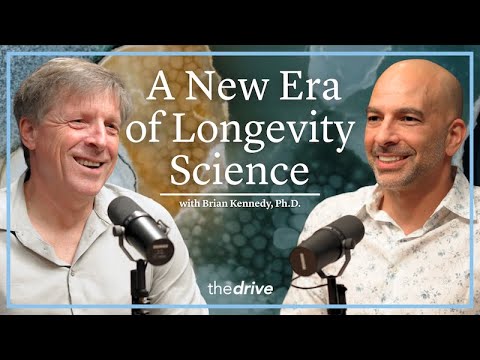
[@PeterAttiaMD] 357 ‒ A new era of longevity science: models of aging, rapamycin trials, biological clocks, & more
![[@PeterAttiaMD] Summarizer](https://summaries.pages.dev/img/logo.webp)
Link: https://youtu.be/7yNvz_0Q1eQ
Short Summary
Number One Action Item/Takeaway:
The transcript emphasizes the need for increased funding in basic aging research to uncover new classes of interventions that can alter the fundamental (linear) aging process, beyond just managing its symptoms (cyclic).
Executive Summary:
Aging research needs more funding to tackle the root causes of aging, not just its symptoms. While interventions like rapamycin show promise in managing aging and improving healthspan, truly transformative changes require basic science discoveries that address the underlying linear accumulation of damage, and that will require more funding for this basic science research.
Key Quotes
Here are five direct quotes from the YouTube video transcript that represent particularly valuable insights, interesting data points, surprising statements, or strong opinions:
-
"I think those [hallmarks of aging] are like outputs or ways you can look at aging, but they're not... The idea that you can target each hallmark and then you'll live to live forever is is not going to work because it's really the network that connects the hallmarks together. And to me, aging is... about maintaining homeostasis." This quote emphasizes the interconnectedness of aging processes, arguing against a simplistic "target-each-hallmark" approach.
-
"All of the interventions that extend lifespan reduce chronic inflammation, or almost all of them." This presents a strong correlation, potentially suggesting a crucial role for inflammation in aging.
-
"If we fundamentally want to get to a point where maximal human lifespan is changed and health span is fundamentally altered, we have to bend the slope of that line." This highlights the ultimate goal in longevity research: not just extending healthspan slightly, but fundamentally altering the aging process to increase maximum lifespan.
-
"I like to tell people that I'm immortal because I think the mindset that it gives me is a very healthy mindset for me...I don't really believe it's true. I think the odds that you could achieve that level of change in aging is non-zero, but close." This quote offers a perspective on the psychological benefits of believing in immortality, while acknowledging its current improbability.
-
"I'd like to just quit my job and do nothing other than these experiments." This emphasizes the speaker's passion about aging research.
Detailed Summary
Here is a detailed summary of the YouTube video transcript, organized into bullet points:
Key Topics:
- Defining Aging: The inherent difficulty in defining aging in a useful, scientific manner is discussed. The limitations of current "hallmarks of aging" are noted, emphasizing the importance of a holistic network view rather than isolated targets.
- Geroprotectors and Longevity: The potential of various interventions, including rapamycin, alpha-ketoglutarate (AKG), urolithin A, spermidine, and NAD, to impact aging and healthspan is explored. The limitations of current approaches, primarily focused on improving healthspan at the expense of impacting maximum lifespan, are discussed.
- Biologic Clocks: The value and current limitations of biologic aging clocks, particularly epigenetic clocks, are discussed. The potential of clinical chemistry-based clocks is highlighted, emphasizing actionable insights for clinicians.
- Translational Research: The importance of translational research and human clinical studies to validate findings from animal models is emphasized. The challenges in designing and interpreting such studies, particularly in the absence of reliable aging biomarkers, are acknowledged.
- Combination Therapies: The potential and challenges of combining multiple interventions to achieve synergistic effects on aging and healthspan are explored. The speaker advises caution when attempting multiple interventions concurrently without understanding individual effects.
- The Role of Inflammation: The role of inflammation as a primary driver or response to aging is discussed. The potential of interventions to dampen maladaptive inflammation and restore dynamic range is highlighted.
Arguments and Information:
- Hallmarks of Aging as Outputs: The hallmarks of aging are viewed as outputs of the aging process rather than root causes. Healthy aging is about maintaining a responsive network that keeps the body in equilibrium. Interventions can improve hallmarks, but targeting individual hallmarks is unlikely to be effective.
- Rapamycin: While rapamycin is considered the "gold standard" small molecule for impacting aging, the discussion also noted that there have been immune suppression concerns with the drug's use at high doses. The speaker uses lower doses, to mitigate the immune suppression side effects.
- Aging Equations and Entropy: There is an ongoing effort to model aging mathematically, viewing it as a process of declining resilience and a linear accumulation of "damage" that eventually leads to an exponential increase in mortality.
- Sublingual NAD: The potential of sublingual NAD, combined with CD38 inhibitors, to enhance exercise performance is discussed based on personal experience.
- Singapore Aging Study: Mention of an aging study in Singapore testing rapamycin in people with no known diseases and between the ages of 40 and 60 years old.
- Cancer is the Most Inevitable Disease: Of the chronic diseases, the speaker argued that cancer is the most inevitable of all because of the accumulation of mutations.
- Geroprotectors extend fertility in mice: An interesting side note that the speaker made during the conversation was that geroprotectors tended to extend fertility in mice.
Key Questions Addressed:
- What is actually causing aging?
- Can we stop aging? Can we reverse aging?
- Do current interventions (e.g., rapamycin) actually bend the slope of damage accumulation?
- Will biologic clocks ever be able to predict longevity better than knowing chronologic age?
- How can we better understand and target the fundamental mechanisms of aging to develop more effective interventions?
- How can we unleash AI to help the problem?
Important Considerations:
- Funding Imbalance: The disparity in funding between disease-specific research and aging research is a significant challenge.
- Safety and Transparency: The importance of safety and transparency in the use of longevity interventions, particularly in the context of clinics offering unproven therapies, is emphasized.
- Individual Variability: The importance of considering individual variability and the potential for interventions to have different effects on different individuals is acknowledged.
This summary provides a comprehensive overview of the key information, arguments, and questions discussed in the provided video transcript.