[@PeterAttiaMD] Efficiency Vs. Productivity | Charles Duhigg
![[@PeterAttiaMD] Summarizer](https://summaries.pages.dev/img/logo.webp)
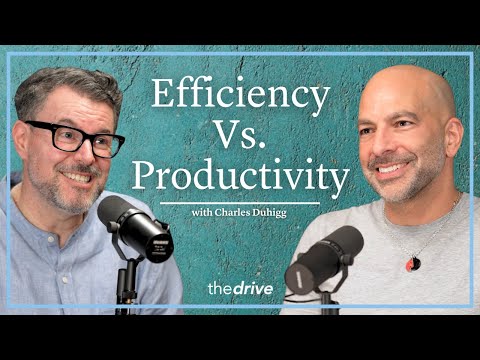
Link: https://youtu.be/bkVSzEwpBPI
Short Summary
Number One Action Item/Takeaway: Prioritize and schedule dedicated "stillness time" for deep thinking and decision-making, even if it feels unproductive in the short term.
Executive Summary: Productivity isn't just about getting things done; it's about making the right choices and focusing on deep work. To improve decision-making and reduce decision fatigue, individuals should cultivate habits that create time and space for thoughtful consideration, such as incorporating phone-free walks into their routines or structuring/automating less important decisions to conserve mental energy for critical tasks.
Key Quotes
Okay, here are 4 quotes from the transcript that I found particularly insightful:
- "We look at some types of activities as being unproductive because they don't yield immediate dividends."
- "...the most important element of productivity is deep thought. Right? Because making the right choice, making the right decision, spending my time on the right task right now yields many more dividends than simply getting something done. It's the difference between productivity and busyiness."
- "The way that I do that is I build habits that give me not only the time and space to make a choice, but the prompt to make a choice. Because there's a lot of times that I'm going to avoid making a choice if I can. My brain doesn't like making choices. It's energy. It costs energy. It feels like it's depleting me."
- "So, the first thing is how do we design our decisions so that we're only having to make the important ones and we're making the the less important ones automatic things where we don't have to make a choice. Right?"
Detailed Summary
Here's a detailed summary of the YouTube video transcript, focusing on the core arguments and information, presented as bullet points:
-
The Power of Stillness and Thinking Time:
- The speaker's brother prioritizes dedicated "stillness time" for thinking and reflection.
- This involves deliberately isolating himself (e.g., walking in nature without distractions).
- The argument is that this intentional isolation enhances productivity, despite appearing unproductive at first glance.
-
Overcoming the "Busyness Trap":
- The speaker admits struggling to implement similar stillness practices.
- A common trap is feeling that time spent thinking could be used for "getting things done."
- This relates to a cognitive bias where activities lacking immediate, tangible results are perceived as unproductive.
-
Cal Newport and Deep Work:
- The video references Cal Newport's work on "deep work" and the importance of habits that support it.
- Building habits to recognize deep productivity or deep work
-
Training Your Brain for Long-Term Productivity:
- The speaker highlights the discrepancy between stated and revealed preferences: knowing stillness is beneficial vs. actually prioritizing it.
- The challenge is to convince the "revealed preference" part of the brain (which favors immediate tasks) that stillness is a worthy investment.
- This involves reminding yourself of the rewards of stillness (better focus, smarter decision-making).
-
The Relationship Between Productivity and Habit:
- Habits themselves aren't necessarily productive, but they enable productivity.
- The most important element of productivity is deep thought.
- Habits should create the time, space, and prompts for making better choices.
- Avoiding decision making can have a negative effective
-
Decision Fatigue and its Impact:
- Decision fatigue is a real phenomenon: the more decisions made, the more mentally exhausted you become.
- Decision fatigue can lead to not being able to make simple decisions.
-
Strategies to Combat Decision Fatigue:
- Decision Design: Structuring your life to minimize unnecessary decisions (e.g., Obama's identical suits).
- Cold vs. Hot States: Decisions are harder in "hot" emotional states (e.g., hunger). Plan ahead in "cold" states (e.g., after breakfast) to make better choices later.
- Creating Heuristics: Develop mental shortcuts to avoid overthinking simple choices (e.g., choosing a restaurant).
- Timing: Defer important decisions to times when you are less fatigued.