[@PeterAttiaMD] How Fear of Hormone Therapy Harmed an Entire Generation | Rachel Rubin, M.D.
![[@PeterAttiaMD] Summarizer](https://summaries.pages.dev/img/logo.webp)
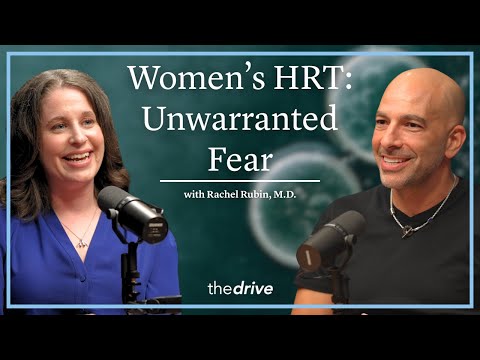
Link: https://youtu.be/MDz2tMSEOks
Short Summary
Hormone Replacement Therapy (HRT) was a common practice until the Women's Health Initiative (WHI) study, which was misinterpreted to show significant risks, leading to a drastic decline in HRT use. This misinterpretation has resulted in a lack of training for new doctors, leaving a generation of women without access to potentially beneficial treatment and perpetuating fear-based medicine.
Key Quotes
Here are five quotes from the transcript that I found to be particularly insightful:
-
"You actually have an entire generation that has forgotten how to prescribe hormone therapy. And this is where the nightmare that we're living in today because now we realize that the data was misinterpreted."
-
"So, if I said to you, Rachel, um, I have a treatment for you that is going to fix a hundred problems, but it increases your risk by 100% of getting hit by an asteroid. Would you take the medicine or not? Well, you'd have to know what your base level risk of getting hit by an asteroid is. And given that it's almost zero, doubling it doesn't mean anything, right?"
-
"This to me is, and I'd like you to push back on this, although I'm worried you won't be able to because you share my bias. This is the greatest injustice imposed by the modern medical system in our lifetime."
-
"Less than 6% of internal medicine OB/GYN or family practice doctors get even an hour of menopause education in their training."
-
"And I was like, "Wait a minute. You prescribe postpartum depression drugs, which are progesterinebased, right? You do reproductive psychiatry, which means birth control is a part of what you do. And you're being told you're not allowed to prescribe hormone therapy when hormone therapy is one of the greatest anti-depressants in the history of of medicine. It is insanity. We're living in a nightmare."
Detailed Summary
Here is a detailed summary of the YouTube video transcript, broken down into bullet points:
I. Historical Context of HRT
- Early Adoption (1960s-1990s): HRT was relatively common. Initially, estrogen was used alone, but it was soon discovered to increase the risk of endometrial cancer due to the continued growth of the endometrial lining.
- Progesterone Addition: The addition of progesterone to estrogen regimens helped control the endometrial lining, becoming the standard of care.
- Epidemiological Support: Observational studies suggested that women on HRT had better health outcomes. However, concerns about "healthy user bias" existed, as women on HRT may have had better access to healthcare and healthier lifestyles.
II. The Women's Health Initiative (WHI) Study
- Rationale: The NIH initiated the WHI to conduct a randomized controlled trial (RCT) to overcome the limitations of epidemiological studies. The WHI had a nutritional component and an HRT component.
- Study Design: The WHI had two arms: one for women with a uterus (estrogen + progestin) and one for women without a uterus (estrogen alone).
III. The WHI Press Conference and Its Impact
- Premature Press Conference: Before the study was even published, the NIH held a press conference announcing that the WHI study had to be stopped early due to increased risks of breast cancer, blood clots, and cardiovascular disease.
- Market Crash: The press conference led to a dramatic decline in HRT use, with prescriptions plummeting and the industry losing billions.
- Clinician Discrepancy: Many doctors felt the study findings did not reflect their clinical experience.
IV. Misinterpretation and Misunderstanding of the WHI Data
- Single Regimen: The WHI used a specific synthetic estrogen and progestin combination, representing a birth control pill-style hormone therapy, not the FDA-approved, more tailored approaches used today (estradiol and progesterone).
- Fear-Based Medicine: The WHI results have led to a prolonged era of fear-based medicine regarding HRT, even though medical practices evolve based on new information.
V. Overlooked Positive Outcomes of the WHI
- Reduced Risk of Colon Cancer: Both estrogen alone and estrogen/progestin combinations showed a decreased risk of colon cancer.
- Reduced Risk of Fractures: HRT was associated with a significant decrease in fracture risk.
- Decreased Risk of Diabetes: HRT showed a decreased risk of diabetes.
- No cardiovascular mortality difference Over time there was no cardiovascular mortality difference between groups
- Estrogen Only Group Had Decreased Risk of Breast Cancer: The women in the estrogen-only arm (those without a uterus) had a decreased risk of breast cancer. This critical finding was not emphasized.
- Questionable Increased Breast Cancer Risk in Estrogen/Progestin Group: The increased risk of breast cancer in the estrogen/progestin group was debated, with some suggesting the placebo group might have been protected due to prior HRT use. There was no increased mortality from breast cancer, only incidence.
VI. Analysis of absolute risk
- The absolute risk increase for these women was 0.1%. It meant that you will, even if you believe the results of that study, for every 1,000 women who were put on HRT, an additional one got breast cancer.
VII. The Ongoing Consequences
- Lost Generation of Doctors: Many doctors who used to prescribe HRT have retired or passed away, and the current generation receives inadequate training in menopause management.
- Lack of Education: Medical schools and residency programs often provide minimal education on menopause and hormone therapy. Less than 6% of internal medicine OB/GYN or family practice doctors get even an hour of menopause education in their training.
- Specialty Gaps: Menopause is often treated as a niche subspecialty within gynecology, rather than a holistic aspect of women's health impacting various organ systems.
- Malpractice Concerns: Some psychiatrists have been told their malpractice insurance won't cover HRT prescriptions, despite prescribing other hormone-based medications.
- The Cost of Deprivation: There are clear data points, such as incidence of fractures, that could be quantified in terms of number of women lost to mortality and morbidity. This quantifies the unnecessary suffering caused by the misinterpreted study and downstream reactions.
- Missed Opportunities: Physicians are not emphasizing the protective factors of hormone therapy in other diseases such as colon cancer.
VIII. Call to Action
- The speakers emphasize the need to correct the misinterpretation of the WHI study and educate healthcare professionals about the benefits and risks of modern HRT approaches.
- Advocate for greater emphasis on menopause education across medical specialties to improve women's health outcomes.