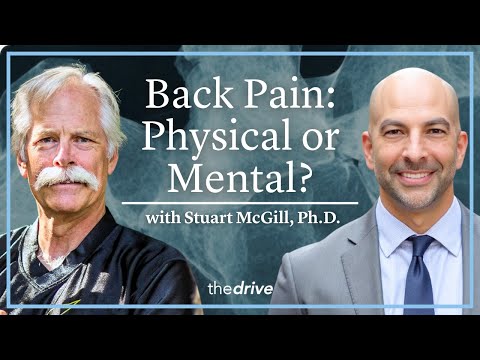
[@PeterAttiaMD] Is Your Back Pain Physical or Mental? | Stuart McGill, Ph.D.
![[@PeterAttiaMD] Summarizer](https://summaries.pages.dev/img/logo.webp)
Link: https://youtu.be/WB6WY_Tl4eU
Short Summary
Number One Action Item/Takeaway:
Healthcare providers need to prioritize understanding the mechanism of a patient's pain, not just treating the symptoms or resorting to psychological explanations without thorough investigation.
Executive Summary:
The speaker emphasizes the importance of identifying the mechanical cause of lower back pain through careful observation and patient interaction, illustrated by stories of patients misdiagnosed and even suicidal due to a lack of understanding. By focusing on the mechanism of pain and empowering patients with strategies to address it, healthcare providers can improve outcomes and avoid unnecessary interventions, including surgery, while addressing the psychological impact of chronic pain.
Key Quotes
Here are four direct quotes from the transcript that represent valuable insights or strong opinions:
-
"I can live with the physical pain. I cannot live with someone telling me the pain is in my head because that means I'm crazy and if I'm crazy I don't deserve to live." - This highlights the profound psychological impact of pain being dismissed as purely mental, particularly the sense of invalidation and despair it can create.
-
"They stole my career from me, giving me that book, How to Live with My Back Pain. Why didn't anyone show me what my pain was like you just did in 30 seconds?" - This powerfully illustrates the frustration and sense of loss that can result from a lack of adequate diagnosis, understanding, and actionable solutions for pain management.
-
"So it was a process of understanding the mechanism, giving him a strategy to address the mechanism and the psyche just changes. It empowered him." - The interconnection of understanding the mechanism and a positive psychological effect is really interesting.
-
"In the 2-year follow-up, following the plan that I just described for you with this thing called virtual surgery, which is part of it, 95% reported that they avoided surgery and they were glad that they did." - This provides a striking data point about the potential effectiveness of a mechanism-focused approach in avoiding surgery for certain back pain conditions.
Detailed Summary
Here's a detailed summary of the video transcript, focusing on the key topics, arguments, and information discussed:
-
Psychological Trauma in Lower Back Pain:
- The speakers discuss the significant psychological trauma associated with lower back pain.
- One speaker shares their personal experience with a debilitating back injury and how overcoming it has built confidence in managing recurrences.
- They express empathy for those without that experience and the difficulty of separating the mental and physical aspects of the pain.
-
Importance of Understanding Pain Mechanism:
- The core argument emphasizes the critical need to understand the mechanism of pain, rather than just diagnosing based on imaging (like MRIs).
- MRIs might not reveal the actual trigger or source of pain.
-
Story 1: Suicidal Patient with Back Pain
- A patient came in suicidal after being told his pain was "in his head" by a pain clinic that had only provided narcotics.
- He presented with a history of trying many treatments and feeling dismissed.
- The doctor focused on identifying the specific movement that triggered the pain ("when I do a certain movement...").
- He used EMG and spine motion monitoring to observe the patient's movement and identify the pain's cause.
- The issue was muscle stiffening followed by complete relaxation at a specific point in the movement, leading to sciatic nerve impingement.
- The doctor coached the patient to maintain muscle control during the movement.
- The patient learned to control the movement and avoid the "clunk" that caused the pain.
- The story highlights the power of understanding the pain mechanism, empowering the patient, and alleviating psychological distress. The man never had another episode and was pain free years later.
-
Story 2: Police Officer with Back Pain
- A former police officer became depressed after a back injury and negative experience with the healthcare system.
- The NHS system only prescribed exercises that made it worse, and was ultimately given a pamphlet on "how to live with back pain".
- The pamphlet was emotionally devastating to the man.
- Showing him a simple squat procedure immediately relieved his pain.
- The man became emotional, realizing the system had failed him and "stolen" his career.
-
Empowerment Through Understanding:
- The speakers emphasize that understanding the mechanism of pain is key to empowering patients.
- Empowerment allows patients to mitigate the cause of their pain and build a more robust foundation for recovery.
-
Research Clinic at the University of Waterloo:
- The clinic followed up with every patient they saw with a two-year follow up to gauge the outcome of the approach they took in helping patients.
- The clinic categorized patients based on the mechanism of their pain pathway.
- Virtual surgery concept: 95% of patients who were told that they needed surgery avoided surgery.
-
Importance of Physical and Biological Understanding:
- The host asks about which types of healthcare providers are most in line with the speaker's mechanism-focused approach to healthcare and treatment.