[@PeterAttiaMD] Longevity Science vs. Hype | Brian Kennedy, Ph.D.
![[@PeterAttiaMD] Summarizer](https://summaries.pages.dev/img/logo.webp)
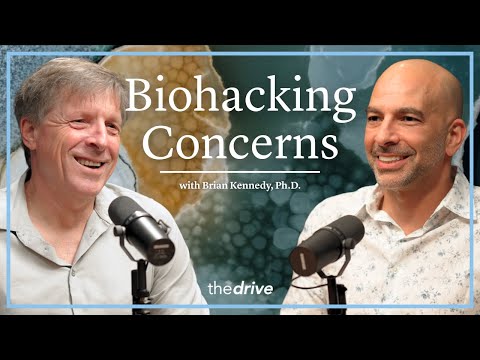
Link: https://youtu.be/acBTr0KkRnE
Short Summary
Number One Takeaway:
Approach longevity "hacks" and treatments, especially those offered by clinics abroad, with extreme caution and a healthy dose of skepticism, understanding that many are unproven and potentially unsafe.
Executive Summary:
The speaker expresses concern about the safety and predatory behavior surrounding certain biohacking and longevity practices, particularly unproven treatments like gene therapy and stem cell therapies offered in unregulated clinics. They advocate for a cautious, informed approach, emphasizing the importance of understanding risks and potential long-term consequences before pursuing novel interventions.
Key Quotes
Here are five quotes that I found particularly insightful from the transcript:
-
"I can't point to a study that tells you this is this is a bad idea and I've never spoken to a person who takes a modest judicious dose of growth hormone who doesn't tell me they feel better." - This highlights the challenging situation where anecdotal evidence clashes with a lack of definitive scientific data, a common theme in longevity discussions.
-
"But it seems very biologically plausible that if you have cancer, small amounts of cancer, your probability that this becomes clinically significant is higher in that it um again I say that with no data." - This quote represents a crucial aspect of risk assessment: acknowledging theoretical risks based on biological plausibility, even in the absence of concrete evidence.
-
"And I don't give people an answer that says, "Oh, this is this stuff's amazing." My answer is I don't know." - This demonstrates a commitment to intellectual honesty and responsible practice, acknowledging the uncertainties inherent in cutting-edge interventions.
-
"I've just seen so many horror stories of people that have come back from parts of the because you can't do this a lot of the stuff you can't even do in the United States. So they're coming back from South America or Mexico, places in Asia having done folstatin therapy or other um sort of very questionable stem cell therapies and I mean people that have had horrible infections like literally just artifacts of the treatment. That's a practitioner problem with this." - This is a stark warning about the potential dangers of unregulated or poorly executed treatments, particularly in the context of medical tourism.
-
"Because it's what I was going to say is it it's clinical practice and research at the same time it's a very unique situation right and and uh there aren't many examples of that that I know of that are really maybe some functional medicine is a little bit like that too but it's uh it's interesting and and I feel like it's better for scientists to engage with, you know, where it's possible to engage with these clinics and try to help them than it is to just let people do things and, you know, and without if you can provide oversight that's helpful, you should be doing it." - This quote acknowledges the blurry line between clinical practice and research within the field of longevity and argues for scientific engagement and oversight in this emerging space.
Detailed Summary
Here's a detailed summary of the YouTube video transcript, focusing on the key topics, arguments, and information, while excluding sponsor announcements:
Key Concerns in Biohacking and Longevity:
-
Safety: The speakers express concerns about the safety of certain biohacking interventions, particularly:
- Gene therapy (e.g., folstatin): They are excited about the potential, but believe the treatments are not well proven and are not ready to pursue them personally.
- Stem cell therapy: They acknowledge that stem cells might be helpful in repairing soft tissue damage with local injections, but doubt the efficacy of using them for aging. There are safety concerns related to practitioner quality, cell handling, and potential infections when going abroad for these treatments.
- Growth hormone: There is no conclusive data suggesting growth hormone initiates cancer, but the speakers think it's biologically plausible that growth hormone could accelerate the progression of existing cancers or subclinical cancers. They haven't personally pursued it due to safety concerns.
-
Predatory Behavior/Wasting Money:
- Many clinics worldwide are offering questionable treatments (e.g., folstatin gene therapy, stem cell therapies) with little evidence of efficacy and potential safety risks.
- Consumers struggle to differentiate between scientifically grounded interventions and those that are not.
- People travel to countries outside the US where such treatments are allowed, leading to horror stories, including infections from bad practices.
Discussion Points & Arguments:
-
Personal Experience vs. Scientific Evidence: While anecdotes suggest growth hormone can improve well-being, there's a lack of strong scientific evidence supporting its long-term safety, especially regarding cancer risk.
-
Clinical Studies are Difficult: Conducting long-term clinical studies to assess the safety of interventions like growth hormone is challenging due to the need to track individuals for extended periods and account for cancer susceptibility.
-
The Gray Area of Longevity Clinics:
- Some clinics engage in "out there" practices with uncertain long-term safety.
- Patients need to be aware of the risks when participating in experimental treatments.
- It's a mix of clinical practice and research.
-
Responsibility of Practitioners:
- Practitioners should engage in lengthy, honest discussions with patients about the pros, cons, risks, and uncertainties of interventions, and avoid presenting them as guaranteed solutions.
- Some practitioners offer unproven treatments without adequately informing patients of potential risks.
-
The Challenge of Navigating the Longevity Landscape:
- It's hard for consumers to discern good information from bad due to the vast amount of unverified information and marketing claims surrounding longevity interventions.
- The landscape is complicated due to the mix of research and practice involved.
-
Role of Scientists and Oversight:
- It's helpful for scientists to engage with longevity clinics and provide oversight where possible to guide them and protect patients.
- Academics may be hesitant to work with clinics due to potential criticism.
-
Examples of potentially risky practices: Use of rapamycin in patients, use of SGLT2 inhibitors in patients without diabetes.