[@PeterAttiaMD] Pain Tolerance: Not All Pain Is Equal | Sean Mackey, M.D., Ph.D.
![[@PeterAttiaMD] Summarizer](https://summaries.pages.dev/img/logo.webp)
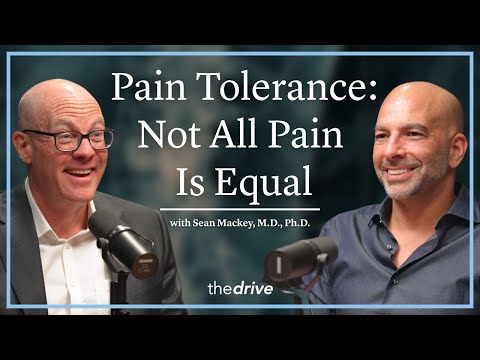
Link: https://youtu.be/iwmcS3ODhlw
Short Summary
Society often values high pain tolerance, potentially influencing how individuals, including medical professionals, perceive those with varying pain thresholds. This societal bias, while potentially rooted in historical or perceived survival advantages, can have significant consequences, particularly in the medical field where understanding and addressing individual pain experiences is crucial, especially regarding chronic pain and the multitude of factors that influence its perception and management.
Key Quotes
Here are five quotes that capture valuable insights and interesting points from the transcript:
-
"That's what society values...you just suck it up and deal with it." - This quote encapsulates the societal pressure and cultural norms that often prioritize high pain tolerance and stoicism, which can negatively impact how individuals perceive and manage their own pain.
-
"I think there's a certain attractiveness because that person may be more likely to be a good provider than somebody who is weak and uh sensitive..." - This highlights a potentially controversial but thought-provoking observation about how perceived pain tolerance might be linked to attractiveness and perceived societal value, even on a subconscious level.
-
"It turns out that some of the sensitivities are modality specific. Uh, so just because you have a high threshold for cold, you could completely flip it on hot or pressure or pin prick or whatever the other modality is." - This reveals the complexity of pain perception, indicating that tolerance levels vary depending on the type of stimulus, suggesting a need for more nuanced pain assessment.
-
"But what we didn't talk about are people's capacity to now manage their pain, cope with their pain, their level of self-efficacy around their pain...there's the level of a person's self-efficacy plays a role. There is the presence or absence of whether they've got underlying depression, anger, anxiety, something called catastrophizing." - This emphasizes the crucial role of psychological factors, such as self-efficacy, mental health conditions, and catastrophizing, in managing chronic pain, moving beyond purely physical explanations.
-
"One of the biggest predictors of diabetic neuropathic pain is glucose control. So you know one of the first things we do if we have a person with diabetic neuropathy...that correlates with glucose control." - This emphasizes the impact of physical factors on pain, highlighting glucose control in relation to diabetic neuropathic pain and illustrating the relationship between physiological processes and pain perception.
Detailed Summary
Here's a detailed summary of the YouTube video transcript, using bullet points:
Key Topics:
- Societal Value of High Pain Tolerance: The video explores the idea that society often views individuals with high pain tolerance more favorably.
- Pain Perception and Individual Variation: The discussion highlights the significant individual differences in pain perception and tolerance.
- Modality Specificity of Pain: The conversation covers how pain sensitivity can vary depending on the type of stimulus (cold, heat, pressure, etc.).
- Chronic Pain Management: The focus shifts to chronic pain, examining factors that influence how individuals cope with and manage long-term pain.
- Role of the Brain in Pain Modulation: The importance of the brain's ability to modulate pain perception is emphasized.
- Factors Affecting Pain Experience: The video delves into various psychological and physical factors that can impact pain levels and management.
Arguments and Information:
- Social Conditioning: The speaker acknowledges societal expectations, often rooted in upbringing and gender roles, which reinforce the idea of "sucking it up" and enduring pain without complaint. It also argues that it's an attractive feature.
- Attractiveness of High Pain Tolerance: It is argued that high pain tolerance is an attractive quality in people.
- Experiment on High Pain Tolerance: The video references an experiment performed on medical students.
- Gender Nuances: While acknowledging a potential masculinity aspect, the video suggests the preference for high pain tolerance may cross gender lines.
- Compatibility Factor: The speaker shares personal experiences, suggesting that partners with similar pain tolerance levels may experience greater compatibility.
- Consequences for Those with Low Pain Tolerance: The video points out the potential negative consequences for individuals who naturally experience pain more intensely, especially in contexts where high pain tolerance is valued.
- Experimental vs. Real-World Pain: The speaker questions the applicability of experimental pain protocols to predicting responses to real-world, especially chronic, pain.
- Importance of the Brain: The speaker states the brain is important for managing pain and being able to turn the amplifier down.
- Self-Efficacy and Pain: An individual's belief in their ability to manage pain (self-efficacy) is a significant factor in coping with chronic pain.
- Psychological Factors: Underlying psychological issues like depression, anger, anxiety, and catastrophizing (exaggerated negative thinking about pain) are discussed as crucial contributors to amplified pain.
- Physical Factors: The video explores the role of physical factors such as:
- Sleep deprivation: Mentioned as a factor
- Exercise: Not exercising can be a factor.
- Insulin Resistance: Mentioned as a factor.
- Glucose Control: Poor glucose control significantly impacts diabetic neuropathic pain.
- Diet: Inflammatory diets exacerbate pain through peripheral sensitization.
- Peripheral Sensitization: Inflammation can turn up the amplifier on pain receptors in the periphery (nociceptors), increasing pain sensitivity.