[@PeterAttiaMD] What the Dying Teach Us About Living | with BJ Miller, M.D. & Bridget Sumer, L.C.S.W.
![[@PeterAttiaMD] Summarizer](https://summaries.pages.dev/img/logo.webp)
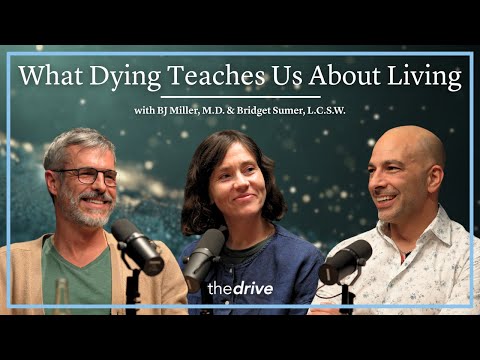
Link: https://youtu.be/5HVa2sqhjJc
Short Summary
Number One Action Item/Takeaway: Practice the death you want by living that way today. Build the mental and emotional "muscles" necessary for a peaceful end by cultivating forgiveness, connection, and acceptance of the present moment in your daily life.
Executive Summary: The way we live shapes the way we die. Instead of fearing death, consider it a reminder to live authentically, embrace all emotions, and practice forgiveness. By cultivating these qualities now, we can develop the skills necessary for a more peaceful and meaningful end-of-life experience.
Key Quotes
Here are 4 quotes extracted from the provided transcript:
-
"What they all seem to have in common is they regret not letting themselves feel or not letting themselves be true to the what they actually felt. Something got in there, shame or something else, wedged in themselves and separated themselves from themselves or separated themselves from other people they love. And the regret has something to do about artificially or accidentally putting a wedge between you and anything."
-
"You could be spend a lifetime running from fear but the I've watched a lot of people come around to when they finally got the cue that fear was just a natural part of being in a body like they became okay with fear they took away that sort of secondary shaming of fear and then then fear became this it was sort of rightsized to them and it was defanged."
-
"I will say that I do think there's kind of something to like people die the way that they live. Like for most people, those who lived in love die surrounded by love kind of thing."
-
"We will default to our regular strategies. The strategies that got us through life are probably the strategies that will get us through death. And so what we should all be doing is imagining the death we want and begin practicing that at life and make that our scaffolding today."
Detailed Summary
Here's a detailed summary of the YouTube video transcript, focusing on key topics, arguments, and information:
-
The Illusion of Fearless Death:
- The idea of a fearless death or a life without regrets is unrealistic and potentially harmful.
- Instead, focus on changing your relationship with fear and regret; accept them as part of the human experience.
-
Common Regrets:
- Regrets often stem from not being true to oneself or not allowing oneself to feel emotions.
- Examples include regretting working too much, not expressing love to family, or putting a "wedge" between oneself and others or experiences.
-
Reframing Fear and Regret:
- Accepting fear as a natural part of life can defang it, removing the secondary shame associated with it.
- Welcome even painful experiences, as the ability to feel anything becomes precious.
-
Realizations and Reconciliation:
- This realization about accepting emotions and living authentically can happen at any point in life, not just near death.
- Being aware of mortality can encourage reconciliation, letting go of grudges, and avoiding causing suffering.
-
Mortality as a Daily Practice:
- Acknowledging that death is an undeniable reality is a tether to the present and a reminder of what we have.
- The speaker intentionally stays connected to the idea of morality.
- Consider this moment.
-
Dos and Don'ts:
- Dos: Cultivate a relationship with mystery, with not knowing, and with the present moment.
- It's okay to be afraid of death and want to extend your life.
- The key is not to be ashamed of the fear itself.
-
Control, Influence, and Surrender:
- Apply the serenity prayer: discern what you can control, focus your efforts there, and let go of what you can't.
- Recognize the spectrum between control, influence, and surrender.
- Build your flexibility and learn to sit with what you can't control.
- Practice not being in control.
-
Forgiveness:
- "I love you," "I forgive you," "Please forgive me," and "Thank you" are powerful messages to express.
- Forgiving oneself is a common and important theme.
- Self-loathing and self-criticism can persist even in the final weeks of life.
- These messages have been "loved on"
-
Die How You Live:
- People tend to die the way they live.
- If you want to die surrounded by love, live a life of love.
- The strategies that got you through life will likely be the strategies you use to face death.
-
Practicing for a Good Death:
- Imagine the death you want and begin practicing those qualities in your life today.
- Building the muscles of forgiveness, connection, and embodiment now will help you in the end.
-
Dealing with Setbacks:
- Learn to deal with things when they don't go as planned.
- Avoid feeling like you're "failing at dying."
- You can't control the outcome with certainty.
-
The Act of Dying Begins Now:
- You don't become a different person when you're dying.
- The act of dying is a continuum that has already begun.
- You can start practicing this "dying thing" today by how you choose to live.