[@PeterAttiaMD] Worry vs. Worrying: Identifying Dysfunctional Health Anxiety | Josh Spitalnick, Ph.D.
![[@PeterAttiaMD] Summarizer](https://summaries.pages.dev/img/logo.webp)
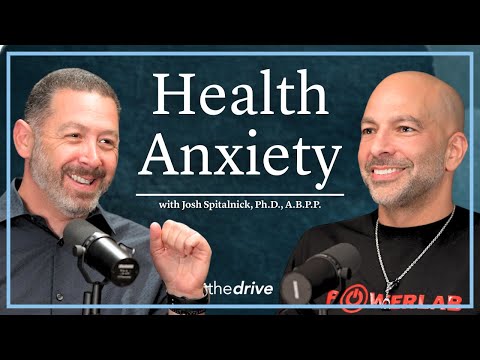
Link: https://youtu.be/BMhyol0QPOY
Short Summary
Number One Takeaway:
Recognize and interrupt the cycle of ruminating and asking "what if?" questions about your health concerns, as this is a dysfunctional way of processing anxiety and doesn't lead to solutions.
Executive Summary:
The transcript differentiates between normal health worries and dysfunctional health anxiety. The key is to avoid getting trapped in a cycle of constant questioning and reassurance-seeking, which is unproductive and doesn't solve the underlying issue. Instead of ruminating, take functional steps like consulting a doctor when truly necessary.
Key Quotes
Okay, here are 4 quotes from the transcript that I found particularly insightful:
-
"When you sit there and start questioning it all to me, it's no different than just sitting there and googling all day long, what are these symptoms? And everyone would look, anyone would look at that and go, of course, that person's ritualizing. But when you do it inside, it's the same mechanism." This quote highlights the equivalency between external reassurance-seeking rituals and internal mental rituals, demonstrating that both can be equally unproductive and potentially harmful.
-
"It's dysfunctional because it's taking away from your life. It's dysfunctional because the duration or intensity of it doesn't match the thing...it's trying to get to the end of a story or or resolve some uncertainty um or some ambiguity in a way that's not actually going to solve it." This explains that the disfunctionality arises from it's interference in life and the mismatch between the level of worry and the actual situation and a way that ultimately does not solve the underlying issue.
-
"So in a single singular moment it's nothing more than you being inquisitive and curious. But the point is is that's not going to solve whether it's a medical event or not." This emphasizes that worry, in moderation and as an isolated incident, isn't necessarily a problem, but it also brings to light that dwelling in the state will not fix anything, further action is needed.
-
"And the goalpost keeps moving. So it's I think I've got this. I think I've got that. I think I've got this. I think I've got that. Everything they get checked up for is fine." This highlights how health anxiety manifests as a constantly shifting concern, even when medical tests provide reassurance, suggesting that the underlying issue isn't the physical symptom but the anxiety itself.
Detailed Summary
Okay, here's a detailed summary of the video transcript, broken down into bullet points, focusing on the core concepts and arguments, excluding any promotional content:
-
Core Concept: Distinguishing Worry from "Thinking" or Ruminating About Worry
- The video distinguishes between initial worry (e.g., "I'm afraid I might be sick") and the subsequent "thinking" or ruminating about that worry (e.g., "What if this is a heart attack? What if this is cancer?").
- The "thinking" component involves trying to "figure it out," often through unproductive means like Googling symptoms or seeking reassurance from unqualified individuals.
-
Real-World Example: Health Anxiety
- The example used is someone experiencing physical symptoms and fearing a serious illness like cancer or a heart attack.
- The initial fear is considered a normal worry. The problem arises when the individual becomes consumed with questioning and researching the symptoms, trying to prematurely "get to the end of the story."
-
The Problem with "Thinking"/Rumination (Dysfunctional Aspect)
- It's unproductive: It doesn't solve the underlying uncertainty or provide accurate information. It doesn't get to the root of the actual problem or solution.
- It's time-consuming and detracts from other areas of life.
- It's often illogical and irrational, despite appearing functional on the surface.
- It's similar to compulsions or rituals, such as constantly checking symptoms online, but conducted internally.
-
Reassurance Seeking as a Ritual
- Seeking reassurance from unqualified sources (e.g., family members, online forums) is identified as a common ritualistic behavior driven by anxiety.
- The point is made that asking yourself (inner thoughts) is the same as seeking reassurance from unqualified sources because you aren't a medical professional.
-
When Worry Becomes Dysfunctional (Beyond a Single Moment)
- The distinction is made between a fleeting moment of concern and a persistent, repetitive pattern of anxious thoughts.
- A single instance of worrying about a symptom is considered normal.
- The problem lies when this worry becomes chronic, occurring multiple times a day, week, or for months on end. The video suggests that health anxiety, per DSM criteria, involves at least six months of heightened concern.
-
Illogical Medical Checkup Pattern
- The video mentions individuals who repeatedly seek medical attention for unexplained symptoms, receiving clear checkups each time, yet constantly shifting their focus to new, imagined ailments. The speaker implies this is a manifestation of health anxiety.