[@RenaissancePeriodization] Exercise Scientist Critiques Lee Priest's ARM GROWTH SECRETS
![[@RenaissancePeriodization] Summarizer](https://summaries.pages.dev/img/logo.webp)
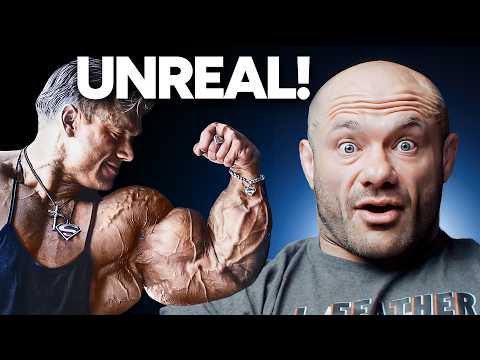
Link: https://youtu.be/U7XhVopy2oU
Short Summary
This video analyzes arm training tips from bodybuilder Lee Priest, emphasizing high volume (20+ sets) performed close to failure in the 5-30 rep range. The speakers stress the importance of proper technique, adequate recovery, and consistent effort while acknowledging that genetics play a significant role in muscle growth, ultimately suggesting that if all else fails, accept your arm size and stay home.
Key Quotes
Here are four direct quotes from the YouTube video transcript that I found particularly valuable:
-
"The third biggest difference in hypertrophy outcomes comes down to volume. The number of sets you do per week of working a given muscle group. So, if your arms are pretty big and you're doing five sets of biceps per week, I can almost guarantee you they'll get much bigger over time if you start doing 10 sets. and probably bigger at 15 and probably bigger at 20. Now it's curve linear. It kind of levels off but it never levels completely off. So it just keeps going for biceps and triceps according to actual research on actual humans that even well into the 30s of sets is better for growth in the short term with recovery in mind than 15 sets or 20 sets of biceps or triceps. So volume ising king, which is why Lee Priest doesn't mess around and is going to do a shitload of it." (This highlights the importance of volume for hypertrophy and references research to support this claim.)
-
"When you do your chest, your triceps absolutely do get work. But you can't count the sets full on because in a bench press you get probably like half the hypertrophic stimulus per set of bench to your tries that you would in push downs or skull crushers or something like that cuz it's like half your chest doing the work, half your triceps doing the work and you can't really trick the body otherwise. Those sets do add up. So if you do lots of chest work, you do put the triceps shit in the piggy bank." (This explains how chest exercises impact tricep growth, but emphasizes that they shouldn't be considered equal to direct tricep work.)
-
"My hypothesis is that if your arm pump starts to decline at some point during your workout, the number of sets you've done is already so damaging that you're just digging yourself a bigger recovery hole without much upside. So, I'd say is a decent heristic to use in the gym is try to get the biggest pump you can. And whenever you have the biggest pump that you have, then it's time to stop and leave the gym." (This provides a practical, subjective guideline for determining when to end an arm workout based on the feeling of the pump.)
-
"If you flip the script and you do biceps first, chest second, it will not grow your chest as much. Period. But it'll grow your biceps more. And if every few months you switch chest and biceps, biceps, chest, chest and biceps, biceps, chest, you're going to have, just as an example, a very balanced routine and all of you is going to be much more proportional." (This explains a valuable strategy for balancing muscle growth by alternating the order of exercises.)
Detailed Summary
Here's a detailed summary of the YouTube video transcript, broken down into bullet points:
Key Topics:
- Lee Priest's Arm Training Tips: Analyzing and discussing advice from bodybuilder Lee Priest on how to build bigger arms.
- Hypertrophy Principles: Explaining the science behind muscle growth (hypertrophy) and how it relates to arm training.
- Volume, Intensity & Frequency: Emphasizing the importance of high volume, training close to failure, and proper frequency in arm workouts.
- Troubleshooting Arm Growth: Addressing common reasons why people struggle to develop their arms and offering solutions.
- Genetics vs. Training: Discussing the role of genetics in muscle growth and what to do when genetics are not on your side.
- Workout Structure: Organizing your workout routine for optimal arm development
Arguments and Information:
- Lee Priest's Approach: Lee Priest advocates for high volume training, going hard, and "punishing" the muscles to make them grow.
- Volume is King: The video emphasizes that volume (number of sets per week) is a crucial factor in hypertrophy. Research suggests that higher volume, even up to 30+ sets per week, can lead to more growth (within reasonable recovery limits).
- Load & Relative Effort are also important: Load meaning how heavy the weight is and relative effort meaning training close to failure are important for stimulating growth as well
- Minimum Volume: Doing below 20 sets per muscle group per week is not considered high volume.
- Gradual Volume Increase: Recommended increasing volume over time to avoid overtraining and injury. e.g. adding one more set per week to your routine
- Rep Range Variation: Incorporating a variety of rep ranges (e.g., 6-8, 10-12, 15-20) can be beneficial for muscle growth.
- Ancillary Muscle Work: Tricep involvement in chest exercises (e.g., bench press) contributes to tricep growth, but doesn't replace direct tricep training
- Don't Neglect Arms: Avoid the excuse of "triceps get worked during chest" to justify skipping arm workouts.
- Workout Routine Organization: Consider training arms on your "last" day or isolating the arms from training that would interfere with arm recovery. A sample routine structure could be:
- Push day
- Pull day
- Day off
- Arms & Shoulders
- Legs
- Maximizing Pump: Stop your workout when your pump peaks. Training beyond that is digging yourself a bigger recovery hole without much upside.
- Balanced Routine: Vary the order of muscle groups to avoid favoring one over the other. E.g., alternating between "chest then biceps" and "biceps then chest".
- Exercise for Shape? Focus on effective exercises and overall muscle growth before obsessing over specific exercises for "shaping" or "peaking" a muscle.
- Genetics and Arm Growth:
- Acknowledges that some people have unfavorable genetics for arm growth.
- If after exhausting all other factors and still struggling, genetics might be the limiting factor.
- Troubleshooting Checklist:
- Technique: Ensure proper form and full range of motion.
- Effort: Train close to failure on working sets.
- Volume: Adjust volume based on soreness, fatigue, and pump levels.
- Frequency: Increase training frequency (e.g., from 1x to 2x or 3x per week).
- Nutrition: Eat enough protein and calories to support muscle growth.
- Sleep: Get adequate sleep for recovery.
- Stress: Minimize stress levels (both physical and emotional).
Humorous and Irrelevant Content (acknowledged but not emphasized):
- Over-the-top praise of Lee Priest.
- Humorous, exaggerated Element ad.
- Self-deprecating jokes about the host's own arm size.
- General comedic banter between the host and Scott.