[@RenaissancePeriodization] Exercise Scientist Critiques Sumo Wrestling's INSANE Brutality
![[@RenaissancePeriodization] Summarizer](https://summaries.pages.dev/img/logo.webp)
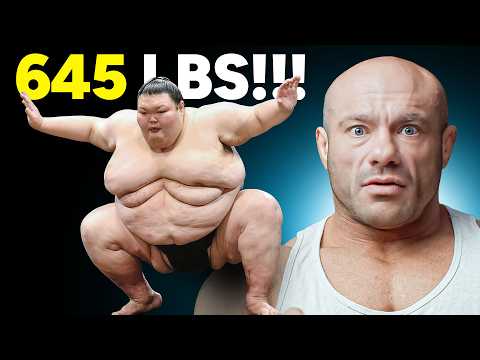
Link: https://youtu.be/gxq_pvgoQKE
Short Summary
Number One Takeaway:
To maximize health and longevity, prioritizing leanness and a smaller body size is crucial, even with regular exercise and a relatively good diet.
Executive Summary:
This video explores the training, diet, and lifestyle of Sumo wrestlers, highlighting their incredible athleticism but also the significant health risks associated with their extreme size. While sumo wrestlers are remarkably strong, their traditional training methods could be significantly improved with modern sports science and resistance training. Finally, the video emphasizes the importance of prioritizing leanness for overall health and longevity.
Key Quotes
Here are five quotes from the YouTube transcript that I found particularly insightful or interesting:
-
"Fat does not help you move around. It reduces your mobility. Not good. However, if you are trying to push a very large person, it doesn't much matter if they have a lot of fat or a lot of muscle. They're harder to push around when they're big. And once something big gets going, the fat acts as a pool for momentum." This quote explains the nuanced reason behind the sumo wrestlers' size.
-
"Cry during training and laugh in battle." This quote encapsulates a Japanese philosophy regarding hard work and competition.
-
"Being good is a matter of making your training, as long as it's specific to your sport, as hard as you can manage and making relaxation recovery as easy as you can manage." This is a useful general principle for athletes.
-
"The life expectancy of sumo wrestlers hardly reaches 65 years, which is 20 years less than the Japanese average... 20 years off lifespan adjusting for genetics and proclivity, let's call it 15 years, even with a ton of exercise with mostly good food going in. That is huge. And so the one thing for take away from this is if you want to live a long time, being leaner and being smaller is a really, really, really, really good idea." This provides a stark consequence of the extreme weight gain and lifestyle.
-
"I do believe most sumo athletes do not do much or any conventional resistance training because their sport predates the invention of weights and they're incredibly traditionalist... If and when sumo wrestlers decide to begin resistance training for sumo, it will 100% have a mega impact on the sport." This highlights a potential area for improvement and modernization within the traditional sport.
Detailed Summary
Here's a detailed summary of the YouTube video transcript, focusing on the key topics, arguments, and information discussed:
-
Introduction to Sumo Wrestling:
- Sumo wrestling originated 1500 years ago.
- Simple rules: Make the opponent fall or push them out of the circle.
- Simplicity makes it instantly engaging for the audience.
-
Sumo Wrestlers as Athletes:
- They are world-class athletes.
- Their weight (350-400lbs, around 6 feet tall) and size provide "ballast" to resist being moved.
- Fat provides momentum and difficulty in moving them.
- Despite being large, they need mobility for maneuvers and footwork.
- Their legs are incredibly muscular (quads, glutes, inner thighs), enabling pushing and balance.
-
Training and Routine:
- Training is very traditional and potentially outdated by modern sport science standards.
- Training may not have evolved enough.
- Training includes exercises focused on lower body strength and stability.
- Stretching is crucial for flexibility.
- Practices mentioned: Foot stomping (lower body focus), foot sliding (quad tension).
- Afternoon naps (2.5 hours) for recovery.
- Living conditions are often basic.
-
Diet:
- Sumo wrestlers consume around 8,000 calories daily.
- "Chankon Nabe" is a high-calorie stew (protein, meat, eggs, fats, some vegetables).
- Purpose is to gain weight.
- Eating can be a difficult part of the job due to the sheer volume.
-
Health and Longevity:
- Sumo wrestlers' life expectancy is significantly lower (around 65 years) than the Japanese average, likely due to the extreme weight.
- Being leaner and smaller is better for longevity.
-
Critique of Traditional Training:
- Modern resisted squats, leg presses, and deficit deadlifts would be superior to the large bodyweight squats.
- Living in basic conditions (sleeping on the floor, non-air-conditioned facilities) hinders recovery.
- Prioritizing rest and recovery (king beds, massages) would be beneficial.
-
Speculation about Resistance Training and Steroids:
- The speaker thinks many sumo wrestlers likely don't engage in conventional weightlifting due to the sport's traditional roots.
- Resistance training would significantly impact the sport.
- There is speculation about some sumo wrestlers using steroids, citing increased muscle mass, speed, aggression, and balance as indicators.