[@RenaissancePeriodization] Inside The Lab That Busts Fake Supplements (Huge Problem)

· 18 min read

@RenaissancePeriodization - "Inside The Lab That Busts Fake Supplements (Huge Problem)"

Link: https://youtu.be/zykO04T9r08

Duration: 16 min

Short Summary

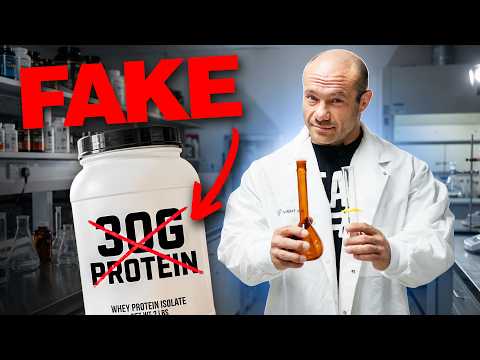
Light Labs in Ann Arbor tested Amazon's top-selling creatine gummy and found zero creatine in the $40 product. A protein powder claiming 21g of protein contained only ~3g—an approximately 90% miss. Multivitamins are identified as especially problematic products because formulating 10+ vitamins that remain stable over an 18-month shelf life across various matrices (gummies, capsules, gels) involves significant chemical incompatibility challenges that cause degradation within 6-9 months.

Key Quotes

  1. "The number one seller on Amazon did not have any creatine in their gummy." (00:02:07)
  2. "Protein powder claiming 21 g of protein, and they had something closer to 3 g of protein." (00:00:21)
  3. "To miss by that much, you have to intentionally be filling it with something else." (00:00:26)
  4. "the economic incentive for fraud is so high" (00:04:27)
  5. "I would say multivitamins as a category" (00:08:35)

Detailed Summary

Key Findings: Supplement Testing and Quality Issues

Creatine Gummy Fraud on Amazon Light Labs in Ann Arbor, Michigan tested the #1 selling creatine gummy on Amazon and found zero creatine in the product—despite it selling for $40. Creatine is the most expensive ingredient in supplements, creating strong economic incentive for fraud. Amazon is now beginning to require stricter testing and proof that products contain what they claim due to this fiasco.

Protein Powder Mislabeling A protein powder claiming 21g of protein contained only ~3g, with the excess being carbohydrates. This product was sold in grocery stores (not just Amazon), missing the mark by approximately 90%.

Why Multivitamins Are Especially Problematic

  • Formulating multivitamins with 10+ vitamins that remain stable over an 18-month shelf life is extremely challenging due to chemical incompatibility issues
  • B vitamins are highly susceptible to degradation during heat and pressure in manufacturing, unlike creatine which is relatively stable
  • Chemical incompatibility causes degradation that can make products significantly less effective within 6-9 months, even if they test fine at day zero
  • Multivitamins are described as "hard mode" products, especially when formulated as gummies, capsules, or gels
  • Simple powder products in bags are much less likely to have efficacy issues than complex proprietary blend products in advanced matrices or gummies

Real-World Case: Vitamin D Degradation

A case was described where someone's D vitamin blood levels continued dropping despite doubling supplementation. This was likely due to oxidation degradation during warehouse storage and shelf time, demonstrating that even brands that manufacture correctly can end up with degraded products.

Supply Chain Vulnerabilities

Heat, light exposure, and improper storage conditions during supply chain transit can degrade supplements even when the brand manufactured them correctly initially. This is why off-shelf testing—purchasing products from retail locations and testing them in the lab—is recommended to ensure efficacy throughout the supply chain up to the point of expiration.

Recommendations for Consumers

  1. Ask brands for their Certificate of Analysis (COA) or lab data showing actual test results for that product down to the lot level
  2. Look for GMP (Good Manufacturing Practices) certification as a baseline verification
  3. Look for stability studies that test products at multiple time points throughout the claimed shelf life
  4. Where you buy matters—retailers like Whole Foods require proof of product claims, while platforms like Amazon are only recently beginning to enforce stricter requirements

Industry Vision

The vision for the supplement industry is to make rigorously tested products the standard so that brands doing it right can win market share and incentivize competitors to fix quality issues.

Full Transcript

Show transcript

Hey folks, Dr. Mike here with Life Strength, and I'm here at Light Labs in Ann Arbor, Michigan, and we're going to find out if the supplements that you're taking have actual supplements in them. Let's go find out. >> The number one seller on Amazon did not have any creatine in their gummy. Wow, legit. Protein powder. Yeah, protein powder claiming 21 g of protein, and they had something closer to 3 g of protein. >> 3 g of protein. To miss by that much, you have to intentionally be filling it with something else. [music] To me, it speaks to >> what I would say is clearly a bad actor. How do I as a consumer do a little bit extra to make sure I'm not getting screwed over? >> [music] >> Yeah, so this room is where all of our supplements are tested for active ingredients, things like creatine, vitamins, the potency of all of that. Like, this is where This is where it happens. So, that's the same temperature as the surface of the sun. No kidding. Yeah, it's basically like blasting anything in there to its like individual like elements. What do you guys do at Light Labs? What's Light Labs all about? So, the main goal behind Light Labs is increased transparency in the consumer good space, which includes food, supplements, vitamins, etc., so the consumers can start to understand what's in and what's not in the products. Excellent. There must be some stories you guys know about supplements Yeah. in the health space, fitness space >> Yeah. that have gone considerably off the freeway ramp of claims versus what's in them. I think one of the areas that was pretty insane to look into was the creatine gummy category. Creatine gummies. >> This is probably the most [music] popular performance-enhancing supplement. >> But I'm taking it now more consistently than I've ever taken it before, cuz with the gummies, it's so easy. This is what what I checked a few months ago, but the number one seller on Amazon at the time did [music] not have any creatine in it. And so Can you say that again just to make sure [laughter] we're understanding? The number one seller on Amazon did not have any creatine >> [music] >> in their gummy. And the It was a creatine gummy. >> creatine gummy. Sold not because it tasted good, but because it had ostensibly creatine in it. Exactly. And it didn't. It did not. >> So, when you mean did not, it means it had less than proposed with 97% of the creatine or or or >> [music] >> You mean 0%? I believe it was like >> This was zero. It was zero. Okay. This was zero. Yeah. >> [music] >> It's It's absolutely insane, and >> Holy crap. And the reviews were good. I think people were just placebo effect, [laughter] right? >> Yeah, oh yeah. We can't really tell when you're on creatine to be Correct. You can't. You can't. It's like Yeah, how much do I weigh today? >> [laughter] >> Muscles feel fuller. >> Right. Um but it's pretty insane. What's that protein [music] story that uh So, I might get the numbers wrong, but I want to say they claimed 21 g of protein and it had 3 g of protein. And then the excess was just carbohydrates. And it was sold in grocery stores, right? And so, it wasn't even like People can argue Amazon, and they're doing things to change this, where they're going to require stricter testing to prove that you have what you claim to have and are free of certain contaminants. >> [music] >> Um and I think Amazon's beginning to shift in that direction because of the creatine gummy fiasco, [music] but this was sold in a high-end retailer. >> It's insane. And just missed the mark by whatever that percentage is. 90, 90%. So, this Let's get the whole story here. This was a protein powder. >> Protein powder. Yeah, protein powder claiming 21 g of protein, roughly around there, and they had something closer to 3 g of protein. To three? 3 g of protein. [music] Yeah. And the actual 18 g between that was carbohydrate. Filler, right? Obviously. Yeah, filler. Do you think this was nefarious? Okay, that's To be that off Right. [laughter] I was going to say. So, don't have all the details, so can't opine. I can opine, and I will. Please. It has to be nefarious. To miss by that much, you have to intentionally be filling it with something else. And if your manufacturer's responsibility is to test inbound raw materials, so >> should have caught this. So, [music] to me, it speaks to one of the instances of what I would say is clearly a bad actor [music] who is just optimizing on great margins. Like they just >> [laughter] >> Yeah. And the margins don't weigh already. And that's actually the issue is like the economic incentive for fraud is so high, [music] right? Cuz these creatine gummies are selling for $40 a pop. And there's no creatine, and that is obviously the most expensive part of a creatine gummy. >> Wow. >> this is why I think more brands, more platforms [music] being online, but also retail stores are going to start forcing some amount of testing because consumers are waking up to this idea. There's more and more exposure that what you're buying is not necessarily guaranteed to be what you're getting. If you're in Whole Foods, you're likely in other stores. [music] Whole Foods and these other retailers they do require some level of proof. Sure. So, I would say where you buy actually matters a tremendous amount. [music] Um and this is why Amazon is beginning to shift way more in this direction because it's a huge I would argue risk to their business, where if you learn that anything can be peddled on Amazon I just don't go on Amazon. >> Exactly. You're not going to buy your supplements on Amazon. As a consumer, other than like going to Whole Foods and Amazon and just trusting that they have my back, which they largely do is there anything else I can make sure like I'm looking up like the lab stuff? I know that if I turn the back of my container for protein, it's got like GMP something or other. What What is all that? How do I as a consumer do a little bit extra to make sure I'm not getting screwed over? Yeah. I think the thing that the component that makes all the difference is just asking the brand for their certificate of analysis or for their lab data. Um if you ask any company, they should be able to send that to you. They should have that on file. They should have it readily accessible and send you the actual lab results for that product down to the lot. Okay. That company that was selling the not protein protein Yeah. did they not have a lab vetted at all? We don't know the specifics. I mean, you can't, right? There's no lab that could accidentally test Right. and show that they actually had the 21 g of protein or like plus or minus 20%. Um that's more for food less so for supplements, but there's no lab that's going to be off by 90%. So, my gut would say no. They didn't work with a testing partner. You mentioned GMP. A lot of supplements, it's good manufacturing practices. There's a certain level of testing uh required of GMP facilities. And so, I would definitely look for a GMP mark. And then third, which is I actually think almost more interesting than a certificate of analysis, something called stability study. COA is a uh point-in-time result of we received the sample as is, we tested this day, here are the results. The issue is everything that you consume, especially when it gets into supplements, uh some of the actives are highly susceptible to degradation. >> the active ingredients. The active ingredients. Like the creatine. Yeah, creatine gummies. >> Creatine is is a pretty stable, but like your your B vitamins, right? Anytime you manufacture something, you're introducing it typically to like heat, pressure, unless it's just a straight like powder encapsulation or a straight powder in a bag. This introduces elements that you have to take into account when you're formulating. A stability study basically says we're going to test this product over the period of the shelf life. So, if you claim 2-year expiration, you test at these different time points to show that at each time point up until point of expiration, it has what it claims to have on the SFP. And so, you have some formulas that are chemically incompatible and degrade close to immediately. And so, you're buying a product that even if you test it like day zero it's going to be a different product from a efficacy standpoint call it 6 to 9 months down the road because of the potential degradation. >> Yeah. So, I would say stability studies paired with a COA, paired with you know, good manufacturing practice, co-packers, which most brands will highlight that as a selling point. Those are the things that you know, I look for now. Very cool. Are there any classes of supplements which are more often running into trouble than other classes of supplements, and can you guys speak to that? I would say multivitamins as a category. Um it's incredibly complex to formulate a tiny product that has 10 different vitamins in there that are all going to be stable over the course of like say 18 months shelf life where uh what Nick was saying is around like chemical incompatibility Mhm. where many of these vitamins may not be compatible uh in certain what what are called product matrices. Without getting too technical, like gummies versus capsules versus gels. Yeah, what's holding the product together? >> Exactly. >> Mhm. And given that lab data is very much just a point-in-time snapshot, if you kind of actually plot every single vitamin in a gummy over the course of 18 months formulation becomes this incredibly hard challenge >> Yep. where you need someone incredibly competent who's testing and is super rigorous about it. And so, that's what I call like hard mode, where that's where I it has more problems than others. >> Mhm. But then once you go to something like creatine just scoop plain powder, like that's like all the >> Physical powder in a bag. Yeah. Generally is much more likely to be not BS than a proprietary blend combo product especially in a kind of matrix that's like >> Yeah. Yeah. advanced, like not just all all a powder or like a drink. Like cuz the unit is water, you have massive degradation potential, temperature range, gummies. >> It's just harder to mess up, right? >> Right, right. And then just put the stuff in the bag and it's not >> Exactly. And I will say yes to This kind of gets back to the class of it's very easy to start a brand. Yeah. Where it tends to be like low minimum order quantities needed to get started. There is a tipping point where there's a lot of risk associated to not having what you claim to have. And so all this to say that yes, those forms are more difficult to be J's point on hard mode. But if you're a legitimate brand, you're most likely spending a ton on testing. Your manufacturer is spending a ton on testing. So I think there are great brands, there's plenty of great brands to buy from that have nailed it. It's not like this impossible thing to figure out. You just need to care. >> [laughter] >> Yeah. Just need to >> test a little bit more. So all that to say you know, it's not a impossible >> fear-mongering thing like don't take a multivitamin. Right. >> It's just you can ask questions. The odds of it actually having what it claims to have are high. Yes. >> But you just need to do your due due diligence basically. Yeah. Okay, so you guys are looking forward to a world in hopefully 5 years or so where finding a supplement through a vetted website like Amazon or a vetted place like Whole Foods that isn't rigorously tested by companies such as yours is like a very highly unlikely thing. It's a unicorn. It's like finding like unapproved chemicals in paint today versus a 1970 where you could just drink >> Exactly. Yeah. [laughter] You shouldn't, but people did. Yeah. Okay. That's your vision is like no more question marks. Yeah. And allow the brands that are doing it right to win the category. Right? If you're a brand that spends the money to put the creatine in and then there are brands that are, you know, charging $15 less they're the ones that are the number one seller. To me that's an incredibly dumb situation. And so it very much is allow the brands that are doing it right to win which then gives the incentive for brands who might have points of contamination might have degradation, might not have what they claim to have to fix that so they can then compete the competitors who are transparent and winning the category. >> Yes. Yeah. Scott can I can I tell a story about my friend and keep it anonymous? Sure. I have a friend >> [laughter] >> who was getting his uh D vitamins blood levels checked. And taking D vitamins from the store. D vitamins are fat soluble and so ostensibly you take them, then your levels go up. Potentially even too much and you need to stop taking them. And my friend continued to take them and went to the doctor and the doctor said, "Yep, still kind of low on D vitamins." So he took double the amount for some time came back with even lower levels. And so where the hell are the D vitamins? Apparently this does actually happen, huh? Yes. Yes. I suspect I'm going to get a guess going and you guys tell me what the most likely thing is. I suspect they actually were putting D vitamins into the product but through some like matrix issue there's some oxidation happening and then just after a few weeks of the thing sitting in a warehouse and then the thing sitting on a truck and then the thing sitting on a shelf on a shelf, there's just no more D vitamins in it. Yeah, highly possible. Growing up I would always read like keep in a cool, dry, dark area and I never knew what that that meant. >> Yeah. You do that because you expose it to heat, you expose it to light and that can degrade the actual supplement. And so that's it's kind of the wild thing is a brand can be doing everything correctly and then somewhere along in the supply chain where they kind of lose a little bit of the control it can be exposed to these circumstances that degrade the efficacy. And so it's just a hard problem. >> [laughter] >> At the end of the day But you can technically test off-shelf testing for your own brand, right? You can have like someone come in, buy things at a store bring them back to the lab. And that's is that a good idea? You guys think people should be doing that? I think if you own the brand, it is your ultimate responsibility Yeah. to ensure efficacy up to point of expiration at all different call it points throughout your supply chain. >> That makes a lot of sense. >> [music] >> And you know what? I I think uh yeah, it's been about a month. Maybe we can do one right now. Yeah. You're kidding. Yeah. What? >> [laughter] >> Mike, you ready for a shower? Yes. Wait, what's a shower? May may I? Are we good, Matt? Yeah, yeah. >> [laughter] >> Hey. Like just pull that? Yep. >> [laughter] >> All right, now just push it back up. All right. All right, folks, that's that. We learned some stuff. I didn't break anything so far, which is great. It's super, super important that everyone involved in the supplement business in general gets up to the highest level of standard in vetted testing so that all of us that consume supplements can make sure that they're free of lead and other crazy stuff and actually are getting us jacked. Light Labs is one of the companies that's doing an amazing job at this testing. Link in the description for them if you want to contact them for anything at all. Now it's time for me to go do stuff in a science lab that's going to get me kicked out. I'm going to try drinking random chemicals. See you next time, maybe.