[@RenaissancePeriodization] My WORST Training Injuries (Learn From This!)
![[@RenaissancePeriodization] Summarizer](https://summaries.pages.dev/img/logo.webp)
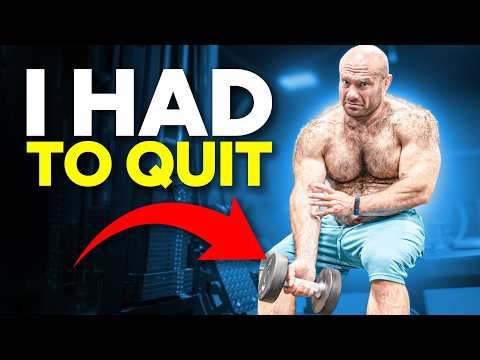
Link: https://youtu.be/ErTXiqcCMJA
Short Summary
Number One Takeaway: Prioritize gradual progression in training volume and controlled technique to minimize the risk of injury and ensure long-term gains. Avoid "yolo" training and instead focus on consistent, sustainable progress.
Executive Summary: This video discusses four of Dr. Mike's worst gym-related injuries and emphasizes the importance of smart training. He highlights key takeaways, including avoiding excessive volume increases in single sessions, prioritizing excellent technique, and gradually rehabbing injuries to facilitate a full comeback, often stronger than before.
Key Quotes
Here are five quotes extracted from the transcript that represent particularly valuable insights or strong opinions:
-
"No one workout is ever going to make or break you. No one workout is ever going to be the difference between gaining a lot and gaining nothing. And accumulated workouts over time, assuming that you are healthy and not hurt, are what's really going to help you be able to drive those gains." (Highlights the importance of consistency and long-term training over individual "hero" workouts).
-
"I'm saving this ego for big lifts and big jacked muscles in 6 months. That's when I'm going to feed the ego because I really care about my ego. You guys probably thought that I was going to say kick the ego out the door. No, the ego is important. It's why you lift weights. Let's just be honest here." (Acknowledges the role of ego in lifting while stressing the need for patience and a long-term perspective when recovering from injury).
-
"If you can't go heavy, you go high rep with short rest and lots of sets. That according to all the science we have makes you at least as jacked as going heavy. And for low versus high volume, going lighter actually will get you even more jacked if the volume is very high." (Presents an actionable strategy for maintaining or even increasing muscle mass during periods when heavy lifting is not possible due to injury).
-
"Anytime you are working for physique, like you want to be your most jacked, and there is an exercise that you could do yolo style, like let's go heavy and clang and bang, or you could do it control style. Really, the only thing you have to ask is just two questions. One, is one of these going to get me better gains? And the answer is no. They both work for roughly equivalent gains. And two, which one is statistically more likely to get me hurt? And it's clanging and banging by a long shot. And so then you end up doing the slower, more controlled reps." (Highlights how controlled movements are less likely to result in injury while being just as effective).
-
"If you train hard and you do sports, it is almost certain that you are going to get hurt...Injury will occur. And then your next thing is how do I deal with it?...Think about this. In a few months, there's going to be a version of me that's more jacked, more ripped, and stronger. How do I get there? The answer is back away from what got you hurt. Do all the other stuff hard that isn't at all related to your injury. And then over the next few weeks, very gently, slowly with super lightweight, super low volumes, very big range of motion. Start rehabbing the area that got you hurt." (Emphasizes the inevitability of injuries in the fitness journey and offers practical steps for dealing with it).
Detailed Summary
Here's a detailed summary of the YouTube video transcript in bullet points, excluding sponsor announcements or advertisements:
Key Topics:
- Dr. Mike discusses four of the worst injuries he's experienced in the gym and how they impacted his training.
- He emphasizes how to avoid similar injuries and continue making progress.
- He advocates for intelligent training, acknowledging past mistakes and learning from them.
- The video focuses on learning from injuries and adapting training accordingly.
Injury #1: Pec and Tricep Issues (Benign Fasciculations)
- Cause (Speculated): Combining explosive chest and quad movements (plyometrics) with a low-frequency "bro split" training style, plus overtraining sets.
- Symptoms:
- Pain in pecs and quads.
- Benign fasciculations (involuntary muscle twitching) in pecs and triceps after contraction.
- Pain during exercises, feeling like scar tissue tearing.
- Treatment:
- Initially, two weeks off, followed by easing back into training.
- Eventually, nine months of no upper body training at all.
- Realization that even lower body exercises like deadlifts and walking lunges were aggravating his pecs due to pec contraction.
- Warming up with light dumbbell flies with slow eccentrics and deep stretches helped.
- Long-Term Impact:
- Inability to bench press heavy again.
- Switched to incline presses and overhead presses.
- Incorporated moderate rep ranges and hypertrophy-focused pec training.
- Tricep issues managed with overhead lat and tricep work (pullovers).
- Lesson: Acute overtraining of a specific muscle group (high volume in a single session) can lead to long-term issues.
- Prevention: Gradually increase volume instead of drastic jumps.
Injury #2: Herniated Disc
- Cause: Incorrect overhead press form (leaning back) inflamed the sacroiliac (SI) joint. Squats and good mornings then further damaged the disc due to asymmetrical rounding of the back.
- Symptoms: Debilitating back pain, inability to get out of bed, loss of sensation in hamstring and glute.
- Rehab:
- Complete rest and limited mobility initially.
- Then, a strategic rehab plan was implemented.
- No back movements requiring flexion or extension.
- High bar squats with elevated heels and weightlifting shoes.
- Occlusion training (blood flow restriction) with high reps.
- Slowly reintroduced deadlifts and good mornings with very low weight and emphasis on technique.
- Recovery:
- Made a full comeback, eventually squatting heavy again.
- Residual effect: Some skin numbness remained in leg.
- Lessons:
- Avoid rounding the back, especially asymmetrically, when lifting heavy.
- A full recovery is possible with proper rehab and patience.
- Embrace isolated hypertrophy training during the recovery phase (high reps, short rest, good technique).
- Key Takeaway: Turn the "ego" switch off for a while, focus on rehab, and then come back stronger with better technique.
Injury #3: Torn Adductor
- Cause: "Yolo" style barbell walking lunges with heavy weight (245 lbs), prioritizing weight lifted over controlled movement, short steps.
- Symptoms: Audible tearing sound, pain in inner thigh, bruising, difficulty walking and sleeping.
- Rehab: Recovered well, but never returned to ultra-heavy lunges.
- Adjustment:
- Switched to longer steps, slower descents, pauses at the bottom.
- Focused on shifting weight to the front leg to emphasize glute activation.
- Lesson: When training for physique, controlled exercises with full range of motion are more beneficial than uncontrolled, heavy lifting, if the objective is muscle size and not strength.
- Prevention: Avoid heavy lifting with bad form. Slow, controlled movements lead to better gains with lower risk of injury.
Injury #4: Neck/Shoulder Nerve Pain from Upright Rows
- Cause: Combining Brazilian Jiu-Jitsu with overhead pressing, followed by dumbbell upright rows.
- Symptoms: Sudden searing pain in the delt and trap, radiating down the arm, benign fasciculations.
- Long-Term Impact: Inability to perform dumbbell upright rows without nerve pain.
- Adaptation:
- Stopped doing dumbbell upright rows entirely.
- Adjusted posture to lean back, as sitting upright aggravated the condition.
- Lesson: Sometimes, despite knowledge and careful training, injuries are unavoidable. The best course of action is to work around the limitation.
- Broader Theme: Hard training and sports inevitably lead to injuries. Focus on minimizing risk through proper technique and listening to your body.
General Conclusions/Advice:
- No "Yolo" Training: Avoid drastically increasing volume or weight in a single session.
- Technique is Paramount: Prioritize proper form and control over lifting the heaviest weight possible.
- Listen to Your Body: Pay attention to pain and adjust training accordingly.
- Rehab Strategically: If injured, focus on isolated hypertrophy training with high reps, short rest, and excellent technique.
- Be Patient: Don't rush back into heavy lifting too soon. Allow tissues to heal properly.
- Adapt and Overcome: If an exercise causes pain, find alternatives and work around the limitation.
- Accept Injuries as Part of the Process: Recognize that injuries are almost certain to occur during a long lifting career. Focus on managing and recovering from them effectively.
- Long-term Benefits: Good form and intelligent decisions, may lead to more long-term gains.