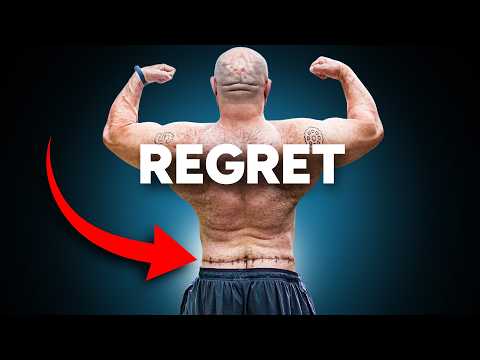
[@RenaissancePeriodization] The Worst Advice I've Ever Followed
![[@RenaissancePeriodization] Summarizer](https://summaries.pages.dev/img/logo.webp)
Link: https://youtu.be/6bVTWPf-NJg
Short Summary
Number One Takeaway: Don't blindly follow extreme diet and training advice. Experiment modestly and assess results before committing fully.
Executive Summary: Dr. Mike shares seven mistakes he made in his early training and dieting, emphasizing that moderate approaches (bulking/cutting pace, macronutrient ratios, cardio) yield better results than extreme ones. He stresses the importance of experimenting cautiously with any new approach before fully committing to it.
Key Quotes
Here are four quotes from the video transcript that I found particularly insightful or interesting:
- "I thought misery was what like I signed up for and I got plenty of it. I just did it kind of in a really stupid way." (This quote highlights the speaker's past tendency to embrace extreme and unsustainable methods, driven by a belief that suffering was a prerequisite for success.)
- "Don't just hook, line, and singer buy into some shit and blindly do it for months like I did." (This is a direct call to action and a warning against blindly following trends without critical thinking and personal assessment.)
- "Teaching out of theory only is cool but doesn't go far enough...you can't be the best teacher about which decisions are a better idea than not really without having made bad decisions as well as good ones." (This speaks to the value of experiential knowledge and the importance of learning from mistakes in order to effectively guide others.)
- "It was a stupid stupid thing. Um I would not recommend doing it. It turns out nowadays we know that nutrient timing isn't a super big deal. A little bit more carbs around your workouts totally cool, but we do need a little bit more." (This demonstrates the evolution of scientific understanding and how what was once considered cutting-edge (nutrient timing) has since been tempered with more nuanced evidence.)
Detailed Summary
Okay, here's a detailed summary of the video transcript in bullet points, focusing on the key topics, arguments, and information discussed, and excluding the sponsor announcements or other adverstisement:
Introduction and Philosophy:
- The speaker, Dr. Mike, reflects on past training and diet advice he followed that he now considers sub-optimal.
- He believes his past mistakes have made him a better teacher because he can draw from experience, not just theory.
- Lifters who were brought into a really good system from day one often have a hard time figuring out what’s wrong with someone else’s workout.
Sub-Optimal Training and Dieting Advice and Practices:
- Dreamer Bulks:
- Years of sequencing "dreamer bulks" with "dreamer cuts."
- He gained weight too quickly (1-2 pounds per week) for 8-12 weeks.
- Resulted in excessive fat gain, stretched skin, and a compromised physique.
- Cardio became difficult due to increased fat mass and limiting lower back pain.
- Muscle gain was less than expected.
- Better Approach: Slower bulking (0.5 pounds per week) with shorter cycles and dieting off the fat.
- Radically Fast Cutting:
- Losing at least 1% of body weight per week during cuts.
- Food intake drastically reduced, which negatively impacted training energy, cognitive performance, sleep, and likely muscle retention.
- The "zigzag" approach of extreme bulks and cuts ultimately worked in the long term, but was unnecessarily miserable.
- Better Approach: Mini zigzags with less extreme up and down is better for physiology.
- No-Carb Diets for Cutting (Keto):
- Used keto diets frequently for cutting due to suppressed hunger.
- Robbed him of psychological and physical energy and muscle pumps.
- Training performance suffered.
- Better Approach: Moderate carbohydrates during dieting for improved energy and training.
- "Palumbo Days":
- Protein and veggies for every meal.
- Used as an extreme measure at the end of cuts to get leaner quickly or for clients on a show prep.
- Very effective for rapid weight loss, but highly unpleasant.
- Better Approach: Moderate carbohydrates and avoiding frequent low-carb/low-fat days.
- Extreme Workout Window Nutrition:
- Driven by enthusiasm for nutrient timing research (since proven to be overvalued).
- Attempted to consume the vast majority of carbohydrates around the workout window.
- Intra-workout shake with up to 240 grams of carbohydrates.
- Caused discomfort during workouts, frequent urination, and extreme hunger later in the day.
- Marginal anabolic benefits compared to the discomfort.
- Better Approach: A little more carbs around workout is fine, but focus carb intake more post-workout. 40-100g of carbs during is fine.
- Ultra-High Carb, Ultra-Low Fat Diets:
- Driven by the idea of maximizing glucose/insulin-mediated anabolic benefits from carbs, and the idea that exogenous hormones lessened the need for fats.
- Tried to maximize carbohydrate intake while minimizing fat intake.
- Experienced inconvenience and difficulty eating normally.
- Did not yield notable results in terms of muscle growth, or only marginal.
- Eating multiple days of 700 gram of carbohydrate with 30 or fewer grams of fat.
- Better Approach: A balanced macronutrient approach. Eat somewhere between 50/50 fats carbs and 70/30.
- Brazilian Jiu-Jitsu for Cardio:
- Tried BJJ as a replacement for traditional cardio.
- Did burn fat, but caused injuries and fatigue.
- Incompatible with bodybuilding goals due to the physically demanding nature of BJJ.
- Better Approach: Steps for cardio. 10,000 steps per day.
Key Takeaways & Conclusions:
- Moderation is Key: Avoid extreme approaches to bulking, cutting, macronutrient ratios, and workout window nutrition.
- Pace Matters: Prioritize slower weight gain/loss for optimal results and health.
- Listen to Your Body: Be mindful of how different approaches affect your energy, performance, and overall well-being.
- Moderate Macronutrients: Prioritize a balanced approach to macronutrient intake, avoiding extreme ratios of carbs to fats.
- Balance Training Goals: Choose cardio methods that align with your training goals, considering factors like injury risk and fatigue.
- Gradual Implementation: If experimenting with extreme approaches, start modestly to assess their impact.
- Don't blindly follow advice: Don't just blindly follow advice like he did. You could end up fat and alone when you are 40.