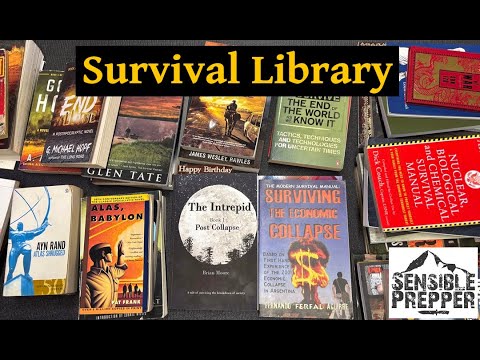
[@SensiblePrepper] Building a Survival Library: Recommended Books
![[@SensiblePrepper] Summarizer](https://summaries.pages.dev/img/logo.webp)
Link: https://youtu.be/Krw3tMsDbTs
Short Summary
Here's the breakdown of the YouTube video transcript:
Number One Action Item/Takeaway:
Build a physical survival library with novels (for mindset), reference books (for practical skills), and training manuals.
Executive Summary:
The Sensible Prepper emphasizes the critical importance of a well-rounded physical survival library. He advocates for combining novels that cultivate the right mindset with reference books offering practical skills and training manuals for specific situations. Having physical books provides a reliable source of information when electronic resources are unavailable.
Key Quotes
Okay, here are 5 direct quotes from the YouTube video transcript that I found particularly insightful:
-
"One thing about reading, it's like dreaming awake if you're reading a good novel." - Captures the immersive and thought-provoking nature of reading, especially regarding survival-related scenarios.
-
"The first line of defense is getting along with people. That is number one." - Highlights the often overlooked importance of social skills in a survival situation, emphasizing community and cooperation.
-
"Principles never change. And the nature of man never changes. I mean he this is just human nature and it happens." - Reflects how lessons from historical texts like "Art of War" remain relevant due to unchanging human behaviors in conflict scenarios.
-
"Money goes down, crime goes up." - A simple but powerful statement emphasizing the predictable correlation between economic hardship and increased lawlessness in a collapse situation.
-
"Being able to tap in to different people and their thoughts whether it's from the 1940s or 50s or it's something that is very current." - Summarizes the benefit of reading a variety of books, both old and new, to gain a wider range of perspectives and insights.
Detailed Summary
Okay, here's a detailed summary of the YouTube video transcript in bullet points, focusing on the key topics, arguments, and information shared, excluding advertisements and sponsor mentions:
Key Topic: Importance of Building a Physical Book/Reference Library for Prepping
- Main Argument: Physical books are crucial for prepping because digital resources (tablets, downloaded information) are unreliable due to potential damage, power loss, and device failure in survival situations.
- Downtime Advantage: Survival situations often involve significant downtime. Books provide valuable opportunities for learning, knowledge enhancement, mindset improvement, and resource access.
- Sharing and Knowledge Dissemination: Books can be easily shared, allowing for collective learning and preparedness within a group. The speaker recommends buying multiple copies of impactful books for trusted individuals.
Categories of Books Recommended (with examples):
-
People Skills:
- Improve communication and interpersonal relations, essential for survival groups and community interaction.
- Example: "How to Win Friends and Influence People" by Dale Carnegie.
-
Novels (Post-Apocalyptic/Survival):
- Help develop the correct mindset and consider potential scenarios.
- Classics provide timeless lessons and profound stories.
- Examples:
- "Alas, Babylon" by Pat Frank (nuclear holocaust survival).
- "Lucifer's Hammer" by Larry Niven and Jerry Pournelle
- "Earth Abides"
- "The Parable of the Sower" by Octavia E. Butler.
- "A Canticle for Leibowitz" by Walter M. Miller Jr.
- "Atlas Shrugged" by Ayn Rand (economic collapse).
- "Brave New World" by Aldous Huxley.
- "1984"
- "Animal Farm"
- "Survivalist series"
- "Unintended Consequences"
- "Patriots"
- "The Survivors"
- Series to Consider
- "Going Home" series by A. American (Chris Weatherman).
- "The End" (The New World series by G. Michael Hopf)
- "299 Days" by Glenn Tate
-
Medical:
- Essential for treating injuries and illnesses when professional medical care is unavailable.
- Examples: "Where There Is No Doctor", "Where There Is No Dentist", survival medical guides.
- Supplement with medical training to put the book knowledge to practical use.
-
"How-To" Prepping/Survival Guides:
- Provide practical advice on building bug-out bags, emergency plans, home defense, and acquiring essential supplies.
- Example: "Prepper's Home Defense", "The Ultimate Bug Out Bag".
-
Self-Defense/War Strategy:
- Enhance personal safety and security in a post-collapse environment.
- Examples:
- "The Art of War" by Sun Tzu (strategy and tactics).
- "Principles of Self-Defense" by Jeff Cooper.
- "Four Pillars of Fighting" by James Joerger
-
Manuals (Military/Technical):
- Offer specific instructions on survival, weaponry maintenance, and other practical skills.
- Examples: "US Armed Forces Nuclear, Biological, and Chemical Survival Guide".
-
Area Intelligence & Community Building:
- Essential for assessing threats in the area and building resilient mutual assistance groups.
- Examples: "Area Intelligence Handbook" by Mike Shelby.
- "Prepper Communications Handbook".
- "MAGS" by Charlie Hogwood.
-
Practical Prepping & Engineering:
- Essential for finding more practical information.
- Examples: "Practical Preppers" by Scott Hunt
Additional Points:
- Importance of Practical Training: Reading alone is insufficient. Real-world training (medical, firearms, bushcraft) is essential to develop competency and skill. Training classes offer direct feedback and correction.
- Value of Learning from Others' Experiences: Novels and reference materials can provide valuable insights into potential challenges and solutions.
- Quality Over Quantity: Carefully evaluate books and reviews to ensure they align with your values and provide accurate information.
- Prepper Groups: Connecting with like-minded individuals and building a prepper group is highly beneficial.
- LDS/Mormon Preparedness Manuals: These manuals are helpful as the Mormons have been prepping for years. The speaker mentions visiting a Mormon Cannery.
- Consider including automatics and wind up watches as time is very important during disaster.