[@TheDiaryOfACEO] Buddhist Teacher: The Hidden Epidemic Behind Your Depression & Anxiety! (No One Talks About This)
![[@TheDiaryofaCEO] Summarizer](https://summaries.pages.dev/img/logo.webp)
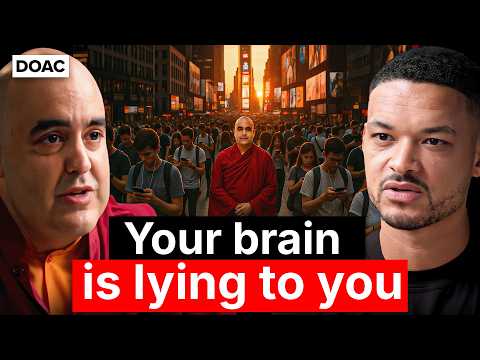
Link: https://youtu.be/vIbLQQ1i56Y
Short Summary
Okay, here's the requested information:
-
Number One Action Item/Takeaway: Implement a daily 10-minute meditation practice immediately upon waking, focusing on your breath and compassion, without judgment, recognizing thoughts are helpful.
-
Executive Summary: In a world of constant stress and distraction, meditation offers a path to inner freedom and reduced suffering by changing our relationship with our thoughts and emotions. By practicing daily meditation, we can train our minds to be less reactive, more compassionate, and ultimately happier, regardless of external circumstances.
Key Quotes
Here are five insightful quotes extracted from the transcript:
-
"The reality is you can run to the end of the earth and that thing that has been tormenting you will always trip you up." - This highlights the futility of external escapism as a solution to internal suffering.
-
"We have developed the most, you know, materially comfortable culture in history. We are materially more comfortable than ever and yet emotionally more uncomfortable. So, something hasn't added up." - This points to the paradox of modern society, where material abundance doesn't necessarily translate to emotional well-being.
-
"What were we looking for? We were looking for freedom...what we're looking for is the absence of wanting. That's the the happiness we achieve when we get what we want is a kind of freedom from wanting, so the problem is is that we're caught in a cycle where we then just want something else." - This delves into the core desire beneath the pursuit of happiness and the traps of unending consumerism.
-
"The deepest addiction we all have is the addiction to our own thoughts...a wanting thought arises in the my mind and then I jump on it and I want to get something to kind of alleviate that." - This reframes addiction, extending it beyond substances to the habitual chase after fleeting desires and a deeper dependence on our thought patterns.
-
"I've learned how to forgive the feelings that those incidents gave rise to. That to me is much more important than forgiving the people." - This offers a nuanced perspective on forgiveness, focusing on releasing the emotional burden rather than necessarily reconciling with others.
Detailed Summary
Here's a detailed summary of the YouTube video transcript, focusing on the key topics, arguments, and information discussed:
Key Topics:
- The Nature of Suffering in Modern Life: Focuses on the feeling of inadequacy, constant pursuit of external validation, and how societal messages contribute to unhappiness.
- Meditation as a Solution: Explores meditation as a means to gain control over one's mind, reduce negative thinking, and cultivate inner freedom and compassion.
- Buddhism as a Path to Inner Understanding: Discusses Buddhism as a science of awareness, emphasizing personal discovery, mental training, and freedom from suffering.
- The Monastic Life: Provides insights into the life of a Buddhist monk, including vows, celibacy, and the intense focus on meditation.
- Personal Healing: Shares the monk's journey through personal trauma, including sexual abuse, parental divorce, mental health issues, and the process of healing through meditation and acceptance.
- Forgiveness and Compassion: Examines forgiveness as a path to personal freedom, alongside compassion as a transformative force for both oneself and others.
- Mindfulness in Daily Life: Focuses on the importance of integrating mindfulness and meditation into everyday activities to combat stress and make conscious choices.
- The Misconceptions of Meditation: How meditation is widely misunderstood as "clearing of the mind" when it's about learning how to be less controlled by your mind.
Key Arguments & Information:
-
Modern Life and Suffering:
- Society makes us feel constantly inadequate and that something is always missing.
- Technology and constant information flow contribute to stress and decreased confidence.
- The consumerist culture perpetuates a cycle of wanting more, leading to emptiness despite material comfort.
- Religion used to give people a sense of purpose but now we obsess over our own purpose.
-
Meditation as a Tool:
- Meditation helps individuals become generators of their own experiences by learning to control their minds.
- It's about working with the mind, not clearing it. Thoughts are helpful.
- Meditation's effects are visible in brain scans.
- Involves focusing on breathing, recognizing when the mind wanders, and gently returning to the breath.
- This practice strengthens the ability to choose one's thoughts and emotions, leading to greater inner freedom and resilience.
- It can be integrated into daily life through "micro moments" of mindfulness to combat stress and rewire the brain.
-
Buddhism & Enlightenment:
- Buddhism is a path to awakening, a science of inner awareness, not necessarily a religion with a deity.
- It emphasizes personal discovery, mental training, and freedom from suffering.
- Hell and heaven are considered states of mind.
- Buddhism focuses on the power of the mind and explores the fabric of reality.
-
Personal Story:
- The speaker became a monk to deal with extreme suffering.
- Burnout at 21 forced him to question his unhealthy lifestyle.
- Experiences sexual abuse as a teenager in a band contributed to self-loathing and escapist behavior.
- He entered a monastery after a heart condition and extreme stress.
- He found that meditation could transform the internal suffering.
- Overcame severe depression and anxiety during a four-year retreat by learning to accept and meditate on the suffering, instead of pushing it away.
- Had a personal experience in the long retreat of running away and coming back.
- He learned to send love and compassion to his inner pain, transforming it into a source of strength.
-
Monastic Life:
- Taking vows to give up intoxicants, and sex led to immediate relief for speaker.
- Celibacy allows for stronger, heart-based relationships within the community.
- The focus is on observing and transforming desires, rather than suppressing or indulging them.
- Monks do this practice to be of more help to others.
-
Forgiveness and Compassion:
- Holding onto grudges is like holding a hot coal, hurting only oneself.
- Forgiveness is about freeing oneself and dropping the burden of rage.
- It involves understanding the suffering of those who have caused harm and recognizing the shared human condition.
- It also involves compassion by sending love into the flames/trauma.
- He was able to forgive the man that murdered his friend because he understood the psychosis.
-
Practical Advice:
- Start with 10 minutes of meditation per day.
- Sit comfortably, set an intention of compassion for oneself and others, and focus on the breath.
- Don't judge the meditation; just do it.
- Engage in "micro moments" of mindfulness throughout the day to combat stress and cultivate awareness.
- Protect your mind with meditation by learning to face fear and make conscious choices.
-
Addressing Fear:
- The media and politics often use fear to manipulate and control.
- Learn to face fear instead of running away from it.
- Be fearless in a frightened world.
- It is important to find the gap between impulse and action and make a different choice.
- People are doing the best they can with the tools they have.
-
High Productivity Meditation:
- Calm is misunderstood as a tranquilized state when its real meaning is able to keep a cool head under pressure.
- Meditation can help you optimize your brain for performing well with clarity and emotional control.
- Meditation can make you work much harder and get less tired.
-
Success with Meditation:
- Examples of successful people who have tremendous benefits from meditation are Ray Dalio, Mark Benioff, Oprah Winfrey, Jack Dorsey, and Steve Jobs.
-
Identity & Victimhood
- We are not our past, even though it's understandable to live like prisoners of what's happened to us.
- Buddhism views the past as an illusion. We are right now in the present.
- Desolidify things that feel really solid and real to become more free.
-
Conclusion:
- The missing link is the doing of the meditation.
- Meditation has given him an opportunity to work on his mind and be of use in the world.
- He also trusts it and he's in it for the long game.
- There is a growing interest in understanding our minds and Buddhism is a really exciting path in history.
- We've created a prison that's not serving us and we're looking for a way out.
- What's within us is what's been there the whole time.