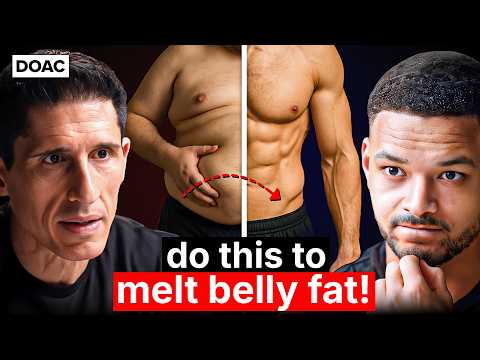
[@TheDiaryOfACEO] Muscle Expert (Jeff Cavaliere): You Need To Know This About Creatine! Melt Belly Fat With 1 Change!
![[@TheDiaryofaCEO] Summarizer](https://summaries.pages.dev/img/logo.webp)
Link: https://youtu.be/epAVydG6IxI
Short Summary
Here's a concise executive summary of the YouTube video transcript featuring Jeff Cavalier:
Jeff Cavalier emphasizes a holistic approach to fitness, integrating physical therapy principles to avoid sacrificing the body for aesthetics. He advocates for finding personal motivation, highlighting the importance of discipline, consistency, and small incremental changes in diet and exercise for overall health, longevity, and mental well-being, while cautioning against being overwhelmed by perceived requirements.
Key Quotes
Here are five quotes extracted from the transcript, representing key insights and/or significant points made by Jeff Cavalier:
-
"Motivation isn't what produces the results. It might get you to the to the show and get you to actually show up at the gym and initiate the work, but only discipline keeps you there. And being disciplined is the number one asset somebody can have."
-
"If I take away your health, you're done. Health is everything."
-
"Everybody that for the most part that's out there trying to put information out, they should have a level there's a level of respect I have for everyone doing that because they're all trying to help people get better or improve themselves...I believe that when people understand the why and they do become empowered to sort of you know make this their own journey the benefits are so far reaching it's it's not just the gym or the aesthetic appeal that you imp improve it's your it's so many facets of life that improve because fitness improves like mental health is directly related to people's physical health."
-
"Change happens when the pain of staying the same becomes greater than the pain of making a change."
-
"I think that one of the biggest things that I see people do is they they talk themselves out of it from the very beginning because they think that the commitment is going to be too much more than what they're doing right now. Too much to ask and they can't do it. That's that's a mistake... Make those We talked about nutrition again, like make that first pass. Take away the obvious stuff, the stuff you know is just not contributing to a healthier life."
Detailed Summary
Okay, here is a detailed summary of the YouTube video transcript in bullet points, focusing on key topics, arguments, and information:
I. Introduction and Guest Introduction
- The video introduces Jeff Cavalier, a physical therapist and strength coach trusted by the NFL, MLB, WWE, and Sylvester Stallone.
- Jeff Cavalier is known for his science-based training.
- The host is asking Jeff about his unique perspective on building muscles, having a strong, healthy body, and prolonging healthspan.
- A request for viewers to subscribe to the channel is made early in the video.
II. Jeff Cavalier's Philosophy and Background
- Jeff stresses a comprehensive, multi-faceted approach to fitness that considers overall health and prevents sacrificing the body for aesthetics.
- His physical therapy background informs his approach, emphasizing not sacrificing the body for aesthetic appeal.
- Empowering people to understand "the why" behind fitness leads to wider life improvements, including mental health.
- He encourages people to adapt fitness information to their individual needs rather than following it exactly.
- Jeff believes health is the most important thing and it is irreplaceable.
- Jeff studied physio neurobiology and became a physical therapist, also becoming a certified strength and conditioning specialist.
- He has worked with professional athletes from the Mets, football players, and wrestlers, appreciating the combination of athleticism and aesthetics.
III. Motivation, Discipline, and Overcoming Inertia
- Motivation is overrated; discipline is key to consistent results.
- Early success builds self-motivation.
- Jeff's genetics weren't great, but he found discipline through enjoyment and fulfillment in training.
- Many people are desperate to change their health but fail to do so.
- Access to information is abundant, making it easier to start.
- The speaker highlights the detrimental effects of prolonged sitting ("the new smoking").
- It's harder to start training in your 40s and 50s, but it's still possible.
- Eliminating thinking and stopping negotiation with yourself is crucial to overcoming inertia.
- The path of least resistance (e.g., sitting on the couch) is a major obstacle.
- Even experienced trainers sometimes struggle with motivation but prioritize taking initial action.
IV. The "Spark" and the Power of Will
- Hearing life-changing stories from people who have been impacted by Jeff's content is a major motivator for him.
- Stories shared: a man with MS competing in a fitness event, a man with stage four cancer competing.
- People pursue fitness for reasons beyond aesthetics (e.g., dealing with illness, defining identity).
- Working out helps build the "muscle" of doing hard things, leading to personal growth.
- The more you do hard things, the more the part of your brain associated with doing hard things grows.
- Neuroscience shows the more hard things that you do, the part of the brain associated with doing hard things grows.
- Once you like something you didn't like, then it no longer challenges that area of the brain.
V. Understanding People's Desires and Motivation
- Insecurity, a feeling of wanting to be accepted, and a desire to be more capable are major motivators.
- People often feel insecure about their physical capability and preparedness.
- "Change happens when the pain of staying the same becomes greater than the pain of making a change."
- Conversation and understanding "the why" behind fitness goals are important for trainers.
- Often, the "why" connects to childhood pain, letting others down, or feelings of inadequacy.
- Many lifelong gym-goers use fitness as an escape or a way to control something in their lives.
- Top-level interests are often aesthetics (abs, biceps, chest) and fixing issues (low back pain, postural problems).
- Jeff aims to broaden people's understanding to encompass overall health beyond initial aesthetic goals.
VI. Aesthetics: Looking Good
- Three main sections are, people want to look good, they want to perform in whatever that might be and they also want to be able to do it for a long time.
- The main component is amount of fat, or how lean, the aesthetic development of the muscles, and what their bodies are shaped like.
- Men focus on upper body development, while women prioritize lower body development.
VII. Nutrition and Achieving Leanness
- To be lean, start by identifying and eliminating obvious poor dietary habits.
- Hidden offenders include excessive sugar (ketchup, yogurt) and overconsumption of carbohydrates (white rice).
- Portion sizes are often underestimated, especially with carbohydrates.
- Look for sugar and fat content on packaging, prioritizing protein.
- High-protein foods promote satiety.
- Jeff's diet includes oatmeal, protein shakes, chicken wraps, Greek yogurt (low sugar), and dinners centered around protein (chicken, steak, fish) with fibrous (broccoli, edamame) and starchy carbohydrates (sweet potatoes, pasta).
- He trains late at night (10:30-11 pm) due to his schedule, eating dinner around midnight, which he acknowledges may be suboptimal.
- The speaker says he will try to not eat after 9pm.
- Routine sleep schedule is the most important aspect.
VIII. Targeting Lower Belly Fat
- Lower belly fat is a common concern and the first place men put on fat, and the last place to come off.
- "Clean diet" is often a red flag that someone doesn't eat healthy.
- Consistency with a restricted diet is key.
- Men tend to lose fat from the top down, making lower belly fat the last to go.
- Weight loss is primarily about calories in vs. calories out, but the type of calories matters.
- Eating only Twinkies in a deficit will lead to muscle loss, so prioritize protein intake.
IX. Common Misconceptions About Abs
- Doing crunches alone will not eliminate belly fat.
- Nutrition is the primary determinant of body fat levels.
- Abdominal muscles can be developed through training (crunches, resistance training), similar to biceps or quads.
- Training to hypertrophy the abs can make them more visible, but you need to address body fat first.
- Bloating in former bodybuilders is often due to anabolic steroid use and/or growth hormone.
X. TRT (Testosterone Replacement Therapy)
- TRT is becoming a prevalent path, which Jeff doesn't like.
- While TRT is medically necessary in some cases, its rising popularity is concerning.
- Maximize natural potential before considering TRT.
- TRT requires lifelong reliance on exogenous testosterone.
- Jeff has never taken TRT, but if shown to be safe, he would consider it.
XI. Longevity: Training Like an Athlete
- Train in a multi-faceted way.
- Prioritize building muscle (hypertrophy) and strength to offset age-related loss.
- Challenge balance and muscle recruitment to combat brain aging.
- Train reactivity and reaction skills.
- Address flexibility and mobility to improve overall function.
- The pyramid: strength, muscle mass, ability to perform, then skill work.
- The roots of the pyramid are stability, flexibility, and mobility.
- Flexibility is muscle length, mobility is joint excursions.
- People often dislike flexibility and mobility work, relegating it to the end or skipping it entirely.
- Stretching and mobility contribute to feeling younger.
- Optimal performance requires both tension/force and flexibility/mobility.
- Even 5-10 minutes per day of consistent stretching can improve flexibility and mobility.
- Programs must be individualized based on assessments.
XII. Five Key Exercises for Longevity and Quality of Life
- These are accessible and scalable with a low barrier of entry.
- Single Leg Romanian Deadlift: Promotes balance, hip hinge.
- Squat and Reach: Improves mobility in the thoracic spine.
- Sumo Stance Hold: Improves hip mobility and stability.
- Posterior Chain Push-up: Works upper body strength and posterior chain.
- Hip Abductions: Strengthens glute medius for hip stability.
XIII. Importance of Strong Feet
- Modern shoes weaken feet.
- Viva barefoot shoes restore natural foot movement and rebuild strength.
XIV. Specific Exercises
- Lunges, Squats, Deatlifts
- Shoulder exercises with chest and triceps.
XV. The Thoracic Spine and Rotation
- Rotation is crucial for function and is often lost with age.
- The thoracic spine is the area most responsible for torso rotation (base of the neck to below the rib cage).
- Loss of extension in the thoracic spine leads to a direct loss of rotation.
- Maintaining thoracic extension maintains rotation.
- Test: slumping forward vs. upright while rotating.
- Limited thoracic rotation can impact shoulder mobility and lead to low back pain.
- Lack of thoracic mobility even inhibits proper lung inflation.
- Wall slides, doweled stretches, and bridge and reach-overs improve thoracic mobility.
XVI. Training Intensity vs. Duration
- "You can train long, or you can train hard, but you can't do both."
- As you get older, minimize "tire rotations" (repetitions).
- Prioritize intensity over excessive repetitions to spare joints.
- Anywhere between 5 and 30 reps to failure can stimulate muscle growth.
- Form is important for safety and targeting the right muscles, but some bending of form at failure is acceptable.
XVII. Nerd Neck and Posture
- Nerd neck is a consequence of thoracic spine rounding and internal rotation of the shoulders.
- Address thoracic mobility to correct nerd neck.
XVIII. Common Avoidable Injuries
- Preparation is key to avoiding injury.
- Injuries often occur at joints built for mobility (shoulder, hip) when they are uncontrolled, or at joints built for stability (lower back) when they are asked to do too much.
- Strengthening the glute medius (hip abduction) is important for hip stability.
- If lunges, do not hold weights in each hand; instead, try holding one weight on one side to force the glute to fire.
- Upper/lower or push/pull/leg splits are effective training approaches.
- Total body workouts with big compound movements are also beneficial.
- In any 7-day plan, prioritize strength and weight training over cardio.
XIX. Set and Rep Ranges
- Aim for 9-16 sets per muscle group per week.
- Bicep Training: Intricacy from person to person because every muscle is different for every person.
- The more frequently that you can stimulate a muscle, the better the results.
XX. Grip Strength
- Important indicator of overall health and strength, which is correlated, but not causitive with overall health.
- The average male grip strength is 100-120 pounds.
- Grip strength can be used to measure recovery.
- Can be improved with hand grippers.
XXI. Back Pain
- A very common issue, which affects a large portion of the population.
- Preventable and can come from a wide variety of causes.
- Stretching and strengthening can help to remedy.
- Lack of thoracic mobility can lead to low back strain.
- Mismatch disease or mismatch issue with living is at odds with how we were supposed to live.
- Standing desks or regular breakups from sedentary activity can help remedy.
XXII. Supplementation
- Creatine monohydrate (or any form of creatine) and protein powder are the top two supplements.
- Protein powder is not essential if you get enough protein through diet.
- Benefits of Creatine.
- There are many different types of creatines, but creatines with less additives is better.
- The new research shows that 5 grams is probably not a sufficient does, and you may need 8,9,10 if you are of a significant size.
- A little of over 200 pounds.
- Loading: If you want to load, you want to get there faster, you load.
- If you don't load, you just will ultimately get to the same capacity, but at a slower pace.
- Whey Protein
- Isolate proteins are of a higher quality, with 90% vs 80% with protein concentrates.
- Amino acid spiking: They include a lot of glycine in protein because they get the label benefit.
XXIII. Foods to Avoid
- Jeff avoids food dyes.
XXIV. Melatonin
- Safe and helpful for establishing normal sleep patterns.
- Consistency in going to bed and waking up is more important.
XXV. Optimal Sleeping Position
- Individual, but the "corpse position" (on your back) is generally best.
- Side sleepers should avoid the fetal position.
- Sleep with a flat pillow to avoid neck issues.
- Loosen sheets to allow free movement of feet.
XXVI. Closing Advice
- Don't stress about doing everything perfectly, just get started and chip away at improvements.
- Any investment in your body is worthwhile, even small changes will accumulate over time.
- Adopt habits and enjoy the process rather than making drastic changes.
XXVII. Closing Remarks
- Thank you to the guest for providing valuable information.
This detailed summary captures the main points and arguments presented in the video transcript. It should be helpful for understanding the key takeaways and insights shared by Jeff Cavalier.