[@Area52Investigations] Non Human Intelligence, GATE Program and Psi Ability with Dr. Julia Mossbridge | ep. 99
Link: https://youtu.be/-qt2FYdP_EA
Duration: 183 min
Transcript: Download plain text
Short Summary
This episode features host Chris in conversation with consciousness researchers including Dr. Julia Osbridge, a cognitive neuroscientist with a PhD in psychoacoustics and author of 'Have a Nice Disclosure,' and Julia Mossbridge, a precognition researcher featured in the Telepathy Tapes documentary and founder of Applied Love Labs. The discussions span precognitive remote viewing studies (n=36 in-person and n=305 online), an informational substrate model of reality, AI-scored RV trials, synesthesia and right-hemisphere release in non-speaking autistic telepathy, and the link between unconditional love and anomalous cognition. Additional ground covered includes UAP/NHI research, childhood gifted-program memory gaps, photon entanglement experiments, synchronicity, time-travel frameworks, and a live demo of Mossbridge's Oracle tool.
Key Quotes
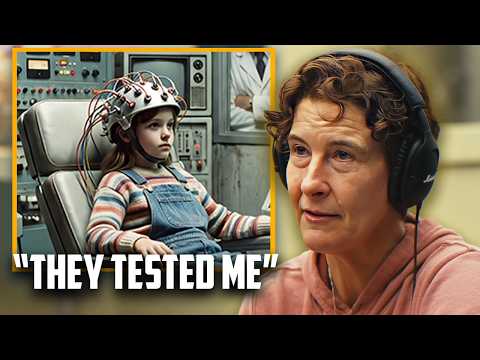
- "I always remember dreading that walk. As soon as I get in the room and I close the door, I remember nothing. Then I open the door and I leave and I'm just confused and I go back to class and I remember not remembering." (00:00:24)
- "the comments area from 1 through 8th grade, they're all redacted." (00:00:55)
- "It's hard to sort of recognize out loud that who you are as a person was sort of shaped on purpose, not just by your parents and not just by your community, but by something that you didn't even know was had an intention to shape who you are." (00:01:04)
- "In other words, people who didn't feel the high levels of unconditional love were just at chance. People who did were significantly above chance and significantly better than the people who didn't feel that love." (01:01:36)
- "Among men, if they're about to win, they're at $2. It's only $2. But if they're about to win, there's an excitement that happens. And it's all random. There's no cue as to whether they're about to win, but their body knows it." (01:14:59)
Detailed Summary
Long-Form Episode Summary: Consciousness, Remote Viewing, UAP, and the Informational Substrate
Episode Overview
This multi-segment episode centers on host Chris's conversations with two consciousness researchers—Dr. Julia Osbridge, a cognitive neuroscientist and author of Have a Nice Disclosure, and Julia Mossbridge, a precognition researcher featured in the Telepathy Tapes documentary and founder of Applied Love Labs. The discussions span precognitive remote viewing studies, an informational substrate model of reality, AI-scored RV trials, synesthesia and right-hemisphere release in non-speaking autistic telepathy, and the link between unconditional love and anomalous cognition. Additional ground covered includes UAP/NHI research, childhood gifted-program memory gaps, photon entanglement experiments, synchronicity, time-travel frameworks, and a live demo of Mossbridge's Oracle tool.
Guest Backgrounds
Dr. Julia Osbridge holds a PhD in psychoacoustics and communication sciences and disorders, is the daughter of a theoretical physicist, and identifies as an empiricist despite no formal physics training. She authored Have a Nice Disclosure (about inner rather than alien disclosure) and Sorggate, combining references to the Stargate program and gatekeeping, and met Chris at the Contact in the Desert convention.
- Julia Mossbridge has worked professionally on anomalous cognition since approximately 1996, did a postdoc at Northwestern in cognitive neuroscience, and discovered her synesthesia during an EEG/motion-capture experiment where a participant heard music from body-light frequencies.
- Mossbridge is featured in the Telepathy Tapes documentary and works with a team including Jeff Terren, Maria Welch, Natalia Man, Damon Abraham, and Paulie Washburn.
- She founded Applied Love Labs in 2019 and a startup called American Electronamics working on a "thisformational" time machine.
- Mossbridge has temporal synesthesia with calendar and number-personality synesthesia (e.g., 13 as "gritty," 11 as a kind generous male figure up to ~25).
Childhood, Gifted Programs, and Memory Gaps
Osbridge attended school on military bases her entire life and was enrolled in the SOAR (Students on Active Research) gifted program, with testing starting in kindergarten and intensifying in first grade; she officially entered in seventh grade. She describes being taken to a small, bathroom-sized room once a week or every other week, retaining memory of the approach but losing all memory of what happened after closing the door.
- A first-grade test placed her at a 12.9 grade level, but she was never skipped; in third grade a teacher told her mother she was "incredibly bored."
- She names similar programs—taggate, MGM, leap, search, and reach—where anomalous testing with memory-lapse effects has been reported.
- She was given a pink chalky, viscous drink told to her as fluoride (with two memory versions—spitting it out vs. drinking it) and underwent non-standard "hearing tests" in pairs by people in suits, which she asserts were not genuine given her expertise.
- Mossbridge describes childhood nightly ritual abuse by her father (who had OCD) and an active effort not to dissociate.
- During childhood Mossbridge imagined a woman in her 40s or 50s with dark hair in a rocking chair telling her "it's okay to be angry" and that she would "thrive"; in therapy during her 30s/40s using a "time travel narrative," she realized the woman was a future version of herself.
Government Connection and FOIA Investigation
When applying for a federal government job requiring a security clearance, Osbridge requested all transcripts from kindergarten through 8th grade, which were retrieved from microfiche and digitized. Comments on the transcripts from first through 8th grade were all redacted, with the unredacted version held by her mother revealing teacher notes about her being taken out for "foreign" purposes and basic training.
- She filed a FOIA request about the SOORE program targeting the Air Force in January or February; four days later she received a recruitment call from the federal organization.
- FOIA officials, despite having years of backlog, quickly offered to drop the request; three minutes after she dropped it she was told she passed cognitive testing.
- Her mother told her the CIA had been studying her and her sister because "you guys were smart."
- She attempted a hypnotic memory regression that was cancelled the day before, with the practitioner citing "emergency dental surgery" that would recur if rescheduled.
Out-of-Body Experiences
Osbridge had two involuntary OBEs approximately two years ago, before she had ever heard about out-of-body phenomena, after taking melatonin; on the second night she willed herself up, saw her body, became frightened, and passed through and below before "swimming back." She had a confirmed awake OBE at 5:30 AM with sun blaring into a curtainless room, lasting approximately 30 seconds, during which she heard a female voice that startled her back.
- She was trained in remote viewing by John Pavanco, signed up for the Monroe Institute, and meditated for one hour every morning at approximately 4:30 AM for three and a half months.
- The host (trained at Monroe) had an OBE in which he tried to leave through a window and was stopped by a stern, indistinct female voice asking "What are you doing?"
- A female OBE experiencer recounted an episode between 6:30 and 6:32 in a fully waking state; the environment was ~80% her memory of her room but clearly not her actual room, with a rosary she does not own beside the window.
- Robert Monroe is cited as describing the OBE environment as a reconstructed version of one's room rather than the actual room.
- Mossbridge's father's wife with Alzheimer's said after surgery her room "looks just like my bedroom but I know it's not," drawing a parallel between dementia processes and losing the tether to spacetime.
Presentiment and Remote Viewing Studies
Presentiment experiments hook participants to monitors and present randomized arousing vs. neutral stimuli; bodies show anticipatory responses (elevated heart rate, skin conductance, sweating) before the stimulus arrives. Osbridge coined "predictive anticipatory activity" as a softer alternative to "presentiment" to get a study published.
- Osbridge ran an in-person study with 36 people and an online replication with 305 participants, both showing significantly above-chance precognitive RV among those in a state of unconditional love.
- Factors cited as helping precognitive RV include binaural beats, need, belief, personality type, nature, and being in a state of unconditional love.
- In a smartphone study with four doors where participants could win $2, men's bodies showed anticipatory excitement before winning while women's did not.
- A paper on interoception reported that the best London day traders are those who can perceive their own heartbeats and use body signals to predict market outcomes.
- Mossbridge's pre-cognitive RV uses a target pool of 89 images randomly selected only after the participant responds; nobody on the planet knows the target in advance.
- Across approximately 1,000 images being compiled with collaborators Damon Abraham and Helani WAB, "interestingness" (operationalized via MTurk raters) replicated twice as a stronger predictor than emotion, novelty, or contrast.
- Remote viewers' expertise shapes perceptions: an engineer gave "nothing" on person targets but detailed responses on buildings; an artist focuses on aesthetics; a computer scientist in cybersecurity focuses on technical aspects.
AI-Based Scoring of Remote Viewing
Damon Abraham has largely been responsible for integrating LLMs into remote viewing scoring; same models can be presented options in different orders, eliminating positional bias. AI does not fully eliminate human bias because models have biases baked into their training, but does eliminate positional bias.
- In 10 lucid dreams by UK artist Dave Green, human judges identified only 1 striking correspondence with the target, while 5 different AI models identified that case plus additional correspondences.
- Recent work using LLMs to score trials reveals larger effects than human judging because the same model can be presented options in different orders.
Daryl Bem, Synesthesia, and Replication
Daryl Bem's pre-cognition studies have faced multiple takedowns; the speakers acknowledge errors but defend key findings. Meta-analysis following Bem's studies found more replicable effects in fast, unconscious studies; slower studies with longer delays did not replicate well.
- An initial screening of ~600 people identified the top 1% of remote viewers; all of those identified turned out to be synesthetes, framing synesthesia as a potential enabling factor.
- The speaker proposes testing whether other top remote viewers are also temporal synesthetes.
Right-Hemisphere Release and the Telepathy Tapes Work
The hypothesis is that non-speaking autistic individuals have unfettered right hemispheres (intuition, creativity, music, emotional/social connection) with altered left-hemisphere wiring, allowing anomalous information processing. Synesthesia and right-hemisphere release are framed as a "physical anomaly" comparable to acquired savant syndrome.
- Neurologist Morris Freeman (Baylor/Baycrest) showed patients with left frontal hemisphere lesions moved an arrow on a computer screen with their minds at significantly better rates than controls, in the direction consistent with left frontal inhibition of the right hemisphere.
- Freeman repeated the experiment using transcranial magnetic stimulation (TMS) to reversibly suppress the left frontal, finding the same directional effect.
- The host raises the possibility that the CIA Gateway Program attempted to induce similar right-hemisphere release states.
Trauma vs. Love as Access to the Substrate
Two opposing approaches are described: loving intention/calming of mind versus inducing trauma; trauma-based methods provide instant access but are devastating, while love-based methods take longer but are preferable. The analogy offered is that hitting a child efficiently stops behavior but treating them like a dog ruins them long-term.
- The polygraph is characterized as a trauma tool passed down in the intelligence community like a hazing tool, screening for sociopathy (passing without stress indicates sociopathy).
- Trauma from these methods festers as insider threat, autoimmune disease, or unexplained frustration directed at the employer.
- Mossbridge distinguishes dissociation from self-transcendence as a very short leap, arguing dissociative experiences can lead into states of unconditional love/healing self-transcendence.
Synchronicity and Flow
Synchronization manifests unconsciously as matched blinks, respirations, movements, nodding, and coherent brain wave oscillations. Synchronicity is the experiential/meaningful layer (Jungian sense), while "flow" is described as synchrony between oneself and oneself.
- Team synchronization is not everyone doing the same task but individuals with different gifts acting with right timing, producing a "buzzing" feeling.
- Paulie Washburn coded a book-oracle tool on Mossbridge's website that ignores the user's question and randomly pulls sentences from her book, often returning strikingly insightful responses.
- Bibliomancy is practiced during B-roll filming; Mossbridge uses the absence of perceived synchronization as a subtle signal to change course.
- Whimsy and psychosis can look similar but are distinguished by valence: whimsy is positive, psychosis is negative.
Informational Substrate and Filter Theory
Osbridge posits an "informational substrate" of timeless, spaceless ones-and-zeros of presence/absence containing all information from the beginning to the death of the universe. She argues the mind is not physical—having no mass, not located in a place, and not bound to physical time—and is therefore "almost equivalent" with information space.
- She invokes Henri Bergson's "reducing valve" (filter theory of consciousness) and references Donald Hoffman's perceptual interface theory.
- She describes love as the foundational substrate underneath the informational substrate, with a cosmology analogy: love is the roots, information is the bushes, and space/time/matter/energy are the fruit.
- Mossbridge links the oneness experienced through unconditional love with oneness measured in quantum physics, observed in the quantum vacuum or zero-point field.
Applied Love Labs and the Time Machine
Applied Love Labs (founded 2019) received a grant from the Robert Wood Johnson Foundation to build and measure a technology called Time Machine, available at timeachine.lo. The Time Machine tool was simple enough to be coded in about a day using Claude.
- Participants used the intervention for 10 days; people with severe early childhood trauma improved in overall well-being to the level of people without such trauma, and everyone improved but the worse-off group gained more.
- A universal love meditation study found opioid addicts introduced to the practice were less likely to reuse opioids.
- The team built an eye-gazing technology where strangers perform an unconditional love meditation while looking at each other without speaking, intended for use between opposing groups such as Israelis/Gazans or red/blue states.
- The Israeli Defense Forces originated "back to the future therapy," in which a PTSD survivor goes back to sit with their past self and offer advice.
Time, the Fourth Dimension, and Time Travel
Mossbridge argues time is foundational and the three spatial dimensions emerged from time, so non-spatial concepts like information are better described as geometry with particular rules than as dimensions. Osbridge proposes three time-travel types: mental (precognition/memory), informational (data sent back without precognition), and physical (sci-fi style object transport).
- Once informational time travel exists, physical time travel becomes unnecessary except for tourism.
- Osbridge published a Medium article titled "How to Avoid the Time Wars" addressing risks of conflicts across time.
- Mossbridge frames informational time travel and alien encounter downloads as insertions into the mind rather than physical events.
Physics Experiments and Critiques
Approximately 12 years ago, Osbridge ran an experiment showing photons at room temperature behave as entangled groups shaped by both on and off boundary conditions. Turning a flashlight on then off 5 minutes later produced photon behavior reflecting the future off-boundary as if known in advance.
- Her startup is building technology that examines the first chunk of a time window to predict the future with relatively high accuracy.
- She questions the no-signaling theorem's assumptions, suggesting it was partly motivated by the assumption that telepathy doesn't occur.
- She describes physicists as "science cops" who dismiss anomalous results by invoking established laws.
- Her father dismissed observed ball lightning in their home as impossible; she cites this as an example of scientism dogma.
UAP/NHI Research and Disclosure
A declassified document by Wilbur Smith, Canada's Minister of Transport around 1950, claims that after a U.S. trip officials were taking flying saucers seriously and that Vannevar Bush assembled a team to investigate them; Smith's listed conclusions state flying saucers are real and the phenomenon is mental. The host notes that MK Ultra and inspired programs followed directly after the 1950 Smith assessment, with studies conducted at McGill University.
- Across many alien encounter accounts involving Nordic, mantis, and gray beings, encounters are described as flooded with familiarity, love, compassion, calming, and a sense that beings mean no harm.
- Jake Barber reportedly sobbed with overwhelming unconditional love and feminine energy while piloting an octagonal craft; George Damsky discussed blonde, blue-eyed Nordic benevolent alien encounters.
- Osbridge hypothesizes gravity could function as a fuel source explaining UAP "bouncing around" and rapid directional changes, and speculates Earth's magnetosphere may assist UAP operations.
- Mossbridge attended the Scientific Coalition for UAP Studies (SCU) and successfully urged them this year to incorporate consciousness study alongside UAP/NHI research.
- The host described witnessing a UAP over a New Jersey building moving at approximately a 45° angle and disappearing in 1-2 seconds.
SAI Programs and International Research Closures
Per audience questioner "spicy pineapple": America, China, and Russia all ended their public SAI (remote viewing-type) research in the 1990s. A story attributed to Ed May (or possibly Joe) recalls Russians in the 1990s ribbing Americans by saying "you killed all your psychics," referencing Pat Price.
- The explanation offered: countries recognized the phenomenon was genuinely real and valuable, so they classified it and developed it secretly rather than continuing public programs.
- Mossbridge compares the simultaneous closures to the UFO disclosure process, with countries mirroring each other rather than acting independently.
- The film Arrival is used as a fictional analogy for a process in which, once one side figures something out, everyone shuts down.
Alien Encounters and Unconditional Love
Osbridge hypothesizes aliens may use the informational substrate (root/love frequency) as their native communication medium. She disagrees with interpretations that alien encounters induce love to mind-control humans, attributing such readings to fear of losing control and discomfort with the sacred feminine.
- She argues a sophisticated alien culture would use the informational substrate to give humans a "taste" toward interdependence rather than pursue war.
AI Critique and Technology
Osbridge critiques current AI systems for clamping down on out-of-the-box thinking, describing responses as lazy and dismissive. She warns against AI gatekeeping and against indulging psychosis, noting neither extreme is desirable.
- She uses Claude for research, an OpenAI model for asking good questions, and Notebook LM for visual presentation ideas.
- She trained a custom OpenAI model called "a student of humanity" that only asks insightful questions and provides no information.
- She frames AI as a thinking partner rather than an authority.
- She argues replacing early-career people with AI is a disaster because no one will reach mid-to-senior career.
The Oracle Tool Demo
Chris uses Mossbridge's Oracle tool at juliabridge.com, typing about how his upcoming tour will affect his channel's trajectory within the next year. The Oracle returned three lines: about a hope/fear wave over a face like his, "In the future, your trash will come up as a flower," and "Back to my concern about this chapter title."
- Chris interprets "trash will come up as a flower" as rough tour moments producing better outcomes, noting "the worst outcome is always a better story."
- Julia suggests "she" may refer to Chris's sacred feminine.
- Julia frames the chapter title as a loop: introspection (line 1), bad outcomes becoming better results (line 2), and a return to the chapter concern (line 3).
Upcoming Projects and Events
Mossbridge is heading to Australia in a couple of weeks for the parapsychology dialogues. She is delivering a TEDx talk in Nashville as part of two days of talks about the sacred feminine, where she will discuss unconditional love.
- The Synapse conference (invite-only, no fee, primarily women speakers) covers consciousness, cognitive science, AI, and robotics, and has been rescheduled from October to next spring.
- The Telepathy Tapes documentary is scheduled for release in January and February, possibly extending into March, with an upcoming episode featuring the team's most recent work with non-speakers.
- Mossbridge's website is julibr.com, and the host invites her to return, suggesting a future recording in a diner.