[@BryanJohnson] I Did Mushrooms for Science, Pt. 2
· 9 min read

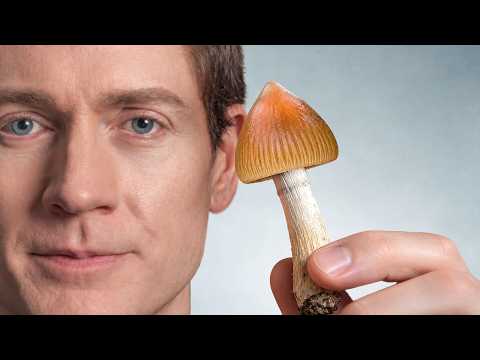
Link: https://youtu.be/moReU8AQ-EE
Duration: 34 min
Transcript: Download plain text
Short Summary
Bryan Johnson — the founder behind the Blueprint and his "Don't Die" longevity project — live-streamed a two-dose psilocybin experiment that tracked 249 biomarkers before dosing and 136 more added on the second dose. Reported effects included a 42% cortisol drop, HbA1c falling from 4.7 to 4.4, and inflammation dropping below the detection limit, though Johnson, who has spoken about depression and past suicidal thoughts, frames the work as a way to stay alive rather than live forever and insists it is not an endorsement of mushrooms.
Key Quotes
- "Everybody is unquestionably confident that I'm going to emerge as a different human." (00:00:03)
- "Psilocybin is a powerful, powerful drug. Within a trip, it can be both heaven and hell. A profound effect on one's sense of reality, including one's sense of self. This is the tool for understanding the mind." (00:00:11)
- "So, if society reframed its understanding of psychedelics to longevity, it might be a big deal. Cuz psychedelics fix broken things. Psychedelics don't make things younger." (00:05:05)
- "There's this moment when you realize that you can no longer steer the ship. You are no longer in control. And the experience begins to unfold. And you have a choice. You can fight it or you can welcome it." (00:13:03)
- "All of this leads me to believe that magic mushrooms are a longevity therapy. Not because they make you feel different, but because they measurably alter the systems that drive aging." (00:30:17)
Detailed Summary
Framing: aging as a measurable problem
- Bryan Johnson treated aging as something that can be studied and engineered, stating his goal plainly as "how to not die," and said he was willing to try everything science would allow via his Blueprint and "Don't Die" project.
- The episode opens with the framing that psilocybin can be "both heaven and hell" within a single trip, profoundly altering a person's sense of reality and sense of self; it is presented as a tool for understanding the mind, not a recreational drug.
- The catalyst was a study showing psilocybin helped human cells live longer in a dish, which stood out from the many psilocybin studies done in mice and caught Johnson's attention.
- After posting his findings and thoughts on social media drew heavy reaction, Johnson and his team reviewed all the existing literature on psilocybin before proceeding.
- Johnson argued that nobody had previously considered psychedelics in the form of longevity, and that reframing psychedelics around longevity could be a big deal because psychedelics "fix broken things" rather than make things younger.
Fears and objections before dosing
- Johnson's stated fear was about identity, not mushrooms: that he might no longer care about Blueprint, that his values might change, or that he could become unrecognizable to himself.
- People warned him with real-life stories of founders who took psychedelic journeys and came back "checked out," finding no meaning and wanting to go off-grid — his phone was blowing up with similar messages.
- The episode notes psychedelics were once studied seriously before being pushed to the margins for decades and associated with chaos, rebellion and loss of control, none of which align with how Johnson lives.
- His conclusion for purely pursuing longevity: he could not be over-protective of his current beliefs and had to be willing to test them.
The protocol
- The aim was "the most quantified psychedelic experience in history," with 249 biomarkers measured before dosing, including brain activity, inflammation, hormones, metabolism, heart vital, stress markers, sexual function, DNA and cellular aging.
- The first dose produced 249 baseline measurements taken before and after dosing, with some markers unchanged and reduced inflammation among the positive movements; Johnson stressed this was a single dose that did not prove a theory.
First dose: cortisol, afterglow and brain imaging
- After the first dose, cortisol peaked again for 3 hours at 3–8x the subject's normal noon levels, then returned to normal baseline by evening — described as a short, contained burst rather than prolonged stress.
- Five days after the first dose, morning cortisol had dropped 42% and DHEA, a second adrenal activity marker, dropped 45%, a state the researchers call the "afterglow": a measured biochemical state of calm after a psychedelic experience rather than numbness.
- Using the Kernel Flow neuroimaging device that the narrator spent seven years building, the team mapped neural activity before, during and after the experience. The default mode network went quiet while sensory, auditory and language regions increased cross-talk — technically an increase in brain entropy — which the narrator experienced as hyper-awareness and a "factory reset" to youthful perception.
Second dose: dosing details and public broadcast
- The second dose came 3 weeks after the first and used 5.35 g of dried mushroom of the same B+ strain containing 28 mg of psilocybin, with 136 additional measurements added, including thermal imaging and continuous brain scans before, during and after.
- The second dose was live streamed publicly, drawing accusations that the narrator was reckless, performative and dangerous. The counter-argument was that transparency is the cornerstone of the project, and that psychedelics — historically studied, then dismissed and stigmatized — needed to be tested seriously.
First-ever thermal profile
- Thermal imaging of the second dose produced what the team described as the first-ever thermal profile of an intense psilocybin experience.
- It showed core body temperature rising between 1.5 and 2 degrees Fahrenheit, with heat redistributing inward, consistent with deep autonomic activation.
- Facial and upper-body thermal patterns blended intense joy with melancholy, capturing the mixed emotional texture of the trip.
Headline metabolic result: blood sugar
- Comparing continuous glucose monitor readings from the 3 days before the first dose with the 3 days after, mean blood glucose fell 8% and day-to-day variability fell 11%.
- Time above 125 mg/dL went to zero, and estimated HbA1c dropped from 4.7 to 4.4, a 6.8% relative reduction.
- That moved the subject from the top 2% of the population to the top 0.2% — better than 99.8% of healthy 18–25 year olds — with the effect holding through day three.
- The team called this the first documented human evidence of improved blood sugar control using psilocybin, noting that glycemic control normally requires months of daily medication such as Metformin, and suggesting a psychedelic experience may have triggered a downstream reset in liver and pancreas function.
Inflammation, hormones and microbiome
- hs-CRP, already low at 0.23, fell below the detection limit of 0.15 five days after the first dose and remained suppressed after the second dose — described as inflammation being effectively erased.
- The team treated hs-CRP as a key marker because chronic inflammation accelerates biological aging and is linked to cardiovascular disease, all-cause mortality and insulin resistance.
- After the first dose, the 42% cortisol drop and 45% DHEA drop were followed by the same pattern repeating after the second dose, indicating a measurable, durable shift to a calmer baseline in how the body handles stress at rest.
- The gut microbiome composition shifted: several species associated with stress, anxiety and insulin resistance declined, and a new species emerged that had not been there before.
Brain, convergence and the "two firsts"
- Three weeks after the first dose the brain had not fully reset, but three weeks after the second dose the brain effects were cumulative and looked like a structural reset rather than a passing high — the opposite of the rigid neural patterns associated with aging.
- The primary drivers of biological aging were identified as stress, hormone dysregulation, metabolic dysfunction and chronic inflammation; after two quantified doses, measurable shifts appeared in all four, with convergence across five biological systems (brain, hormones, metabolism, inflammation, microbiome) rather than isolated signals.
- Ryan concluded the experiment produced two firsts in humans: continuous glucose evidence of improved blood sugar control following psilocybin, and the first-ever thermal profile of an intense psilocybin experience — achieved by pointing modern tools (microbiome and brain analysis) at a substance used for thousands of years as a pillar of ancient medicinal ritualistic medicine.
- Ryan concluded that magic mushrooms may be a longevity therapy because they measurably alter the systems that drive aging, calling this the most quantified psychedelic experiment ever conducted.
Caveats and pending results
- Ryan cautioned that these are first-in-human observations that need replication, and that both the magnitude and the durability of the effects require further study.
- Results still pending include telomere length, epigenetic age and markers of cellular aging; the experiment is explicitly not finished and the protocol is deliberately not fixed.
- Psilocybin was framed as expanding rather than replacing the fundamentals of sleep, nutrition, movement and discipline — the "power laws" that do the heavy lifting.
- The work was explicitly stated to be neither an endorsement of magic mushrooms nor a recommendation to try them: everything was done legally, safely, under direct medical supervision in a controlled environment.
Personal stakes
- The speaker described a history of depression and periods of considering suicide, saying he began measuring his body not to live forever but because he was unsure he would survive how he was living — the "Don't Die" project began as a way to stay alive.
- The measurement obsession and millions of dollars spent are cited directly, along with data showing inflammation below detectable levels, a younger-looking brain and convergence across five systems, which looked like a tool for people who feel the way he once did.