[@Area52Investigations] They Located FOUR Extraterrestrial Bases - Dr. Paul Smith | ep.106
Link: https://youtu.be/bYEpMSSayKE
Duration: 181 min
Transcript: Download plain text
Short Summary
This wide-ranging interview episode covers remote viewing with retired U.S. Army Major Paul Smith, a former Stargate remote viewer and training instructor who ran over 1,000 sessions in the 1980s at Fort Meade, and with Ed Dames, author of The Essential Guide to Remote Viewing. Smith recounts his recruitment in 1983, Project 8200 and Pat Price's four alleged extraterrestrial bases, Ingo Swann's rigorous teaching method, his 1984 doughnut-shop initiation session, the 2011 Nimitz tasking, and his moon sessions, while Dames argues remote viewing is a counterexample to physicalism. The conversation closes on the unresolved problem of causality, the mind extending beyond the brain, and why LDS premortal-existence doctrine makes Mormons unusually receptive to paranormal ideas.
Key Quotes
- "if you add up all the money that's spent on the research and including Stargate that's still not enough to buy you one F-35." (03:00:07)
- "literally, as far as we know, the only way of stopping remote viewing is is to stop the viewer from remote viewing." (01:51:46)
- "and described the aircraft with um weirdly shaped wings, special uh special skin that you know absorbed radar and stuff, radar other radar foiling devices and went through a whole list of things that actually perfectly described the stealth aircraft." (03:27:24)
- "if you have a clear static vivid image in your head of the target, it's almost always wrong because what that is usually a construct of your left brain trying to answer the question, what is it?" (03:40:05)
Detailed Summary
Remote Viewing, Stargate, and the Edges of Physicalism
Participants, Credentials, and Points of Focus
The episode brings together retired U.S. Army Major Paul Smith, a former remote viewer and trainer, and Ed Dames, a researcher and author. The host, also named Paul, uses their conversation to connect remote viewing’s classified operational history with its implications for consciousness, physicalism, and Latter-day Saint doctrine.
- Paul Smith’s military background: Smith enlisted in 1976, attended Officer Candidate School, and spent three years in Germany with a special forces organization. He emphasizes that he was not Special Forces qualified, but served as an intelligence officer with airborne training.
- Academic and operational role: Smith served as a Middle East analyst at Fort Meade and earned a PhD from the University of Texas at Austin in philosophy of mind, consciousness studies, and the science of parapsychology.
- Volume of remote viewing work: Smith conducted more than 1,000 training and operational sessions for the government over roughly seven years in the 1980s. He worked as a viewer, training instructor, unit historian, and security officer.
- Training and publications: He was trained by Hal Putoff and Ingo Swann, wrote the principal DIA manual on coordinate remote viewing, and authored books including Reading the Enemy’s Mind and Foundations of Controlled Remote Viewing. He also co-founded the International Remote Viewing Association, which has held roughly 20 conferences.
- Current work: Smith now teaches in Germany, mostly in German, and says his Arabic and Hebrew have deteriorated since his Army and academic years.
- Ed Dames’s background: Dames is a remote viewing researcher associated with The Essential Guide to Remote Viewing, which he describes as a survey course using stories rather than conventional textbook exposition. He maintains rviewer.com, a blog with an article called “the great Santa Claus caper,” and a YouTube channel devoted to remote viewing.
- The host’s framing: The host says many podcast interviews are “generally good but often superficial” because interviewers have not done their homework. He credits Dames partly with being willing to explore unusual subjects that others avoid.
Recruitment into the Remote Viewing Program
Smith entered the program in 1983, about seven years into his military career. His unusual recruitment began with two neighbors and culminated in an invitation to join a classified Army project.
- Two neighbors knocked on Smith’s door and said, “We think you might be good at what we do,” but refused to explain what “we” did. They subsequently administered psychology and personality-profile tests, and Smith scored where the recruiters wanted him to.
- After the testing, Smith was taken to the program buildings, allowed to read about the work, and asked whether he wanted to volunteer. He says he accepted immediately, calling it “the coolest thing I’d heard in the military.”
- At the time of his recruitment, the project had been called GRILL FLAME and had just barely been renamed CENTER LANE. The Stargate nickname came later as an administrative project name.
- Smith says the program was already Stargate “by constitution”; it had government oversight, formal procedures, and personnel assigned to it for roughly 20 years. The nickname was what made it recognizable in later public accounts.
- Smith was not retired from remote viewing in 1990. He left in 1991 for Desert Storm and the liberation of Kuwait, ending his period of active-duty participation.
Early Program Mechanics and Personnel Controls
Remote viewing was organized around strict blinding, viewer-numbering systems, and formal monitoring arrangements. The project’s secrecy was intended to prevent both unauthorized access and interference with the viewing process.
- Smith’s official duty was to sit in a gray room with a pen and pad and describe places he had never seen, while handlers withheld the identity of the target and provided only a tasking mechanism.
- Early viewers were each assigned at least three numbers so that anyone who broke into a facility might believe there were far more viewers than actually existed. Smith speculates that Joe McMoneagle was “001,” although Mel Riley was actually “011,” McMoneagle may have been “372,” and Skip Atwater’s number may have been “051.”
- As McMoneagle neared retirement, the Monroe Institute received a special contract to provide advanced training to him, with the government treating it as a parting gift. His future wife, Nancy Scooter, was present during that period.
- The participants disagree over who served as McMoneagle’s monitor and who served as tasker during some sessions, but they agree that the archived transcript would settle the question.
- Skip Atwater managed much of the operational side of the program, while Hal Putoff and Russell Targ served as the scientific figures associated with SRI’s remote viewing research.
Controlled Remote Viewing and Its Stages
Ingo Swann originally called the disciplined practice “controlled remote viewing”; “coordinate” was adopted because the military understood geographic coordinates. The program used a staged method that practitioners could stop before reaching its most elaborate levels.
- “Coordinate remote viewing” is considered a misnomer. Swann wanted the term “controlled remote viewing,” but accepted “coordinate” because that vocabulary fit the military’s way of thinking.
- The program had six stages, but practitioners used only as many as a task required. Stage three, involving sketches and basic concepts, often supplied enough information.
- Stage four handled more complex or abstract concepts, while stage five was very often skipped. Stage six was called “three-dimensional appreciation” by Swann, though Smith calls it four-dimensional because time and timelines can also be represented.
- During a stage-six session, the viewer physically constructs a three-dimensional model of the target. Smith gives the example of an Eiffel Tower made from Sculpey, toothpicks, soda straws, and tongue depressors.
- Smith identifies Richard Dreyfuss’s mashed-potato Devil’s Tower sequence in Close Encounters of the Third Kind as an example of stage-six controlled remote viewing. He also notes that the film’s French UFO scientist was based on Jacques Vallée, then a classification adviser to the remote viewing program, which may explain how program material reached the film.
- Swann proposed two stages beyond six. One did not work, while the viable seventh stage, “phonics,” attempted to recover the sound of the target’s name by building on the sensory information from stage two.
- In an Oklo or Oconee nuclear-power-plant session, a viewer made an accurate model but wrote the name as “okoi” instead of “okoni.” In Smith’s attempt on Edgar Allan Poe’s grave at Westminster Burying Ground in Baltimore, he produced only the initial “W” and never reached “Westminster.”
- Internet claims that remote viewing has 18, 20, or 24 stages are dismissed as “baloney,” although Smith allows that some of the rumors might contain a small kernel of truth.
Outbounders, Coordinates, and Tasking Numbers
Controlled sessions used physical outbounds, standardized training targets, and tasking numbers to separate genuine information from the viewer’s conscious guesses. The protocol also showed how coordinates could help at first but later interfere with perception.
- In an outbound session, a random number generator selected a target, the viewer remained in a Faraday cage, and an agent traveled to the location to act as a physical beacon. The viewer then attempted to describe the surroundings without seeing the outbound team.
- Training often used National Geographic photographs because they were prosaic, visually rich, and easy for judges to compare with ground truth. Swann supplied many of the targets personally, while Putoff handled part of the training process.
- Coordinates attached to National Geographic images allowed viewers to locate targets precisely before Google Earth became available. Smith calls Google Earth a “real blessing” for later remote viewing training.
- The response to the charge that viewers simply memorize coordinates is that the number of possible geographic coordinates is effectively infinite. Memorizing the relevant location would therefore be a more extraordinary feat than remote viewing itself.
- Knowing the latitude and longitude could also become a hindrance. After viewing enough Soviet targets, viewers began recognizing familiar terrain such as cold forests, mountains, and pine trees, so the laboratory generated coordinate noise to obscure the location.
- The group developed ways to target people and objects at unknown locations, including hostages in Lebanon’s Bekaa Valley and shipments of nuclear material, narcotics, or other contraband. In these situations, coordinates could be a disadvantage rather than an aid.
- A tasking number is arbitrary and content-free. The tasker associates the number with an intention, while the viewer receives only the number and must connect it subconsciously to the target; Smith uses 8675309, which prompted a Jenny joke about “the number on the wall.”
- A location may still be needed because more than one Eiffel Tower exists. The host demonstrated what3words.com by zooming to one square pixel in Paris, where the words were “century repair sock,” in the middle of the Seine.
Ingo Swann’s Teaching Method
Swann combined an unassuming personality in informal settings with exceptionally severe standards in the classroom. His methods emphasized disciplined note-taking, memory, and honest criticism.
- Smith credits Swann with inventing the term “remote viewing” and developing its original protocol. He describes Swann as one of the field’s most enigmatic figures: apparently an exceptionally strong natural psychic and a highly eccentric artist.
- Before meeting Swann in January 1984, Smith and three other trainees heard office “scare stories” describing him as didactic, difficult, and unwilling to tolerate nonsense. At their first-day lunch, however, Swann proved friendly, open, and genial.
- Once class began, Swann became serious and could be funny, but he came down hard on anyone caught goofing off. Smith says the discipline exceeded anything he experienced in a college course.
- Swann required handwritten notes and watched students while they took them, treating longhand note-taking as essential to integrating the material. Students also wrote essays from memory without consulting their notes.
- Rejected essays received large red marks and had to be rewritten. Smith needed four attempts before Swann accepted his essay in the form he wanted.
- Research on learning psychology is cited as support for combining longhand notes with longhand recall. Smith now assigns ten homeworks after class and grades them with a red pen, sometimes covering entire pages.
- Smith criticizes teachers who avoid damaging students’ self-esteem by excusing complete misses as success. His position is that students need honest feedback so they can learn to be honest with themselves.
Project 8200 and Pat Price’s Four Bases
Project 8200 was an unofficial SRI project directed by Skip Atwater, built around material supplied by early viewer Pat Price. Its significance came from the project team’s later attempt to replicate Price’s findings independently.
- Atwater ran Project 8200 informally at Stanford Research Institute rather than as an official government project. Pat Price, one of SRI’s earliest viewers, brought papers to Putoff claiming he had spent a night traveling around the planet looking for UFOs and extraterrestrial bases.
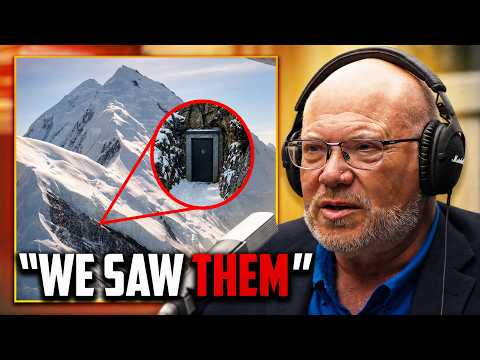
- Price claimed there were four Earth bases: Mount Nyangani in Africa, Mount Perdido in the Pyrenees, Mount Hayes in Alaska, and a fourth in Australia whose name Smith could not recall.
- Price grew up in Salt Lake City, became a Scientologist, and offered to work at SRI without a clear indication of whether he was being paid. Smith says Price produced good results before beginning independent side expeditions.
- About five or six U.S. viewers participated in Project 8200. McMoneagle worked all four of Price’s bases, while the others included Smith, Bill Ray, possibly Limb Buchanan, and possibly Charlene Shoufeld.
- Atwater deliberately supplied “extra normal” targets, including counter-narcotics sessions involving drug shipments, smugglers’ vessels, or narcotics-trafficker meetings. The goal was to keep viewers from assuming every session had the same subject.
- Viewers remained blind to their targets. Smith argues that this defeats the most obvious skeptical charge of cheating and makes it harder for the analytic mind to disguise guesses as incoming signal.
- Smith’s own Mount Hayes session occurred in 1984, roughly ten years after Price’s and without knowledge of Price’s data. His sketch of the craft closely resembled Price’s diagram of tic-tac-like objects.
- Price died in 1977 while Smith was in Arabic training, so the two never met. Price reportedly supplied validated information about the Patty Hearst kidnapping, but authorities discounted it and failed to act.
- Price had already passed a legitimate laboratory-style test judged for the likelihood of correctness. The Project 8200 team later independently replicated his work without knowing his results, adding a second reason Smith gives for taking the base findings seriously.
Anomaly Targets and Ed Dames’s Experimental Choices
Smith and the other former viewers distinguish carefully controlled sessions from loosely supervised anomaly work. They argue that speculative targets often make it impossible to measure accuracy or obtain useful feedback.
- Anomaly targets such as UAPs, Bigfoot, and xenobiology are criticized for weak protocols, unverifiability, and the assumption that every impression must be correct. This approach produced rumors about Pleiadians, “plutes,” and lizard people.
- New viewers sometimes train only on anomaly targets, preventing comparison with ground truth and leaving them unable to determine whether they are succeeding. Smith’s view is that anomaly targets should not be used as the primary training curriculum.
- Smith says Dames ran remote viewing more loosely than Atwater, choosing well-known targets and fantasy or metaphysical subjects such as the Holy Grail, the Ark of the Covenant, Roswell, and Kecksburg.
- One Dames target was a “Galactic Federation” or “Supreme Galactic Council” that Smith believes Dames simply supplied from his own imagination, possibly influenced by the Urantia Book or Star Trek reruns.
- Dames is described as having a strong need for closure. He could take half a fact, jump to a conclusion, change his model of the universe, and then task viewers to look for evidence supporting the new model.
Classification, Security, and Defensive Research
Remote viewing was placed inside a special access program, with personnel identities protected at a high classification level. The program also investigated whether ordinary countermeasures could stop a viewer from gaining information.
- The CIA, and later the DIA, initially refused to let Hal Putoff conduct remote viewing because of the program’s MK Ultra past and the difficulty of learning the method. Atwater nevertheless ran it informally at SRI and within Army channels.
- The discussion criticizes CIA researchers attempting to remote view themselves, arguing that doing so destroyed implicational objectivity and made the research suspect from the outset.
- Remote viewing was classified at CL4, or CENTER LANE level 4, inside the SAP special access program. That level protected the identities of remote viewing personnel and required access to the program’s highest clearance level.
- Atwater officially remote viewed only a couple of times. One project concerned the silver-futures market and reportedly produced more than $200,000 for an investor, with 10% directed to fund a Waldorf school.
- The NSRI produced a report for the CIA on ways to defend against remote viewing and found no technological or psychic deterrent that worked.
- The program concluded that remote viewing is not electromagnetic. Performance was reportedly better inside a Faraday cage that blocked most of the electromagnetic spectrum.
- A proposed defense involving Mickey Mouse balloons and children’s tunes was rejected because a trained viewer follows the tasker’s intentionality and treats distractions as noise rather than the target.
- Edwin May describes the mechanism in terms of entropy, while Julia Mossbridge describes intrigue as a pole or polarizing force. Neither account resolves the question of how the information reaches the viewer.
The Doughnut Shop Session and the Causality Problem
Smith’s first session became a major example in discussions of precognition, protocol failure, and the unresolved direction of influence. The case remains one of the strongest anecdotes offered for remote viewing’s apparent ability to capture information outside the ordinary viewing process.
- Roughly 10 days to two weeks after beginning the job, Atwater insisted on an initiation exercise. Associates Tom and Charlene selected the target while Smith performed exterior remote viewing in a sound-deadened, window-blocked room.
- Exterior remote viewing involves lying on a bed with the mind awake and the body asleep, in a hypnogogic state. Neither Smith nor Atwater could see or hear which direction the outbound team drove.
- The target was a massive water tower resembling a metal spider, with a large tank and tube-like legs. Smith described walking around it, entering and leaving it, and hugging its metal surface.
- Tom and Charlene violated the outbound protocol by stopping at a doughnut shop on their return. Smith’s details about off-color walls, lacy curtains, small tea tables, and a counter with donuts behind glass matched the shop rather than the assigned tower.
- Atwater’s teaching rule was that if the viewer does not remote view the intended target, it does not matter what else is received. The training objective is to follow the assigned intention rather than the most interesting impression.
- Smith argues that the doughnut-shop information is better explained by precognition than retrocausation, because the outbound team stopped at the shop only after it had already visited the intended target.
- Smith’s model allows influence to flow from the future into the present, but he argues that changing the past is impossible. An unresolved case involved a student who dreamed of being hit by a car, stopped before crossing, and was spared; it remains unclear whether this was future influence or a misperceived target.
The 2011 Nimitz Tasking
In 2011, Smith was asked to assemble a contract team to investigate the 2004 Nimitz Tic Tac encounter without being told what the target was. The resulting arrangement reproduced several features of the old program while introducing significant differences in blinding and tasking.
- Smith received only a tasking number and did not know that the intended subject was the Nimitz incident. He selected six viewers, three monitors, and an administrative assistant who had been his best friend growing up.
- Many of the viewers were former students whom Smith considered his strongest performers. The client provided three gray-painted viewing rooms, sound-deadened space, and facilities that Smith says came closer to the Fort Meade setup than anything else he has assembled.
- Two client analysts were also blind to the target, making the arrangement what Smith calls “quadruple blind.” He believes the excessive blinding harmed the result because the intentionality became “way too downstream.”
- Hal Putoff served as technical consultant. He did not call the task the Nimitz incident, but described what happened; Smith calls that account “awesome” while noting that it failed to describe the UAP itself.
- Smith first heard about the Nimitz encounter during the 2011 tasking, about six years before the event became public. The host identifies Leslie Keane’s 2017 account as the major public disclosure, with pieces leaking beforehand.
- The event contained dozens of moving components. A remote viewing team might have captured the Aegis cruiser’s radar scope, nearby aircraft, or objects moving around rather than the UAP itself.
- Viewers received no feedback because the analysts needed information that conventional feedback channels could not provide. The client nevertheless concluded that the project had failed, while Smith believes there was some successful information.
- The host argues that blinding the project manager reduced sensitivity, especially because the viewers were not TSCI-cleared and the manager had signed an NDA. Smith says he had no active clearance but could have received a temporary read-on if classification required it.
- Smith suspects the work was performed through a contractor or government-affiliated organization because the event was sensitive and occurred aboard a military platform. He says the Tic Tac material was held under a close hold but does not know that it was formally classified.
The Moon Sessions and the Sentient Craft
Smith’s moon work was not presented as a government project; it was requested by Ingo Swann and involved the far side of the Moon. The sessions produced mutually corroborating architectural details and an unusual account of a responsive craft.
- Smith says the moon work was for Swann rather than the government and involved at least two and possibly three projects. The first occurred in 1993, while Smith was still on active duty.
- One tasker supplied lunar latitude and longitude without identifying the Moon as the target. The coordinates differed from those Smith had used previously, and his first clues were difficulty breathing, harsh light, and sharp-edged, un-eroded landforms.
- He perceived a downward passage leading to a large underground chamber. The space felt partly natural and partly engineered or expanded for use.
- Something inside the chamber appeared aware of Smith and resisted emerging while he watched. It eventually emerged, merged with him, and was shaped like a manta ray, combining biological and mechanical or technological features.
- Smith says no earlier fiction supplied the image: Stargate Atlantis and the second Battlestar Galactica, both of which featured biological or artificial spacecraft, came later.
- The craft was annoyed that Smith was observing it but continued on a predetermined mission it could not abandon. Smith describes this as the only occasion when he felt perceived while perceiving a target.
- Later feedback from Swann included both Swann’s own data and that of another viewer. All three independently reported a tunnel leading into an underground lunar chamber and sketched it differently.
- Some of the landform anomalies Smith drew appear in what he believes was a legitimate NASA lunar-mapping book. He assigns a fair chance to the idea that some lunar anomalies are intentionally generated and a fair chance that some non-Earth-originating base exists, while remaining cautious about Ingo’s speculative book Penetration.
- A separate team project concerned four secret extraterrestrial military bases located on Earth rather than on Mars or the Moon. Smith also cites McMoneagle’s Mind Trek account, in which he follows a nonphysical being toward the Moon before being told to turn around and learning that the being was dead.
Target Noise, Roswell, the Mind Sweeper, and Mars
High-profile subjects can contaminate a session because the viewer already carries strong expectations about them. The examples of Roswell, the Argentine “mind sweeper,” and Mars illustrate both the difficulty of accessing clean information and the importance of preserving the original record.
- Smith usually refuses notorious targets such as the JonBenét Ramsey kidnapping because many people with different levels of expertise have already saturated the “psychic space” with thoughts about the case.
- In his Roswell session, Smith perceived an adult and a son in a pickup truck looking into the sky and shading their eyes against brightness, suggesting a nighttime crash. He called the experience “ontological shock.”
- Smith realized midway through the Roswell session that the target was Roswell but continued briefly while trying to work through the noise. Later feedback confirmed the target.
- Another target was an Argentine “mind sweeper,” or transmaterial UFO, adrift off South America like the Mary Celeste: food remained on the table, but there was no crew and no blood. Smith quit because he could not clear the target from his mind, then later learned it had indeed been the mind sweeper.
- Bill Ray reported impressions of the abandoned ship, including a UFO off the stern and the crew becoming irate and jumping off the back. Such episodes illustrate how familiar stories can be generated from sparse impressions.
- Dames had Smith conduct one or two Mars sessions, including a task involving Titan and an expectation that something would be found there without a stated evidentiary reason for that expectation.
- Around 1984 or 1985, Putoff sent Atwater JPL photographs later publicized as the “Face on Mars.” Atwater possessed the images before the public did and used them to initiate Mars remote viewing work.
- The Mars session was recorded by Atwater on cassette and transcribed by an office secretary whose transcription contained errors because the viewers were difficult to hear. Smith disputes McMoneagle’s later recollection, saying the archived transcript shows that the session actually unfolded differently.
The Stealth Aircraft Session and Later Verification
A 1986 tasking on the still-classified U.S. stealth aircraft program produced visual information that became publicly checkable roughly a year later. The session illustrates both the potential value of hindsight and the limits of individual sketches.
- In June 1986, a team was tasked with examining the U.S. stealth aircraft program because its sponsors wanted to know how Soviet remote viewers might attack the new aircraft. The program was publicly revealed around the summer of 1987.
- Although the viewers did not know they were looking at aircraft, they described unusually shaped wings, radar-absorbing skin, and devices intended to foil radar. Those features matched the real program.
- Smith sketched what he describes as a hybrid aircraft: a bulbous B-2-like “whale” shape combined with F-17 features, including a V-tail and faceted canopy windows.
- Mel Riley’s front-view sketch resembled a B-2. Smith believes his own drawing merged two aircraft because the tasking phrase “stealth aircraft” could be understood as either singular or plural.
- Smith names the Nimitz incident as the clearest past remote viewing target that later became verifiable hard fact. His “Stark” session depicted an attack on a U.S. warship, but the feedback arrived 50 hours later, so he does not count it as promptly verified information.
The CIA-DIA Transfer, Program Closure, and Financial Cost
Remote viewing survived the MK Ultra era because it continued informally and through Army, DIA, and later private channels. Its eventual bureaucratic closure was shaped by institutional reluctance, personnel decisions, and budgetary politics rather than a decisive scientific evaluation.
- The program was largely abandoned in 1975, with funding withdrawn during the MK Ultra fallout, but it continued in some form for roughly two more decades. The military and intelligence communities therefore continued assigning remote viewing work despite the earlier scandal.
- In 1994, budget-markup language moved the program from the DIA, which did not want it, to the CIA, which also did not want it. Supporters had lobbied for the move because they believed the DIA was not managing it effectively.
- Robert Bird, a powerful West Virginia senator reportedly associated with Ways and Means, had a supportive staffer. Bird’s girlfriend was also in the program and pushed for the CIA to take custody, according to the discussion, without knowing about John Deutsch.
- The timeline given places the CIA’s takeover and shutdown on June 30, 1995. The CIA tasked the program close to 40 times during that period, with one estimate placing the total at 42 taskings.
- CIA director John Deutsch, who had a nuclear-physics background, rejected remote viewing and threw Dale Graph out of his office when he learned the briefing concerned the program, then called Sun Streak.
- When canceling the project, the CIA retained about a dozen personnel slots that could be reassigned elsewhere. This is presented as a cynical but practical bureaucratic reason for the closure.
- The American Institutes for Research report was published in September 1995 and made public in November, but the CIA did not begin the underlying research until mid-July. Since the program had already been shut down at the end of June, the report cannot have served as the original justification.
- The discussion estimates that roughly $20 million over 20 years was spent on parapsychology research from the 1890s through Stargate. Smith argues that this is less than the cost of one F-35, while a fighter pilot’s helmet alone is said to cost about $1 million.
- Religious opposition played a relatively small role. One staffer reportedly removed the program from the budget on religious grounds during the 1984–85 briefing cycle, after which Stubble or Stalbin funded it from INSCOM discretionary funds rather than allowing it to die.
- The government building was returned to Fort Meade, and no former viewers were recalled after closure. Claims that the CIA later canceled a remote viewing program are described as inaccurate because the CIA never meaningfully ran one in the first place.
Post-9/11 Use and the Missing Soldier
After the formal closure, the CIA used remote viewers ad hoc during the war on terror. A missing-soldier case shows both the potential practical value of the method and the institutional resistance that could neutralize its results.
- Following 9/11, the CIA recruited viewers independently using intelligence contingency funds. It hired people who already had established reputations and were located around the world rather than training novices.
- Smith argues that American remote viewing began because the Russians were doing it and the CIA had to determine whether it posed a threat, regardless of whether officials believed the phenomenon.
- A CIA official at the assistant deputy director level approached Putoff and Helen and asked, “What would it take to get a program going at the CIA?” That inquiry indicates the agency did not already possess such a program.
- When the proposal reached the deputy director level, it was rejected with the statement, “No way in hell are we going to do that.” The program was described as a “third rail we don’t want to touch.”
- Smith’s group was later asked to locate a soldier kidnapped when an al-Qaeda convoy was attacked in Iraq, in territory that subsequently became part of ISIS. A requesting general signed certificates of appreciation, while a lieutenant colonel connected the viewing team to the ground task force.
- Two blind analysts given the session data correctly identified the scenario as a missing servicemember imprisoned under wartime conditions, probably in the Middle East, and supplied supporting sketches.
- The exhaustive report passed to the lieutenant colonel and then to the task force, which discarded it after learning that the data came from psychics. The soldier was found dead two or three years later.
- The recommended follow-up method was to mark details that were “close to the money” and return to the same viewers without adding new information. Smith believes this iterative procedure could have located the soldier.
- Smith is confident that the military services no longer conduct remote viewing because drones and satellites now handle many tasks once reserved for psychic methods. The host notes that an NSA program trained viewers under Swann, though no public program name is known, and wonders whether it continues for problems technology cannot solve.
Why Remote Viewing Might Be Used for Anomalies
Remote viewing is presented as potentially useful when conventional collection platforms are too slow, incomplete, or misleading. The strongest proposed application is the UAP subject, where the phenomenon itself may resist straightforward observation.
- The episode argues that remote viewing is most valuable for anomalous cases that technical collection systems cannot resolve quickly or accurately. UAPs are named as the prime example, and BAS and OAP are identified as related organizations studying such phenomena.
- The approach is described as “using an anomaly to look at an anomaly.” The host invokes Churchill’s “enigma wrapped in a riddle,” making the UAP subject an “anomaly filled with anomalies.”
- Materialist scientists are said to neglect anomalies because they disrupt the formulas or proofs on which their work depends. Smith argues that recurring anomalies nevertheless require investigation.
- The “house party” analogy captures the institutional floodgate problem: admitting remote viewing into the gathering also means admitting Bigfoot and reptilians in the refrigerator.
- Smith says he has never had a target specifically designated as non-human intelligence, although non-human intelligence formed part of some sessions, including the moon work. In the Mount Hayes session he perceived beings who were “not exactly people,” intensely disliking their isolated posting much like soldiers assigned to Greenland without shore leave.
- David Jacobs’s conclusion that hybrids live among humanity is cited as the origin of the idea that a blended-in person would choose Salt Lake City, while New York City is offered as the opposite, where an unusual person might stand out more easily.
The Suspect Zero and Pennybacker Bridge Demonstration
The Suspect Zero DVD bonus feature became an informal public demonstration of remote viewing. The case also illustrates how first-time novelty, process control, and audience expectations can influence the apparent result.
- Suspect Zero starred Ben Kingsley and included a character named Terry Moss. Dames consulted on the film and can be heard discussing remote viewing.
- The film performed poorly at the box office, and at least one critic treated its remote viewing premise as too fantastical and called the practice “nonsense.”
- The director, identified in the discussion as Elias Marage, released a DVD with bonus features including an interview with Russell Targ and wanted Smith to provide a remote viewing demonstration. Smith refused: “I’m not going to do it. You are.”
- The selected target was the Pennybacker Bridge in Austin, an iconic structure that local residents do not ordinarily associate with the city; they are more likely to think of Sixth Street or the University of Texas Tower.
- Smith arranged for Putoff to monitor and explain the outbound process. A young female family friend went to the bridge with a camera operator and filmed it, while Marage was not told the location beforehand.
- While traveling over Capitol Texas Highway, Marage spotted the bridge on the horizon and identified it as the target. On arrival he said, “I got this and I perceive this,” but he did not record all his impressions, and Smith’s rule is that unrecorded information does not count.
- Smith’s first demonstration was for an A&E production. Although he gave the crew precise instructions for the outbound procedure, they implemented it incorrectly and achieved only marginal success, leading him to conclude that a demonstration usually fails when he cannot control the process.
- SRI’s preferred model called in one of its strongest viewers while another person served as the outbound, then presented the results to a visiting scientist or journalist. The visitor’s likely conclusion was “You might have fooled me,” not a conversion experience.
- Remote viewing has a “first time effect”: a novice has a high chance of success during the first few attempts. With Putoff or Targ monitoring, first-time inquirers achieved good results a little over 80% of the time because they had personally experienced what they knew and did not know.
- Smith and Marage planned a more controlled follow-up in which both would act as outbounds, supported by an outbound team, setup time, and at least one additional camera. They preferred a location with no familiar visual cues that might permit guessing.
Ed Dames on Causality and Physicalism
Dames treats remote viewing as evidence that the mind is not reducible to physical processes. His central question is not whether the target and the report exist, but how information travels between them.
- Dames calls causality the largest mystery in remote viewing: the stimulus or target and the resulting information are both known, but the pathway by which the target reaches the viewer’s mind remains unexplained.
- He argues that remote viewing and other parapsychological phenomena are counterexamples to mainstream science’s physicalism, which he characterizes as dogma. He also rejects the claim that no evidence exists, describing that position as denial.
- Dames says the signal is not a frequency, wave, particle, or electromagnetic effect. Quantum nonlocality is the only physical candidate he is willing to concede, while his broader view treats the signal as information.
- Because information requires a substrate, Dames acknowledges that this explanation merely relocates the mystery. Consciousness, love, and the vacuum are offered as possible speculative carriers, without any of them being established.
- Based on the available evidence, he doubts that an unusual physical phenomenon could make remote viewing work within a wholly physical context. He adds the important qualification that he is not an initiate and may be wrong.
- His dissertation did not claim to prove physicalism false; it attempted to show that physicalism is highly doubtful. Its final chapter argues that rejecting a likely nonphysical aspect of reality would prevent science from producing a complete description of the universe.
- Dames argues that strict physicalism would probably exclude God, free will, and angels. The universe is largely deterministic, and even its indeterministic portions have not produced free will despite decades of attempts to reconcile the two.
The Mind Beyond the Brain
Dames’s most important claimed conclusion is that remote viewing shows the mind is not confined to the brain. His example focuses on the ordinary act of projecting awareness across the globe without prior information or physical interaction.
- Dames says remote viewing gave him solid evidence that people are more than their physical bodies and minds. In his view, the mind is not constrained by the parameters of the brain.
- His primary example is sitting at his desk, projecting consciousness to a target on the other side of the world, and then accurately predicting, describing, and sketching it without prior knowledge or a means of physical interaction.
- He treats this as strong evidence that consciousness is not merely a function of neural firing and that a nonphysical mind can operate outside the brain.
- The host distinguishes Dames’s position from idealism by noting that pansychism can accommodate both the mental-only view and the physical view, rather than forcing a simple choice between them.
The Analytical Overlay
Dames teaches “analytical overlay” as a practical warning about the viewer’s conscious mind contaminating sparse perceptual data. The concept governs how impressions should be recorded, withheld, and evaluated.
- Dames describes analytical overlay as “left-brain interference”: the left brain speaks simplistically while the right brain handles sensory processing. He acknowledges that psychologists would be scandalized by this formulation but says it helps lay viewers understand the process.
- A clear, static, vivid mental image is almost always wrong because it is usually a left-brain construction answering “What is it?” rather than information received from the target. Feeling “on” does not rule out an overlay.
- Remote viewing is described as low-bandwidth because very little information arrives sequentially in conscious awareness. The viewer therefore extrapolates, borrows old memories, and jumps to conclusions; deeper sessions contain more data and often improve on first impressions.
- Comparisons such as “it is like a lighthouse” or “a tall industrial chimney” are presented as warning signs. The conscious mind tends to sort an object into categories by resemblance, which can overwrite the less articulate incoming signal.
- Research attributed to SRI reportedly found that viewers convinced they were on target were often off, while viewers convinced they were off were often on. Smith interprets this as a sign that absolute conviction often reflects a convincing overlay rather than accuracy.
- Internal editing occurs when the analytical mind rejects an impression as impossible, preventing it from being written down, and only later recognizes that the discarded detail was correct.
- Smith and Dames both enforce the rule that if an impression is not recorded, it does not count. The host compares this to Buster Keaton’s philosophy that what the camera does not see does not exist.
Mormon Receptivity and Latter-day Saint Parallels
The conversation links Latter-day Saint beliefs to a relatively favorable reception of paranormal claims. The host supplies scriptural parallels, while Dames explains how agency and a wider conception of reality affect religious attitudes.
- The host cites Joseph Smith’s 1820 encounter with two beings descending in a light described as brighter than the sun. He also describes the 1834 appearance of Moroni, who floated into the room, passed through the ceiling, and headed toward a light.
- The Three Nephites are presented as beings who travel around helping people, resembling stories in which a stranger assists someone beside a road and then disappears.
- Dames notes that the church’s official name is the Church of Jesus Christ of Latter-day Saints. He explains that “Mormon” began as a pejorative and that members are discouraged from using it.
- Dames says Latter-day Saints tend to be more accepting of UFO and paranormal phenomena than many other religious groups. In a community containing Catholics, Mormons, and Protestants, he says Catholics handled paranormal material reasonably well while Protestants were more likely to label anything not clearly from God as satanic.
- According to Dames’s account, LDS doctrine does not place everything in the category of either God or Satan. People are agents unto themselves and can use their own faculties for good, evil, or neutral purposes.
- Dames has discussed remote viewing and Mormon metaphysics on Jeffrey Mishionel’s “New Thinking Aloud” podcast.
Premortal Existence, Spirits, and Psychic Abilities
Dames interprets remote viewing and telepathy through Latter-day Saint ideas of premortal life, the spirit world, and the veil of mortality. The resulting framework treats psychic abilities as recoverable spiritual capacities rather than entirely new powers.
- Dames contrasts the Western religious view that identity begins at conception or birth with the LDS view that identity has always existed and continues forever. He jokingly describes this as linear rather than cyclical reincarnation.
- In the sequence he presents, an intelligence acquires a spirit body created by God and then receives a physical body. At death the physical body decays, the spirit separates, and literal resurrection follows with a new physical body and spirit.
- After death, the spirit enters the spirit world, where spirits continue interacting, learning, and repenting at a different level. When reunited with a body, the person retains knowledge gained there, while the resurrected body becomes immortal rather than mortal.
- Spirits without bodies can know, move, interact, and communicate. Dames maps these capacities onto telepathy and interprets spatial movement as teleportation, noting parallels in parapsychology literature.
- A veil is installed at birth so people forget their premortal existence. Dames adds that it is unclear whether the veil is actively installed or is a consequence of birth trauma.
- One purpose of life is to unify body and spirit, so gaining remote viewing or telepathy can be understood as relearning premortal spiritual abilities. Dames says Mormons often respond that this explanation “makes a lot of sense.”
- The word “angel” literally means messenger in both Hebrew and Greek. Dames therefore understands an angel as a person or spirit on an errand for God rather than as a fundamentally separate category of being.
- Dames rejects the idea that the developmental process ends once every lesson is learned. He presents it as an ongoing ontological cycle of intelligence, spirit, bodily existence, separation, and reunion, after which body and spirit remain together while learning continues.
Language Training and the Latter-day Saint Recruiting Pipeline
Smith’s language education and the host’s claims about Latter-day Saint recruitment overlap in the discussion. Both are presented as examples of the practical value of church mission training.
- Smith learned four languages in four ways: English natively, Hebrew in college, Arabic in an Army language school, and German in a church language school followed by two years of conversation with Swiss people.
- Smith’s strongest language training came through the church program. It generally avoided native speakers except for one daily class, favoring Americans who had learned the language themselves and knew where its “linguistic landmines” were.
- His argument is that native speakers are good for pronunciation but harder to teach because they must first learn how to teach. Non-native instructors understand the acquisition process because they went through it.
- The church course preceding a mission runs about two and a half months in near-full immersion. Smith’s Swiss mission required standard German because the country has too many Swiss dialects for one curriculum.
- The host claims that Latter-day Saints are regularly recruited into three-letter agencies because they tend to avoid drugs, alcohol, and partying, work hard, already live near sensitive areas and training grounds, and often possess useful language skills.
- Smith argues that mission service prepares candidates through discipline, immersion in a new language, integration into a foreign society, and sustained obedience to instructions. Most are also considered straightforward security candidates because they have little or no disqualifying history.
- The host says Latter-day Saints are not a majority in the intelligence world but are represented far beyond their population share. He links part of the pipeline to geography, noting that Dugway and other Four Corners facilities are only a few hours from Area 51.
- A Utah National Guard Language Brigade composed almost entirely of returned Mormon missionaries has reportedly been called on for Army work, including training in Morocco. The host also refers to a 1990s class-action suit alleging that the FBI hired large numbers of Brigham Young University graduates without reviewing résumés or conducting interviews.
Multiple Worlds, Epistemic Humility, and Unresolved Questions
The discussion closes without treating multiple worlds or remote viewing’s mechanism as settled. Both participants oscillate between skepticism, uncertainty, and claims that the available evidence warrants further investigation.
- One participant initially calls multiple worlds “baloney” and an easy solve, then walks the claim back to rejecting only what he does not know enough about. The other says there is no direct evidence and warns that mathematical models have supported many claims that later failed.
- Quantum physics alone produces several model-based interpretations that differ slightly from one another, so neither mathematical modeling nor a lack of a known mechanism automatically settles the multiple-worlds question.
- As far as the discussion establishes, there is no known way to enter a parallel universe. Even if someone did, they would apparently have no way to know that they had left the original universe.
- The host calls firm conclusions about parallel universes “way premature” and says the court remains out. He quotes Mark Twain: “All you need in life is ignorance and confidence, and then success is sure.”
- One of Heinlein’s later works was based on the multiple-universe premise and featured characters entering other universes. Dames also cites a work referred to as “Highline,” whose story genuinely moves between universes, among his favorite science fiction.
- Dames emphasizes epistemic humility, saying he knows little compared with what remains to be known and must withhold judgment in science, religion, and philosophy. When the Book of Abraham and mistranslated papyrus scriptures arise, both participants steer away rather than treating them as part of the remote viewing discussion.
- Smith says the largest unsolved mystery remains causality and that remote viewing is not 100% accurate. When he is “on,” he feels it but cannot describe the sensation; he had also given a conference talk the previous day on remote viewing Bigfoot as a stand-in for any anomaly target.
- The host divides the field into a scientific path emphasizing standard testing, p-values, and numerical results and a “vibing” path involving crystals and sensing. He places Smith between the two, appreciating the rigor of the former while remaining sympathetic to the experiential side of the practice.