[@joerogan] Joe Rogan Experience #2576 - Dr. Peter McCullough

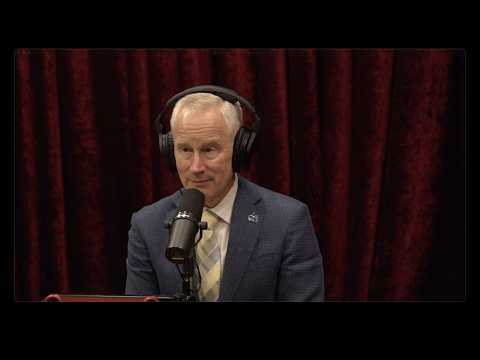
Link: https://youtu.be/ml1hyhqBEJE
Duration: 156 min
Transcript: Download plain text
Short Summary
Joe Rogan interviews Dr. Peter McCullough, a Baylor-trained internist and cardiologist who co-authored the multi-drug COVID-19 early-treatment protocol published in the American Journal of Medicine and who says he was stripped of professorships, editorships and grants after speaking out during the pandemic. Rogan calls him the first person who ever got him canceled, and together they cover the "misinformation" apparatus and medical-board retaliation, the Wuhan lab-leak hypothesis and Moderna, measles vaccine-failure data, ivermectin and monoclonals withheld from hospitalized patients, and myocarditis and cardiac arrests among vaccinated athletes. The episode closes with hospital financial incentives, The Wellness Company, and McCullough's warning that federal spending rising from $2.2 trillion in 2004 to $7.7 trillion under the "big beautiful bill" will bust the Treasury bond system.
Key Quotes
- "You know, before 2020, before the pandemic, the word misinformation never appeared in medical literature." (00:01:53)
- "So as soon as you make that accusation, you achieve moral superiority." (00:02:53)
- "So, here's the point. This whole pandemic, my analysis is this was about mass vaccination." (01:02:02)
- "So, of course, in a widely prevalent respiratory viral pandemic, vaccination is the worst strategy." (01:20:11)
- "I've testified under oath that 85% of these deaths could have been avoided." (01:15:04)
Detailed Summary
Joe Rogan with Dr. Peter McCullough: Detailed Episode Summary
Episode overview and central argument
The roughly 73-minute conversation is organized into three broad movements: censorship and COVID-19 origins; early treatment, vaccine effectiveness, and safety; and hospital economics, professional retaliation, and federal spending. Dr. Peter McCullough is presented as a Baylor-trained internist and cardiologist whose multi-drug protocol and pandemic dissent became central to the episode’s argument that policy displaced bedside medicine and early treatment.
- McCullough held administrative posts as a division chief, program director, and chief academic scientific officer, and says he co-authored the widely circulated multi-drug COVID-19 protocol published in the American Journal of Medicine.
- The protocol included nasal sprays, gargles, vitamins, secondary antibiotics, aspirin, colchicine, and antithrombotics, with ivermectin and steroids central to McCullough’s account of early outpatient care.
- He wrote Courage to Face COVID-19 and a second volume with historian John Leake of Highland Park, Texas, tracing roughly three centuries of vaccination history.
- McCullough says the American Board of Internal Medicine took policy action against him and that he subsequently lost professorships, editorships, grants, advisory panels, and consultancies after speaking out during the pandemic.
- He argues that the response was organized around mass vaccination rather than early treatment, while dissenters were neutralized through institutional policy rather than open scientific debate.
- The episode repeatedly contrasts agencies such as the CDC, HHS, and FDA—which McCullough says treated no patients—with the physicians and nurses who were left to manage the disease.
- McCullough claims his protocol saved tens of millions of lives and prevented hundreds of millions of hospitalizations, while also asserting that he has appeared hundreds of times on prime-time programs during five years of pandemic debate.
Cancellation and the “misinformation” apparatus
Rogan opens by telling McCullough that he was the first person who ever got him canceled. McCullough characterizes COVID-19 as the first “obvious psyop” of his career and argues that his disputed claims were later vindicated while the White House and CNN came down on Rogan.
- McCullough says that before his first pandemic-era appearance, no one had accused him of spreading medical misinformation.
- He claims “misinformation” did not appear in medical literature before 2020 but was an official National Library of Medicine term by 2021, with instruments that could score people on a COVID-19 misinformation scale.
- He traces the English word to around 1500, connects accusations of falsehood with Joseph Goebbels’s propaganda office in Nazi Germany, and notes that it was Webster’s word of the year in 2018.
- McCullough says no corrections or apologies were issued for incorrect COVID-19 claims, naming Rachel Maddow and the White House, and adds that not even vaccine-injured people he knows admitted being wrong.
- The episode enumerates six labels used to dismiss dissenters: misinformation, disinformation, malinformation, anti-science, anti-vaxxer, and conspiracy theorist.
- “Malingformation,” defined in the discussion as factual information that could cause harm, was contrasted with disinformation that is false but harmful.
- Peter Hotez was described as having toured on the “rise of anti-science” and having spoken at Baylor, McCullough’s alma mater.
- An Australian dissident who was jailed argued that McCullough was a “rational theorist” rather than a conspiracy theorist because a brand-new phenomenon naturally invites testable theories.
Policy machinery, licensing, and professional retaliation
McCullough compares the pandemic response to a war governed by the Bioshield Act and the PREP Act, which shielded countermeasures from liability while directing doctors and nurses to carry out the treatment. He argues that formal policies created the mechanism by which physicians could be professionally punished for dissent.
- In early 2020, the Federal Trade Commission issued a COVID-19 Misinformation Policy covering nutraceuticals and supplements.
- Nate Jones, CEO of Clear Corporation in Salt Lake City, was sued personally and as a company for studying nasal sprays and gargles against SARS-CoV-2 and publishing the results; the case lasted about four years and drained him of legal fees.
- McCullough says the Jones case turned on violation of the policy itself rather than a settled scientific finding that his products were ineffective.
- He says he faced similar policy-based action from the American Board of Internal Medicine and only learned of the relevant policy after it had been issued.
- Dr. Eric Nepute, who ran a vitamin D company, was targeted by the FTC; McCullough cites seven clinical trials showing that vitamin D helped prevent COVID-19 without safety concerns.
- Hydroxychloroquine and ivermectin became so controversial that McCullough says doctors lost their licenses for prescribing them.
- He cites data from Uttar Pradesh, India, indicating that people using the medications were better protected, and says thousands of doctors in France and Australia lost licenses almost immediately for trying to treat COVID-19 patients.
- McCullough says roughly one million doctors and 500,000 nurse practitioners remained on the sidelines while Americans died, with only a small number willing to step forward.
The “biopharmaceutical complex” and CEPI
In Courage to Face COVID-19, McCullough introduces the “biopharmaceutical complex,” describing an aligned network of international organizations, philanthropic foundations, and regulators. He argues that pharmaceutical manufacturers were often suppliers within this structure, while testing, protective equipment, and other pandemic businesses became major beneficiaries.
- The network he names includes the WHO, World Economic Forum, Gates Foundation, Rockefeller Trust, Wellcome Trust, Gavi, CEPI, Unitaid, and regulators such as MHRA, EMA, TGA, FDA, CDC, and NIH.
- The WHO’s 2019 white paper World at Risk included a diagram of possible pandemics, including a SARS pandemic, and named Anthony Fauci and Jeremy Farrar, then at the Wellcome Trust, among four principal players.
- Investigative author Lisa Miron of Toronto mapped a WHO communication network of roughly 190 countries and 140 national focal points, with PAHO in Washington serving as the U.S. point.
- McCullough says pandemic beneficiaries included makers of tests, gowns, hazmat suits, and rubber gloves, as well as home-delivery services.
- CEPI was founded through the Gates Foundation, the World Economic Forum, and participating companies with funding beginning in 2017; he says its business plan envisioned repeated pandemics answered by a single model: mass vaccination.
- U.S. vaccine-liability protection was enacted in 1986, which McCullough says allowed a product to be mandated for an entire population while shielding its manufacturer from liability.
Moderna, Wuhan, and the laboratory-leak hypothesis
Rogan and McCullough favor an accidental laboratory-leak explanation over a zoonotic origin, while stopping short of endorsing deliberate release. Their discussion focuses on Moderna’s coronavirus work, Ralph Baric’s research at UNC Chapel Hill, and the investigation of the virus’s origins.
- Stéphane Bancel began as a pharmaceutical representative, became a distribution supervisor in Belgium, earned a master’s degree in 2007, and then became CEO of Biomerieux, whose contract included helping build the Wuhan Institute of Virology’s biosecurity annex and training Chinese staff.
- Bancel left Biomerieux in 2011 for the much smaller Cambridge, Massachusetts-based Moderna and told his wife that the company had less than a 5% chance of succeeding.
- McCullough says Bancel obtained a patent on part of the COVID-19 virus in 2016 and was communicating with Ralph Baric at UNC Chapel Hill about coronavirus challenge studies by 2019.
- The NIH and Moderna co-owned the relevant vaccine patent; after Trump declared the national emergency, Bancel reportedly said five days later, “Well, we have a vaccine for that.”
- Rogan points to a 2012 Joe Rogan Questions Everything bio-warfare episode filmed at the Galveston lab, where he saw workers in moon suits with vacuum hoses and heard from a former Soviet insider about Russia’s biological-warfare program.
- Rogan says Galveston Island would be his first place to investigate if serious illness began, rather than a fish market, restaurant, or street.
- The discussion identifies Peter Daszak of EcoHealth Alliance as the intermediary who connected Baric with Chinese researchers and directed Wuhan-linked grants, while describing Baric as the “mastermind” at Chapel Hill.
- Anthony Fauci is identified as the head of NIAID, which funded the relevant research.
- The WHO reportedly refused Rear Admiral Brett Giroir’s request to send three American scientists to investigate Wuhan, instead sending Daszak, who reported that the virus had not come from a laboratory.
- Christian Anderson of Scripps published the first origins paper in Nature under the title “The natural origins of SARS-CoV-2.”
- McCullough says 12 later manuscripts asserting a laboratory origin had been published without retraction, including a British Medical Journal paper co-authored by Daszak.
Masks, social labels, and the appeal to consensus
The episode treats masks, travel restrictions, and the rapid institutional consensus around vaccination as examples of policies adopted before evidence or public debate was settled. McCullough and Rogan also examine how disagreement itself became stigmatized.
- McCullough argues that Australia’s 5-kilometer mask-and-movement limits were ineffective because airborne virus “does not respect boundary limits.”
- At Laura Ingraham’s request, he appeared on Fox News, where footage showed a teenage girl in the Midwest collapse during a 1,000-meter race because a mask impaired “minute ventilation,” or maximum air movement during exercise, and injured her shoulder.
- He cites Singapore studies of masked swimmers whose masks became saturated and argues that outdoor masking was not reasonable in such circumstances.
- McCullough says masks had become a political symbol comparable to a MAGA hat, with the wearer presumed to be an avowed leftist.
- The episode recounts a Massachusetts lesbian bar that tried a no-cover-charge, pay-what-you-can model, went out of business, and then introduced one mask-optional night each week.
- Regulars reportedly revolted, threatened to firebomb the bar, and turned the dispute into national news and a tourist attraction; the bar, possibly called “Last Ditch,” was said to be closed and seeking new owners.
- The podcast played a video of a doctor putting on a mask and blowing nicotine vape vapor through it, and the hosts were criticized for presenting it as misinformation.
- Rogan argues that science cannot be equated with consensus because science requires people to question and test claims.
- McCullough distinguishes deduction in mathematics, physics, and engineering from clinical inference, where conclusions remain provisional, using the shifting health claims made about chocolate and coffee as an example.
- “Mass formation psychosis,” used by Dr. Robert Malone and credited to Belgian psychologist Mattias Desmet, describes a frightened population being offered one universal solution with no room for ambiguity.
Vaccination as a three-century religious transformation
McCullough and John Leake’s second book uses religious language and historical episodes to argue that vaccination developed alongside claims of moral authority, public fear, and assertions that humans could improve upon nature. The account begins with variolation in colonial Boston and extends to modern vaccine mandates.
- Cotton Mather was a Puritan minister and adviser to the judges in the Salem witch trials whose wife and several children probably died of measles in 1721.
- After an arriving ship’s crew brought smallpox, Mather partnered with Dr. Zabdiel Boylston on variolation, opening a smallpox blister with a scalpel and injecting the fluid into another person on the theory that disease was a poison one could survive in small doses.
- Benjamin Franklin initially ridiculed variolation, but after his son “little Frankie” died of smallpox he reversed course and declared Mather was on the right track.
- Mather then called the procedure “a gift from God,” which McCullough uses to argue that vaccination began as a religious concept.
- The discussion connects that framing to Louis Pasteur’s bold vaccine claims and to New York Governor Kathy Hochul’s use of similar language.
- Edward Jenner carried variolation work forward in the United Kingdom and was described as being at the right hand of the king and queen.
- McCullough says vaccinologists held money and power while populations were frightened and were hubristic in claiming that humanity could outdo God.
- He cites Fauci’s declaration “I am science” and points to the book cover’s 2022 20-euro Vatican coin, which shows a boy in the classic tripartite pose receiving the body and blood of Jesus—but receiving a vaccine instead.
- Smallpox vaccination became mandatory in many jurisdictions, with people jailed for refusing shots in Boston, Toronto, and the United Kingdom.
- Leicester rejected vaccination and adopted the “Leicester method,” separating infected children who had slept together on straw beds; McCullough says that approach controlled smallpox without vaccines.
Disease control before widespread vaccination
McCullough emphasizes sanitation, nutrition, antibiotics, and public-health infrastructure as causes of declining infectious-disease mortality before modern vaccines became widespread. He uses family history and tuberculosis to argue that public-health discussions often center on vaccination while omitting other interventions.
- Erysipelas and other infections came under control before broad vaccination through better nutrition, sanitation, hygiene, and antibiotics.
- McCullough says his great-grandmother died of Bright’s disease at 32 and his grandfather died of rheumatic heart disease, both conditions he links to post-streptococcal disease.
- The United States built tuberculosis sanatoriums and still has no effective tuberculosis vaccine.
- McCullough says the 63 U.S. schools of public health cite vaccination among the greatest public-health achievements but rarely mention sanitation, hygiene, or testing.
- Measles mortality closely tracks vitamin A deficiency in the data he discusses.
- A double-blind, randomized, placebo-controlled trial published in the New England Journal of Medicine gave vitamin A to critically ill children with measles pneumonitis and reported reduced mortality.
- His position is that modern nutrition, sanitation, antibiotics for bacterial pneumonia, and steroids for measles encephalitis should make measles deaths far less common.
Measles protection, vaccine failure, and surveillance
The measles discussion becomes a concrete case study in McCullough’s argument that vaccine effectiveness and official surveillance data require scrutiny. He contrasts reported protection after natural infection with protection attributed to vaccine immunity and describes individual cases of apparent vaccine failure.
- In a study by Bianchi and colleagues at an Italian medical school, children with natural measles infection were reported to have 96% protection, while only 80% of children with vaccine immunity had measurable protection.
- McCullough says the CDC treats Americans born before 1957 as immune, calling that a dishonest form of epidemiological reporting that obscures vaccine failure.
- He reports receiving the measles vaccine four times, beginning in medical school and continuing through residency with additional MMR doses, while repeated antibody testing showed no protective antibodies.
- Dr. Ben Edwards, a Baylor-trained West Texas physician who treats Mennonites, took four measles vaccines and still developed measles during an outbreak; he sent McCullough a photograph of a rash covering his body from head to toe.
- McCullough says CDC measles surveillance does not investigate every reported case individually and instead receives data from state laboratories, commercial laboratories, and other sources.
- Unless a person can produce a vaccine record, he says, the case is classified as unvaccinated or as having unknown vaccination status.
- Quest and LabCorp expanded measles PCR testing, which McCullough says inflated reported case counts.
- He also alleges that Pennsylvania Governor Josh Shapiro effectively directed medical examiners to perform measles PCR on deaths, producing “measles death” classifications for cases without rash or pneumonitis.
Trial exclusions, natural immunity, and pregnancy
McCullough argues that the 2020 vaccine trials excluded populations for whom risk-benefit questions were most important, then universal recommendations were made without the same evidentiary caution. The pregnancy discussion contains some of the episode’s strongest statistical and anecdotal claims.
- The 2020 Moderna, Pfizer, and Janssen trials excluded people already infected with COVID-19, people with COVID-19 antibodies, pregnant women, and women of childbearing potential.
- Vaccination began rolling out on December 10, 2020, with recommendations applying to everyone, including people with prior infection.
- McCullough cites prior infection as up to seven times more effective at preventing reinfection than vaccination.
- He says Sanjay Gupta asked him on a separate podcast why someone who had already had COVID-19 should still be vaccinated but received no answer; a vaccine-skeptical friend raised the same question with him.
- Three studies cited by McCullough reportedly found more serious adverse events, including hospitalization, among previously infected people who were vaccinated because their immune systems were already activated.
- He says the FDA and manufacturers initially advised against vaccinating previously infected people, then reversed that guidance within three months.
- During the first week of the December 10 campaign, about 3,000 pregnant American women, largely nurses, were vaccinated without objection at vaccine sites.
- The American College of Obstetrics and Gynecology recommended vaccination at any time during pregnancy, which McCullough says was offered without a stated rationale; obstetrician Jim Thorpe called it “madness.”
- CDC’s Tom Shimabukuro published a New England Journal of Medicine analysis suggesting that first-trimester miscarriage among vaccinated pregnant women could be as high as 84%, compared with a baseline near 15%.
- McCullough notes that the pregnancy data lacked full nine-month follow-up; he says the CDC later concluded that the real number could not be determined but “whatever it is, it isn’t good.”
- After rollout, McCullough and Thorpe say miscarriage and stillbirth rates rose, while Thorpe described a healthy fetus from his church whose movement stopped after the mother was vaccinated and later cases involving premature delivery, neonatal ICU admission, intracranial hemorrhage, and premature lung disease.
- Thorpe proposed that high fever from a strong vaccine response was a major trigger of fetal loss or premature delivery, while stillbirth normally occurs in fewer than 1% of pregnancies.
- McCullough says no data existed when vaccination was recommended for pregnant women and cites Paneles and colleagues in Annals of Internal Medicine as finding that pregnant women who contracted COVID-19 did better than non-pregnant women.
- He says hydroxychloroquine, ivermectin, and bamlanivimab all proved safe in pregnancy.
Monoclonal antibodies withheld from hospitalized patients
The episode argues that monoclonal antibodies worked for early COVID-19 but were systematically underused once patients entered hospitals. A Dallas-area death involving a pastor and his wife becomes the central example.
- McCullough says only about 15% of patients admitted to hospitals with COVID-19 received monoclonal antibodies, and that some hospitals refused to provide them after admission.
- A 2020 Medical Economics article had said Operation Warp Speed would deliver monoclonal antibodies purchased for every U.S. citizen.
- In a case McCullough advised on south of Dallas, a pastor and his wife both contracted COVID-19; she received monoclonals and was sent home to their five children, while he was admitted without them and died.
- He says the drugs had emergency-use authorization and FDA endorsement, while the stated reason for withholding them was that they had only been tested in outpatients.
- When McCullough ran a hospital emergency department, he held monoclonals in the ER and told patients they would not be admitted until they received them.
- Rogan says he heard authorities wanted to limit monoclonals because they believed the drugs contributed to vaccine hesitancy.
- After publicly announcing his own infection—canceling shows with Dave Chappelle in Nashville or New Orleans and being mocked by CNN after his face turned green—Rogan began paying privately for nurses to treat acquaintances and strangers around the country.
- McCullough cites “Nurse Michelle,” an unlicensed Instagram contact in rural North Georgia who stocked her minivan with ivermectin, hydroxychloroquine, antibiotics, and steroids sourced overseas and traveled around Georgia treating patients with the multi-drug protocol.
- He says comparable treatment work occurred in South Africa and Southeast Asia.
- Six monoclonal antibodies received FDA emergency-use authorization and were subsequently withdrawn one after another, officially because of viral mutations, while vaccination continued with products targeting the wild virus.
Ivermectin, early treatment, and the Lorigo court-order record
McCullough ranks ivermectin as the most valuable drug of the pandemic and steroids second, arguing that the key error was waiting until patients needed ventilators. The episode’s most concrete support for this position comes from the court-order record presented by attorney Ralph Lorigo.
- McCullough says his strategy of managing the work of breathing through “permissive hypoxemia,” published with first author Eleftherios Gkikas of UT Rio Grande, meant that most patients placed on ventilators would not have needed them if they had received the multi-drug protocol.
- He describes the “war on ivermectin” as being driven less by vaccine hesitancy than by doctors discovering a potentially effective treatment.
- McCullough cites a Rolling Stone article about emergency rooms crowded with people overdosing on veterinary ivermectin and says the photographed queue was actually people waiting for flu shots in Oklahoma.
- He says CNN called ivermectin “horse dewormer” while interviewing him.
- Paul Marik, Dr. Apter of Arizona, and Mary Talley Bowden sued the FDA over false claims about ivermectin; McCullough says the FDA agreed to remove the challenged information and describes what he calls an FDA “false campaign on ivermectin” under President Biden and commissioner Robert Califf.
- At a hearing with Ron Johnson, Ralph Lorigo described families seeking court orders to treat hospitalized relatives with ivermectin.
- Lorigo testified that all 62 patients who received ivermectin after a court order lived, while all patients in more than 100 cases died when an order was blocked or not obtained.
- Lorigo estimated under oath that 85% of those deaths could have been avoided, acknowledged that the cases were not a randomized trial, and noted that the hospitalized patients received less than McCullough’s full protocol.
- McCullough says he told the U.S. Senate that intensive home treatment continued through hospitalization, including ivermectin and monoclonals, could have spared 85% of COVID-19 deaths.
- The ICON study, published in Chest and described as a case-matched, non-randomized comparison, reported more than a 50% reduction in mortality among hospitalized patients given ivermectin in the emergency room and continued on it.
Treatment timeline, Paxlovid, and remdesivir
The episode arranges the pandemic’s treatment history into yearly stages and contrasts effective outpatient drugs with the government’s preference for other interventions. McCullough says Operation Warp Speed actually succeeded on monoclonals but that later official choices favored remdesivir and mass vaccination.
- Oral outpatient treatments arrived in sequence: hydroxychloroquine and generics in year one, ivermectin in year two, and Paxlovid in year three.
- McCullough says large randomized trials showed Paxlovid reduced hospitalization and death, but he criticizes the government for not prominently featuring it because it works slowly, can cause rebound symptoms, and has drug interactions.
- He calls remdesivir a failed Ebola drug and says a November 2020 WHO statement, backed by the European Society of Critical Care, recommended against it.
- Roughly a year and a half later, he says The Lancet revisited the recommendation using WHO Solidarity trial data and concluded that remdesivir still did not work while presenting kidney and liver toxicities.
- The United States nevertheless front-lined remdesivir under HHS Secretaries Alex Azar and Xavier Becerra, with FDA commissioner Robert Califf.
- McCullough reports several patients developing acute kidney injury beyond the baseline risk associated with severe COVID-19.
Suppression, retractions, and professional pushback
McCullough argues that suppression occurred both on technology platforms and inside academic publishing. He uses professional responses to his treatment proposals and editorial decisions affecting papers on both treatment and vaccine safety to illustrate his claim of one-directional institutional bias.
- He attributes suppression of early-treatment findings to censorship across YouTube, Google, Twitter, and other social-media platforms, as well as suppression within medical journals.
- McCullough says papers showing that therapeutics worked faced retraction threats, while papers identifying flaws in COVID-19 vaccines also faced retraction threats.
- He describes administrative retractions involving problems with references 42 and 43 as leaving the literature “tainted and biased” in one direction.
- On November 19, 2020, Ashish Jha told him in the Senate that there was insufficient evidence to treat COVID-19 patients; McCullough says Jha published a New York Times op-ed calling him a snake-oil salesman the next day.
- McCullough cites George Freed, who had worked with Anthony Fauci at the NIH approximately 50 years earlier and treated about 6,000 patients in California with hydroxychloroquine and other drugs.
- He also cites Mary Beth as treating thousands of patients in Houston with early multi-drug care.
The case against vaccination during an active pandemic
McCullough advances Geert Vanden Bossche’s argument that mass vaccination during a widespread respiratory-virus outbreak can select for escape variants. His proposed mechanism combines rapid viral diversification in the nose with the strain specificity of local immunity and the leaky nature of spike-only vaccines.
- Geert Vanden Bossche, a virologist with a doctor of veterinary medicine degree, argued that vaccination during a pandemic should never be conducted, consistent with earlier literature warning that pandemic vaccination could encourage variants.
- McCullough says viral infection percolates in the nose for about seven days before draining into the throat and lymphatics, making a sore throat an early sign of infection.
- Because replication errors allow a patient to carry roughly a thousand different substrains, he argues that a variant already present in the nose can escape an immune response keyed to a different strain.
- He describes this as an evolutionary principle: “that’s evolution, an evolutionary principle.”
- With a leaky, non-sterilizing vaccine and widespread infection, McCullough argues vaccination becomes the worst possible strategy because it increases selective pressure without preventing every infection or transmission event.
- The Pfizer, Moderna, Janssen, and Novavax vaccines target only spike, while roughly 30 other proteins are present inside the nucleocapsid, so he argues the virus needs to change only spike slightly to evade those antibodies.
- A sterilizing vaccine would target multiple proteins, whereas he notes that influenza and pertussis vaccines are not sterilizing.
Transmission, mandates, and public messaging
McCullough and Rogan argue that official statements about transmission and vaccine effectiveness did not match the studies they cite. They connect changing CDC guidance to employer mandates and contrast institutional certainty with the uncertainty McCullough says he communicated to his own patients.
- McCullough cites 2021 papers by Accorsi, Cherian, and others that measured comparable viral loads in the noses and mouths of vaccinated and unvaccinated people.
- He also cites a Houston “Fearing Hope” paper reporting that every attendee of a vaccinated wedding became infected.
- In August 2021, CDC Director Rochelle Walensky said in a press release that vaccines were not stopping transmission, and within a few months Biden-era employers and athletic teams imposed mandates.
- Rogan calls Rachel Maddow’s televised “the virus stops with you” claim one of the more egregious examples of vaccine propaganda.
- Rogan raises a private call in which Meta CEO Mark Zuckerberg warned that the vaccine was gene therapy and that “we don’t really know what’s going to happen.”
- McCullough says his honest answer to patients was, “I don’t know if they work. I don’t know if they’re safe,” but argues that public-health institutions could not tolerate that ambiguity.
- He says he searched for a memo instructing public-health officials to become vaccine zealots and never found one, attributing the behavior to an infectious form of groupthink he calls “mass mimesis.”
- McCullough says no data showed that vaccination stopped infection or transmission.
- He says the original trials counted an infection in the vaccine group only after participants received two doses but counted all infections in the placebo group, which he describes as a modified intent-to-treat analysis and “cheating.”
- The schedule he cites was one month of injections followed by two months of observation.
- An analysis by Michael and colleagues noted that no participant could have known the vaccine’s month-four effect under that schedule.
- Two NCAA studies by Daniels and colleagues reportedly found that approximately 30% of college athletes had already had COVID-19 in 2020 and 70% by 2022, without serious cases, hospitalizations, or deaths among them.
- McCullough notes Evusheld for post-exposure prophylaxis and Pemgarda, a monoclonal-antibody pair administered every three months to very sick, frail patients, while saying transplant patients fared better than expected.
Joe Rogan’s vaccine hesitation and personal experience
Rogan recounts moving from casual mockery of vaccine skeptics to reluctance after observing adverse events and concluding that pandemic messaging contained substantial propaganda. His account focuses on personal testimony rather than a controlled medical evaluation.
- Rogan says the UFC was the first organization to allocate COVID-19 vaccines, covering testing staff, corners, and fighters at the Apex Center in Las Vegas.
- He was offered the one-shot Johnson & Johnson vaccine but delayed returning for two weeks, doing so around the next event.
- Within the two weeks before his own vaccination, two people he knew had strokes after vaccination, including a very healthy 50-year-old.
- Afterward, he heard that a friend in his 40s and a dentist in his 30s needed pacemakers, and that another acquaintance began blacking out.
- Before COVID-19, Rogan says he was never vaccine-hesitant and mocked anti-vaccine people on his show.
- After assessing “so much lies and so much propaganda,” he said, “I don’t think we went to the moon.”
- He attributes his own immunity to daily training and a supplement routine that included vitamins D, A, K2, and D3.
- Rogan says his wife and children contracted COVID-19 while he did not, despite sleeping with his wife and hugging his children without a mask.
- He cites Vioxx as an example of a suppressed side effect, saying an elite UFC fighter he knew had a stroke after taking it and that Vioxx is said to have killed around 50,000 Americans.
- Rogan caught COVID-19 in Florida one or two years later, after performing stand-up shows before 15,000 people and then playing pool until about 5:00 a.m. with his friend John Shulman, a pool-cue maker, while drinking margaritas.
- Invoking “germ versus terrain,” McCullough says a person may carry the virus repeatedly in the nasopharynx while the immune system is functioning, with illness occurring when the immune system has a “wrinkle” and a sufficiently large inoculum arrives at once.
Vaccine technology, adverse events, and editorial bias
The technical portion of the interview distinguishes the vaccine platforms and proposes mechanisms for thrombosis, myocarditis, and persistent spike production. McCullough combines those claims with an argument that major journals were less willing to publish conclusions unfavorable to COVID-19 vaccination.
- McCullough describes Janssen as an adenoviral-vector vaccine rather than messenger RNA: a replication-incompetent adenovirus temporarily instructs cells to make large amounts of spike protein, with the vector itself described as thrombogenic.
- He says Janssen and AstraZeneca were nearly the same product manufactured by Emergent BioSolutions of Baltimore, a biodefense contractor, and questions why such a company made human pandemic vaccines.
- Moderna’s product was made by Resilience, which McCullough says was funded by the Department of Defense.
- He describes vaccine-induced thrombotic thrombocytopenia, or VITT, as causing platelet counts to fall while massive clots form in the brain and major sinuses, sometimes requiring the skull to be opened, with leg clots traveling to the lungs.
- McCullough states a 30% mortality rate for VITT.
- AstraZeneca and Janssen withdrew their vaccines as court cases accumulated, while Pfizer and Moderna retained theirs despite what McCullough describes as the same blood-clot problems.
- He says an AI-assisted search of the Lancet, New England Journal of Medicine, and British Medical Journal found no papers concluding that COVID-19 vaccine risks outweighed benefits, while comparable balance papers existed for statins and back surgery.
- One of McCullough’s patients had a blood clot treated in 2014, developed clots spreading to his lungs and MRI-confirmed myocarditis after two Pfizer doses, and then experienced more clots after a booster.
- Work describing itself as the first report on that topic was published in the European Society of Medicine Medical Archives.
- McCullough explains that natural messenger RNA is quickly broken down by ribonucleases and that early synthetic mRNA developed in the 1980s and 1990s was rapidly degraded.
- The replacement of uracil with pseudouridine, associated with Katalin Karikó and Drew Weissman’s work and the 2022 Nobel Prize, was tested first at 25% and then 50% before full replacement to maximize persistence.
- He proposes that polymorphisms and loss-of-function mutations in enzymatic clearance may allow some people to accumulate mRNA and continue producing spike.
- The CDC stopped tracking booster uptake in 2023 and used a National Immunization Survey robo-call to estimate 15% uptake; McCullough’s foundation used Pfizer and Moderna sales, pricing, revenue, and wastage data to estimate 8.9% for the previous year and less than 5% for the current year.
- McCullough argues that neutralizing IgG1 and IgG2 antibodies can stop spike production, while subclass switching to IgG4 leaves unopposed spike, which he links to heart damage through a Circulation paper by Yonkers and colleagues.
Myocarditis, cardiac arrest, and athletes
McCullough interprets sudden cardiac arrests among young athletes as consequences of subclinical vaccine myocarditis followed by an adrenaline surge. His evidence consists primarily of case histories, his own proposed treatment framework, and European league data.
- Under his “mechanism of injury” framework, McCullough argues that a football helmet and breastplate cannot precipitate cardiac arrest and that this sequence had never occurred in professional football history.
- Buffalo Bills player Damar Hamlin rose after the tackle and collapsed while about to clap or adjust his helmet; McCullough attributes the event to vaccine myocarditis combined with an adrenaline surge.
- McCullough says Hamlin had normal cardiac function, no heart failure, and passed his tests after resuscitation.
- He says he predicted on prime-time television that Hamlin would recover, while Fox commentator Mark Siegel called him “a goner” who would never survive.
- McCullough says he wrote to the Bills’ doctors and the Buffalo Evening News without receiving a reply.
- His proposed treatment for vaccine myocarditis is “spike detoxification” using nattokinase, bromelain, and curcumin, plus colchicine; he notes that many primary cardiac-arrest patients otherwise receive a defibrillator.
- McCullough and Athanasios Palaiokostas published European professional and semi-professional league data for players under 35 showing a tenfold increase in cardiac arrests in 2021, when vaccination was rolled out and mandated.
- Danish soccer player Christian Eriksen suffered a primary cardiac arrest and received a subcutaneous ICD; about five years later, he suffered a second arrest that the defibrillator stopped.
- McCullough speculates that Eriksen was never properly treated with spike detoxification and colchicine.
- Bronny James had a reported near miss, while USC player Ewu Chuku suffered a cardiac arrest and received a defibrillator implant.
- McCullough says USC mandated vaccination and that 100% of its basketball team took the vaccine.
- Aaron Rodgers skipped vaccination because of an allergy to an ingredient in one of the shots, while Eric Clapton was vaccinated, had what McCullough calls a horrible reaction, and was attacked in an Los Angeles Times article.
- Cam Newton said many people obtained fake vaccination cards; Rogan also said he knows people who obtained them to travel.
- McCullough contrasts the U.S. paper-card system with electronic systems in Europe and Canada and says half of his patients cannot find their cards.
Ultimate Spike Detox and the senators’ stroke statistic
The episode connects McCullough’s commercial “detoxification” product to his proposed treatment for spike-related clotting and cardiac injury. It then uses the early strokes of four Democratic senators as an example of what he considers an unusually high adverse-event rate.
- McCullough and his partners formed a wellness company in 2022 to sell “Ultimate Spike Detox,” a high-dose medicinal-grade combination of nattokinase, bromelain, and curcumin on Amazon.
- They intentionally did not patent the product, instead copyrighting it in McCullough’s name because, as he says, “the whole world needs this stuff.”
- He claims nattokinase enters cells, dissolves spike protein, and has an antithrombotic effect.
- McCullough cautions that Spike Detox is a minor blood thinner and says he uses it alongside prescription blood thinners under his own physician’s supervision.
- He advises people to stop taking further vaccine injections and begin a spike-detoxification protocol.
- He claims Pfizer messenger RNA has been detected in breast milk and says the vaccine has been found in the placenta, citing skin biopsies from one of his patients.
- A Newsmax statistic cited in the conversation says four of 45 Democratic senators had strokes before age 65, which McCullough calculates as 8.9% or 9%, compared with an expected rate below 1%.
- The four senators are Chris Murphy, Chris Van Hollen, Ben Ray Lujan, and John Fetterman.
- McCullough says Fetterman had atrial fibrillation in 2017, was not taking blood thinners, received shots from 2020 through 2022, and later had a stroke and difficulty speaking.
- He says Murphy had a stroke four years after a vaccine injection and predicts it was an internal-capsule stroke from which he will recover.
- McCullough argues that spike protein is directly present in blood clots, can cause autoimmune disease by remaining on cell surfaces, and contributes to neurological conditions such as transverse myelitis and Guillain-Barré syndrome.
- He cites the former YouTube CEO as developing aggressive cancer and dying after suppressing critical vaccine information.
Cancer claims and the SV40 controversy
McCullough expands his proposed injury mechanism from clotting and myocarditis into cancer and neurodegeneration. The argument relies on cited multi-hit hypotheses, epidemiological papers, individual cases, and claims about manufacturing contamination.
- McCullough cites a Bustos paper in the Curious Journal of Biomedical Sciences, “The Multi-Hit Hypothesis of COVID-19 Oncogenesis,” and invokes Sutherland and Baylor’s 1984 principle that carcinogens can act through multiple mechanisms.
- He compares the proposed COVID-19 mechanism with smoking, noting that tar contains roughly 2,000 components, and says messenger RNA may impair DNA repair while spike interferes with the p53 and BRCA tumor-suppressor systems.
- Cantazaro and Holscher are cited for identifying roughly three dozen mechanisms that could tilt the cancer equation, while Brown oncologist Wafik El-Dairy is cited for analyzing 66 peer-reviewed papers.
- McCullough says that review found both COVID-19 infection and vaccination tilting the equation toward cancer, but claimed vaccination did so far more.
- He points to a 2025 Time magazine cover featuring young people and to Irish runner McGee, who won a 2024 world championship in the 1,000 meters and died of aggressive colon cancer in 2026.
- McCullough claims President Joe Biden, whose doctor is O’Connor and who has publicly received six COVID-19 vaccines, has “COVID vaccine turbo cancer.”
- He describes Biden as having a non-classic, blended neurodegenerative syndrome, citing a history of subarachnoid hemorrhage and craniotomies.
- McCullough cites Ota and colleagues in Japan as finding messenger RNA in brain blood vessels and Roe and colleagues in Korea as studying eight million Koreans and reporting neurological disorders rising within months of vaccination.
- He says multiple laboratories found SV40 in COVID-19 vaccine samples and describes SV40 as an oncogene activator.
- Large-scale messenger-RNA production uses circular plasmid DNA in E. coli containing spike DNA, an SV40 promoter and enhancer, and antibiotic-resistance genes.
- McCullough says this scaled production process differs from the method used to manufacture material for the original clinical trials, a distinction Rogan calls very important.
- He also describes historical SV40 contamination of polio vaccines made in primate kidney cells, which prompted an Institute of Medicine review and manufacturing cleanup.
- Despite the allegations, McCullough predicts that in a future pandemic, the public will not trust government institutions and will instead seek physicians who were correct during this one.
Ebola, natural immunity, and reinfection
The closing medical segment broadens from COVID-19 to outbreak containment, natural immunity, and Rogan’s own second infection. McCullough and Rogan use these examples to contrast supportive care and prior infection with the emphasis placed on testing and vaccination.
- The episode describes an active Ebola outbreak in the Democratic Republic of Congo with roughly 5,000 deaths and about 10,000 infections.
- Ebola is presented as largely spread through fecal-oral contact, making hand hygiene and separation effective, with nearly everyone who reaches a hospital saved through intravenous fluids and supportive care.
- McCullough cites Cowling and colleagues’ papers arguing that people could not get COVID-19 twice, noting that he may have been the only guest on the show to cite papers by their first author.
- Two days after McCullough and Rogan met on the border of Rwanda, a vaccinated traveler was reported to have been reinfected; the discussion later notes that Omicron made genuine reinfection possible.
- Rogan says he caught COVID-19 a second time with only sniffles.
- A nurse’s pre-show test, which was not a PCR test, came back positive, while a test the next day was negative; Rogan therefore took the podcast day off and received intravenous vitamins.
- Natural immunity is described as cellular immunity involving IgG, IgA antibodies, and natural killer cells, and is claimed to be seven times more effective, with McCullough saying that also applies to measles.
- The interview says early PCR false positives were extremely high because laboratories ran too many amplification cycles.
- The test is described as using four primers targeting spike, envelope, nucleocapsid, and ORF sequences, with amplification continuing until a signal appeared.
- The CDC instructed laboratories not to exceed 25 cycles, but some ran 40 to 45 or more, which McCullough says made the majority of positives false positives.
- Japan Olympics mass-screening data reportedly showed about 1% of asymptomatic people testing positive when screened daily or weekly, with 80% of those positives classified as false.
- The recommended alternative was lower cycle thresholds or confirmatory rapid antigen testing, analogous to dual testing for HIV rather than relying on one result.
- The CDC’s COVID-19 death definition counted anyone who had ever had a positive PCR test and later died, which the episode says distorted mortality attribution; Rogan mentions Elon Musk citing a shark-bite victim listed as a COVID-19 death.
Hospital testing incentives and influenza testing
McCullough links testing practices to reimbursement, arguing that hospitals had a financial incentive to classify COVID-19 as a leading admission category. The resulting shift away from influenza testing is presented as evidence that hospital economics distorted public-health surveillance.
- McCullough says COVID-19 became the leading cause of hospitalization and the number-one hospital reimbursement category for two years.
- He says hospitals rapidly adopted high-cycle PCR testing at 40 to 45 cycles to capture reimbursements and claims more than 80% of positive results were false positives.
- Many hospitals dropped influenza testing while expanding PCR testing for COVID-19, after which influenza cases “basically went away.”
- McCullough says elderly patients with genuine influenza were consequently given remdesivir.
- He points to a 2023 JAMA paper from Johns Hopkins reporting roughly 40% ventilator mortality late in the pandemic, compared with about 90% discussed early on.
- No hospital advertises itself as a leader in COVID-19 care, which McCullough calls evidence that it was treated as a “cash cow” rather than a medical specialty.
- He also refers to a U.S. Senate hearing in which hospital care was described as horrible.
Hospital preparedness, the CDC, and private-sector innovation
Asked how the country should prepare for another pandemic, McCullough recommends collecting comparative hospital data rather than relying on another centralized exercise. He contrasts the CDC’s large bureaucracy with private companies that responded to shortages and preparedness needs.
- At a standing Arizona Senate and House committee hearing, McCullough recommended calling hospital CEOs and chief medical officers to obtain comparative statistics and lessons learned.
- He says legislators would not attend and told him there had been no innovation.
- McCullough characterizes the pandemic as a six-year learning experience that may continue for several more years.
- The CDC is described as having 12,000 employees and a $9 billion annual budget while treating no patients, operating no hospitals or clinics, and dispensing no drugs.
- He argues that this failure created space for private innovation, citing American Fortress, which warned about keeping 90 days of water and food, along with The Wellness Company, Medical Solutions, Patriot Supply, and Elon Musk’s solar and cell-phone service.
- McCullough says the public should seek independent physicians who can evaluate evidence during future emergencies rather than relying on institutions that failed to treat patients during COVID-19.
The Wellness Company and its business model
McCullough presents The Wellness Company as a private response to failures in medicine, pharmacies, and pandemic preparedness. Its offerings range from compounded drugs and emergency kits to Medicare care management.
- McCullough founded The Wellness Company with Foster Coulson of Canada as CEO and a board that includes Drew Pinsky, Kelly Victory, Harvey Risch, and McCullough.
- The company operates its own and compounding pharmacies, emergency medical kits, and pre-prescribed medications.
- McCullough says it offers compounded ivermectin and bendazole, or fenbendazole, for cancer.
- He says the company holds what he calls the nation’s Medicare care-management contract and operates a large Dallas office.
- CVS and Walgreens are said to continue refusing ivermectin prescriptions, including for parasitic diseases such as river blindness, while compounding pharmacies will dispense it.
- McCullough says the professional losses generated new ventures: a “skyrocketing” IPO valuation for The Wellness Company, New York Times best-selling books, a fifth Dallas office, and a new editorship after losing two prior editorships.
Professional isolation, colleagues, and personal stakes
McCullough’s account of retaliation extends from formal institutional action to social isolation. He frames his career sacrifice as justified by helping patients, even though he says former colleagues now avoid any personal contact.
- After speaking out during the pandemic, McCullough says he was stripped of professorships, editorships, grants, advisory panels, and consultancies, then labeled a spreader of misinformation and accused of selling snake oil.
- He says colleagues in Australia, Europe, the United Kingdom, Canada, and South America took similar positions and suffered comparable professional consequences.
- In 2019, McCullough was a visiting professor in medicine and lectured at Harvard in two divisions.
- He says no former academic colleague will now send even an email, text, or phone call, and that his goal is to live long enough to be invited back for grand rounds.
- McCullough says he committed his life to medicine at age 17 and decided that helping even one person justified sacrificing his career.
- He says he has had neither a stroke nor myocarditis and remains healthy.
- He cites the deaths of David Haines, a former chief of cardiology at William Beaumont in Detroit who died at an annual ski meeting, and Baylor cardiologist Dr. Jimenez in Dallas.
- McCullough predicts that human longevity will be truncated by the pandemic through both infection and vaccination.
- He cites Danish public-health figure Dr. Vivek Manniche as finding that male and female fertility fell sharply after the first year of vaccination.
- He also raises Colorado representative Lauren Boebert’s removal of blood clots from her legs, diagnosed as May-Thurner syndrome, and the death of Dianne Feinstein from neuroinvasive varicella in her brain, which he calls “COVID vaccine injury syndrome.”
All-cause mortality and demographic pressure
Rogan raises an extraordinary increase in mortality among younger people, and McCullough interprets it as a major actuarial event. They connect the increase to broader demographic pressure on Social Security and Medicare.
- Rogan estimates that all-cause mortality rose by roughly 40% among young people at one point.
- McCullough calls the surge in working-age mortality a “six sigma event” for actuaries.
- He credits former financial manager Edward Dowd and John Bedwinek, who studied death certificates, and notes that dozens of books have addressed the mortality increase.
- McCullough says public concern about Social Security and Medicare running out of money, common 10 to 15 years earlier, had largely disappeared.
- As the tail end of the 1946–1964 baby boom ages, he expects a large number of deaths to create an actuarial loss and force Social Security and Medicare to curtail benefits.
Federal spending and the closing warning
The episode concludes by linking the pandemic-era expansion of government to a much broader fiscal trajectory. McCullough argues that borrowing-backed spending threatens the Treasury bond system and ends by calling for greater fiscal responsibility.
- McCullough traces federal spending from $2.2 trillion in 2004 to $4.4 trillion in 2019, roughly doubling the 2004 figure.
- He says COVID-era spending under the Trump administration took the budget from $4.4 trillion to $6.6 trillion “overnight,” a 50% increase.
- The “big beautiful bill” under Trump 2.0 is characterized as a $7.7 trillion spending bill.
- McCullough describes the country as being in an “absolute spending orgy” funded by borrowing through Treasury bonds.
- He predicts the Treasury bond system will go bust when the spending spree ends and says fiscal responsibility has “kind of gone out of the window” in the United States.
- He says Elon Musk went to Washington to uncover “waste, fraud, and abuse,” with political insiders wanting him out because he would “ruin the party.”
- His fiscal recommendation is to recognize the budget trajectory and “do better.”
- Rogan closes by thanking McCullough for his courage, ethics, and morals, while McCullough expresses hope that elections and people seeking truth across a range of opinions will steer the country toward a better course.