[@ChrisWillx] AI Bands, Spotify, TikTok & The Death Of Songwriting - Rick Beato
![[@ChrisWillx] Summarizer](https://summaries.pages.dev/img/logo.webp)
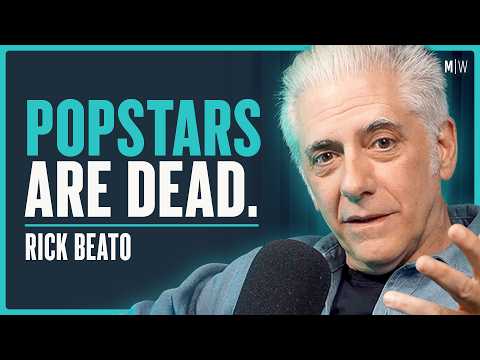
Link: https://youtu.be/0g06zPgwuKs
Short Summary
Number One Takeaway/Action Item:
Musicians need to embrace entrepreneurship, diversify income streams beyond traditional songwriting and touring, and proactively adapt to the evolving music landscape by leveraging all available tools (including AI responsibly) to connect with their audience.
Executive Summary:
The music industry is undergoing a significant transformation, with algorithms, AI, and social media playing increasingly dominant roles. While this presents challenges like homogenized sounds and the potential for AI to displace artists, it also creates opportunities for musicians to diversify their income, connect directly with fans, and build unique brands. Success in the modern music landscape requires adaptability, entrepreneurial skills, and a willingness to embrace new technologies responsibly.
Key Quotes
Here are five quotes that represent valuable insights or interesting perspectives from the transcript:
-
"The thing now about pop music is that you have to be your own promotion department basically to be really successful. You have to be you kind of have to be an expert in social media... If you don't have a viral moment with a song, that's you know, the the days of the record labels creating your career are pretty much over." - This highlights the shift in the music industry, where artists need to be proactive in marketing themselves through social media to achieve success.
-
"As people get older, I've made videos about this that uh that once people hit 30 or so, artists they begin to um lose the spark, if you will... How much do you think that's due to the fact that they were 30? And how much of that do you think is due to the fact that they've released 12 albums in the space of eight years?" - This brings up an interesting discussion about creativity, age, and burnout, suggesting a combination of factors contribute to artists losing their edge.
-
"Producer-driven songs are songs like... Since You've Been Gone by Kelly Clarkson. That was Max Martin and Dr. Luke wrote this song. They wrote the lyrics. They recorded everything. She came in and sang it. And that's a producer-driven song. uh literally written by the two guys that produced it including the lyrics. So um most music nowadays or a lot of music is producer driven..." - This helps clarify the difference between artist-driven and producer-driven music, noting the trend toward producer-led creation.
-
"It still comes down to do you have a tick- tockable moment in your song. It just does Chris. That's the you know it's you can have the greatest record in the world the most different sounding record revolutionary new trend in music and if you don't have those if people don't say can you feel my heart then it doesn't it doesn't" - This summarizes the powerful influence of Tik Tok on modern music, emphasizing the need for songs to have viral-worthy moments to succeed.
-
"If AIs are able to create better music than you as an artist can, I think it's a very difficult argument to make to say that they should be held back given that this is supposed to be a meritocracy..." - This poses a controversial question about the potential role of AI in music creation, forcing a difficult conversation about competition, art, and skill.
Detailed Summary
Here's a detailed summary of the YouTube video transcript, focusing on the key topics, arguments, and information discussed:
-
Beyonce's Car Stunt & Stage Safety
- Discussion about a recent Beyoncé performance where she stood on top of a moving car, raising concerns about safety and the potential consequences of an accident.
- Mention of Ronnie Radke's reaction to a stage accident involving pyro, leading to firings and stricter safety measures.
- Discussion about the safety protocols at Metallica shows, involving ear prompts for pyro warnings and mic locations as safe zones.
- Consideration of the liability involved in stage productions with pyrotechnics and the importance of ensuring safety every night.
-
The Pop Song Creation Process:
- Pop music is discussed in terms of crossing over into mainstream culture.
- The traditional belief that the singer is the primary songwriter is challenged. It's more common now for pop stars to have very little to do with their songs beyond choosing them.
- Role of Professional Songwriters: They are often the ones realizing the pop star's ideas or even providing fully written songs.
- Taylor Swift is mentioned as an example of a potential exception, where she likely writes most of her lyrics.
- The shift from rock bands writing their own songs to pop artists relying on co-writers is explored.
- Social Media Expertise: Essential for modern pop stars; ability to create viral content (TikToks, videos) is a huge advantage.
- Record labels' role in creating careers has diminished; viral moments are key to a song's success.
-
Songwriter Contributions & Creative Spark:
- Questioning the large number of songwriters on pop songs and the actual contribution of the artists.
- Debate over whether artists lose their creative spark around age 30, referencing The Beatles' breakup.
- The rapid pace of album releases in the past (e.g., The Beatles releasing multiple albums in a year) and its impact on creativity versus the slower pace of touring and writing cycles today.
-
Producer-Driven vs. Artist-Driven Songs:
- Distinction between songs where the producer/songwriter creates everything (e.g., Kelly Clarkson's "Since You've Been Gone") versus songs where the artist is more involved.
- Historical background of songwriting: usually music first, lyrics second (Elton John an exception).
- Nashville songwriting process: collaboration involving multiple songwriters, publishing companies, and "track guys" (producers with pre-made tracks).
- Emphasis on the assembly line nature of Nashville's music production.
- Session Musicians: Described as incredibly skilled and efficient (one-take recordings).
- Example given with a top session guitarist in Nashville recording a near-perfect solo, highlighting the high level of musicianship.
-
Artist Authenticity & Audience Perception:
- Questioning whether audiences should feel differently about songs knowing that artists might have limited involvement in the writing process.
- Debate over whether it's "gaslighting" the audience to make them believe an artist is more creative than they are.
- Emphasis on the audience's perception and connection to the artist's performance in music videos.
- Trent Reznor's perspective on Johnny Cash owning the song "Hurt," despite Reznor writing it.
- Story of Rick Rubin's persistence in getting Johnny Cash to record Hurt.
-
Modern Pop Star's Value & The Rise of Famous Figures in Music:
- For non-self-contained artists: "You need to be famous prior to being a big pop star."
- Disney stars and social media personalities (TikTokers) becoming pop stars.
- Importance of Athleticism: Dance skills and physical performance are a huge component to appeal.
- Argument: Musical skill is now less of a priority than social media presence and public image.
- Exception: Ed Sheeran and Chris Martin can still write and perform by themselves.
-
Prefabricated DJs, Trends, Algorithm and Social Media's Impact on Creativity and Exposure:
- Suggests there may be "prefabricated DJs" in the future.
- Anecdote about TikTok being down for a few hours, leading to a shift from TikTok to Instagram.
- Translation on musical parts and trends; discusses what is dominating right now:
- The Algorithm: Everyone is algorithmically siloed.
- There are very few shared experiences that people have as far as with music nowadays.
- The discussion of trends shifts into Nirvana's impact on music by changing the glam metal era.
- Discusses the "independent promoters" and old "mob" music.
- Platforms: Dominant trends nowadays are controlled algorithmically by platforms like Spotify, YouTube, and TikTok.
-
Homogenization vs. Individuation & The Death of Subcultures:
- Argues that people are getting siloed off into algorithmic echo chambers and are listening to more of the same.
- Reference to old subcultures such as goths and emo kids.
- Homogenization is happening because everything is so fast-paced and doesn't allow anything to solidify.
- Music is too easy to make and consume, with everything being more homogenized due to this.
-
The Digital Age and Ease of Production:
- Use of digital modelling for guitar amplifiers vs real analog ones.
- The same sounds are often used, creating similar records.
- Lack of professional mixers and producers in rock music due to lack of financial incentive.
- The importance of the front person's ability in differentiation, in addition to using auto-tune on the voice.
-
The Importance of Singers and Song Marketing:
- Singer is the highest point of differentiation now as music sounds are becoming homogenized.
- The marketing presence becomes important as that is how the artist differentiates themselves.
- If the band has a big social media presence is the method to bring people to shows.
-
The Importance of a Tik-Tokable Moment, the New Music Formula:
- One must figure out verality and the data.
- Explores how the structure of the song is written in order to be "Tik-Tokable."
- Headlock from Image and Heap is used to explain how a song blew up after 2005 by finding the right Tik-Tok spot.
- Discusses resources spent reverse engineering what goes viral.
-
The Allure of Natural Virality:
- Questions if anything is going to blow up after people see what gets revealed from them.
- Ocean Spray dude with Fleetwood Mac and Dreams is discussed as not meant to go viral.
- Can You Feel My Heart trampolining videos are something the artist didn't design, but it ended up becoming popular.
-
Getting Picked, Predictability & Financials:
- If you write for big stars (Beyonce, Sabrina Carpenter) and they pick the song as the single, there is a higher chance of success.
- Describes how to get a song picked to be a single after being written and the ANR department goes back and forth with what is picked.
- Public has its own vote as they vote with their attention.
- The replication of music as it has worked before is another point.
-
New Metal & Country Evolution:
- Describes the new metal era that was huge until it wasn't and how nickelback was a force in the industry.
- Joey Moy, the engineer from nickelback went to Nashville and had hit after hit after hit, and how Chad Kroger didn't go to Nashville.
- Once rock lost the blues, it started to lose its appeal and moved into country.
- Country has been popified, where the same drum loops from pop music are heard.
-
Country's Growth and Popularity:
- The productions style has changed and it sounds like pop music.
- It connects with more people because it doesn't sound like "country" music.
- Broadway in Nashville on July 4th and the artist has a shot and the audience drinks along is the moment that they say convinced them to move to Nashville.
- The sound seems so familiar even to the person that had listened to that much country.
- Jelly Roll and Post Malone had major pivots into country.
-
AI Musicians and Artists:
- AI companies are testing whether people will accept AI music.
- Spotify has AI music already, and the AI music is getting millions of views.
- I had testified at the Senate hearing about AI, and I don't believe that anything fully generative should be copywritten.
- They talked about the band Velvet Sundown as they seem to be a fake AI band, and if they are not, it is smart marketing.
-
Embracing AI Music:
- They state that people will eventually embrace AI music.
- Eventually, there will be Beatles AI.
- People may like AI better than the original artists.
-
The Value of the Process, Ethics, Human Input:
- There should be protections for artists so AI bands and artist do not steal streams.
- The ethical questions about if AI should be banned or integrated into music in a more ethical way are mentioned.
-
Plagiarism vs. Inspiration & AI Implementation
- The two mention how a graphic designer has had their jobs taken away.
- Podcasts can be created from Notebook LM that make them listenable.
- They talk about how people use tools so often like AI.
- Everyone is inspired or educated by what came before them.
- Notebook LM is used to make thumbnails that have been refined with the AI programs.
-
Authenticity and Artistry - Human vs. AI:
- It would con people if people found out that the music was made with AI.
- AI can create more effectiveness within real humans.
- The point made is that the writer likes the story of a song, but AI removes the story and emotion to it.
- They have another discussion regarding a "zombie" operating, but ultimately there is nothing behind it.
-
The Future, Sound, and Music:
- Mentions the use of 11 Labs.
- Archer, the British AI voice, is something that you can use and put information in, and the voice will repeat.
- They are testing 11 Labs for putting B-roll in place.
-
Music Industry Finances & Income Streams:
-
Live music is the way to make money.
-
Not much money in the "rock" genre music.
-
Artists make money from publishing.
-
Selling records is not a source of income.
-
Spotify - The Good, Bad, and Ugly:
- Creating playlists is good.
- Podcasters and artists make money from them.
- Hard for musicians to see how much money artists make.
- It is easy to game the system with algorithms.
- There will be the higher payout rates based on record labels.
- The main concerns are AI bands and this "reverse integration."
-
The Future of Music and Monetization:
- They will use blockchain to verify if an artist is real.
- The people being interviewed in the podcast are famous and don't need to worry about missing meals.
- Younger musicians have their own income streams.
- The "gordian knot" causes a disruption of creative songs as less time is spent and is more homogenous because of less care and attention spent.
-
The "Full-Glass Half-Full Approach:
- The people need to find business practices and stick to them.
- They cannot whine about changing their ecosystem because there are solutions.
-
Live Performances
- They are more protected than any other industry.
- AI cannot recreate live performances.
- There are robot shredders in some bands and music being played, people see them as spectacles.
-
Adapting to Change & Innovation
- Everyone may become in a bubble to have what they are used to, the person may use that and record it on the phone and send it into their algorithm.
- People need to go back to 2014 and listen to the music that they had heard before to experience that time.
This summary captures the key elements of the video's discussion regarding the changing landscape of the music industry, the impact of technology, and the challenges and opportunities for artists in the modern era.