[@ChrisWillx] Design Your Environment For Maximum Motivation - Dr Mike Israetel
![[@ChrisWillx] Summarizer](https://summaries.pages.dev/img/logo.webp)
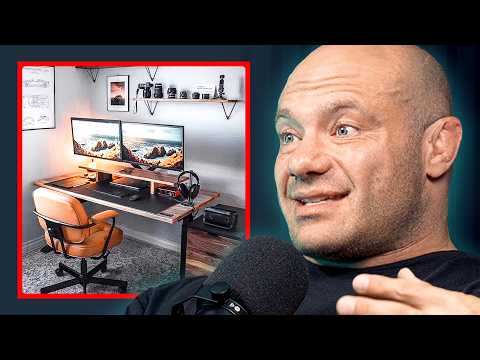
Link: https://youtu.be/uqwH77h5A0Q
Short Summary
Here's a summary and action item based on the transcript:
Number One Action Item/Takeaway: Architect your habits to be as easy and seamless as possible by optimizing your environment and systems.
Executive Summary: Success is achieved by strategically designing your environment and systems to minimize friction and maximize ease of execution. Focus on removing obstacles to make desired habits effortless and accessible, then use that "easy" win as a springboard to tackle even more ambitious goals.
Key Quotes
Here are five direct quotes from the provided transcript that represent valuable insights, interesting data points, surprising statements, or strong opinions:
- "So, architecting your habits in such a way that gives them clear timelines on which they can occur that reduces the distance and the cost in every other way is a big deal." (Valuable insight on the importance of planning and environmental factors in habit formation)
- "That's the funny thing about life is supply and demand is the huge ruler of many of our worlds. And what many people demand is awesome hedonic things to be delivered quickly and easily. And so a lot of our economy is architected very well to do that." (Insightful observation about the ease of accessing unhealthy options vs. healthy ones in modern society)
- "But if you have a goal that it's real difficult to get to and you could make it easier to get to that same goal, what you really should be thinking is, 'Oh, it's too easy for you. Dope. Your goal is too pathetic.' Make your goal harder." (Strong opinion and useful advice on adjusting goals based on ease of achievement.)
- "Make things as easy as humanly possible in the execution so that you can execute more." (A concise and actionable principle for optimizing productivity.)
- "Start with giving yourself every single weapon so that the goal is easy. So that you accomplish a goal barely sweating. So you can go to sleep that night with people congratulating you that you did it. And that you can feel a sense of imposttor syndrome. So that you can feel like you did it and it wasn't even hard. What a [ __ ] blessing that is for people who have struggled to accomplish great things in their lives. I'm not one of these people. Wouldn't they want that? They'd want to be able to look back and say, 'Fucking God, that was easy.'" (A perspective challenging traditional notions of hard work and success, advocating for efficient strategies and reframing perceived "imposter syndrome" as a blessing.)
Detailed Summary
Okay, here's a detailed summary of the YouTube video transcript, focusing on the core arguments and information, excluding the sponsor mentions:
Key Topics and Arguments:
-
Architecture of Habits: Environment and System Design: The core focus is on designing your environment and systems to support desired habits, making them easier to adopt and maintain.
-
Environment Design: Choosing gyms close to you. Partnering with others to work out (with caveat), having music to listen to. Scheduling in a way that accomodates for the habit.
-
Social Dynamics of Habit Formation (Partnering Up):
- Partnering with others can be beneficial for motivation, but only if both parties are genuinely committed.
- Dragging someone along who isn't interested can be counterproductive and drain willpower.
-
Making Habits Easy and Pleasant:
- Strategically incorporate elements that make the desired behavior enjoyable and convenient (e.g., listening to enjoyable music at the gym).
- Schedule and allocate time effectively to accommodate the habit.
- Simplify the process of engaging in the habit, reduce the barriers and costs.
-
Example: Healthy Eating Habit:
- Don't try to cook every meal from scratch if it's not sustainable.
- Utilize options like meal delivery services, batch cooking, or hiring a cook to make healthy eating easier.
- Contrast: Comparing the ease of getting junk food delivered versus preparing a healthy meal highlights the importance of reducing friction.
-
The Dichotomy of Hard Work vs. Efficiency:
- Some people value the struggle and difficulty of achieving goals.
- The argument is that if a goal can be made easier, either achieve it effortlessly or raise the stakes and pursue a more challenging goal.
- Essentially, leverage all available tools and strategies to maximize your potential and achieve ambitious objectives.
-
Analogies: Warfare and Elon Musk:
- Comparing achieving goals to warfare: Use every available "weapon" (strategy, tool, resource) to win.
- Imagine what would happen if Elon Musk had to ride a bike to get to work? His energy would be drained, and his work quality would decrease.
-
Addressing Concerns about "Easy":
- Acknowledges that some people might use the "easy" approach as an excuse for laziness.
- Emphasizes that the goal is to make execution easier, allowing for either effortless achievement or the pursuit of more difficult goals.
-
Weight Loss Drugs (Semaglutide, etc.) as Example:
- Modern weight loss drugs make dieting easier; instead of criticizing them, use that advantage to diet more effectively.
-
Emphasis on Empowerment:
- The focus should be on empowering oneself by making the process of achieving goals easier, allowing for greater success and ambition.
- Difficulty should lie in the goal itself, not in the execution.
-
Embrace "Imposter Syndrome" (at First):
- The feeling of achieving something great with relative ease should be welcomed, not feared. It allows for the setting of more challenging goals.
-
Analogy: Churchill and Modern Warfare:
- Even in difficult situations, like World War II, leaders would embrace any advantage to achieve victory.
-
Don't Stop at Easy: Pre-Arrangement of Outfits, Next Steps:
- Famous inventors pre-arranged outfits the night before so that they would not have to expend energy thinking about it.
- Even Einstein took steps that would allow him the energy to focus on his equations.
In Essence: The video advocates for strategically designing environments and systems to make desired habits easier to adopt and maintain. It argues that focusing on efficiency and reducing friction allows individuals to either achieve goals effortlessly or pursue more ambitious objectives. It also addresses concerns about the value of hard work by suggesting that difficulty should reside in the goal itself, not in the execution.