[@joerogan] Joe Rogan Experience #2357 - Sarko Gergerian
![[@joerogan] Summarizer](https://summaries.pages.dev/img/logo.webp)
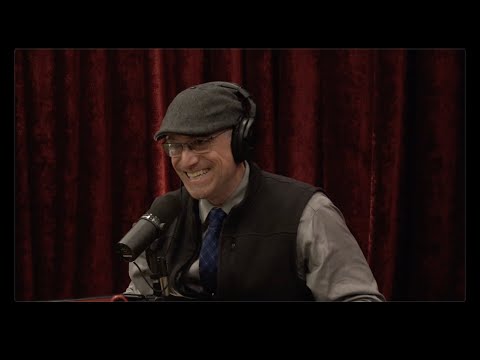
Link: https://youtu.be/Eq4y2vh8TD8
Short Summary
Executive Summary:
This Joe Rogan Experience podcast features Sarco Gergerian, a law enforcement lieutenant and psychedelic-assisted therapist, discussing the need for a paradigm shift in how we approach drug policy, particularly concerning psychedelics. He advocates for a harm reduction model, decriminalization, and safe supply to combat the dangers of the illicit drug market and address the mental health crisis within law enforcement. He calls for open conversations, education, and a shift away from fear-based policies toward compassion and community-based solutions.
Number One Takeaway:
Open, honest conversations about drug policy, harm reduction, and the potential benefits of psychedelics are essential to challenge outdated narratives, promote compassion, and ultimately save lives.
Key Quotes
Here are five quotes from the Joe Rogan Experience podcast transcript with Sarco Gergerian that represent particularly valuable insights, interesting data points, surprising statements, or strong opinions:
-
"There's research out there that says the amount of critical incident exposure in an average law enforcement career is 200. 200 murders, suicide, car accidents, baby head crushed... Most civilians have five. Critical incidents send people's lives sideways. So, the first responder's nervous system is a carrier of trauma at a level unimaginable by most people, which is what you just brought into this conversation." This quote presents a stark and powerful statistic about the level of trauma experienced by law enforcement, highlighting the immense psychological toll of the job.
-
"MDMA helped me access that, right? I've experienced ketamine. Ketamine, I say, was like a luscious massage of my soul. I felt like the energy of my being was traveling in and out of my body. And I had three energetic streams traveling with me. My martial arts instructor periodically, my wife, and God on ketamine. It was unable." This quote describes Sarco's personal experience of using psychedelics. In particular, the expression "luscious massage of my soul" is a compelling analogy.
-
"You have to make logical sense as to why you're imposing these laws and then imprisoning people and taking away their freedom for not listening to you. That's right. because you don't make any sense. And here's another part of the problem. A vast majority of the people that are pushing for these laws and want these people to be locked up have not had these experiences themselves. And that's a part of the problem. They don't know what they're talking about." This quote highlights the core issue of drug policy being made by individuals with a lack of understanding of the substances and their potential effects.
-
"We've been stripped of our power to define what medicine is. Yes. Right. Yeah. Have you heard people say community is medicine? Joy is medicine. Oh, yeah. For sure it is. Right. Yeah. Well, ask a hardcore western science model, is that medicine? And they'd go, well, you got to show us the evidence. Yeah. Right." This quote challenges the conventional definition of medicine and suggests that things like community and joy can also be considered medicinal.
-
"When you kick indoors and arrest black and brown people for having a relationship with a plant like cannabis and charge them and put them in a cage and lock them up and they weren't doing anything violent, we have to ask who is this hurting? And I'm here to tell you it's hurting them and us. For sure. For sure. Because anyone who's a law enforcement officer that's arresting someone for weed, they know that they're not doing anything good. Moral injury." This powerful quote confronts the racial disparities in drug enforcement and the moral burden it places on law enforcement officers.
Detailed Summary
Here's a detailed summary of the Joe Rogan Experience podcast episode based on the transcript provided, presented in bullet points:
Key Topics:
- Psychedelics and Law Enforcement: The core theme revolves around the guest, a law enforcement professional (Lieutenant), sharing his journey into psychedelic-assisted therapy and advocacy.
- Trauma in Law Enforcement: The discussion explores the high rates of PTSD, suicide, and other mental health issues among law enforcement officers due to constant exposure to trauma.
- The War on Drugs: The episode critically examines the history, motivations, and consequences of the War on Drugs, particularly its impact on marginalized communities and its failure to address addiction.
- Psychedelic-Assisted Therapy: The potential of psychedelic-assisted therapy, especially MDMA for PTSD, is discussed, along with the recent FDA delay and the reasons behind it.
- Safe Supply and Decriminalization: The conversation touches upon the importance of safe supply of substances to reduce harm from adulterated drugs, and the potential benefits and drawbacks of decriminalization strategies.
- The Power of Propaganda and Public Perception: The role of propaganda in shaping public perception of drugs, and how this influences policy and individual beliefs is explored.
Arguments and Information:
- The Guest's Background:
- A law enforcement lieutenant with 15 years of experience.
- A trained psychedelic-assisted therapist.
- Claims to be the first law enforcement professional to receive a religious exemption for accessing entheogens.
- Has an academic background in religion, philosophy, and psychology.
- Witnessed the impact of ecstasy (MDMA) on nightclub culture in the 1990s.
- Psychedelic Conference Experience:
- Shadowed people at a psychedelic science conference to help participants feel safe, considering potential sensitivities around Jewish, Palestinian, and Arab practitioners.
- Referenced a past disruption at Psychedelic Science 2023 involving Rick Doblin.
- Journey into Psychedelics:
- Attended the International Association of Chiefs of Police (IACP) conference.
- Saw Rick Doblin present on MDMA-assisted psychotherapy for PTSD.
- Was profoundly moved and approached Doblin to offer his help.
- Received training in MDMA-assisted therapy through MAPS (Multidisciplinary Association for Psychedelic Studies).
- Participated in a federally sanctioned research protocol to experience MDMA as a "healthy normal."
- MDMA Experience:
- Described a mystical experience with MDMA, which was filmed and included in Michael Pollan's "How to Change Your Mind" docuseries.
- Concerns about Law Enforcement & Mental Health:
- Highlighted the high suicide rate among law enforcement officers.
- Argued that MDMA-assisted therapy could be a valuable tool for addressing trauma and preventing suicide among first responders.
- Expressed frustration that law enforcement professionals are often "muzzled" and cannot openly discuss or pursue alternative treatments for mental health issues.
- The Problems with Schedule One Classification:
- Argued that the Schedule One classification (no medical use, high potential for abuse) for many psychedelics is a lie that harms people.
- Claimed that it creates a political taboo, making it difficult for politicians to support research and access to these substances.
- Advocacy for Change:
- Called for politicians to create safe spaces for open discussion about psychedelics.
- Encouraged law enforcement professionals to speak up about the need for access to alternative treatments.
- FDA Delay and the Future of MDMA Therapy:
- Discussed the FDA panel's decision to delay the approval of MDMA-assisted therapy, citing concerns about the strength of the data and how to integrate therapy with a prescription drug.
- Expressed disappointment that many people who could benefit from MDMA therapy will have to wait years for access.
- The Illicit Drug Market and Safe Supply:
- Highlighted the dangers of the illicit drug market, where substances are often adulterated with fentanyl and other harmful substances.
- Advocated for safe supply initiatives to provide people with access to regulated, tested substances.
- Historical Context of Drug Prohibition:
- Drew parallels between the prohibition of alcohol and the current War on Drugs.
- Referenced historical accounts of how prohibition led to the rise of organized crime and dangerous, unregulated supply.
- Cited the example of William Randolph Hearst's role in outlawing hemp due to its threat to his paper mill business.
- The Benefits of Hemp:
- Discussed the versatility and benefits of hemp as a sustainable and superior material for clothing, paper, building materials, and protein source.
- Discussion on Coca-Cola:
- Discussed the history of Coca-Cola.
- Discussed the early amounts of cocaine and caffeine in the product.
- The Need for Freedom and Education:
- Argued for the freedom to explore different substances and make informed choices.
- Emphasized the importance of accurate information and education about the risks and benefits of various substances.
- Ancient Medicinal Wisdom:
- Drew parallels to the Roman silencing of Ilusinian mysteries.
- Call to action against laws enforcement being used for profit:
- Pointed out law enforcement's actions against cannabis use are funded.
- The United Nations:
- The world health organization claims schedule 1 drugs are fraudulent.
- Treaties were spent focusing on one word.
- The Algorithm for hate and division:
- Discussed human nature being easily manipulated.
- Winthrop, Massachussetts Police Department Example:
- Officers followed up on public health issues from police incidents.
- Officers knocked on doors and had conversations with the public.
- Community and law enforcement assisted in recovery.
- General Philosophy:
- Endorsed seeing the world through two eyes, western science and indigenous wisdom.
This summary captures the core themes and arguments presented in the provided transcript.