[@ChrisWillx] How To Actually Build Discipline - Gen. Stanley McChrystal
![[@ChrisWillx] Summarizer](https://summaries.pages.dev/img/logo.webp)
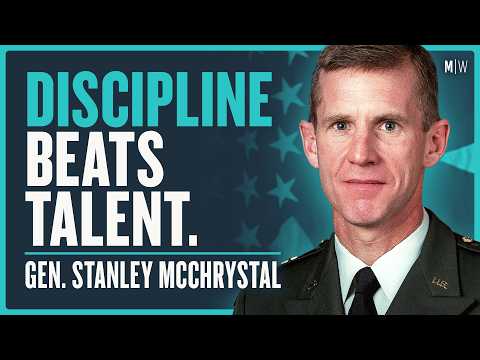
Link: https://youtu.be/Y-DmG-vdU5s
Short Summary
Here's the requested information from the YouTube transcript:
Number One Action Item/Takeaway:
Value the things that really matter to you and develop the self-discipline to live up to your convictions.
Executive Summary:
General McChrystal reflects on his near expulsion from West Point, emphasizing the importance of learning from mistakes and valuing what truly matters. He learned later in life that discipline is the most important thing we have and that, self-discipline is the ability to get yourself to do those things which you believe you should do and you decide to do. He highlights how moral courage, strong convictions, and self-awareness are essential for effective leadership and building a fulfilling life, emphasizing the need for leaders to enable their team's success.
Key Quotes
Here are five direct quotes from the transcript that offer valuable insights:
-
"Maybe late in life, I learned if there are things that really matter, value them." - This quote reflects on a key lesson learned from his West Point experience, highlighting the importance of recognizing and cherishing what truly matters in life.
-
"I think discipline is the most important thing we have. And I when I talk about that, I start with self-discipline. Self-discipline is the ability to get yourself to do those things which you believe you should do and you decide to do." - This statement provides a definition of discipline while underscoring its importance as a foundational trait for success and leadership, starting with the individual.
-
"The only thing different is who decides not to quit. And that's the same with the SEALs. That's the same with others. So that's what they test for. The selection processes are designed to see who's persistent, who won't quit because that actually shows up later in times when you really need it. Again, you don't need brilliant people. You need people who commit themselves to something and then won't turn away." - This quote challenges the notion that exceptional talent is the key to success, arguing that persistence and the refusal to quit are more crucial qualities, especially in demanding environments.
-
"Without being trite, it is the journey and not the destination... I wanted a jersey to wear. I wanted comrades because I realized that that was most important to me. That still is, and I'm I'm pretty self-aware about that right now. And so I think when people don't understand that and they think the goal is to be X really the goal is life between here and there it matters." - This emphasizes that the experiences and relationships built along the way are more valuable than the end goal itself.
-
"Character... It's what are our convictions, the things we believe in that we've really pressure tested and then the discipline we have to live up to it." - This defines character as the combination of deeply held, examined beliefs and the discipline to consistently act in accordance with those beliefs.
Detailed Summary
Here's a detailed summary of the YouTube video transcript, organized into bullet points:
Key Topics:
- Discipline: Importance of self-discipline, relationship to leadership and success.
- Character: Definition, development, and its role in leadership and life.
- Leadership: Traits, moral courage, balancing ambition with service, and the "loneliness of command."
- Conviction: Development, importance of self examination, and distinction from superficial beliefs.
- Standards: The US Army Ranger's high standards as example.
- Humility: Its importance in leadership, relationships, and self-awareness.
- Reflection on Past Mistakes: Personal anecdotes about past struggles and lessons learned.
- Teamwork & Camaraderie: Its importance in achieving difficult goals and personal fulfillment.
- Balancing High Standards with Gratitude: Finding contentment despite aiming for excellence.
Arguments and Information:
- Near Expulsion from West Point:
- The speaker (a retired four-star general) recounts being close to expulsion from West Point due to poor academic performance and disciplinary issues.
- He received "slugs" (punishments) for disrespecting a superior and being drunk.
- Punishments involved walking tours with a rifle, demerits, and special confinement.
- He narrowly avoided expulsion after a second major offense.
- Lesson learned later in life: value things that really matter and the risk of losing opportunity.
- Learning from Failure:
- Discusses the difficulty of learning lessons during a challenging experience.
- Highlights the "peak-end rule" - the most emotionally intense and final moments of an experience are most memorable.
- Having a string of bad luck/failures can make it hard to see the bigger picture or find gratitude.
- Turning Point & Influence of Others:
- He began to mature and met his future wife, who helped him straighten up.
- A new tactical officer believed in him, which motivated him to persevere.
- Analogy to CrossFit:
- Compared West Point challenges to CrossFit competitions.
- Sometimes you must endure difficult initial phases before reaching areas where you excel.
- Important to earn stripes and be patient, even in mundane tasks.
- Discipline as Key to Success:
- Discipline is the ability to get yourself to do what you believe you should do.
- It's a differentiator between good leaders and others.
- Self-discipline is crucial for managing personal life, finances, and relationships.
- Army Ranger Standards:
- Coming out of the Vietnam War, the US Army was in disarray.
- General Crate Neighbors formed two Ranger battalions to raise standards across the army.
- The Rangers set extremely high standards for discipline, physical fitness, and professionalism.
- This created a gravitational pull, influencing the rest of the army to improve.
- The Rangers had a disproportionate influence on the army, with many leaders having Ranger backgrounds.
- Rangers vs. Navy SEALS
- The difference was the very overt discipline of the Rangers.
- The Rangers took young people and shaped them over time into extraordinarily disciplined people.
- Discipline vs. Stubbornness:
- Explores the fine line between discipline and stubbornness.
- Stubbornness can be channeled into discipline if used correctly.
- Army Standards in Vietnam:
- Drafted army, attrition of leaders, lowering standards for enlisting, short command tours contributed to the issue.
- Importance of Character:
- Character is the essence of who we are.
- Defined as the combination of convictions and the discipline to live up to them.
- Life is a journey towards character development.
- Influence of Personal Ambition in Leadership:
- Discusses the tension between personal ambition and service in leadership.
- Effective leaders are ambitious but also guided by values and a desire to serve.
- Leaders must prioritize the needs of their people over their own.
- Vulnerability/Doubt in Leadership:
- The book "Endurance" by Alfred Lansing about Shackleton's Antarctic expedition.
- Adm. James Stockdale was a Navy Aviator shot down in 1965, held as a prisoner in Hanoi Hilton for 7 years.
- The Stockdale Paradox:
- "You must retain faith that you will prevail in the end, regardless of the difficulties, AND at the same time confront the most brutal facts of your current reality, whatever they might be."
- Moral Courage:
- Discusses the importance of moral courage, which is often harder than physical courage.
- Moral courage involves standing up for what is right, even at personal risk.
- Shares an anecdote about General Wayne Downing making a difficult decision during the Gulf War.
- Value of Convictions:
- The speaker defines convictions as things one has examined, thought about, and wrapped their mind around.
- You should live for or be willing to die for convictions.
- Balance in Character Development:
- There are leaders who's moral conviction is ambition.
- The goal is to make sure that whatever conviction is applied to, is something that will not be looked back on with regret.
- The Role of Humility:
- Humility is hugely important because it brings respect.