[@ChrisWillx] How To Not Let Your Past Define You - Scott Barry Kaufman
![[@ChrisWillx] Summarizer](https://summaries.pages.dev/img/logo.webp)
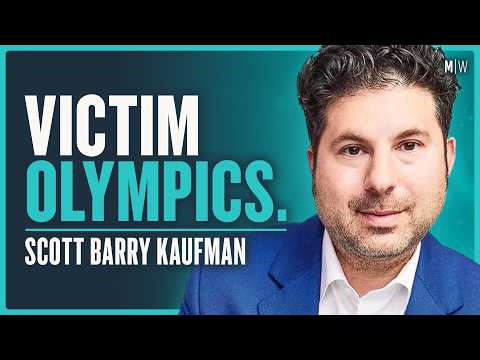
Link: https://youtu.be/GOapR7tKQtk
Short Summary
Number One Action Item/Takeaway:
Give up all hope for a better past by acknowledging past hurts without letting them define your identity or dictate your future potential.
Executive Summary:
The video explores the dangers of a victimhood mindset and how it can hinder personal growth. It emphasizes the importance of acknowledging past traumas without allowing them to define one's identity, instead advocating for an empowerment mindset focused on resilience and future potential. It also dives into the science and research of high sensitivity, genes and how they play a role in potential victim mentalities.
Key Quotes
Here are 5 direct quotes extracted from the YouTube video transcript that represent valuable insights or strong opinions:
-
"When you blame all your problems on someone else, you are stripping yourself of your agency." This highlights the self-empowering aspect of taking responsibility, even in difficult situations.
-
"There seems to have been a cultural shift among youth where… the entitlement… you get special privileges for saying you've suffered." This quote provides a critique of the modern incentivization of victimhood, particularly within youth culture and social media.
-
"Learn helplessness is the default state in humans. There's something very primal about that where we default to learn helplessness and what we have to learn is hope. Hope is an intentional process that has to be learned." This challenges the conventional understanding of learned helplessness and emphasizes the active nature of cultivating hope.
-
"A victim mindset is independent of victimization. You can have real victimization and not harness a victim mindset about it." This emphasizes the importance of the individual's mindset, regardless of their actual experiences with victimhood.
-
"There is a pretty substantial heritability of your attachment style." This offers a provocative, gene-centric counterpoint to traditional attachment theory, adding nuance by connecting heritability to traits like neuroticism and providing a potential alternative explanation for perceived trauma.
Detailed Summary
Here's a detailed summary of the YouTube video transcript, organized into bullet points for clarity:
Key Topics:
- The Victim Mindset: Definition, origins, manifestations, and its impact on personal agency and potential.
- The Importance of Moving Beyond the Past: Giving up hope for a better past and focusing on the future.
- Psychotherapy vs. Coaching: Differing orientations of therapy (trauma-informed) and future-oriented coaching.
- High Sensitivity and its Potential: Exploring the challenges and advantages of being a highly sensitive person (HSP).
- The Role of Emotions: Recognizing emotions as signposts and not facts, regulating emotions, and psychological flexibility.
- Genes and Trauma: Heritability, the role of epigenetics, and the impact of genetics and trauma on behavior.
- The power to take actions Empowerment mindset - play 'yes and', to have resilience, and continue with your life with meaning and purpose.
Arguments and Information:
- Giving Up Hope for a Better Past:
- Ruminating on the past is futile and prevents progress.
- Important for existential perspective
- Criticism of Trauma-Informed Therapy:
- Potential for focusing too heavily on victimhood, overshadowing other aspects of identity and future possibilities.
- The Victim Mindset Defined:
- Blaming external circumstances for problems.
- Believing you don't need to take responsibility due to past trauma.
- Fixating on revenge instead of solutions.
- Nuance and Degrees of Victimhood:
- Most people exhibit varying degrees of victim mentality.
- Outsourcing problems strips away personal agency.
- Examples of Victim Mentality in Everyday Life:
- Personalizing neutral events and seeing malevolent intent where none exists.
- Getting upset about small things in social situations (e.g., someone not smiling back).
- Origins of Victim Mentality:
- Combination of nature and nurture.
- Challenging experiences or feeling wronged.
- Experiment shows that wronging people in an experiment increases the likelihood of punishment of an innocent.
- Incentivization of Victimhood (Ancestral and Modern):
- Historically, the "victim" in a conflict gains resources and support.
- Modern culture, including social media, can incentivize victimhood for attention and validation.
- People want to be able to show genuine vulnerability to gain sympathy and support.
- Learned Helplessness vs. Learned Hopefulness:
- Original theory of learned helplessness refuted in humans, as helplessness appears to be the default state, and hope is learned.
- The Value of Identifying Parts of You That Are Not Broken:
- Need to have a perspective on the things in our lives that can empower us.
- Social Sensitivity:
- Important part of a social species to build repuatation and social value.
- Role of Victimhood:
- Important throughout history to be the tribal group that is the victim.
- Modern Incentives of Victimhood
- Especially on social media, that provides the youth an idea that they can belong to the outside world as a marginalized individual.
- The Role of Genes:
- Genes are always a debateable topic as it brings up the question of whether we are living in a genetically deterministic or environmentally deterministic world.
- Trauma and Neuroticism:
- People who have a personality of neuroticism may see the world as a threat, whereas someone who is low in neuroticism may not.
- Harnessing Potential:
- Important to do what one can with what is given.
- Epigenetics:
- Important to understand that intergenerational trauma effects are limited beyond two generations.
- Impacts on the Brain:
- Brain creates a narrative from certain events or experiences.
- Genes as Sensitive To the Environment
- It is important to have both sides but to also have supportive and encouraging environment that allows for more encouragement and curiosity.
- Highly Sensitive People:
- Combination of neuroticism and openness to experience, leading to feeling overwhelmed easily.
- Often misconstrued as weakness, especially in men.
- Advantages: creativity, social sensitivity, appreciation of beauty.
- Challenges: Overwhelm, social pressure to conform.
- Transforming Sensitivity into Strength:
- Contextually, that is very conducive to creativity to be able to see the nuances in things to be able to see to have such an open mind where you're able to make connections between things that most people aren't seeing.
- Internally generated Safety and Self-regulation:
- It is very important to allow for new tests of our resiliency.
- Psychological Flexibility
- It is important to check in on what the values are and have it in mind.
- Emotions and Victimhood:
- Taking emotions as facts and acting immediately on them.
- Emotions often fall victim too - fear, anxiety.
- ACT approach: Acting in line with values regardless of current emotions.
- Self-Esteem and Victimhood:
- Uncertain self-esteem leads to looking outward for validation.
- Domain-specific self-esteem exists (e.g., high work self-esteem, low mate value self-esteem).
I hope this is helpful!