[@ChrisWillx] The Only 12 Lessons Buried In Every Self-Help Book - Spencer Greenberg
![[@ChrisWillx] Summarizer](https://summaries.pages.dev/img/logo.webp)
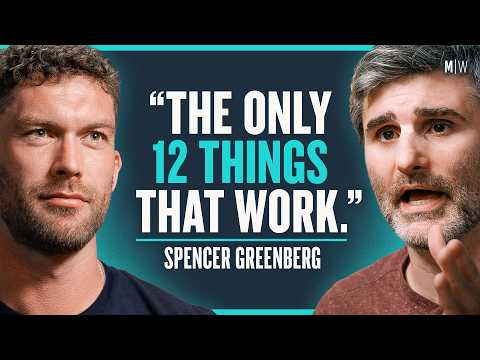
Link: https://youtu.be/k8nO9gyQphI
Duration: 87 min
Transcript: Download plain text
Short Summary
Guest Spencer Greenberg, founder of Clearer Thinking and host of the Clear Thinking podcast, joins to discuss his new self-improvement book "The 12 Lovers," co-authored with clinical psychologist Jeremy Stevenson, which distills nearly 500 techniques into 12 underlying levers such as exposure therapy, defusion, and the productivity equation. The conversation emphasizes behavioral activation over positive thinking, attention as the core lever of personal change, the hidden internal diversity of humans, and whether LLMs and podcasts can replace the curated experience of a self-improvement book.
Key Quotes
- "we were able to boil it down to just 12 levers, which is these 12 underlying psychological strategies. And that's the name of our book, 12 levers." (00:00:50)
- "No, no, no, no. It is right for the right person at the right time applied in the right way." (00:02:12)
- "much to our surprise, we were able to boil it down to just 12 levers" (00:00:56)
- "Having run over 100 studies on human psychology, my biggest takeaway about human nature is that we humans are way more different from each other than we realize." (00:17:15)
Detailed Summary
Detailed Episode Summary: Spencer Greenberg on "The 12 Lovers" and the Levers of Self-Improvement
Guest Background: Spencer Greenberg
Spencer Greenberg, founder of Clearer Thinking and host of the Clear Thinking podcast, joins to discuss his new self-improvement book and the psychological principles behind it. He is a mathematician turned social entrepreneur whose work has produced surprising insights about human individuality.
- Spencer Greenberg is the founder of Clearer Thinking (clearerthinking.org) and host of the Clear Thinking podcast, and he has authored a new self-improvement book promoted at 12Loversbook.com.
- He has run over 100 studies on human psychology, and the single biggest takeaway from that body of work is how internally diverse humans are beneath their compressed outward behavior.
- He also launched a new YouTube channel under his own name, whose first video hit 1,000,000 views.
The Book and Its 12 Levers
The book, co-authored with clinical psychologist Jeremy Stevenson, compresses hundreds of self-improvement strategies into a small set of underlying mechanisms rather than promoting any single silver bullet. The project was as much an exercise in debunking self-selection bias among specialists as it was a synthesis of techniques.
- The book was co-authored with clinical psychologist Jeremy Stevenson and reviewed nearly 500 self-improvement strategies drawn from over 100 self-help books and over 20 therapy modalities, which were condensed into 12 underlying "levers."
- The authors argue there is no silver bullet: self-selection bias leads specialists to overestimate the response rate of their specialty, and the "golden hammer" cognitive bias causes public intellectuals to over-apply their favorite principle to everything.
- A substantial portion of modern self-help repackages ancient techniques—some over 1,000 years old, with attributions reaching back to the Buddha—under new terminology.
- The book includes a decision tree/map at the back to help readers pick the right psychological tool, with three free bonuses (including a little AI bot for application).
- The least sexy but highest-impact lesson in the book is that you must actually sit down and do the techniques—reading without action changes nothing, because consuming knowledge can feel like progress while taking time from actually doing the work.
Lever 1: Unravel the Causes (ABC and Inner Y)
The first lever asks practitioners to identify deeper, controllable causes across multiple levels of understanding, using two complementary techniques to surface beliefs that otherwise evaporate from memory. The psychological phenomena of "permanent forgetting" makes this a deliberate practice rather than a passive one.
- The first lever targets deeper, controllable causes across multiple levels of understanding, from surface wants (level 1) to deeper drivers like resentment (level 3).
- The "inner Y" technique flags sudden emotional shifts in real time and feeds them into ABC (Activating event, Belief, Consequence)—for example: dishes in the sink → the belief "I just want peace" → the consequence of annoyance and a raised voice.
- People experience "permanent forgetting": after as little as 20 minutes they cannot recall what triggered an emotion, even though the average person reports only about 5,000–7,000 thoughts per day (the popular 70,000 figure is overstated).
- The authors recommend a self-tracking game: count how many times per day you catch a negative emotional shift and identify its cause, treating the practice itself as the lever.
Values and Guiding Foundations
Values are split into intrinsic versus instrumental categories, and the authors ultimately reframed values as lifelong "guiding foundations" after a serious co-author disagreement about their usefulness. Direct pursuit of some values backfires while others can be pursued head-on.
- Intrinsic values (e.g., happiness, connection) are valued for their own sake; instrumental values (e.g., cash, watches) are valued as means to ends; the authors identified 22 intrinsic value categories and offer a free test at clearthinking.org.
- Direct pursuit can backfire—the guest cited the classic insomnia paradox, where telling insomniacs to try staying awake put them to sleep faster—suggesting happiness is usually best reached indirectly, while human connection often can be pursued directly.
- For conflicting values, the authors recommend thought experiments (e.g., "would I still say it if it broke their heart for 3 days?") to map personal trade-off curves across both effort-based and world-imposed conflicts.
- A major co-author disagreement over the usefulness of values was resolved by adopting "guiding foundations"—a composite of values, principles, and priorities—as ongoing, lifelong processes distinct from finite goals, addressing the common mistake of failing to ground goals in values.
Habits and Behavior Change
A rigorous randomized study put 20 habit-formation techniques through their paces, and almost none of them beat a control group, leaving the authors with a small bundle of actually-effective interventions. The most powerful tactic turned out to be a self-adapting reflection rather than any fixed workaround.
- A randomized study tested 20 habit-formation techniques against a control over a month; almost none worked, but sticky note reminders, tiny habits, and habit reflection were bundled into a free "daily ritual" tool at clearerthinking.org.
- Habit reflection—recalling a past successful habit and applying what made it work—is self-adapting and outperformed fixed-obstacle tactics.
- People often discard past successes chasing novelty, so the host and guest recommend choosing forms of exercise you genuinely enjoy rather than the theoretically "best" version.
Fears, Exposure, and Emotion Regulation
The guest shared a personal exposure-therapy success that involved asking strangers on Manhattan streets for hugs, illustrating why dropping safety behaviors is essential to the technique working. Related grounding and physiological tools provide in-the-moment relief for emotional dysregulation.
- In his early 20s an anxiety specialist prescribed a fear hierarchy culminating in asking Manhattan strangers, "Excuse me, would you give me a hug?"; his social anxiety dropped dramatically over about six months.
- Exposure therapy works only if safety behaviors (e.g., leaving early, over-laughing, weather-checking before flights) are dropped, so the brain learns the true safety rule.
- Flooding—one-shot intense exposure, such as David Burns asking a contamination-phobic patient to lick a toilet seat—can work for simple phobias but is risky and not recommended for non-experts; live animal exposure for phobias remains the gold standard.
- For acute emotional dysregulation the book recommends the 3-3-3 grounding technique (three things seen, heard, felt), splashing the face with super-cold water to trigger the mammalian dive reflex, and progressive muscle relaxation via NSDR or yoga nidra.
- Chronic anxiety can manifest as neck, shoulder, or lower back pain; the guest noted people sometimes spend years (including surgery) treating the physical symptom before recognizing the anxiety origin.
Overthinking, Worry, and Defusion
The conversation distinguishes between fighting thoughts with more thinking versus fighting them with the absence of thinking, with the latter preferred for OCD. A toolkit of defusion techniques and scheduled "worry time" gives people portable methods for breaking rumination loops.
- Overthinking splits into combatting thinking with thinking versus with not thinking; for OCD the latter is preferred.
- Defusion reframes "I suck" as "I just had a thought that I suck"; techniques include imagining thoughts drifting on clouds, singing Happy Birthday to them, or using a Daffy Duck voice.
- Worry time is scheduled (e.g., 5:00 p.m. daily, never before bed) to batch worry into 15–20 minutes, then transitions into action planning—worry is framed as a playground bully that retreats when confronted.
- Cognitive restructuring targets the second response thought (not the first automatic one), asking what more-helpful thought is at least as true; parts work (Internal Family Systems / schema therapy) communicates compassionately with named "parts" to meet their underlying needs.
Depression, Behavioral Activation, and the Limits of "Think Positive"
A comparison between standard cognitive behavioral therapy and a simple activity-scheduling protocol produced a result that reshaped how therapists treat depression: just doing more enjoyable things works surprisingly well, because positive thinking often follows behavior rather than the other way around.
- Telling a depressed person to "think positively" is, in the guest's words, "probably the most annoying thing you can say to them," because positive thinking typically follows behavior rather than arising on its own.
- A study compared standard CBT for depression against a group simply instructed to schedule and regularly do activities they really enjoy.
- The activity-scheduling group worked "really well" despite researchers' initial skepticism and spawned the therapy now called behavioral activation, which rivaled CBT for depression.
- Behavioral activation works partly because getting depressed people to do more enjoyable positive activities produces more positive thoughts, reversing the assumption that negative thoughts are the root problem.
- This frames a tension between top-down (thinking one's way out) and bottom-up (activity-driven state change) approaches, with a limit to pure bottom-up state generation.
Productivity: Time × Efficiency × Importance
The guest's productivity equation reframes productivity as a product of three multiplicative factors, not a function of hours logged. Each factor has different leverage depending on where a person currently sits, and importance is by far the most underweighted.
- The guest's equation: productivity = time × efficiency × importance; healthy productivity measures weekly value produced across all valued life domains, not just work output.
- If a person is already at 70+ hours/week, more time yields diminishing returns, while the importance factor can swing outcomes up to ~100×.
- Efficiency tactics include coming prepared (typing practice—about 5 hours unlocks notable gains—mise en place desk setup, clearing screens) and removing distractions (silent notifications, environment change, noise-cancelling headphones).
- The book recommends a time audit; people overestimate working time and underestimate phone scrolling by hours; sleep trackers such as Whoop and Eight Sleep often reveal sleep deficits—the host reported 7h15 in bed ≈ 6h sleep.
"Glad You Did It" Choice Points
Small micro-decisions accumulate to shift identity toward or away from values without requiring bold gestures, and the friction-reduction view of willpower outperforms the ego-depletion metaphor in light of failed replications. Temptation bundling and behavioral activation are two powerful, research-backed examples.
- Small micro-decisions ("choice points") accumulate to shift identity toward values without bold gestures; identity in turn shapes habits, fears, and downstream narrative.
- Easy "Glad You Did It" swaps include spending time with pets, calling a friend, going for a walk, or watching a documentary instead of scrolling—basic, clichéd, and commonly ignored (the host noted it took roughly 1 hour 10 minutes for him to arrive at "go for a walk and call a friend").
- Willpower resembles a fatigued muscle under the ego depletion model, but many classic findings failed replication; long-term, easier friction-reduction beats willpower.
- Temptation bundling (Katy Milkman) pairs averses with rewards (treadmill + video games); behavioral activation rivaled CBT for depression by simply scheduling enjoyable activities, because positive thinking often follows behavior rather than preceding it.
Journey Meditation Retreat and Morning Practice
The host has attended Journey, a progressive meditation retreat with eight levels, and the guest discussed why certain levels felt overwhelming and how he now uses a simple daily practice. The retreat design pairs embodied lower stages with disembodied higher ones.
- The host attended Journey, a meditation retreat, and the guest had Journey's founder as a guest on Clear Thinking.
- Journey levels run J1 through J8, with J8 representing disillusion of the self and everything in time and space.
- Levels J1–J4 are embodied, and J5–J8 are disembodied.
- The guest entered around J3/J4 because J1/J2 were too energetic—comparable to "holding on to an electrical cable," a reaction other facilitators shared.
- His morning routine includes spending one minute trying to generate the most positive feelings he can.
Human Diversity vs. Social Norms
After running hundreds of psychology studies, the guest's biggest takeaway is that humans are far more internally different than outward behavior suggests, with social norms doing most of the work of compressing that diversity into predictability. The host extended the point into an evolutionary argument about personality variation.
- After 100+ psychology studies, the guest's biggest takeaway is that humans are way more different from each other than we realize.
- Social norms (weddings, driving, queuing) compress outward behavior so people appear similar, but the internal mental "galaxy" behind each person can be universes apart.
- The host added that humans may have survived partly because of personality diversity, citing the adventurer finding new resources and the worrier provisioning the tribe.
- People only show a tiny aperture of their subconscious thoughts, which others then interpret through their own lens.
- Despite wildly different internals, people behave predictably (driving in lanes, queuing for food) because of cultural and societal norms.
Attention as the Lever of Personal Change
A recurring principle throughout the conversation is that attention is the master variable for personal change, with a racing analogy used to drive the point home. The "unsaid obvious" framing turns attention-direction into something concrete rather than abstract.
- A core personal-growth strategy: where you focus your attention is where your life goes.
- From racing: "Don't look at the wall. Where you put your eyes is where the car goes."
- The "unsaid obvious" concept holds that everything you experience is where your attention goes, and you can learn to direct attention toward things that bring good results.
Books vs. Podcasts vs. LLMs as Self-Improvement Tools
The conversation closes on the meta-question of which medium best delivers self-improvement content, with the authors' case for a curated linear book, the limits of LLM-driven Socratic conversations, and the appeal of unstructured podcasts. Each format offers different trade-offs between expert curation and user-driven exploration.
- A book is best understood as an experience designed by an expert in a specific word order to change the reader, not merely a packet of information.
- The ideal purpose of a book is to arrange words so that the process of reading creates change in the person; writing this book required far more care in order and exact word choice than any of the authors' prior writing.
- LLMs create a Socratic dialectic relationship—e.g., ChatGPT's live voice mode only "speaks" when prompted—and the optionality resembles a choose-your-own-adventure book versus a linear book arc an expert crafts to move readers from a starting point to a useful landing place.
- On average, the optionality of LLMs is less effective for learning content because users can get bored, miss insights, or bounce between threads.
- Podcasts sit on the opposite end of the spectrum from books: unstructured conversation where neither host nor listener knows where it will go.
Notable Prior Episode and Promotions
A handful of cross-references and free resources accompany the conversation, including a prior episode on astrology and IQ and three digital bonuses tied to the book.
- The guest references a prior "IQ and astrology" episode from a couple of years ago on the Clear Thinking podcast.
- Three free bonuses come with the book (promoted via 12Loversbook.com), including a little AI bot that helps readers apply the content.
- Comparison points cited for the book's habit framework include Atomic Habits and Tiny Habits by BJ Fogg, both of which offer either a single track or a lattice of habit interventions.