[@ChrisWillx] Why "Men" is Such a Sensitive Topic - Louis Theroux
· 3 min read
![[@ChrisWillx] Summarizer](https://summaries.pages.dev/img/logo.webp)
Link: https://youtu.be/qPajf3v66JU
Duration: 12 min
Short Summary
Speaker Chris Williamson, appearing on podcasts hosted by Theo Vaughn and Joe Rogan, discusses the diverse and often inexact landscape of the 'manosphere' community. He contrasts maternal feminists like Louise Perry with manosphere figures such as Scott Galloway, Jordan Peterson, and Andrew Huberman, highlighting significant disagreements on gender relations and male self-improvement strategies.
Key Quotes
- "shared audiences don't really indicate shared motives." (00:00:19)
- "people are pointing at lots of the same issues uh but their uh diagnosis and then treatment plan uh diverge an awful lot." (00:00:59)
- "So, I get I get kind of ideologically spit roasted from either side. I've got sort of one in the front and one in the back." (00:00:30)
- "the term manosphere has now been inflated to encompass so much that it basically it it doesn't really mean anything." (00:00:37)
- "It's as though sort of any attempt by men to rebuild themselves outside of approved therapeutic and ideological channels is is is contaminated in some way." (00:00:57)
Detailed Summary
The Manosphere and Gender Dynamics
Defining the Manosphere and Its Participants
- Chris Williamson describes the 'manosphere' as the online equivalent of feminism, though he argues the term suffers from 'concept creep' by lumping together disparate figures ranging from 'hustle bro culture' to gender-focused commentators. Key figures identified include Scott Galloway, who advocates for men to prioritize gym attendance and life experiences, and Dr. Andrew Huberman of Stanford, who discusses evidence-based approaches to sleep, muscle gain, and caffeine. The community spectrum extends to include Richard Reeves from the American Institute of Boys and Men, Arthur Brooks, Nick Fuentes, and a tight group featuring Justin Werner, Myin, and Andrew Tate.
Perspectives on Gender, Women, and Men
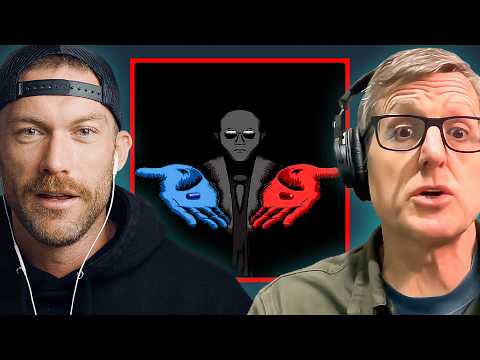
- Williamson notes that feminism includes diverse groups such as maternal feminists like Louise Perry, who campaigned against rough sex killings and maintains a pro-family stance. Data indicates that women currently out-earn and out-educate men up to the age of 30, contributing to a landscape where the current generation represents the most fatherless homes ever seen. Williamson himself faces criticism for being 'too bluepilled' and not sufficiently militant, with legacy media like The Guardian perceiving him as a misogynist right-winger while the manosphere views him as a bluepilled figure.
Challenges Facing Men and Self-Improvement
- A major theme is the divergence in diagnosis and treatment plans regarding gender relations and declining coupling among commentators who identify similar underlying issues. Men's specific issues are highlighted as including suicide, drug addiction, violent crime, incarceration, and homelessness, alongside a massive moral panic surrounding extremist content that pipelines boys and men. Male self-repair efforts conducted outside approved therapeutic channels are often met with suspicion and treated as contamination.
Critique of Terminology and Lifestyle Solutions
- Williamson critiques the term 'luxer' or 'lux maxer' used to accuse him, noting the term has only been in existence for approximately 3 seconds. He discusses legitimate concerns about viciferous extremist content being used to smear male self-improvement initiatives. As a practical solution for health, the speaker promotes Element hydration drinks, which he uses daily to reduce muscle cramps, optimize brain health, and regulate appetite through a science-backed electrolyte ratio of sodium, potassium, and magnesium.