[@CityPrepping] How To Build a 21-Day Food System on a Budget
![[@CityPrepping] Summarizer](https://summaries.pages.dev/img/logo.webp)
Link: https://youtu.be/SROY-zI9vPM
Duration: 13 min
Transcript: Download plain text
Short Summary
A creator presents a practical 30-day food preparedness system built on a structured 4-week framework focused on foundation foods, meal systems, resilience, and rotation. The approach emphasizes building pantry margins gradually through the "buy one extra" habit rather than panic buying, shifting the preparedness mindset from "can I survive?" to "can I still function?" during economic uncertainty or power outages. Key recommendations include rice, beans, pasta, oatmeal, peanut butter, canned proteins, backup cooking methods, and water storage with filtration.
Key Quotes
- "What most people really need is a simple system, a practical way to create more stability, a little more flexibility, and a little more breathing room when life gets unpredictable." (00:00:36)
- "Because preparedness today isn't really about fear. It's about reducing stress, lowering dependency, and regaining a little control over your future." (00:00:45)
- "Modern preparedness really isn't just about asking, can I survive? Instead, it's more about asking, can I still function when life gets difficult?" (00:00:31)
- "morale matters more than most people realize." (00:00:43)
- "That's not really preparedness, but rather it's just expensive clutter." (00:00:26)
Detailed Summary
Overview
A creator proposes building a practical food preparedness system in 30 days using a structured 4-week framework, addressing rising food prices and economic uncertainty. The philosophy shifts from "can I survive?" to "can I still function?" during stressful situations like power outages, price spikes, or busy weeks.
Week 1: Foundation
- Build the core food storage around foods the family already uses rather than survival foods that go uneaten
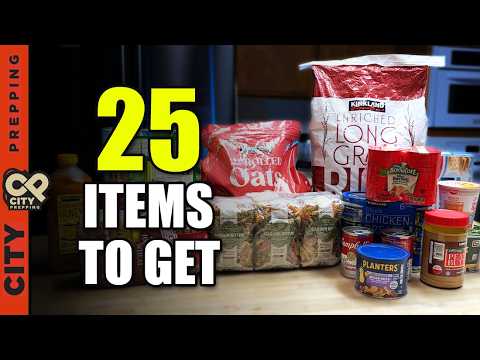
- Top foundation foods: Rice (recommended for flexibility and calories per dollar), beans (canned or dried), pasta, oatmeal, cereal, pancake mix, and peanut butter
- Canned proteins and vegetables: Chicken, tuna, soups, green beans, and corn to create complete meals or stretch ingredients
Week 2: Meal Systems
- Move beyond storing ingredients to building complete "meal systems" with specific options for each meal
- Breakfast: Oatmeal, cereal, pancakes
- Lunch: Canned soups, peanut butter sandwiches, chili
- Dinner: Rice and beans, pasta with sauce and chicken, skillet meals
Week 3: Resilience
- Freezer backup: Extra frozen meat, vegetables, bread, batch meals
- Convenience foods: Protein bars, trail mix for stress situations
- Backup cooking methods: Butane stove, propane camp stove, backyard grill
- Water storage: Identified as one of the most overlooked parts of preparedness; requires storage and simple filtration as foundational backup
Week 4: Rotation & Maintenance
- FIFO rotation (First In, First Out): Place new items toward the back of shelves and move older items to the front to use first, preventing waste and saving money over time
- Avoid "expensive clutter"—panic buying food and forgetting about it for years leads to waste rather than true preparedness
Key Habits
- "Buy one extra" habit: Grab one or two extra cans every grocery trip to gradually build pantry margins without overwhelming expense
- Prioritize spending in order: 1) Core calories, 2) Water storage with filtration, 3) Easy-to-prepare meals, 4) Backup cooking method, 5) Deeper pantry over time
- Do not go into debt to prepare—people who do typically regret it
- Preparedness should integrate into normal routines rather than being driven by fear or crisis panic buying
Core Philosophy
- Focus on steady practical habits that slowly increase family resilience over time
- You don't need a giant pantry overnight or expensive equipment
- Small consistent progress creates margin for busy schedules, tight money, or unexpected situations