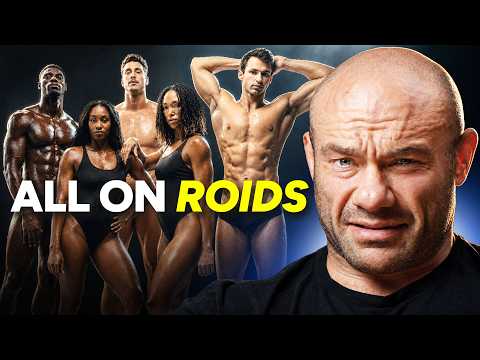
[@RenaissancePeriodization] Enhanced Games: The "Steroid Olympics" Everyone Is Freaking Out About
![[@RenaissancePeriodization] Summarizer](https://summaries.pages.dev/img/logo.webp)
Link: https://youtu.be/C6epF1t8u7E
Duration: 17 min
Transcript: Download plain text
Short Summary
The Enhanced Games presents itself as a more honest alternative to the Olympics, where athletes can legally use enhancement substances in track, swimming, and weightlifting. Critics argue the concept normalizes doping and risks severe substance abuse, while proponents point to extensive medical profiling and existing precedents in bodybuilding and powerlifting federations with tested and untested divisions. The $25 million prize pool offers dramatically higher payouts than traditional sports, where a German Olympic swimmer earned only €20,000 and world-ranked athletes make roughly $36,000 annually.
Key Quotes
- "Who doesn't cheat in life? [music] Everybody cheats in taxes. Everybody cheats in everything." (00:00:06)
- "in my sport, if you're top 12 in the world, you make a salary, and that salary is like $36,000 a year before taxes." (00:00:13)
- "The number one fundamental underlying reason for sport, especially in the modern time, is for just one thing, entertainment." (00:00:01)
- "I personally want to see the glory of drug tested sport with the Olympics. And I also want to see how far the human body can be pushed safely but with a lot of enhancement to see what's really going to go on." (00:00:16)
Detailed Summary
The Enhanced Games Concept
The Enhanced Games positions itself as a more transparent and athlete-friendly alternative to the traditional Olympics, allowing competitors to use legally available enhancement substances in three sports: track, swimming, and weightlifting. The hosts argue that the current Olympic system creates perverse incentives for state-sponsored doping programs, with research showing 43% of Olympians admit to using banned substances while only 1% are caught. The concept suggests that allowing enhancement under medical supervision could actually be safer than the current underground approach.
Historical Context of Performance Enhancement
The discussion traces performance enhancement through history, noting that Ancient Greek athletes used wine, herbs, mushrooms, and animal organs, while Roman gladiators relied on stimulants and herbal mixtures. The mid-20th century Cold War era saw state-run drug programs manufacturing testosterone and derivatives, fundamentally changing strength, speed, and recovery records worldwide. Modern elite athletes already employ extensive advantages including altitude camps, heat training, lactate testing, glucose monitoring, and equipment costing up to $25,000 for racing bikes, custom carbon-plated shoes, and aerodynamic skin suits.
Financial Realities of Traditional Elite Sport
The episode highlights severe financial constraints facing Olympic athletes: a German gold medalist swimmer at the Paris Olympics earned approximately €20,000, barely covering training and travel expenses. In track and swimming, athletes ranked in the top 12 worldwide earn only about $36,000 annually before taxes. This economic pressure creates the context for why athletes might seek alternative competition formats with better financial rewards.
Enhanced Games Prize Structure
The Enhanced Games offers a total prize pool of $25 million, with $500,000 per event and $250,000 for the winner—equivalent to winning 13 world championships in traditional swimming. World record bonuses are $250,000 per record, with $1,000,000 specifically offered for records in the 50 freestyle and 100m sprint events. All substances used must be clinically approved drugs already prescribed by doctors daily, not experimental compounds.
Medical Safety Framework
Every Enhanced Games athlete undergoes comprehensive medical profiling including organ scans, cardiac screenings, and biomarker monitoring to determine health and safety eligibility to compete. The organizers argue this medical oversight provides better athlete protection than the current Olympic system's detection-focused approach.
Precedent in Other Strength Sports
The episode cites bodybuilding and powerlifting as existing models where tested and untested federations coexist successfully, with cheating being rare because athletes who want to use drugs simply compete in untested divisions. Under this self-selecting system, athletes caught doping in tested divisions simply move to untested competition rather than facing the temporary bans typical in Olympic sports.